
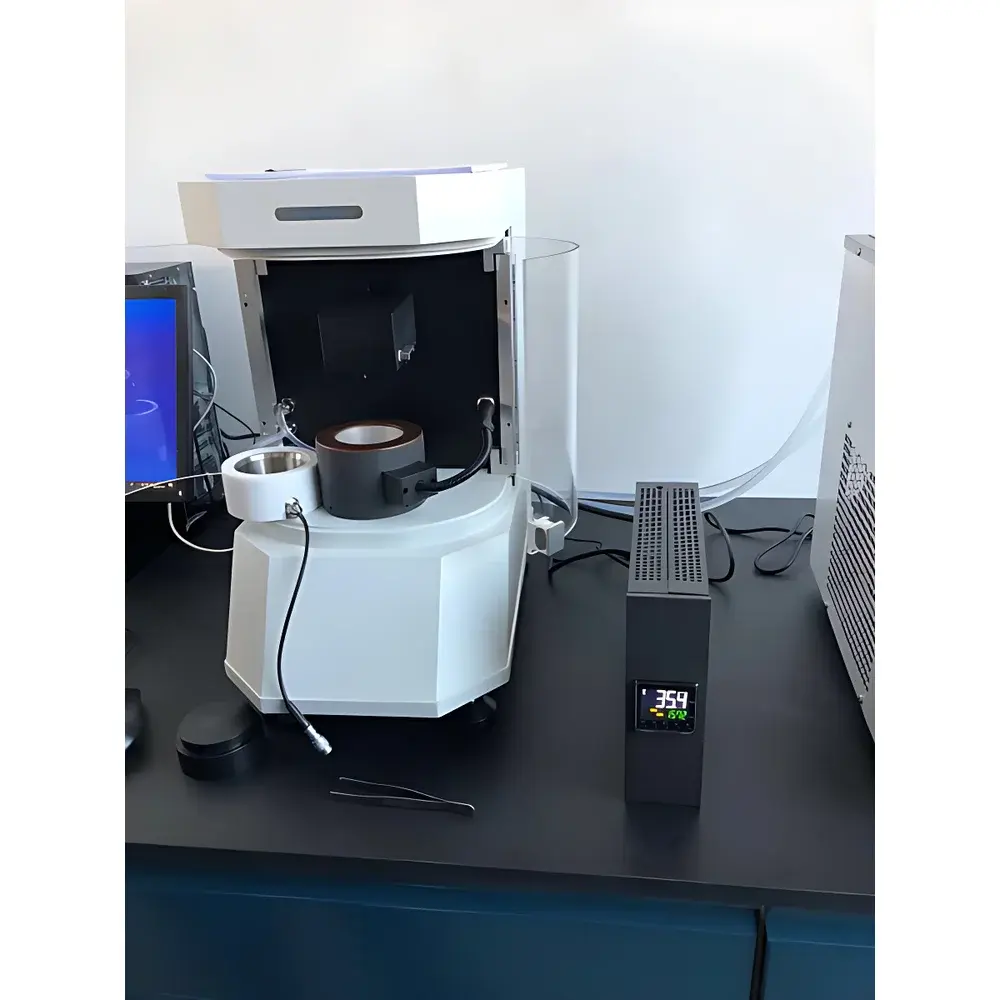
Zykx JK99H4 High-Temperature Surface and Interfacial Tensiometer
| Brand | Zykx |
|---|---|
| Origin | Beijing, China |
| Model | JK99H4 |
| Surface Tension Range | 0–500 mN/m |
| Resolution | 0.05 mN/m |
| Temperature Control Range | Ambient to 400 °C |
| Temperature Accuracy | ±1 °C |
| Measurement Methods | Du Noüy Ring & Wilhelmy Plate |
| Sampling Interval | 150–300 s (dual-speed adjustment) |
| Power Supply | AC 220 V ±22 V, 50 Hz |
| Power Consumption | <150 W |
| Operating Humidity | 30–85% RH |
Overview
The Zykx JK99H4 High-Temperature Surface and Interfacial Tensiometer is a precision instrument engineered for quantitative determination of surface tension (liquid–air) and interfacial tension (liquid–liquid) under elevated thermal conditions. It operates on two internationally standardized physical principles: the Du Noüy ring method (based on maximum pull force at detachment) and the Wilhelmy plate method (based on vertical force balance on a wetted platinum plate). Designed for rigorous laboratory environments—including enhanced oil recovery (EOR) research, formulation development, and high-temperature material science—the JK99H4 integrates robust thermal management with real-time data acquisition to support dynamic tension profiling across time, concentration, and temperature gradients. Its compliance with SY/T 5370–1999—a Chinese petroleum industry standard aligned with ASTM D971 and ISO 6295 methodologies—ensures traceable, reproducible measurements in both academic and industrial QC/QA settings.
Key Features
- Simultaneous dual-method capability: Switch between Du Noüy ring and Wilhelmy plate configurations without hardware reconfiguration, enabling cross-validation and method-specific optimization.
- Integrated high-temperature furnace system with PID-controlled heating up to 400 °C, featuring ceramic insulation, inert atmosphere compatibility (N₂ purge port optional), and thermocouple feedback for stable thermal equilibrium.
- Precision-machined platinum components (ring and plate) sourced from Japan—certified for purity (>99.95%), dimensional consistency, and corrosion resistance across aggressive solvent systems.
- Dual-speed motorized lift mechanism with programmable sampling intervals (150–300 s), supporting kinetic studies of surfactant adsorption, film relaxation, and emulsion aging.
- Low-noise mechanical architecture (<45 dB(A)) and vibration-damped base, minimizing signal drift during long-duration measurements (e.g., 24+ hour interfacial aging experiments).
- Native Windows-compatible software (Win7 through Win10) with real-time tension vs. time plotting, automatic baseline correction, and export to CSV/Excel for statistical analysis or integration into LIMS workflows.
Sample Compatibility & Compliance
The JK99H4 accommodates a broad range of sample types: aqueous surfactant solutions, hydrocarbon–water interfaces (e.g., crude oil–brine), molten polymers, high-boiling solvents (e.g., glycols, silicone oils), and thermally stable ionic liquids. Its sealed sample chamber and high-temp-rated seals permit operation under inert gas blanket—critical for oxygen-sensitive formulations or high-volatility systems. Instrument validation adheres to SY/T 5370–1999 requirements for calibration verification using standard reference liquids (e.g., ultrapure water at 25 °C: 72.75 mN/m; diiodomethane at 20 °C: 50.8 mN/m). While not pre-certified for FDA 21 CFR Part 11, the software supports audit-trail-enabled user accounts and timestamped data logging—facilitating GLP/GMP-aligned documentation when deployed in regulated R&D or manufacturing support labs.
Software & Data Management
The bundled Zykx TensiSoft™ v3.2 application provides full instrument control, real-time visualization, and post-acquisition analysis tools. Users define multi-step temperature ramps, concentration series, or timed measurement sequences via intuitive GUI. All raw force–time datasets are stored with metadata (operator ID, date/time stamp, method parameters, calibration history). Export formats include CSV (for MATLAB/Python scripting), PDF reports (with embedded curve plots and statistical summaries), and XML (compatible with enterprise data repositories). The software maintains local database integrity and supports networked deployment via shared drive mapping—enabling centralized data archival without cloud dependency.
Applications
- Enhanced oil recovery (EOR): Quantifying ultra-low IFT (<0.01 mN/m) between reservoir brine and alkali-surfactant-polymer (ASP) formulations at reservoir-relevant temperatures (up to 120 °C simulated via extrapolation protocols).
- Coating & ink development: Evaluating substrate wettability and leveling behavior of high-solids, low-VOC formulations at processing temperatures (e.g., 80–150 °C).
- Pharmaceutical colloids: Characterizing interfacial stability of lipid nanoparticles and microemulsions during thermal stress testing per ICH Q5C guidelines.
- High-performance lubricants: Monitoring oxidation-induced interfacial activity changes in synthetic ester- or PAO-based fluids under accelerated aging conditions.
- Materials science: Assessing melt–air surface tension of thermoplastics (e.g., PET, PEEK) during extrusion process modeling.
FAQ
What calibration standards are recommended for routine verification?
Certified reference liquids—ultrapure water (72.75 mN/m at 25 °C), 2-ethylhexanol (35.0 mN/m), and diiodomethane (50.8 mN/m)—are used per SY/T 5370–1999. Calibration should be performed daily before critical measurements.
Can the JK99H4 measure interfacial tension below 0.1 mN/m?
Yes—when combined with optimized ring geometry, precise temperature stabilization, and low-vibration mounting, the instrument achieves reliable resolution down to 0.02 mN/m in controlled lab environments, though accuracy below 0.05 mN/m requires extended equilibration and statistical averaging.
Is atmospheric control (e.g., nitrogen purging) supported?
The standard chamber includes a threaded port for inert gas inlet; optional purge kits (including flow meter and O-ring-sealed lid) are available to maintain oxygen-free conditions during high-temperature measurements.
How is temperature uniformity verified across the sample volume?
A secondary calibrated Pt100 probe can be immersed adjacent to the measuring probe during validation runs; radial and axial gradients are typically ≤±0.5 °C within the central 10 mm³ measurement zone at steady state.
Does the software support automated method sequencing for unattended operation?
Yes—users can program up to 16-step sequences combining temperature ramps, dwell times, and measurement triggers, enabling overnight kinetic studies with auto-shutdown and report generation.
Related Products



