
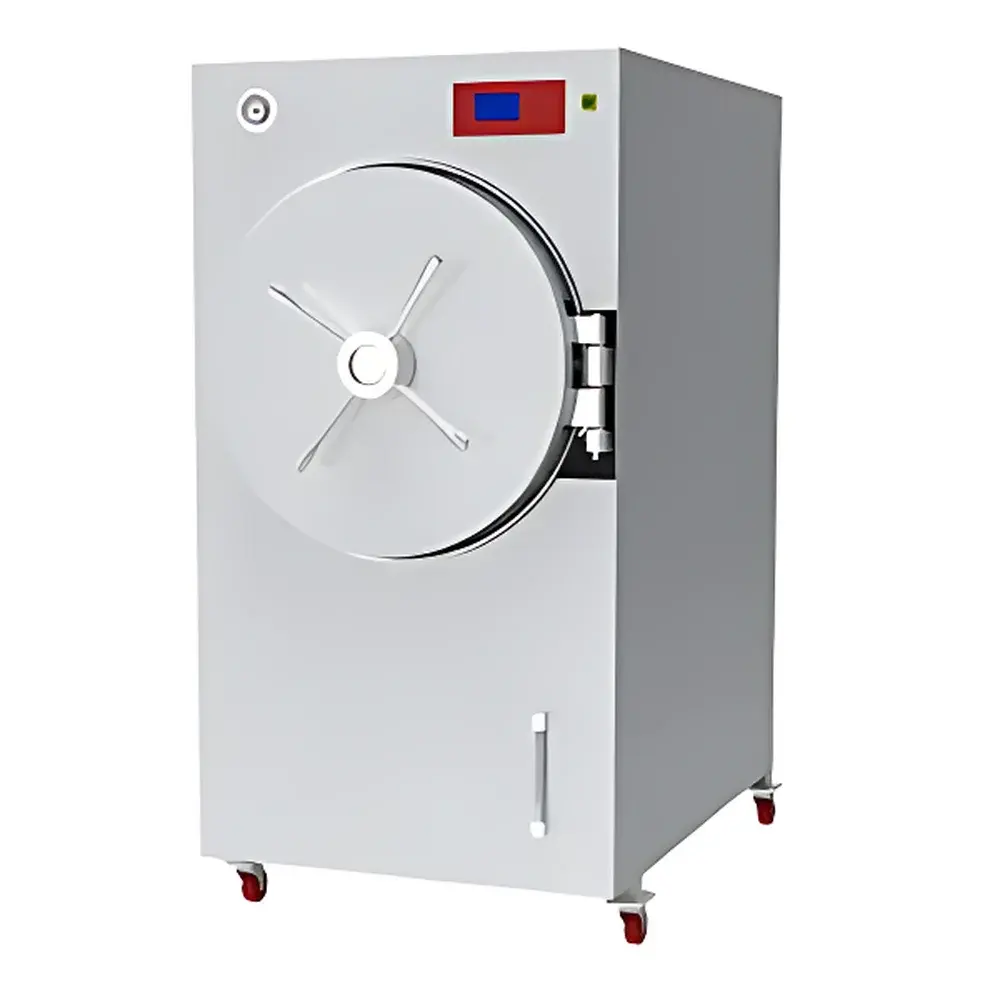
BOXUN BXW-SD-AI/GI Horizontal Cylindrical Autoclave with Radial Grid Structure
| Brand | BOXUN |
|---|---|
| Origin | Shanghai, China |
| Manufacturer Type | Direct Manufacturer |
| Product Category | Domestic |
| Model | BXW-SD-AI/GI |
| Instrument Type | Horizontal Autoclave |
| Maximum Temperature | 131 °C |
| Maximum Pressure | 0.22 MPa |
| Chamber Dimensions | Ø600 × 1050 mm |
| External Dimensions | 911 × 1432 × 1803 mm |
| Chamber Volume | 280 L |
| Power Supply | 380 V / 50 Hz |
| Heating Power (AI) | 13 kW |
| Heating Power (GI) | 14.5 kW |
| Vacuum & Drying System (GI only) | Water-ring vacuum pump + drying heating elements |
Overview
The BOXUN BXW-SD-AI/GI is a horizontally oriented, cylindrical steam autoclave engineered for reliable, repeatable sterilization of heat-stable laboratory and healthcare materials under saturated steam conditions. Its core sterilization principle relies on moist-heat inactivation of microorganisms—including bacterial spores—via precise control of temperature, pressure, and exposure time in accordance with ISO 17665-1, EN 285, and FDA-recommended validation protocols. The unit features a radial grid structural design within the chamber, which ensures uniform steam distribution and minimizes cold spot formation during cycle execution. This architecture supports consistent thermal penetration across heterogeneous loads—particularly critical for wrapped instruments, porous textiles, and fluid-filled containers. Unlike vertical units, the horizontal configuration allows for larger batch processing and improved ergonomic loading/unloading, making it suitable for central sterile supply departments (CSSDs), pharmaceutical QC labs, and university core facilities requiring GMP-aligned operation.
Key Features
- Chamber constructed from high-grade austenitic stainless steel (AISI 304), welded using tungsten inert gas (TIG) technique for corrosion resistance and structural integrity.
- Microprocessor-based control system with real-time display of sterilization phase, chamber temperature, elapsed time, and pressure—enabling full operational transparency and cycle traceability.
- Interlocked safety mechanism compliant with EN 61010-1 and PED 2014/68/EU: (1) Sterilization cycle cannot initiate unless door is fully closed and mechanically locked; (2) Internal pressure interlock prevents door unlocking until chamber pressure drops to ambient level.
- Self-expanding silicone door gasket providing long-term sealing performance and reduced maintenance frequency.
- Integrated steam generator with automatic water replenishment via submersible feed pump; low-water cutoff protection with audible/visual alarm during active cycles.
- Pressure-regulated steam generation via precision pressure controller, backed by dual mechanical safety valves set at 0.25 MPa (ASME Section I certified).
- Selectable exhaust modes—including gravity displacement, slow exhaust, and fast exhaust—to accommodate load-specific requirements (e.g., liquids vs. solids).
- PID temperature regulation with adaptive tuning capability to suppress thermal overshoot and maintain ±0.5 °C stability across the 109–131 °C operating range.
- GI variant includes a water-ring vacuum pump and dedicated drying heating elements, enabling post-sterilization vacuum-assisted drying per ISO 15883-1 and EN 13060 standards.
Sample Compatibility & Compliance
The BXW-SD series accommodates a broad spectrum of sterilizable items: surgical instrument sets, glassware, culture media bottles, rubber tubing, textile packs, and polymer-based labware. Its radial grid chamber layout enhances steam permeation into nested or stacked configurations without compromising cycle efficacy. All models are designed and tested to meet national mandatory safety standards GB 8599–2008 and YY 0504–2016, and support IQ/OQ/PQ validation documentation packages. Optional printer integration enables direct hardcopy output of cycle logs for GLP/GMP audit readiness. The system architecture supports 21 CFR Part 11-compliant electronic record retention when paired with validated data management software.
Software & Data Management
The embedded controller stores up to 1,000 complete cycle records—including start/stop timestamps, temperature/pressure profiles, alarm events, and operator ID—if configured with user authentication. USB export functionality permits raw data transfer for external analysis in Excel or statistical process control (SPC) platforms. Optional Ethernet or RS485 interfaces enable integration into facility-wide monitoring systems (e.g., BMS or LIMS). Firmware updates are performed via secure USB key with version-controlled checksum verification to ensure regulatory continuity.
Applications
- Terminal sterilization of reusable medical devices in hospital CSSDs.
- Preparation of sterile culture media and reagents in microbiology and cell culture laboratories.
- Decontamination of biohazardous waste prior to disposal (in accordance with WHO biosafety guidelines).
- Validation studies supporting ISO 13485-certified manufacturing processes.
- Research-scale sterilization where reproducible thermal dose delivery (F0 ≥ 12 min) must be demonstrated.
- Drying-critical applications—such as pre-packaged instrument trays—using the GI configuration’s vacuum-drying sequence.
FAQ
What is the purpose of the radial grid structure inside the chamber?
The radial grid ensures radial symmetry in steam flow, eliminating stagnant zones and promoting uniform heat transfer—critical for achieving validated F0 values across all load positions.
Can this autoclave be validated for pharmaceutical use?
Yes; its design, sensor redundancy, and data logging capabilities align with Annex 1 (EU GMP) and USP requirements when operated within documented SOPs and supported by third-party IQ/OQ protocols.
Does the AI model support drying cycles?
No—the AI variant performs sterilization only; drying functionality requires the GI configuration with integrated vacuum pump and auxiliary heating elements.
Is remote monitoring supported out of the box?
Standard configuration includes local HMI only; remote access requires optional communication modules and compatible SCADA or cloud-based platform integration.
What maintenance intervals are recommended for the steam generator?
Daily visual inspection of water level and weekly descaling (using citric acid solution) are advised; annual calibration of PT100 sensors and pressure transducers is required for continued compliance.



