
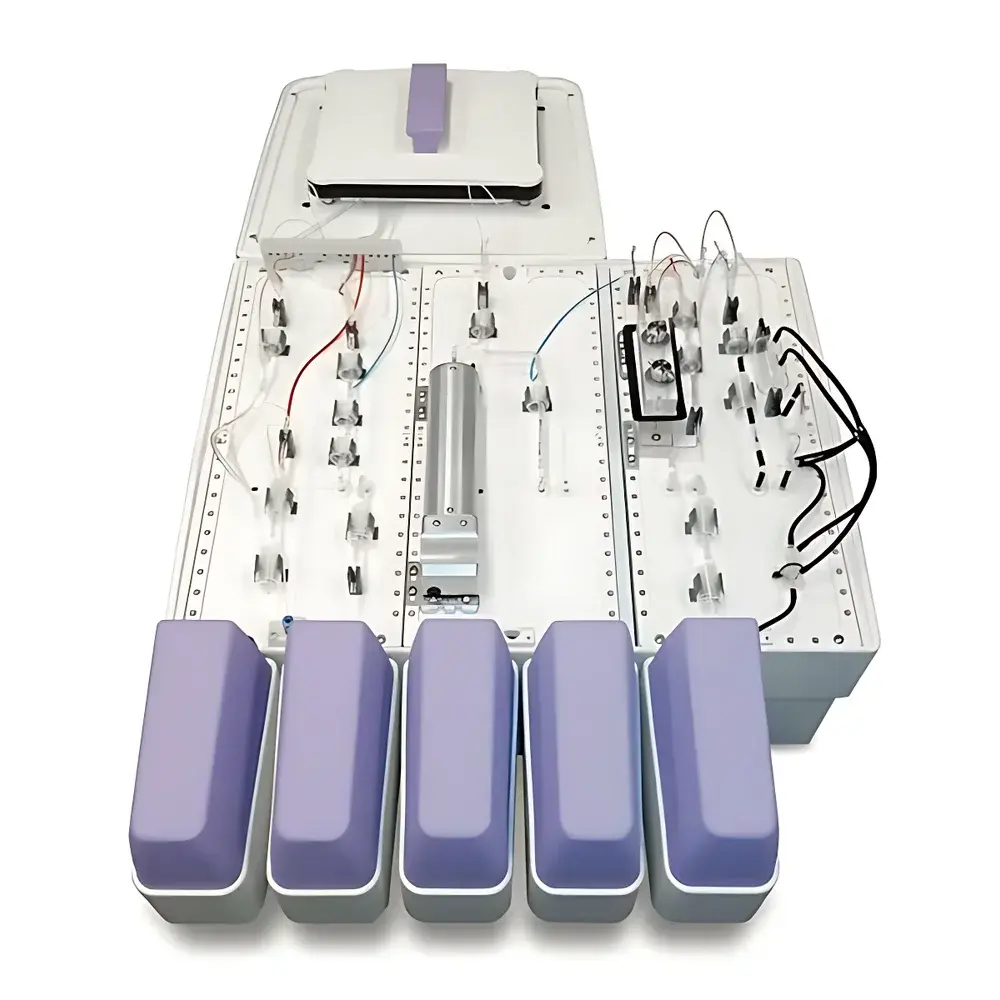
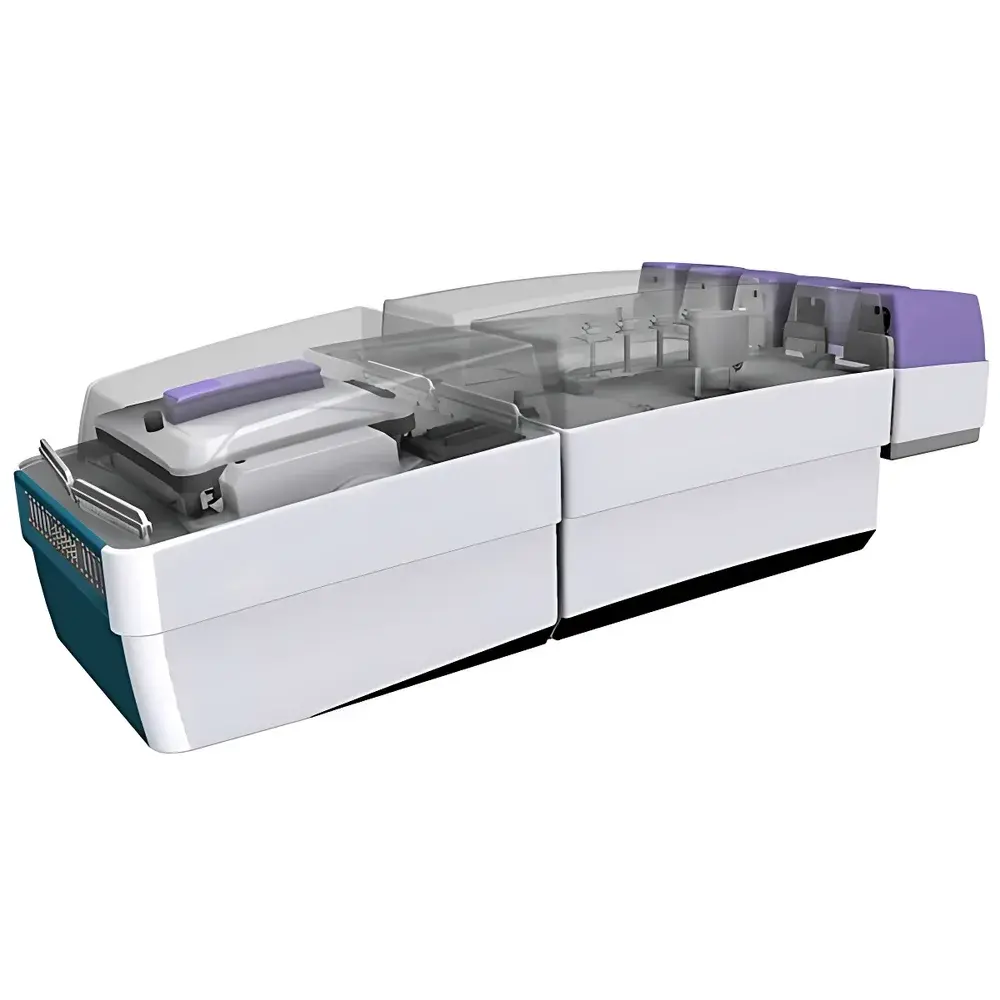
SEAL AA500 Continuous Flow Analyzer
| Brand | SEAL |
|---|---|
| Origin | Germany |
| Model | AA500 |
| Product Type | Continuous Flow Analyzer |
| Wavelength Range | 250–880 nm |
| Sample Capacity | 180 positions / 120 cups |
| Reagent Positions | 34 |
| Flow Cell Path Length | 10–50 mm (selectable) |
| Light Source | LED |
Overview
The SEAL AA500 Continuous Flow Analyzer is an advanced, fully automated benchtop system engineered for high-precision, high-throughput environmental and routine chemical analysis. Based on the segmented flow (bubble-segmented continuous flow) principle—where discrete sample segments are separated by air bubbles within a continuously flowing carrier stream—the AA500 minimizes axial dispersion and cross-contamination while ensuring reproducible reaction kinetics and precise timing control. This architecture delivers exceptional sensitivity, low detection limits, and robust inter-laboratory comparability. Designed specifically for regulatory-compliant analysis of aqueous matrices—including natural waters, wastewater, seawater, soil extracts, plant digests, fertilizers, and agricultural feedstuffs—the AA500 supports over 700 validated methods aligned with USEPA, ISO, and ASTM standards (e.g., EPA Method 365.4 for phosphate, ISO 15681-1 for orthophosphate, ASTM D5179 for nitrate/nitrite). Its modular hardware architecture and integrated digital control enable seamless method switching, unattended operation, and long-term stability under GLP/GMP-aligned workflows.
Key Features
- Fully automated operation: Scheduled startup/shutdown, auto-calibration, on-the-fly reagent replenishment monitoring, and autonomous cleaning cycles—including automatic actuation of pressure plate engagement/disengagement for peristaltic pump tubing compression.
- High-resolution dual-beam LED photometer: Stable solid-state illumination across 250–880 nm; selectable flow cell path lengths (10, 20, 30, 40, or 50 mm) to optimize sensitivity vs. dynamic range for each analyte.
- Modular, chemically inert reaction manifold: Borosilicate glass coils and reactors ensure compatibility with aggressive reagents (e.g., strong acids, oxidants); transparent housing enables real-time visual verification of bubble segmentation, reagent mixing, and reaction progression.
- Expandable chemistry platform: Integrated options include UV digestion modules, gas diffusion units (for ammonia, cyanide), dialysis cells, distillation manifolds, and cadmium reduction columns—all mountable without mechanical recalibration.
- Intelligent sample handling: 180-position autosampler with dual rack support (120 × 16 mm and 60 × 18 mm vial configurations); live sample injection capability during active runs.
- Low reagent consumption: Optimized fluidics reduce average reagent usage by ≥40% versus conventional CFA systems; integrated level sensors trigger alerts prior to depletion.
Sample Compatibility & Compliance
The AA500 is validated for direct analysis of complex environmental and biological matrices without pre-filtration in most applications. It accommodates turbid samples (e.g., clarified wastewater, soil leachates) and high-salinity media (up to 35 ppt seawater) via optimized bubble segmentation and flow-rate control. All hardware components contacting reagents or samples comply with USP Class VI and ISO 10993 biocompatibility requirements. The system meets FDA 21 CFR Part 11 criteria for electronic records and signatures when deployed with AACE software’s audit trail, user role management, and electronic signature modules. Method validation documentation—including LOD/LOQ, linearity (r² ≥ 0.999), precision (RSD < 2% at mid-level), and spike recovery (85–115%)—is provided for all EPA- and ISO-listed procedures.
Software & Data Management
Control and data acquisition are managed exclusively through SEAL’s AACE (Advanced Analytical Control Environment) software suite. AACE provides full instrument orchestration—including valve sequencing, pump speed ramping (multi-step peristaltic profiles), temperature regulation of reaction zones, and real-time photometric signal processing. Key capabilities include: automated bubble detection and software-based bubble removal (pre- and post-run), retrospective baseline correction, dynamic range extension via dual-concentration channel switching, and integrated QC charting (Levey-Jennings, Westgard rules). Raw absorbance data, method metadata, calibration logs, and maintenance records are stored in encrypted SQLite databases compliant with ISO/IEC 17025 traceability requirements. Export formats include CSV, PDF analytical reports, and LIMS-ready XML.
Applications
The AA500 delivers quantitative results for nutrients (NH₄⁺, NO₂⁻, NO₃⁻, PO₄³⁻, SiO₂), metals (Fe²⁺/Fe³⁺, Mn²⁺), and organic parameters (COD, phenols, surfactants) across diverse sectors. Environmental laboratories use it for compliance monitoring under NPDES permits and EU Water Framework Directive reporting. Agricultural testing labs deploy it for fertilizer nutrient profiling and soil extract analysis. Public health agencies apply it to drinking water nitrate screening and wastewater treatment plant effluent verification. Research institutions utilize its modularity for method development—e.g., coupling UV digestion with post-column derivatization for total phosphorus speciation.
FAQ
Does the AA500 require manual alignment after更换 flow cell or lamp?
No. Optical alignment is factory-set and maintained mechanically; LED source and detector geometry are fixed. Replacement of flow cells or lamps does not necessitate recalibration.
Can existing AA3 modules be retrofitted into the AA500 chassis?
Yes—AA3 reaction modules (including UV digestors and gas diffusion units) are mechanically and electrically compatible with AA500’s backplane interface.
Is remote monitoring supported?
AACE includes secure HTTPS-based remote access for real-time status viewing, alarm notifications, and limited parameter adjustment—subject to network firewall configuration and TLS 1.2+ encryption.
What is the typical detection limit for phosphate using the AA500?
Under standard EPA 365.4 conditions (10-mm flow cell, molybdenum blue chemistry), the method detection limit (MDL) is 0.005 mg/L PO₄-P with ≤1.8% RSD (n=7).
How does the system handle carryover between high- and low-concentration samples?
Air segmentation, programmable wash cycles (with dedicated rinse ports), and flow-path geometry optimization reduce carryover to <0.1% for analytes such as nitrate across 0–10 mg/L ranges.





