
ORTEC CSS Anti-Compton Spectrometer System
| Brand | ORTEC |
|---|---|
| Origin | USA |
| Manufacturer Type | Authorized Distributor |
| Origin Category | Imported |
| Model | CSS |
| Instrument Type | Laboratory Gamma-Ray Spectrometer |
| Detector Type | High-Purity Germanium (HPGe), N-type Coaxial |
| Measured Radiation | Gamma Rays |
| Energy Range | 3 keV – 10 MeV |
| Peak-to-Compton Ratio | >1000:1 (¹³⁷Cs) |
| Background Count Rate | <0.5 cps (50 keV – 2 MeV, Anti-Compton mode) |
| Relative Efficiency | >60% |
| Resolution | Comparable to ORTEC GMX60 Reference Detector |
| Cooling | Liquid Nitrogen or Electromechanical Cryocooler (No LN₂ Required) |
| Sample Form | Solid (e.g., filter papers, Petri dishes) |
| Software | GammaVision® v7+ with Full 21 CFR Part 11 Compliance Support |
Overview
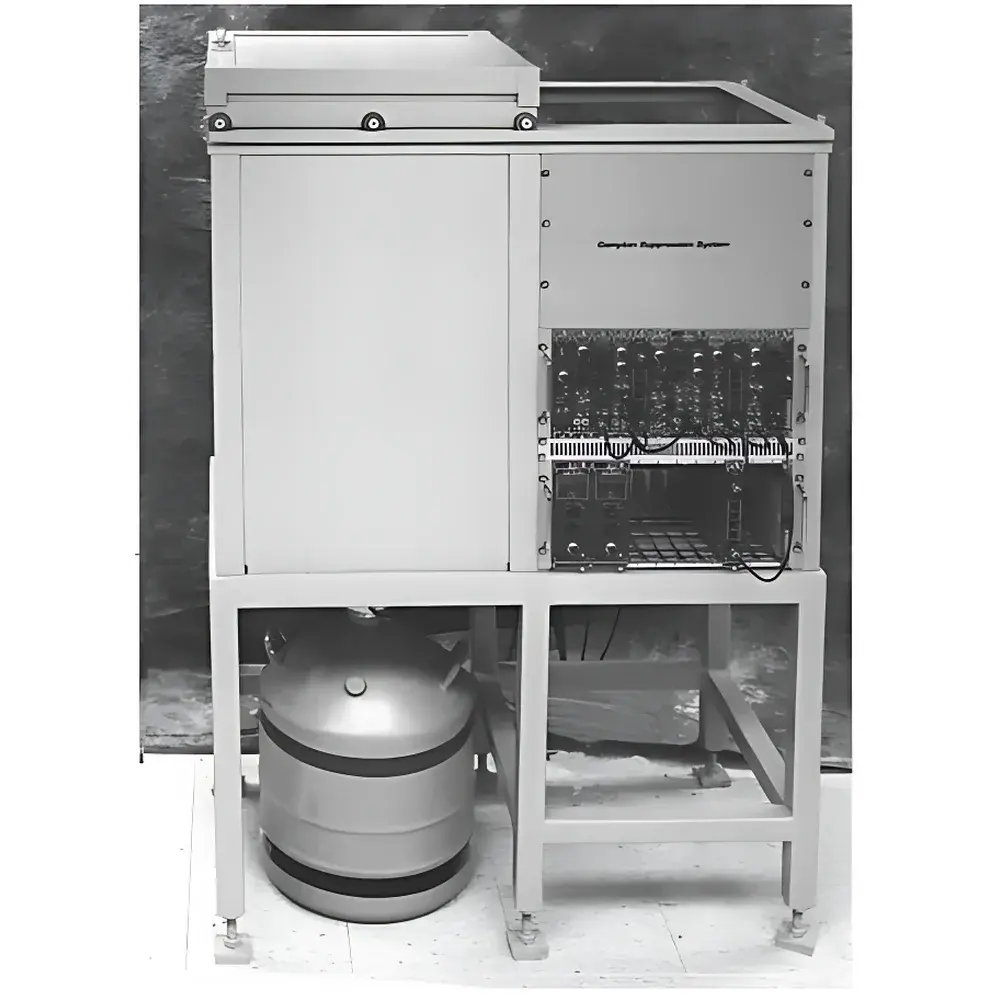
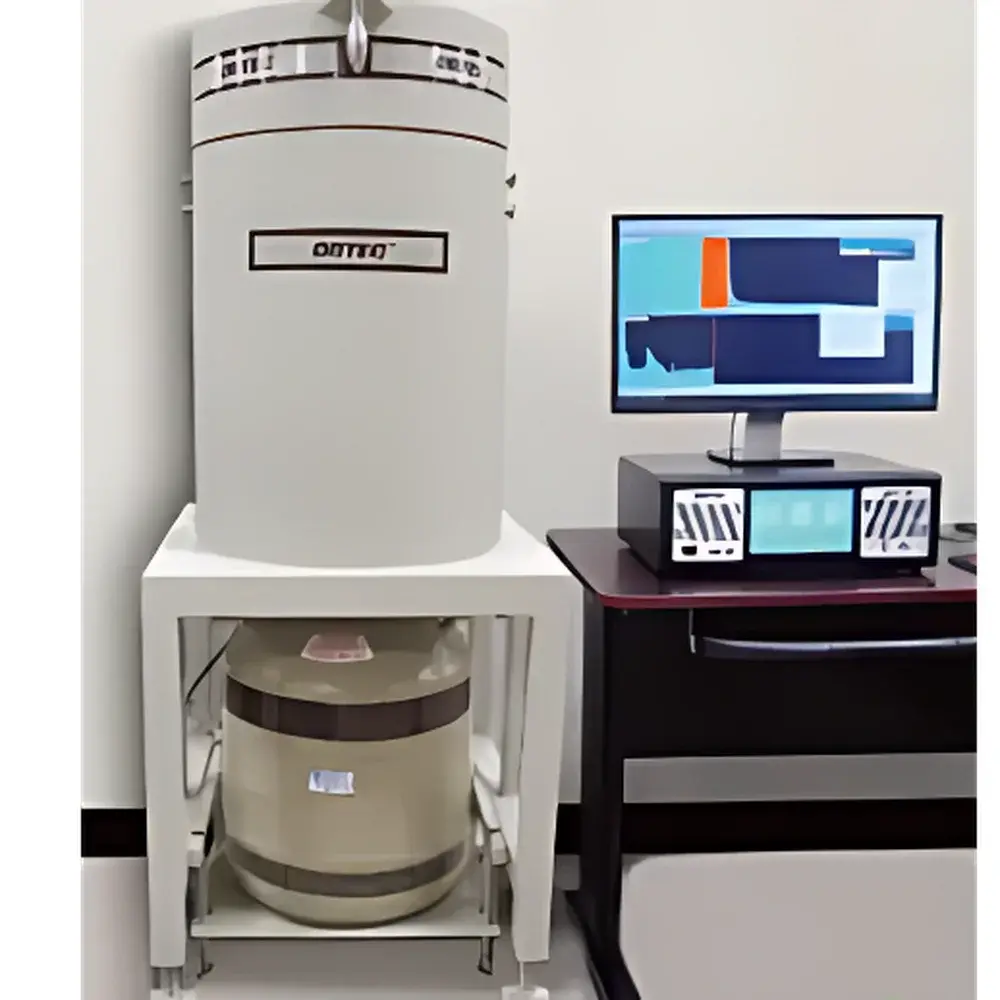
The ORTEC CSS Anti-Compton Spectrometer System is a high-sensitivity, low-background gamma-ray spectrometry platform engineered for ultra-trace radionuclide analysis in environmental, nuclear safeguards, and health physics applications. It operates on the principle of active background suppression via coincidence vetoing: when a gamma photon undergoes Compton scattering in the primary HPGe detector—depositing only partial energy—the scattered photon escapes and is intercepted by an annular NaI(Tl) guard detector surrounding the cryostat. A fast timing coincidence circuit identifies such events and rejects the corresponding HPGe signal, thereby eliminating contributions to the Compton continuum. This technique directly improves the peak-to-Compton (P/C) ratio and reduces the Minimum Detectable Activity (MDA) by up to a factor of three compared to conventional low-background HPGe systems—particularly critical for large-area solid samples such as air filters, soil digests on planchets, or biological tissue homogenates in Petri dishes.
Key Features
- Optimized N-type coaxial HPGe detector with >60% relative efficiency and ultra-thin dead layer (<0.5 µm), minimizing low-energy absorption and enhancing detection sensitivity below 100 keV
- Integrated annular NaI(Tl) anti-Compton shield with precise geometric matching to the HPGe cryostat envelope—maximizing escape photon capture probability while minimizing passive material between detector and guard
- Carbon-fiber composite cryostat housing: low-Z, low-radioactivity structural support that reduces intrinsic background from structural materials
- Dual cooling options: standard liquid nitrogen dewar or optional electromechanical cryocooler (no LN₂ handling required), both maintaining stable detector operating temperature (≤77 K) over extended acquisition periods
- Real-time digital coincidence processing with adjustable time window (typically 20–50 ns), fully integrated into the DigiBASE-E or ASPEC-2 digital spectroscopy platform
- Peak-to-Compton ratio exceeding 1000:1 for the 661.7 keV photopeak of 137Cs—validated per ASTM E1452 and ISO 8769 protocols
Sample Compatibility & Compliance
The CSS system is configured for solid-sample gamma spectrometry under controlled laboratory conditions. Standard geometries include 50–100 mm diameter planchets, 47 mm filter papers, and shallow Petri dishes (≤15 mm depth). Sample-to-detector distance is configurable (3–15 cm) to balance counting efficiency and geometric self-absorption effects. All shielding components—including graded lead (5–10 cm), copper (1–2 mm), and cadmium (0.5 mm) liners—are certified low-background (U/Th < 1 Bq/kg) and comply with IAEA Technical Reports Series No. 488 requirements for environmental radioactivity measurement. The system meets GLP and GMP data integrity standards: audit trails, electronic signatures, and user-access controls are fully implemented in GammaVision® software per FDA 21 CFR Part 11 and EU Annex 11 guidelines.
Software & Data Management
GammaVision® v7+ provides complete spectral acquisition, analysis, and reporting functionality. Its Anti-Compton module automates veto threshold optimization, coincidence timing calibration, and background subtraction using validated algorithms traceable to NIST SRM 4357 and IAEA RGU-1 reference materials. All raw FCS files, processed spectra, and metadata are stored in a secure SQL database with versioned backups and role-based access control. The software supports automated MDA calculation per ISO 11929:2019, including uncertainty propagation for efficiency calibration, geometry correction, and coincidence loss correction. Export formats include ANSI N42.42-compliant XML, CSV, and PDF reports suitable for regulatory submission to EPA, NRC, or EURATOM.
Applications
- Environmental monitoring: quantification of 137Cs, 90Sr (via 90Y), 238U, 232Th series nuclides, and 210Pb in air filters, sediment cores, and biota samples
- Nuclear forensics and safeguards: isotopic fingerprinting of uranium and plutonium materials with sub-mBq sensitivity
- Decommissioning and waste characterization: clearance-level verification of concrete, metal, and soil matrices per IAEA RS-G-1.7
- Radioecology research: long-term trend analysis of fallout radionuclides in lichen, moss, and tree-ring archives
- Reference laboratory metrology: primary-standard calibration of secondary gamma sources and inter-laboratory comparison exercises
FAQ
What is the typical acquisition time required to achieve MDA < 1 mBq for 137Cs in a 100 cm² air filter?
Under standard configuration (10 cm source-detector distance, 100,000 s live time), typical MDA is 0.3–0.6 mBq with <1% relative uncertainty.
Can the system operate without liquid nitrogen?
Yes—electromechanical cryocooler option eliminates LN₂ dependency while maintaining detector resolution stability within ±0.05 keV over 72 h.
Is the NaI(Tl) guard detector replaceable or serviceable in-field?
The annular scintillator is factory-aligned and hermetically sealed; replacement requires recalibration at an ORTEC-certified service center.
Does GammaVision support automated efficiency calibration for irregular sample geometries?
Yes—using Monte Carlo-based efficiency transfer (ET) with validated geometry models for Petri dishes, funnels, and Marinelli beakers.
How is compliance with ISO/IEC 17025:2017 demonstrated for this system?
Through documented uncertainty budgets, annual intercomparison participation (e.g., IAEA RM-2022), and full traceability of energy/efficiency calibrations to NIST SRMs.







