
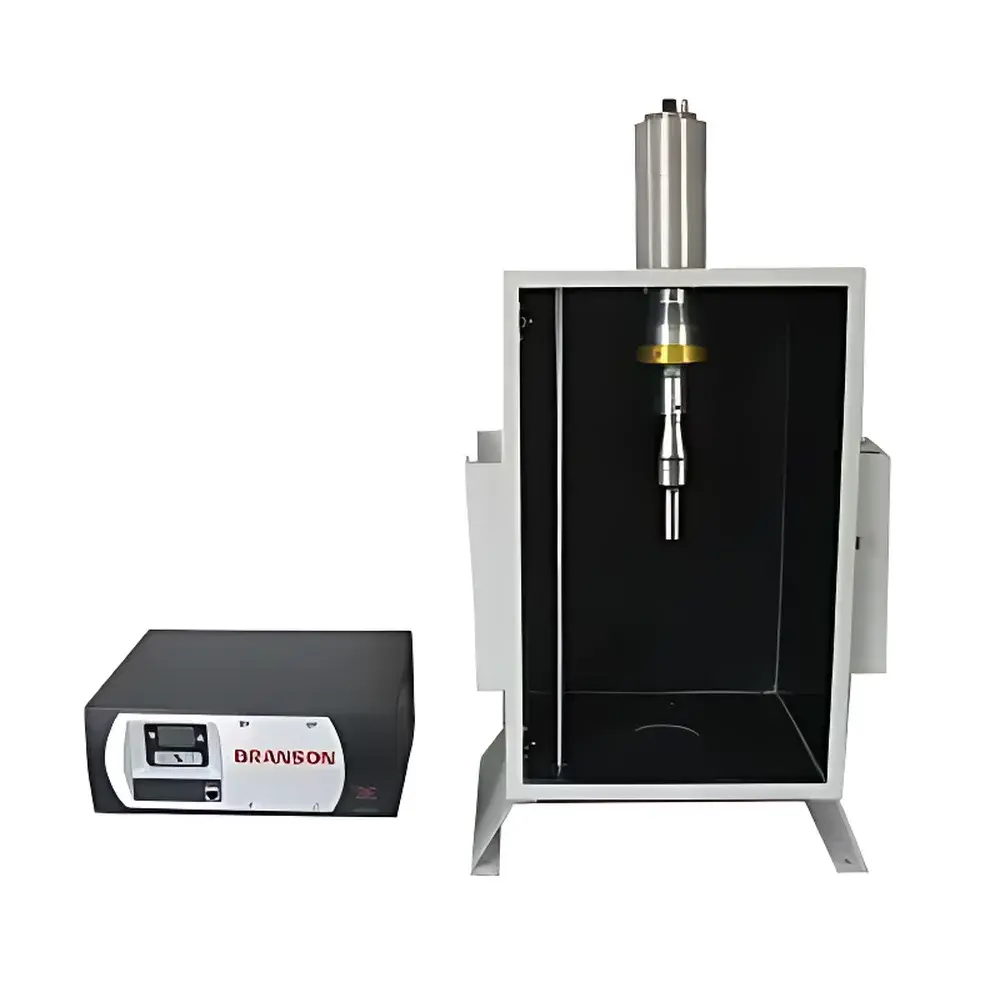
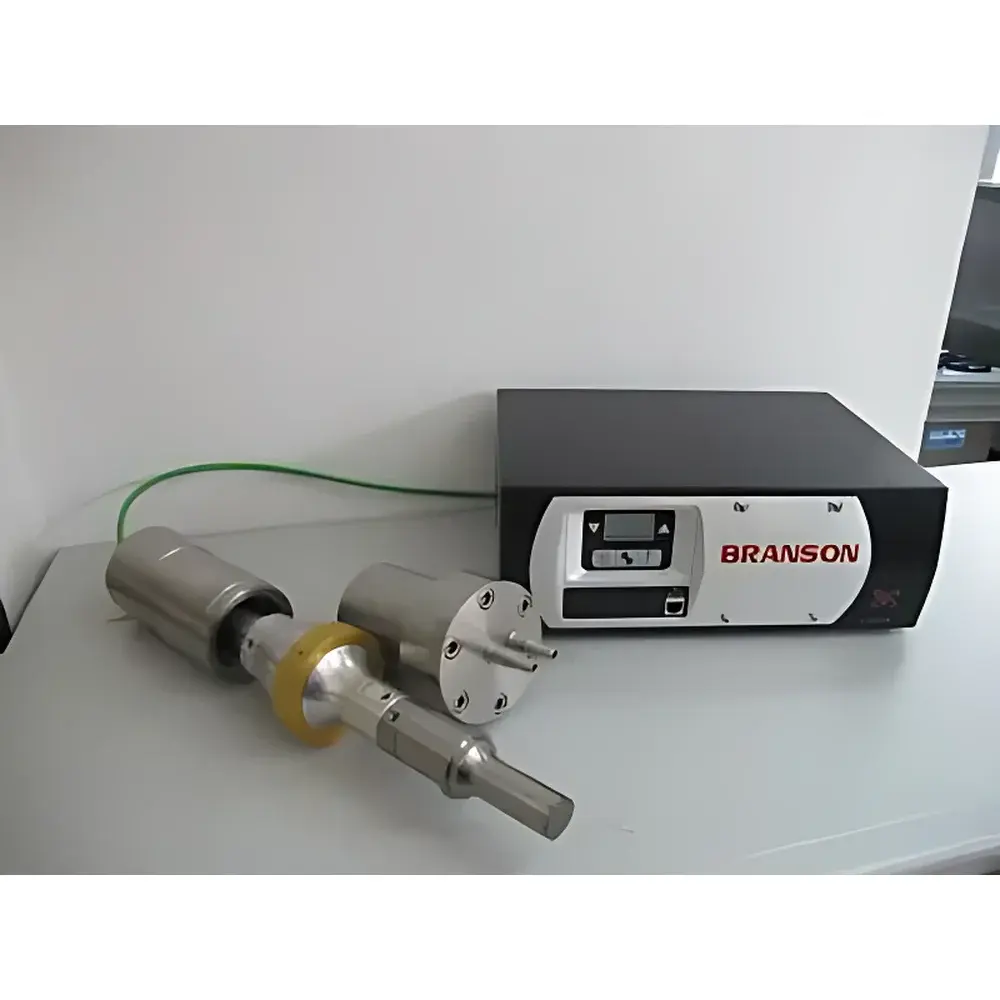
Branson MLP-DCX Series Medium-Cup Ultrasonic Cell Disruptor
| Brand | Branson |
|---|---|
| Origin | USA |
| Manufacturer Type | Authorized Distributor |
| Product Origin | Imported |
| Model | MLP-DCX |
| Instrument Type | Ultrasonic Cell Disruptor |
| Frequency | 20 kHz |
| Output Power | 1250 W / 2500 W / 4000 W (model-dependent) |
| Amplitude Range | 10–100% adjustable |
| Probe Material | Ti-7Al-4Mo alloy with carbide surface treatment |
| Probe Amplification Ratios | 1:1.5 or 1:2 (aluminum booster) |
| Processing Volume | 1–5 L |
| Power Supply | 230 V AC, 50/60 Hz |
| Protection Features | Overload, frequency drift, thermal, current, impedance, and arc fault detection |
| Control Interface | PLC-based touchscreen HMI |
| Diagnostics | Built-in startup self-test, real-time online monitoring, remote diagnostic port |
| Cooling | Segregated internal forced-air cooling system |
| Compliance | Designed for GLP/GMP-aligned lab environments |
Overview
The Branson MLP-DCX Series Medium-Cup Ultrasonic Cell Disruptor is an engineered solution for scalable, reproducible, and controllable ultrasonic energy delivery in life science and bioprocessing applications. Based on the principle of high-intensity ultrasonic cavitation—where rapid pressure oscillations generate transient microbubbles that collapse violently near biological or colloidal interfaces—the system enables efficient mechanical lysis, dispersion, emulsification, and homogenization without chemical additives or thermal degradation. Unlike benchtop probe sonicators limited to small volumes, the MLP-DCX series integrates a closed-loop amplitude control architecture and modular cup-based transduction geometry to support consistent energy coupling across 1–5 L sample volumes. Its 20 kHz fundamental frequency, coupled with precise amplitude modulation (10–100%), ensures stable cavitation intensity independent of load impedance shifts—critical for maintaining batch-to-batch equivalence in protein extraction, liposome formation, or nanoparticle dispersion protocols.
Key Features
- Closed-loop amplitude control circuitry: Patented real-time compensation for voltage fluctuations and acoustic load variations, ensuring ±1.5% amplitude stability over extended operation.
- Modular power platform: Three configurations (MLP-DCX 1.25, 2.5, 4.0) deliver up to 4000 W nominal output with >90% electroacoustic conversion efficiency.
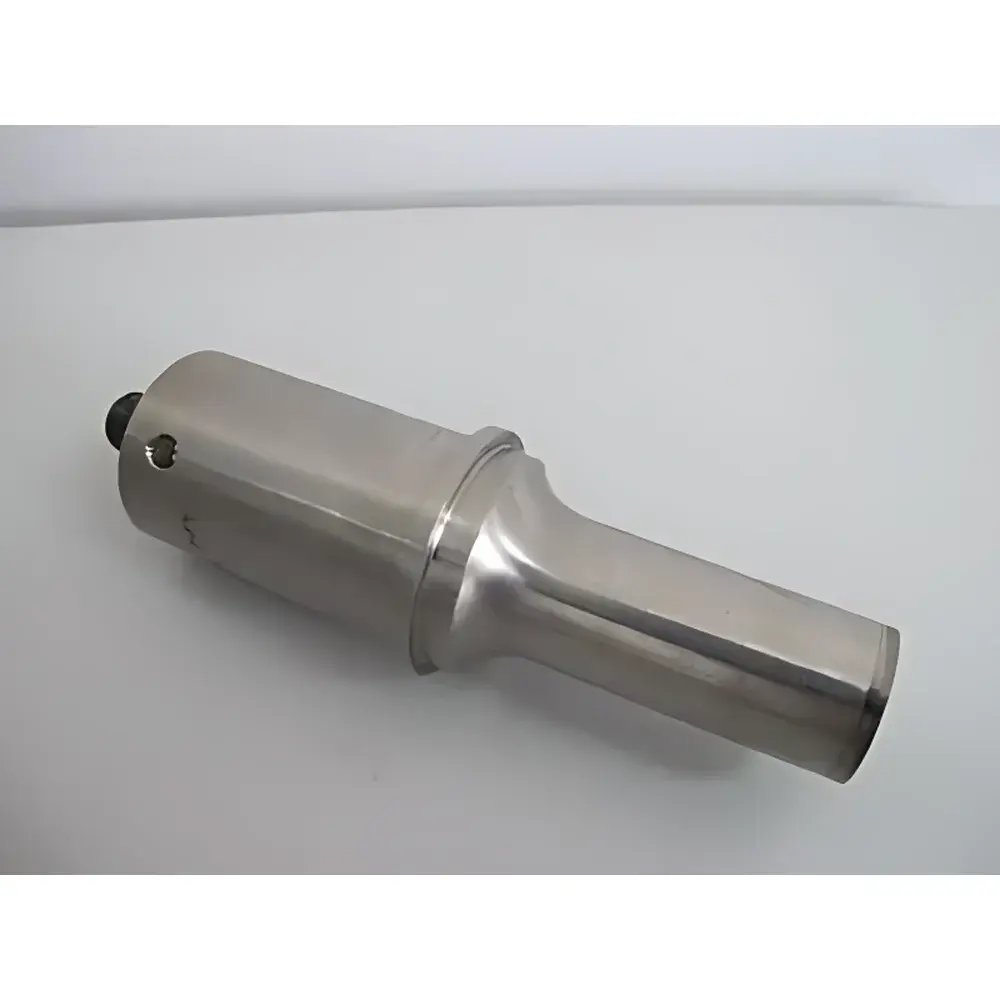
- Ti-7Al-4Mo alloy probes with carbide-surface hardening: Eliminates titanium particle shedding during high-duty-cycle processing, preserving sample integrity for sensitive biologics and regulatory-compliant workflows.
- PLC-integrated touchscreen HMI: Enables parameter logging, method recall, user-level access control, and timestamped event recording—including alarm triggers and system health status.
- Comprehensive protection suite: Six independent hardware-level safeguards monitor overload, frequency drift, excessive current draw, thermal rise, impedance mismatch, and electrical arcing—preventing component stress and extending transducer service life.
- Segregated thermal management: Dedicated airflow paths isolate power electronics from piezoelectric stack zones, enabling uninterrupted 8-hour continuous operation at full rated power.
- Remote diagnostic capability: Proprietary service port allows secure, authenticated remote interrogation of generator, transducer, and probe operational parameters—including resonance tracking, impedance profiling, and cumulative duty cycle metrics.
Sample Compatibility & Compliance
The MLP-DCX accommodates aqueous, viscous, and suspension-based matrices—including mammalian cell cultures, bacterial lysates, lipid dispersions, herbal extracts, carbon nanotube slurries, and polymer solutions—within standard laboratory-grade stainless-steel or borosilicate medium cups (1–5 L capacity). Its non-contact cup geometry eliminates cross-contamination risk between runs and simplifies cleaning validation. The system meets electromagnetic compatibility (EMC) standards per IEC 61326-1 and is designed to operate within ISO 14644-1 Class 7 cleanroom environments when installed with appropriate acoustic shielding. For regulated biomanufacturing, optional firmware modules support 21 CFR Part 11-compliant electronic signatures, audit trails, and role-based data export restrictions—enabling alignment with GLP, GMP, and USP analytical instrument qualification frameworks.
Software & Data Management
The embedded PLC controller logs all operational parameters—including amplitude setpoint, actual delivered power, cumulative run time, temperature trends (via optional external sensor input), and alarm history—with UTC timestamps and user ID attribution. Data exports are supported via USB 2.0 or Ethernet (TCP/IP) in CSV format for integration into LIMS or ELN platforms. Remote diagnostics utilize encrypted TLS 1.2 communication over standard HTTP(S) ports, requiring no proprietary client software. All firmware updates are digitally signed and validated prior to installation. Audit trail records retain immutable entries for parameter changes, method execution, and system resets—fully traceable for regulatory inspections.
Applications
- Cell disruption for recombinant protein recovery from E. coli, yeast, or CHO cultures
- Liposome and exosome formulation with controlled size distribution (Dv50 < 200 nm)
- Botanical extraction of thermolabile phytochemicals (e.g., curcumin, resveratrol) without solvent degradation
- Deagglomeration and stabilization of graphene oxide, carbon nanotubes, and metal-organic frameworks in aqueous media
- High-shear emulsification of vaccine adjuvants and nanoemulsion drug carriers
- Preparation of uniform polymer blends for biomedical hydrogel synthesis
- In-line degassing of cell culture media and buffer solutions prior to sterile filtration
FAQ
What distinguishes the MLP-DCX from conventional probe sonicators?
Unlike open-probe systems, the MLP-DCX uses a sealed cup transduction geometry with closed-loop amplitude regulation—delivering consistent energy density across variable volumes while minimizing operator exposure and aerosol generation.
Can the system be integrated into automated bioprocessing workflows?
Yes. Analog/digital I/O ports and Modbus TCP support enable synchronization with PLC-controlled reactors, peristaltic pumps, and temperature management units.
Is the titanium probe compatible with aggressive solvents or acidic buffers?
The carbide-treated Ti-7Al-4Mo surface exhibits excellent resistance to pH 2–12 aqueous environments and common organic co-solvents (e.g., ethanol, isopropanol, DMSO); prolonged exposure to halogenated solvents or strong oxidizers is not recommended.
How is calibration verified for regulatory submissions?
Branson provides NIST-traceable calibration certificates for amplitude linearity, power output accuracy, and frequency stability—valid for 12 months under normal operating conditions.
Does the system support multi-step, time-programmed protocols?
Yes. Up to 99 programmable steps—including ramped amplitude, pulsed duty cycles (1–99% ON/OFF ratio), and inter-step delays—can be stored and executed autonomously.





