
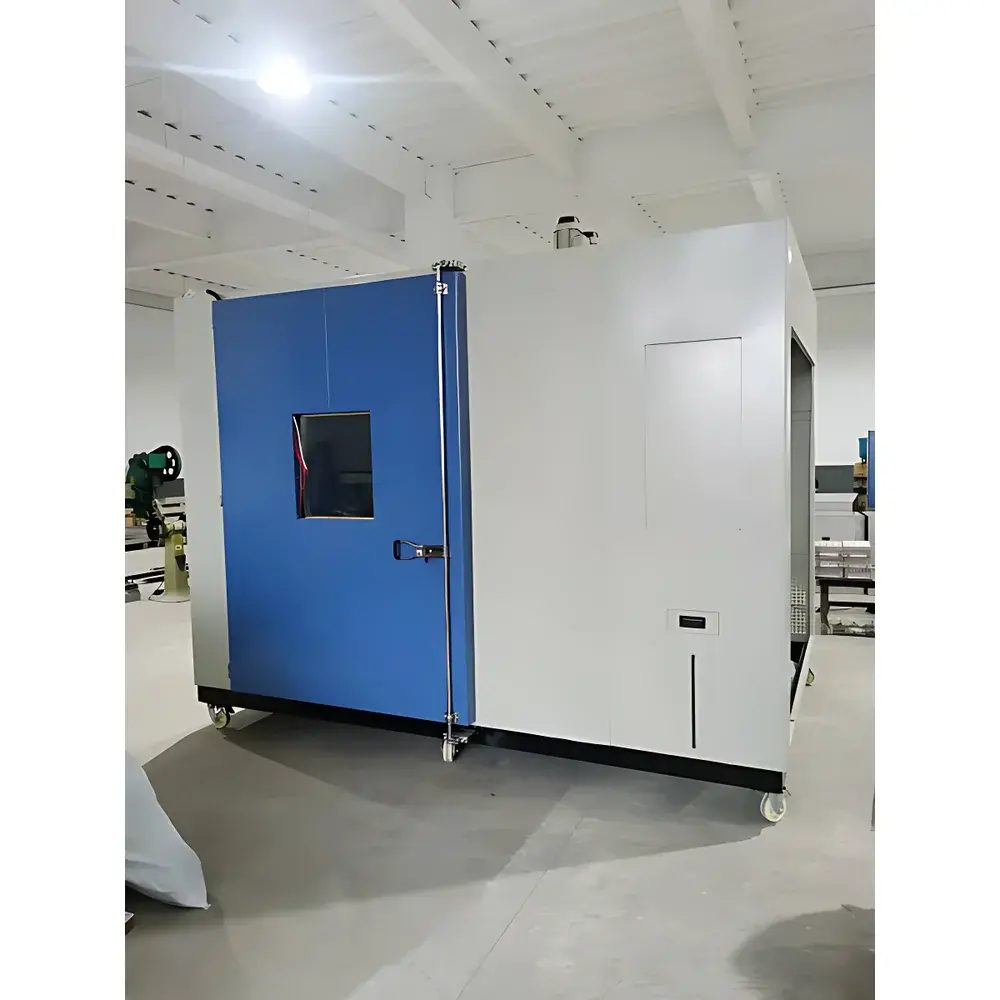
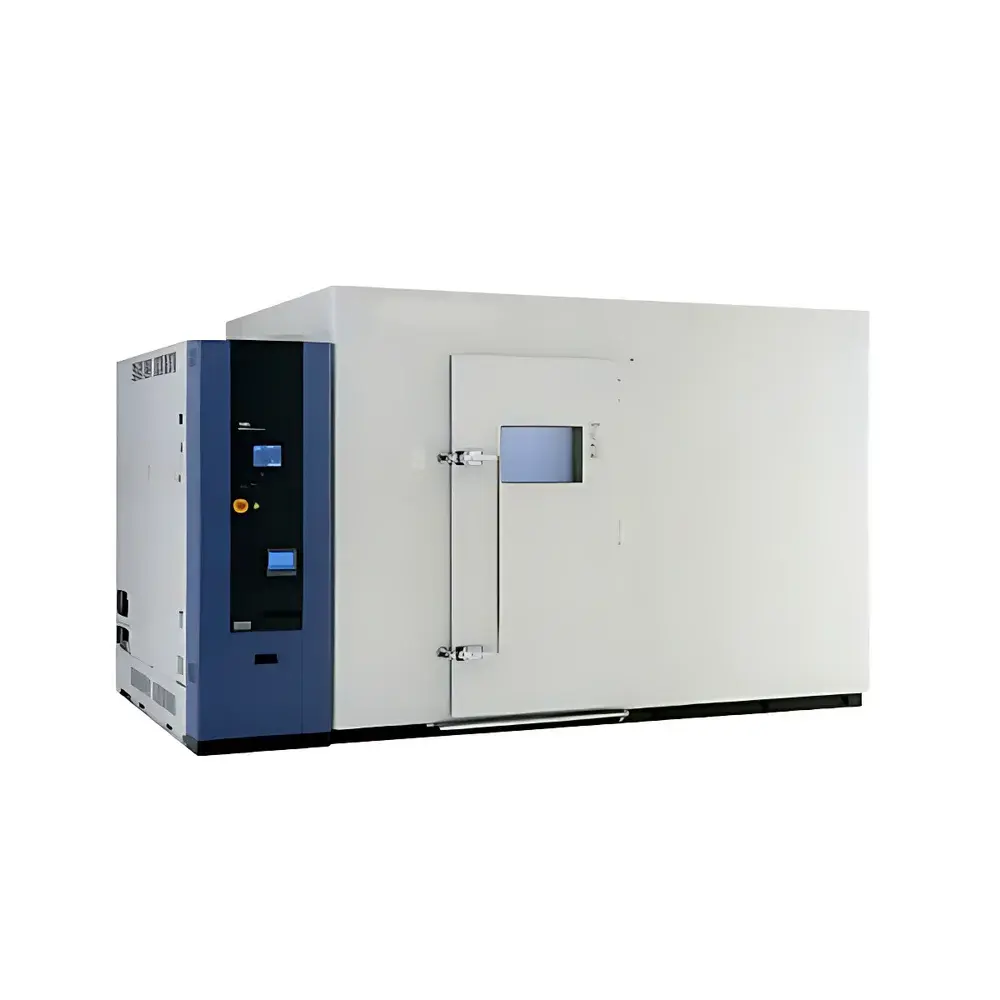
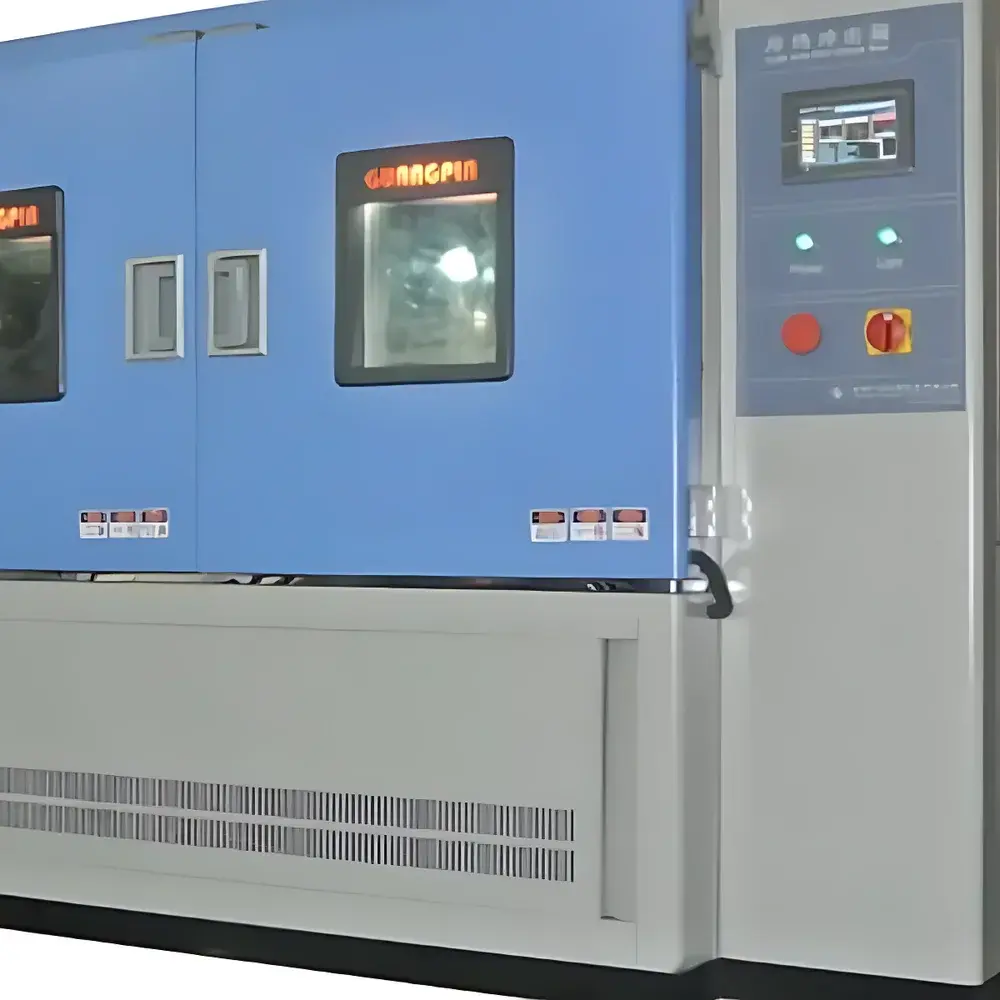
Langbo DHG-1600A Compostability Degradation Tester
| Brand | Langbo Instruments |
|---|---|
| Origin | Jiangsu, China |
| Manufacturer Type | Authorized Distributor |
| Country of Origin | China |
| Model | DHG-1600A |
| Price Range | USD 70,000 – 140,000 |
| Channels | 36 (standard), up to 72 or custom-configurable |
| Temperature Range | Ambient to 80 °C |
| Temperature Accuracy | ±0.5 °C |
| Airflow Control Range | 0.01–10 L/min |
| Airflow Accuracy | ±1.0 % FS |
| CO₂ Detection Range | 0–10,000 ppm |
| CO₂ Detection Accuracy | ±40 ppm (0–3,000 ppm), ±2 % (3,000–10,000 ppm) |
| O₂ Detection Range | 0–25 % |
| O₂ Detection Accuracy | ±1 % FS |
| Pressure Range | 0–200 kPa |
| Pressure Accuracy | ±1 % FS |
| Reaction Vessel Volume | 3.5 L per chamber |
| Total Chambers | 18 |
| Power Supply | 220 V AC, 50 Hz, 3000 W |
| Dimensions | 3600 × 810 × 1930 mm |
| Weight | 1100 kg |
| Compliance | GB/T 19277.1–2011, GB/T 19277.2–2013, GB/T 22047–2008, ISO 14855-1:2012, ISO 14855-2:2018, ISO 17556:2012, ASTM D5338, EN 13432, GB/T 20197–2016 |
Overview
The Langbo DHG-1600A Compostability Degradation Tester is an engineered system for standardized aerobic biodegradation assessment of polymeric and bio-based materials under controlled composting conditions. It operates on the principle of respirometric CO₂ evolution measurement—where test specimens are incubated in mature, active compost under regulated temperature, humidity, airflow, and oxygen availability. As microorganisms metabolize organic carbon, O₂ is consumed and CO₂ is generated; the latter is quantitatively absorbed by alkaline scrubbing solution (typically NaOH or soda lime), and its accumulation is determined gravimetrically or via total inorganic carbon (TIC) analysis. This method aligns with internationally recognized respirometry protocols and provides a direct metric of mineralization—the ultimate indicator of inherent biodegradability in soil or industrial compost environments.
Key Features
- Modular 18-chamber design with independent environmental control per reaction vessel (3.5 L high-borosilicate glass), enabling parallel testing of replicate samples or multi-material comparative studies.
- Precision temperature regulation from ambient to 80 °C with ±0.5 °C stability—optimized for ISO 14855-2’s mandated 58 ±2 °C thermophilic phase.
- Integrated mass-flow controlled aeration system (0.01–10 L/min, ±1.0 % FS accuracy) with real-time O₂ and CO₂ monitoring (0–25 % O₂, 0–10,000 ppm CO₂) and pressure feedback (0–200 kPa).
- Automated humidity management via intelligent water-level sensing and auto-refill, maintaining ≤90 % RH within compost matrix without manual intervention.
- Dual CO₂ quantification pathways: gravimetric absorption (NaOH weight gain) or optional TIC titration—both traceable to ISO 14855 Annex C and ASTM D5338 Section 9.
- PLC-based hardware architecture with Langbo’s TLR0.1 software suite, supporting GLP-compliant data logging, audit trails, and user-access controls per FDA 21 CFR Part 11 requirements.
- Comprehensive safety layering: overtemperature cutoff, ground-fault circuit interruption, pressure-relief venting, and real-time parameter deviation alerts (temperature, flow, time, humidity).
Sample Compatibility & Compliance
The DHG-1600A accommodates solid films, molded parts, fibers, and granules up to 20 g dry mass per chamber, compatible with heterogeneous compost matrices meeting ISO 14855-1 specifications (C/N ratio 25:1, moisture 55±5 %, particle size <2 mm). It fully satisfies regulatory testing mandates for certification under EN 13432 (industrial compostability), OK Compost INDUSTRIAL, and ASTM D6400. All operational parameters—including chamber-specific temperature ramp profiles, airflow sequencing, and CO₂ integration intervals—are programmable to replicate site-specific composting dynamics (e.g., municipal vs. agricultural feedstock behavior). The system supports full documentation alignment with ISO/IEC 17025 accredited laboratories and is routinely deployed in third-party verification labs serving EU Ecolabel, TÜV Austria, and BPI certification bodies.
Software & Data Management
TLR0.1 software provides ISO 17025-aligned instrument control, real-time sensor visualization (CO₂/O₂/pressure/temp/humidity), and automated calculation of % theoretical CO₂ release (ThCO₂) using ASTM D5338 Equation 1. Raw sensor data, calibration logs, user actions, and alarm events are stored with immutable timestamps and digital signatures. Export formats include CSV, PDF test reports (with configurable templates), and XML for LIMS integration. Audit trail functionality records all parameter modifications, user logins, and report generation events—meeting FDA 21 CFR Part 11 electronic record requirements when configured with role-based authentication and electronic signatures.
Applications
- Validation of compostable packaging (food service ware, mulch films, carrier bags) per EN 13432 and GB/T 20197–2016.
- Comparative biodegradation kinetics of PHA, PLA, PBAT, starch blends, and novel lignocellulosic composites.
- Regulatory submission support for FDA Food Contact Notifications (FCNs) and EU Commission Regulation (EC) No 1935/2004 compliance dossiers.
- Research into microbial consortia activity under varying aeration regimes, moisture gradients, or inoculum sources (e.g., green waste vs. sewage sludge compost).
- Development and QA/QC of ASTM D6868-certified coated paperboard and biopolymer laminates.
FAQ
What standards does the DHG-1600A directly support?
It natively implements test protocols defined in ISO 14855-1, ISO 14855-2, ISO 17556, ASTM D5338, EN 13432, GB/T 19277.1–2011, GB/T 19277.2–2013, GB/T 22047–2008, and GB/T 20197–2016.
Can the system operate unattended for extended periods?
Yes—designed for continuous 28-day or longer tests with auto-refill, thermal redundancy, and email/SMS alerting for critical deviations.
Is TIC analysis integrated or optional?
Gravimetric CO₂ capture is standard; TIC module integration is available as a factory-installed option with certified calibration kits.
How is chamber-to-chamber variability minimized?
Each chamber features individual PID-controlled heating jackets, dedicated mass flow controllers, and isolated gas manifolding—validated per ISO 14855-2 Annex A inter-chamber CV ≤3.5 %.
Does the system support GLP or GMP audit readiness?
With TLR0.1 software enabled and configured per user-defined SOPs, it delivers full 21 CFR Part 11 compliance including electronic signatures, audit trails, and data integrity safeguards.



