
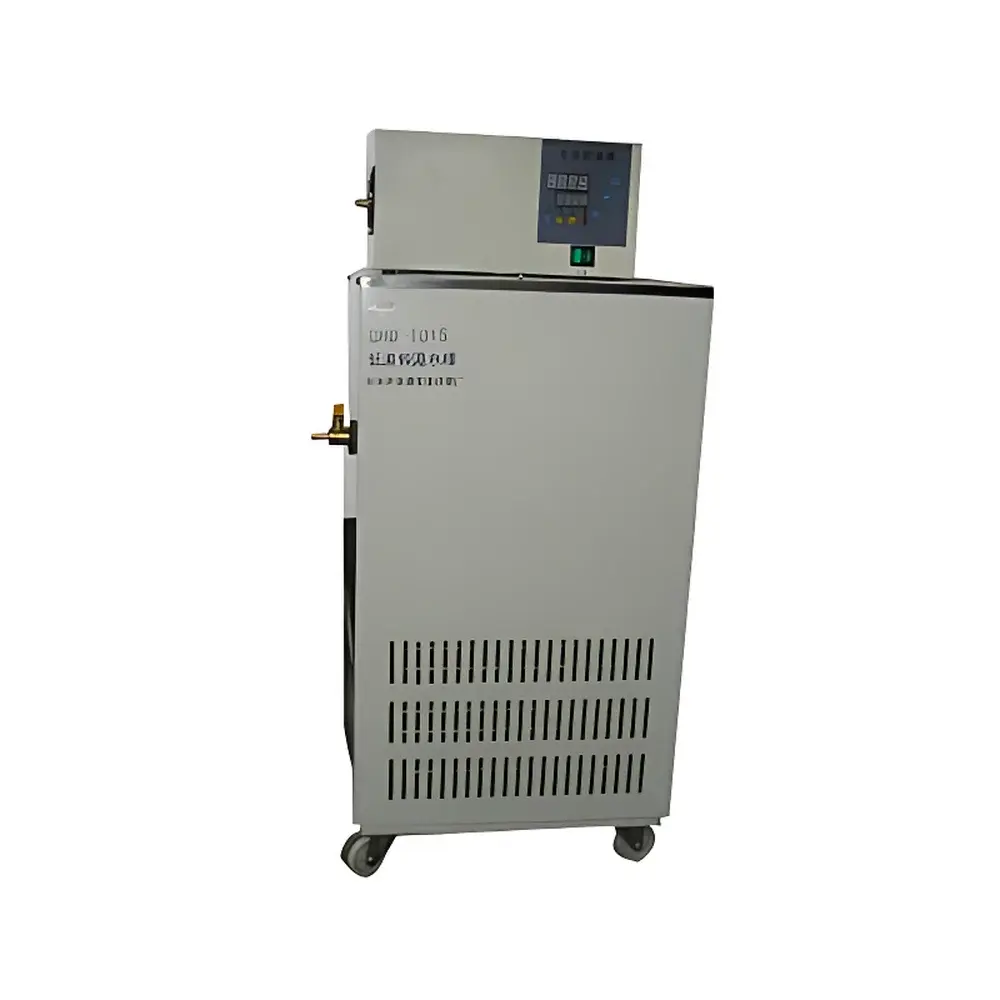
Jinghong DC-0515 / DC-1006 Low-Temperature Constant-Temperature Circulating Bath
| Origin | Jiangsu, China |
|---|---|
| Manufacturer Type | Authorized Distributor |
| Origin Category | Domestic (PRC) |
| Models | DC-0515, DC-1006 |
| Temperature Range | −5 °C to 100 °C (DC-0515) |
| Internal Dimensions (W×D×H) | 250×200×200 mm (DC-0515), 300×250×200 mm (DC-1006) |
| Working Volume | 10 L (DC-0515), 15 L (DC-1006) |
| Temperature Uniformity | ≤ ±0.1 °C |
| Temperature Stability | ≤ ±0.5 °C |
| Circulation Flow Rate | ≥ 8 L/min |
| Construction | Stainless Steel Interior Tank, Powder-Coated Steel Exterior |
| Control System | Microprocessor-Based PID Controller with Digital Display |
| Heating Method | Enclosed Immersion Heater |
| Cooling Method | Integrated Refrigeration System with Internal Coiled Heat Exchanger |
Overview
The Jinghong DC-0515 and DC-1006 Low-Temperature Constant-Temperature Circulating Baths are precision-engineered thermal management systems designed for laboratory applications requiring stable, controllable cooling and heating of external equipment or samples. These units operate on a closed-loop liquid circulation principle, using a refrigerant-based vapor-compression cycle combined with a resistive heating element to achieve bidirectional temperature control across wide operational ranges. Unlike open-bath water baths, the circulating design enables connection to external devices—such as spectrophotometer jackets, rotary evaporator condensers, or reaction calorimeters—via insulated inlet/outlet ports, ensuring consistent thermal transfer without evaporation loss or ambient contamination. The system’s core architecture integrates a high-efficiency hermetic compressor, copper-aluminum finned evaporator, and a stainless steel reservoir with optimized internal flow geometry to minimize thermal lag and maximize response fidelity. Both models comply with IEC 61000-6-3 (EMC emissions) and IEC 61010-1 (safety requirements for laboratory electrical equipment), supporting continuous operation under GLP-aligned environmental monitoring protocols.
Key Features
- Precision microprocessor-based PID temperature controller with real-time digital display (0.1 °C resolution) and programmable ramp/soak profiles
- Stainless steel interior tank (AISI 304) resistant to corrosion from aqueous and mild organic coolants; powder-coated carbon steel exterior for mechanical durability and chemical splash resistance
- Integrated dual-mode thermal regulation: sealed immersion heater (low thermal inertia, minimal energy loss) + direct-expansion refrigeration circuit with R134a refrigerant
- High-flow silent circulation pump (≥ 8 L/min at 0.3 bar head pressure) with adjustable flow valve and non-return check function to prevent backflow during shutdown
- Internal serpentine cooling coil maximizes heat exchange surface area while minimizing footprint—enabling rapid cooldown from ambient to −10 °C in < 25 minutes (DC-1006, no load)
- Over-temperature, low-level, and compressor overpressure protection circuits with audible/visual fault indication and automatic shutdown
Sample Compatibility & Compliance
These circulating baths accommodate standard laboratory coolants including deionized water, 30% ethylene glycol/water mixtures, and silicone oils (viscosity ≤ 50 cSt). They are compatible with externally mounted analytical instruments requiring jacketed temperature control per ASTM E2913 (Standard Practice for Calibration of Liquid-in-Glass Thermometers) and ISO 17025-accredited calibration workflows. The DC-1006 model supports temperature validation using NIST-traceable PT100 probes (optional accessory), enabling documented compliance with FDA 21 CFR Part 11 requirements for electronic records when paired with audit-trail-enabled software. All units are CE-marked and meet RoHS Directive 2011/65/EU material restrictions.
Software & Data Management
While standalone operation is fully functional via front-panel interface, optional RS485 communication (Modbus RTU protocol) allows integration into centralized lab infrastructure. Third-party SCADA or LIMS platforms can log temperature setpoints, actual bath temperature, pump status, and alarm events at user-defined intervals (1–60 s). Data export is supported in CSV format for post-processing in MATLAB, Python (Pandas), or Excel. Firmware updates are performed via USB port using manufacturer-provided utilities; version history and update timestamps are retained in non-volatile memory for audit readiness.
Applications
- Temperature stabilization of UV-Vis and FTIR spectrophotometer sample compartments and detector housings
- Cooling of HPLC column ovens and detector flow cells to improve peak resolution and retention time reproducibility
- Controlled condensation in rotary evaporation systems using chilled coolant loops
- Calibration of thermocouples, RTDs, and infrared thermometers against traceable reference standards
- Long-duration stability testing of polymer solutions, enzyme kinetics assays, and pharmaceutical formulations under isothermal conditions
- Pre-conditioning of materials prior to tensile, impact, or rheological characterization per ASTM D638 or ISO 527
FAQ
What coolant fluids are recommended for sub-zero operation?
Deionized water with 30% v/v ethylene glycol is validated down to −15 °C; for −20 °C and below, use certified low-viscosity silicone oil (e.g., Dow Corning 200 Fluid, 5 cSt). Avoid methanol or acetone due to material compatibility risks.
Can the bath be used for external circulation only—without internal immersion?
Yes. The unit supports “external loop-only” mode via manual valve configuration; internal tank temperature is monitored but not actively controlled unless the immersion sensor is enabled.
Is remote monitoring possible without third-party software?
Basic status (setpoint, actual temp, pump on/off) can be read via Modbus registers using generic terminal emulators; full logging requires host-side scripting or commercial SCADA tools.
What maintenance intervals are specified for compressor longevity?
Compressor oil level and refrigerant charge require verification every 24 months by authorized service personnel; annual cleaning of condenser coils with compressed air is mandatory for rated cooling capacity retention.
Does the system support password-protected parameter locking for regulated environments?
Yes. User-access levels (Operator, Technician, Administrator) with configurable password protection are available in firmware v2.3+; parameter change logs include timestamp, user ID, and pre/post values.



