
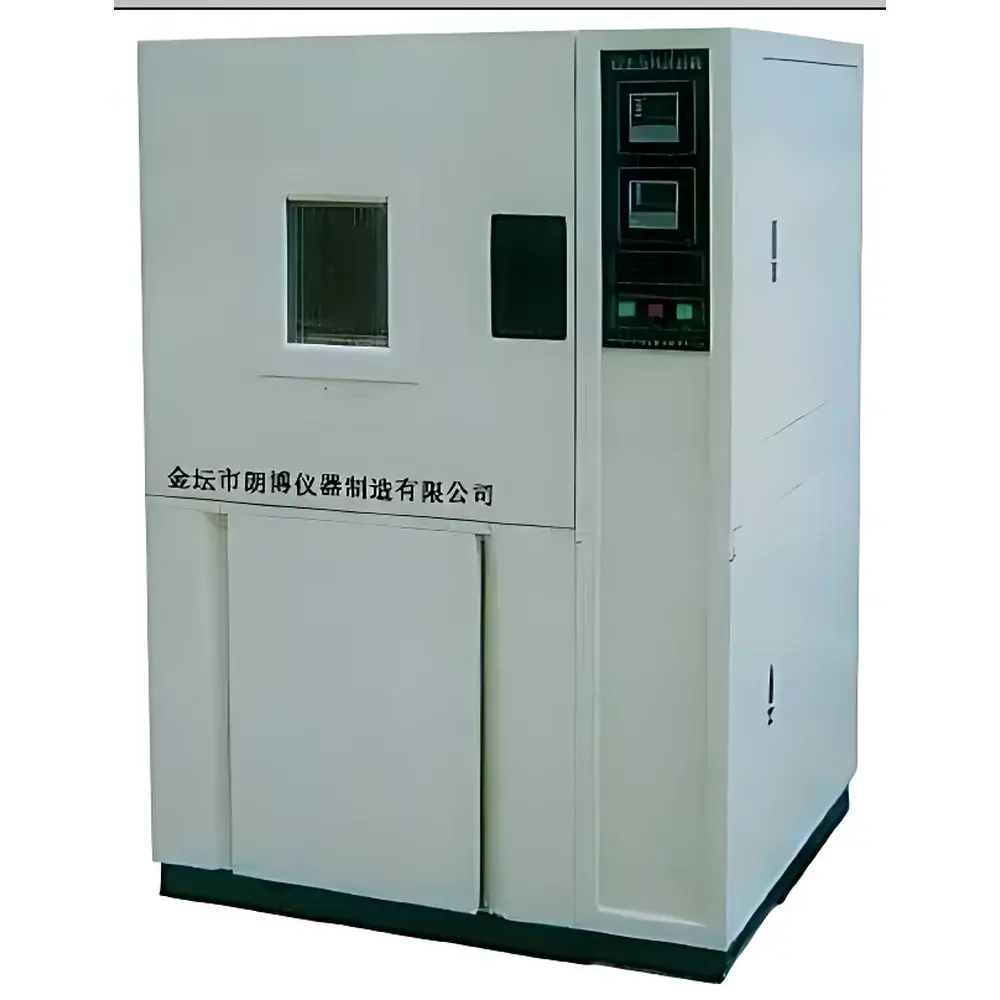
Langbo MS-015 & MS-025 Mold Growth Environmental Test Chambers
| Brand | Langbo |
|---|---|
| Origin | Jiangsu, China |
| Model | MS-015 / MS-025 |
| Temperature Range | 20–80 °C |
| Humidity Range | 45–98 %RH |
| Humidity Deviation | ≤ +2 to –3 %RH |
| Temperature Uniformity | ≤ ±2 °C |
| Temperature Fluctuation | ≤ ±0.5 °C |
| Controller | Fuji Electric Programmable Temperature & Humidity Controller |
| Interior Material | Stainless Steel (AISI 304) |
| Exterior Material | Powder-Coated Carbon Steel |
| Humidification Method | Surface Evaporation |
| Refrigeration System | Imported Compressor-Based Cooling |
| Safety Protections | Over-Temperature, Over-Pressure, and Low-Water-Level Interlocks |
| Compliance | GB/T 2423.16–1999 (IEC 60068-2-10), GJB 150.10A–2009 |
Overview
The Langbo MS-015 and MS-025 Mold Growth Environmental Test Chambers are precision-engineered environmental simulation systems designed specifically for standardized fungal proliferation testing of electrical, electronic, and material specimens under controlled temperature and humidity conditions. These chambers operate on the principle of sustained high-humidity thermal conditioning—maintaining stable, reproducible microclimates that promote hyphal germination and mycelial colonization in accordance with internationally recognized test protocols. Unlike general-purpose climate chambers, the MS series incorporates structural and control features optimized for long-duration mold exposure cycles (typically 21–28 days), where biological viability, condensation management, and contamination containment are critical performance criteria. The system is engineered for laboratory-based conformance testing per GB/T 2423.16–1999 (equivalent to IEC 60068-2-10:2010) and military-grade evaluation per GJB 150.10A–2009, supporting both qualification and reliability assessment workflows in QC/QA laboratories, R&D centers, and third-party certification facilities.
Key Features
- Corrosion-resistant interior chamber constructed from AISI 304 stainless steel, ensuring long-term resistance to microbial metabolites and humid degradation.
- Exterior housing fabricated from cold-rolled carbon steel with electrostatic powder coating for mechanical durability and chemical resistance.
- Fuji Electric programmable temperature and humidity controller with PID regulation, enabling precise setpoint tracking and ramp/soak profile programming for multi-stage test sequences.
- Surface-evaporation humidification system with auto-refill capability, minimizing mineral deposit accumulation and reducing maintenance frequency compared to ultrasonic or steam-based alternatives.
- Imported hermetic refrigeration unit with optimized heat exchange design, delivering stable cooling performance across the full operational range without compressor cycling-induced fluctuations.
- Anti-condensation double-glazed observation window with internal heating trace, maintaining optical clarity during high-RH operation and eliminating moisture fogging at the viewing surface.
- Multi-layer safety architecture including independent over-temperature cut-off (mechanical backup), high-pressure refrigerant monitoring, and real-time water-level sensing with audible/visual alarm and automatic shutdown.
Sample Compatibility & Compliance
The MS-015 (150 L working volume) and MS-025 (250 L working volume) accommodate standard test specimens up to 400 mm × 400 mm × 200 mm (W × D × H), with adjustable stainless-steel shelf configurations supporting simultaneous evaluation of multiple sample types—including printed circuit boards, polymer enclosures, insulating materials, and coated metallic substrates. All chambers are validated for compliance with GB/T 2423.16–1999 (Mold Growth Test Method), which specifies inoculation procedures, spore suspension preparation (e.g., Aspergillus niger, Penicillium citrinum, Candida albicans), and pass/fail criteria based on visual and microscopic assessment after exposure. The system also meets the environmental conditioning requirements of GJB 150.10A–2009 (Mold Resistance Testing for Military Equipment), including mandatory preconditioning, stabilization, and post-test inspection phases. While not certified to ISO/IEC 17025 for accredited testing, the chamber’s documented temperature/humidity uniformity and stability metrics support GLP-aligned validation protocols.
Software & Data Management
The Fuji controller provides local data logging with timestamped records of chamber temperature, relative humidity, and alarm events stored internally for up to 30 days. Optional RS-485 or Ethernet interfaces enable integration with LabVIEW, MATLAB, or custom SCADA platforms for remote monitoring and automated report generation. Raw data export is supported via USB flash drive in CSV format, facilitating traceability in regulated environments. Though the base configuration does not include FDA 21 CFR Part 11-compliant electronic signatures or audit trail functionality, the system architecture permits third-party software upgrades to meet GMP/GLP documentation requirements when deployed in pharmaceutical or medical device quality labs.
Applications
- Evaluation of mold resistance in consumer electronics housings, automotive interior components, and aerospace composite laminates.
- Material qualification for outdoor-rated enclosures exposed to tropical or subtropical climatic zones.
- Verification of antimicrobial coating efficacy under accelerated biotic stress conditions.
- Supporting failure analysis of field-return units exhibiting biodeterioration symptoms.
- Academic and industrial research into fungal adhesion kinetics, biofilm formation thresholds, and substrate-dependent growth inhibition.
FAQ
What mold species are recommended for use with this chamber?
Standardized testing typically employs a mixed spore suspension containing Aspergillus niger, Penicillium citrinum, Candida albicans, and Chaetomium globosum, as specified in GB/T 2423.16–1999.
Is calibration certificate included with shipment?
A factory calibration report verifying temperature and humidity sensor accuracy at three points (25 °C/50 %RH, 40 °C/95 %RH, 60 °C/85 %RH) is provided; NIST-traceable third-party calibration is available upon request.
Can the chamber operate continuously for 28-day tests?
Yes—the refrigeration system, humidification reservoir, and controller firmware are rated for uninterrupted operation exceeding 720 hours with routine maintenance intervals aligned to manufacturer-recommended service schedules.
Does the system support dynamic humidity cycling?
The Fuji controller supports step-and-hold profiles but does not natively execute sinusoidal or complex cyclic RH modulation; such functionality requires external PLC integration.
What maintenance is required for long-term reliability?
Monthly cleaning of the humidifier basin and drain line, quarterly verification of door gasket integrity, and annual refrigerant pressure and insulation resistance checks are advised per the operator manual.



