
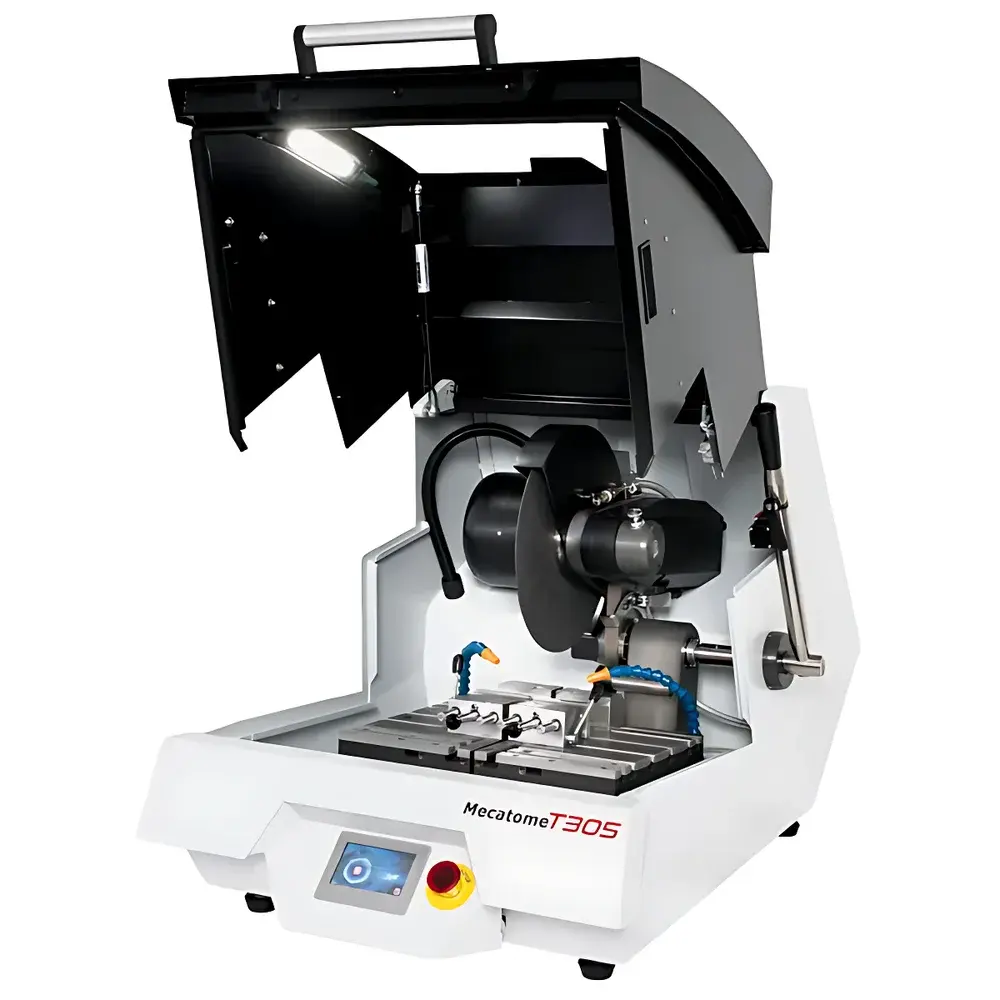
PRESI MECATOME T305 Manual Abrasive Cutting Machine
| Brand | PRESI |
|---|---|
| Origin | France |
| Model | MECATOME T305 |
| Motor Power | 4000 W (S3 duty cycle) |
| Voltage/Frequency | 380 V / 3-phase / 50–60 Hz |
| Cutting Axis | Z-axis manual straight cut + Y-axis oscillating cut |
| Spindle Speed | Adjustable via inverter |
| Sample Holding | Universal fixture compatibility |
| Worktable | Anodized aluminum base with removable stainless-steel top plate |
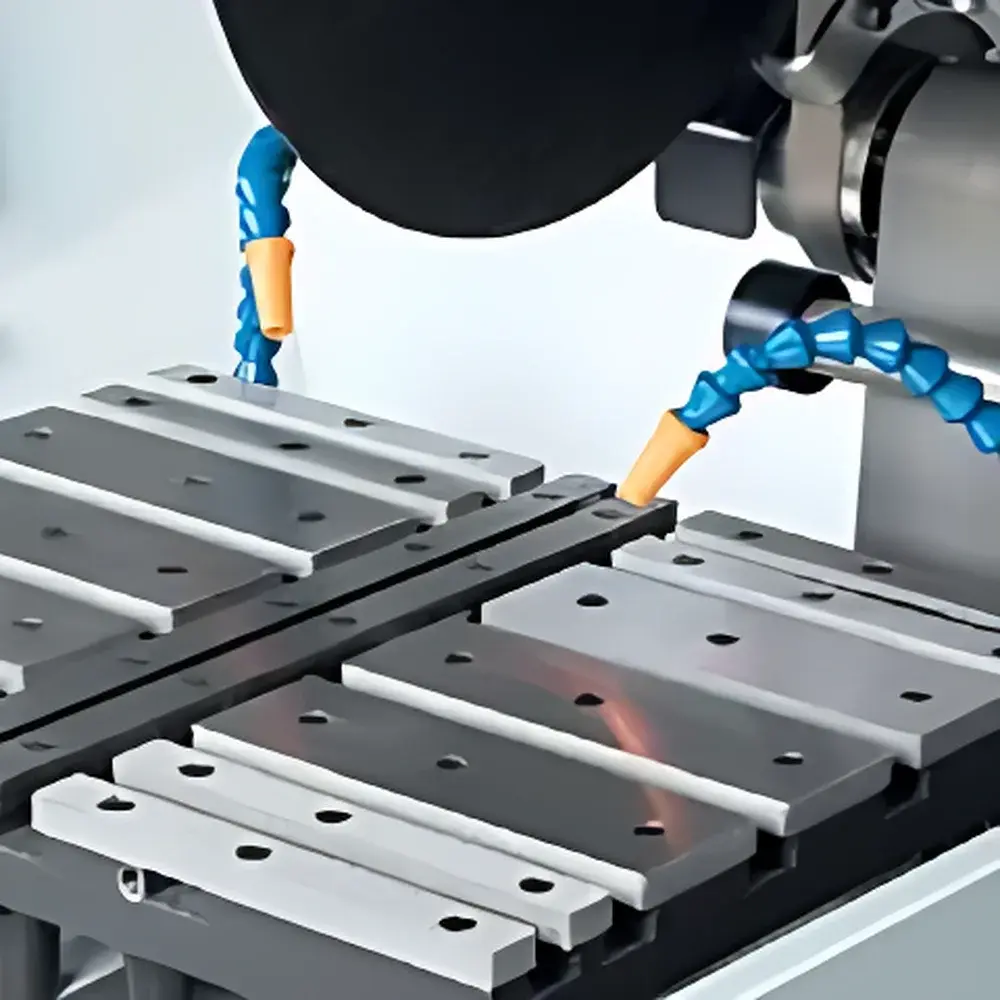
| Cooling | High-flow adjustable nozzle |
| Illumination | Integrated industrial-grade LED lighting |
| Viewing Window | Large shatter-resistant safety viewport |
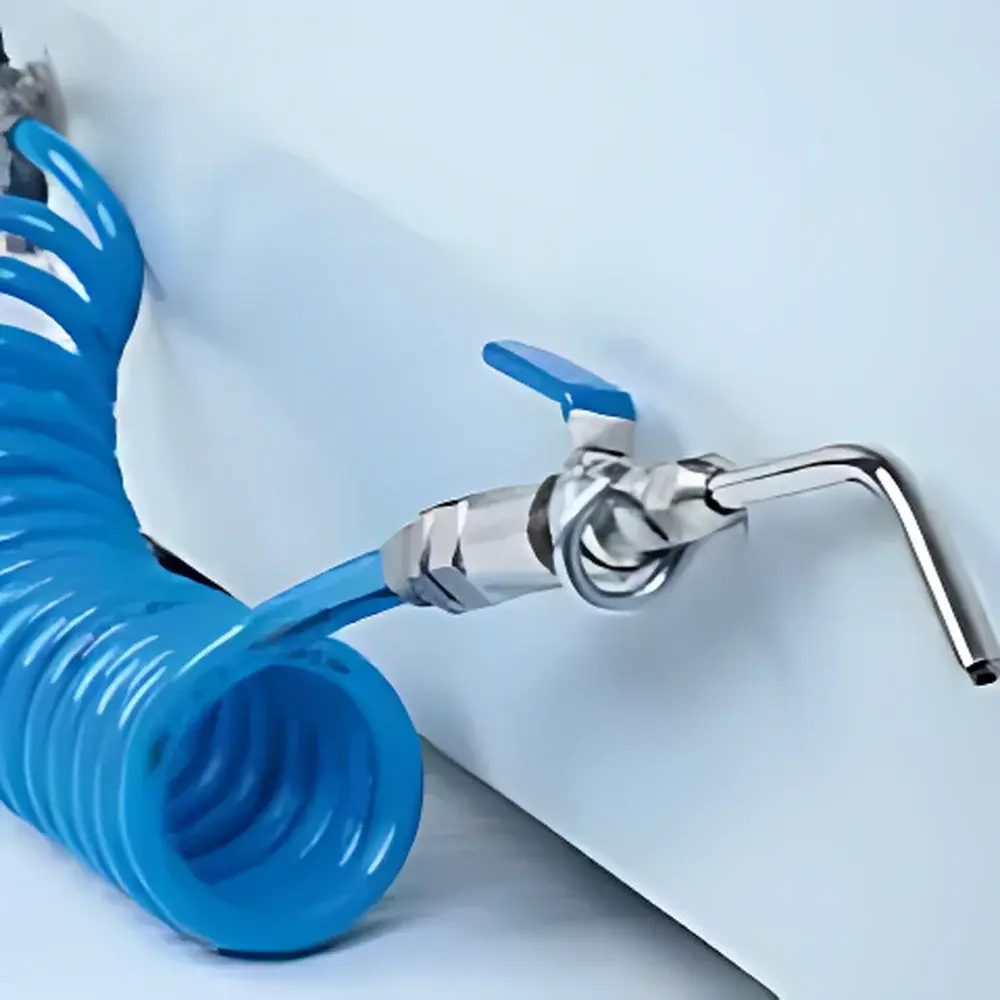
| Exhaust Interface | Dedicated port for fume extraction system |
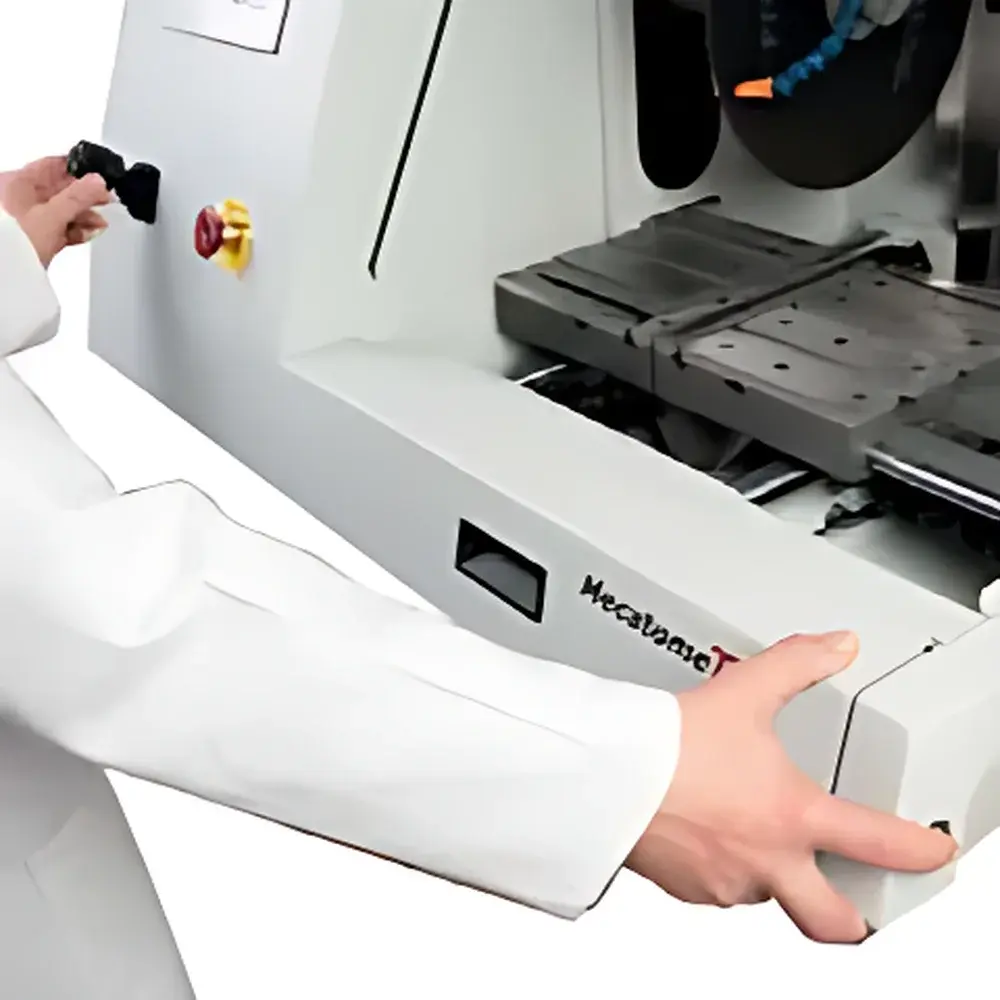
| Safety Features | Emergency stop button, interlocked safety door switch, electromagnetic motor brake, reinforced polycarbonate guard housing |
| Compliance | CE-marked |
Overview
The PRESI MECATOME T305 is a heavy-duty manual abrasive cutting machine engineered for precision sample sectioning in metallurgical, geological, ceramic, and advanced materials laboratories. Based on the principle of controlled mechanical abrasion using rotating bonded wheels—typically diamond, cubic boron nitride (CBN), or silicon carbide—the MECATOME T305 delivers reproducible cuts with minimized heat-affected and deformation zones, critical for subsequent metallographic analysis, microstructural evaluation, or failure investigation. Its robust cast-iron frame and rigid kinematic architecture ensure dimensional stability during high-load cutting operations, while the dual-motion capability (Z-axis linear feed and Y-axis oscillating motion) enables optimized chip removal and reduced localized thermal buildup—particularly advantageous for hard, brittle, or heterogeneous specimens such as tool steels, tungsten carbides, composites, and sintered ceramics.
Key Features
- 4000 W inverter-driven motor (S3 intermittent duty rating) delivering consistent torque across variable load conditions, with real-time speed compensation to maintain optimal peripheral velocity as wheel diameter decreases due to wear;
- Manually operated Z-axis feed mechanism with fine-pitch lead screw and calibrated depth scale, enabling precise control over cut depth and feed rate;
- Oscillating Y-axis motion (±15° swing range) to distribute cutting forces evenly across the wheel face and reduce groove formation in large-section samples;
- Modular worktable assembly: anodized aluminum base structure with a replaceable 304 stainless-steel top plate—designed for corrosion resistance, flatness retention, and long-term dimensional integrity;
- High-volume coolant delivery system featuring an articulated, height-adjustable nozzle capable of directing flow directly at the cut interface, ensuring effective heat dissipation and debris flushing;
- Integrated LED illumination and oversized laminated polycarbonate viewport (EN 166-compliant) provide unobstructed visual monitoring without compromising operator protection;
- Removable side shields allow extended specimen handling—supporting workpieces up to 350 mm in length beyond the standard table boundaries;
- Dedicated exhaust coupling (Ø100 mm) compatible with centralized laboratory fume hoods or independent ducted extraction units, meeting occupational hygiene requirements per EN 689 and OSHA 1910.1200;
- Comprehensive safety architecture including a spring-loaded emergency stop, door-interrupt switch, dynamic electromagnetic braking (<500 ms response), and full enclosure with impact-rated guarding.
Sample Compatibility & Compliance
The MECATOME T305 accommodates specimens ranging from small 5 mm diameter pins to oversized components up to 305 mm in diameter and 120 mm in height. It supports a broad spectrum of abrasive wheel chemistries—including resin-bonded diamond, vitrified CBN, and aluminum oxide—enabling method-specific optimization for ferrous alloys, non-ferrous metals, refractory compounds, geological cores, and polymer-matrix composites. All operational parameters adhere to ISO 14971 (risk management), EN 61000-6-2/6-4 (EMC immunity/emission), and are validated under EU Machinery Directive 2006/42/EC. The system is routinely deployed in GLP-compliant environments where traceability of cutting protocols (e.g., speed, feed, coolant flow) is maintained through documented SOPs—not integrated digital logging.
Software & Data Management
As a manually operated instrument, the MECATOME T305 does not incorporate embedded firmware or network connectivity. Control is executed exclusively via tactile metal pushbuttons and a monochrome LCD display showing real-time spindle RPM and elapsed runtime. No data export, audit trail, or electronic record functionality is provided—consistent with its classification as a Class I mechanical sample preparation tool under FDA 21 CFR Part 11 and EU Annex 11 regulatory frameworks. Users retain full procedural control, with all operational settings recorded manually in laboratory notebooks or LIMS-integrated log sheets.
Applications
- Metallographic specimen preparation for optical microscopy (OM) and scanning electron microscopy (SEM);
- Sectioning of weld joints, heat-affected zones (HAZ), and coated substrates for cross-sectional analysis;
- Dimensional reduction of additively manufactured parts prior to porosity or grain structure assessment;
- Preparation of geological thin sections and mineralogical blocks for petrographic study;
- Trimming of ceramic matrix composites (CMCs) and ultra-high-temperature ceramics (UHTCs) without microcracking;
- Routine quality control sampling in foundry, aerospace, and nuclear component manufacturing facilities.
FAQ
Is the MECATOME T305 suitable for automated or programmable cutting sequences?
No. It is a manually controlled system requiring operator intervention for feed initiation, motion coordination, and process termination.
What abrasive wheel sizes are supported?
Standard mounting accepts 305 mm (12″) diameter wheels with 31.75 mm (1¼″) arbor hole; optional adapters available for 250 mm and 200 mm wheels.
Does the unit include coolant reservoir and pump?
No. Coolant delivery is gravity-fed or requires external pressurized supply; reservoir and pump must be sourced separately.
Can the machine be installed in a cleanroom environment?
Yes—provided ambient particulate and humidity levels comply with ISO 14644-1 Class 8, and exhaust ducting is appropriately sealed and routed.
What maintenance intervals are recommended?
Lubrication of feed screws and pivot points every 200 operating hours; inspection of belt tension and electrical connections quarterly; replacement of worn coolant nozzles and viewport seals as needed per visual assessment.



