
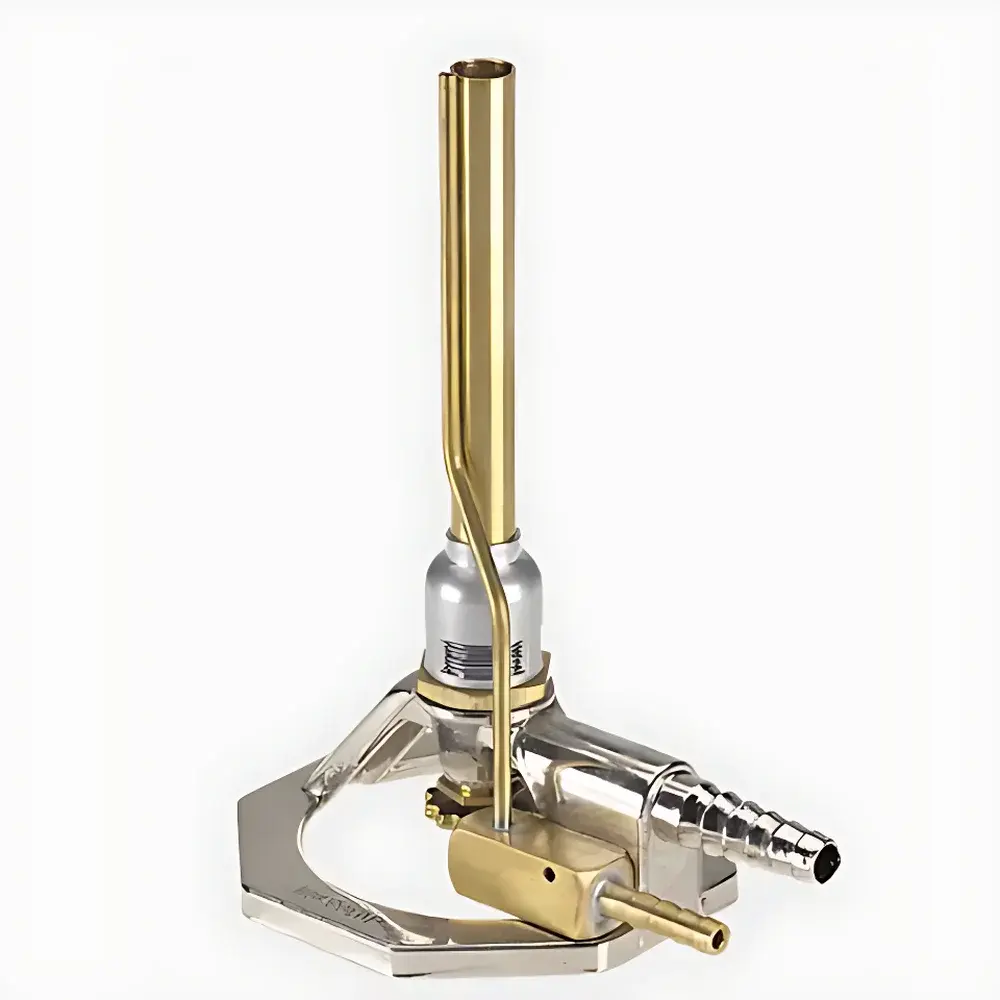
Humboldt H-6240C Tirril-Style High-Temperature Combustion Burner
| Brand | NYX (NTX) |
|---|---|
| Origin | USA |
| Manufacturer | NYX Instruments |
| Product Type | Imported Laboratory Combustion Burner |
| Model | H-6240C |
| Application | Flame Resistance Testing of Protective & Textile Materials |
| Repeatability Error | ±0.1 s |
| Compliance | ASTM D6413, ISO 15025, NFPA 2112, GB/T 5455 |
| Intended Use | Standardized Vertical Flame Propagation Testing |
Overview
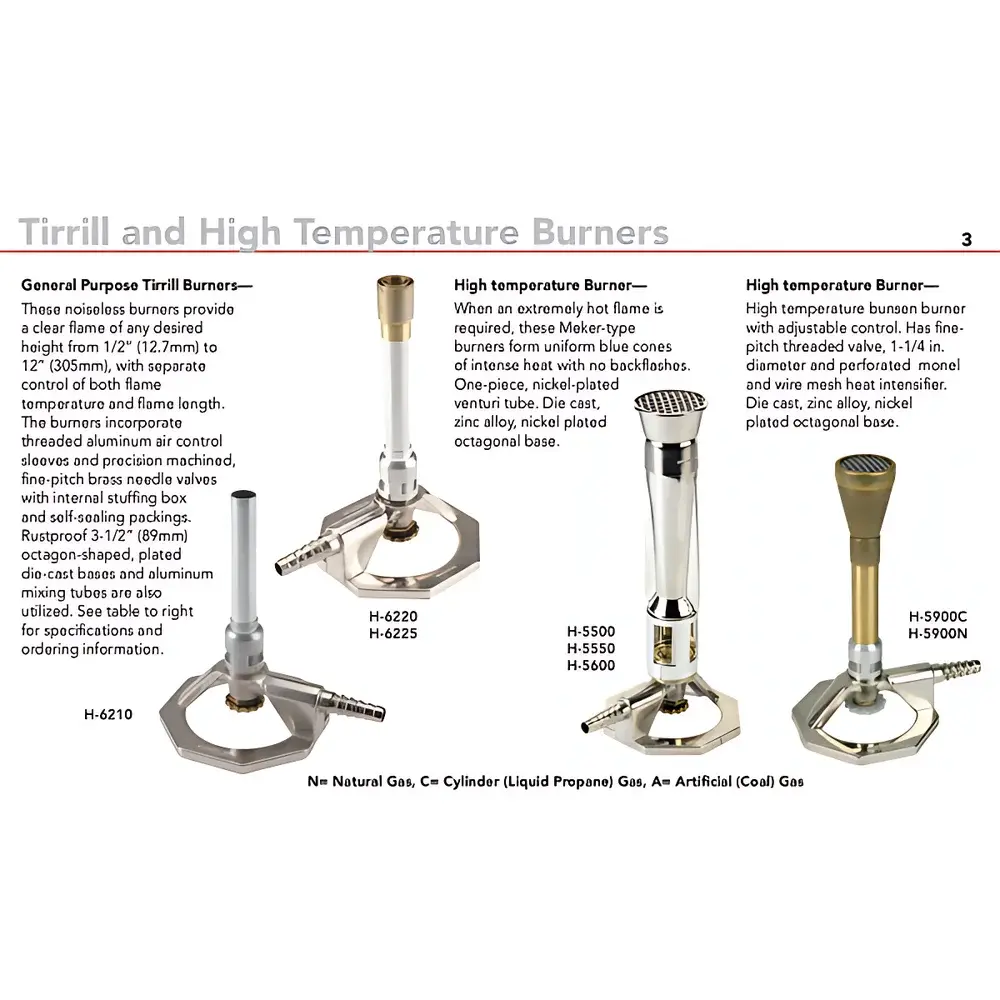
The Humboldt H-6240C Tirril-style high-temperature combustion burner is a precision-engineered laboratory-grade flame source designed for standardized vertical flame propagation testing of protective textiles, flame-retardant fabrics, and personal protective equipment (PPE). Based on the classical Tirril burner geometry—distinct from conventional Bunsen burners—the H-6240C delivers a stable, reproducible, laminar blue flame with defined thermal profile and consistent ignition energy output. Its core function is to generate a calibrated 45° inclined flame (per ASTM D6413 and ISO 15025) at a nominal tip temperature of approximately 950 °C, enabling precise evaluation of afterflame time, afterglow time, char length, and flame spread behavior under controlled thermal insult. The burner operates on regulated propane or butane gas supply, with integrated dual-control valves for independent adjustment of fuel flow and primary air entrainment—ensuring stoichiometric combustion and minimizing soot formation. Unlike generic laboratory burners, the H-6240C conforms to strict dimensional tolerances (including nozzle inner diameter, mixing tube length, and flame exit geometry) required by international fire safety test standards.
Key Features
- Calibrated Tirril burner geometry compliant with ASTM D6413, ISO 15025, and NFPA 2112 specifications for flame resistance testing
- Stainless steel construction with high-temperature resistant brass nozzle and precision-machined mixing chamber
- Dual independent control valves: one for fuel gas flow (propane/butane), one for primary air intake—enabling fine-tuned flame color, stability, and thermal output
- Integrated flame stabilization collar and draft shield compatibility for ambient airflow mitigation during testing
- Repeatability error ≤ ±0.1 seconds in ignition timing and flame height consistency across consecutive test cycles
- Gas inlet fitting compatible with standard CGA 510 or BS 341 No. 3 regulators; includes leak-tested stainless steel hose interface
- CE-marked electrical safety compliance for optional integrated flame monitoring accessories (e.g., thermocouple port, photodiode trigger)
Sample Compatibility & Compliance
The H-6240C is validated for use with flat textile specimens (woven, knitted, nonwovens), coated fabrics, laminates, and PPE components per ASTM D6413 (Standard Test Method for Flame Resistance of Textiles – Vertical Test), ISO 15025 (Protective Clothing – Protection Against Heat and Flame – Method of Test for Limited Flame Spread), and EN ISO 11612 (Heat and Flame Protection). It supports specimen mounting in vertical orientation using standardized clamping frames (e.g., ASTM-compliant 300 × 80 mm holder). All operational parameters—including flame height (40 mm ± 2 mm above burner tip), angle of inclination (45° ± 2°), and exposure duration (12 s ± 0.2 s)—are traceable to NIST-traceable calibration protocols. The unit meets GLP documentation requirements when used within validated test systems and supports audit-ready operation logs when paired with compliant data acquisition software.
Software & Data Management
While the H-6240C is a manually operated burner, it is fully interoperable with digital test management platforms such as Humboldt’s FireTest Suite™ and third-party GLP-compliant systems (e.g., LabWare LIMS, Thermo Fisher SampleManager). Optional accessories include a Type K thermocouple port for real-time flame temperature verification and an optical flame sensor module for automated ignition detection and exposure timing synchronization. All recorded test parameters—including gas pressure (kPa), air-to-fuel ratio (v/v), exposure duration, and post-test measurements—are timestamped and stored with full 21 CFR Part 11–compliant electronic signatures, audit trails, and user access controls when integrated into validated workflows.
Applications
- Vertical flame testing of firefighter turnout gear, military uniforms, and industrial workwear per NFPA 1971 and EN 469
- Flame resistance certification of medical scrubs, surgical drapes, and hospital linens per ISO 14116
- R&D validation of intumescent coatings, flame-retardant additives, and polymer composites
- Quality assurance in textile mills producing FR-treated cotton, modacrylic, aramid, and polybenzimidazole (PBI) fabrics
- Regulatory submission testing for UL 2112, CSA Z96, and GB 8965 (Chinese national standard for flame-resistant clothing)
- Comparative flammability benchmarking across material lots and supplier batches under ISO/IEC 17025-accredited laboratories
FAQ
What gases are compatible with the H-6240C burner?
Propane (LPG) and butane are the only approved fuels. Natural gas (methane) is not recommended due to lower flame temperature and altered stoichiometry that compromises test repeatability.
Is the H-6240C certified for use in ISO/IEC 17025-accredited laboratories?
Yes—when installed, calibrated, and operated per the manufacturer’s SOP (NYX-SOP-H6240C-Rev.3) and maintained with annual traceable calibration against NIST SRM 1991b, it satisfies ISO/IEC 17025 clause 6.4.10 for measurement equipment fitness-for-purpose.
Can the burner be used inside a fume hood without affecting test validity?
Yes, provided the hood face velocity is maintained between 0.4–0.5 m/s and the burner is positioned ≥300 mm from the sash to prevent turbulence-induced flame deflection—verified per ASTM E1228 Annex A1.
Does the H-6240C require annual recalibration?
Yes. Calibration must verify flame height (40 mm ± 2 mm), inclination angle (45° ± 2°), and exposure duration repeatability (±0.1 s) using certified gauges and digital timers traceable to national metrology institutes.
How is operator safety ensured during extended testing sessions?
The burner incorporates fail-safe gas shutoff linkage, integrated flashback arrestors, and thermal shielding around the base housing—meeting OSHA 1910.106 and NFPA 56 requirements for laboratory combustion equipment.



