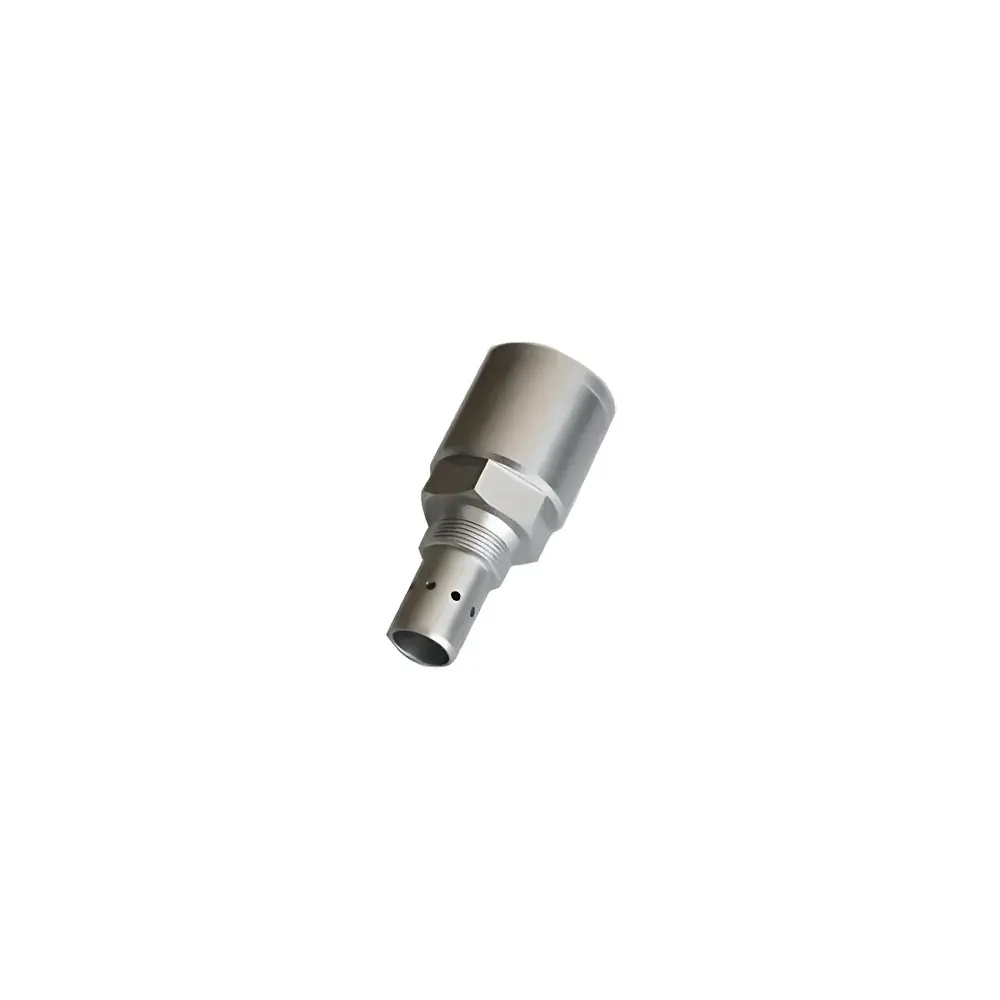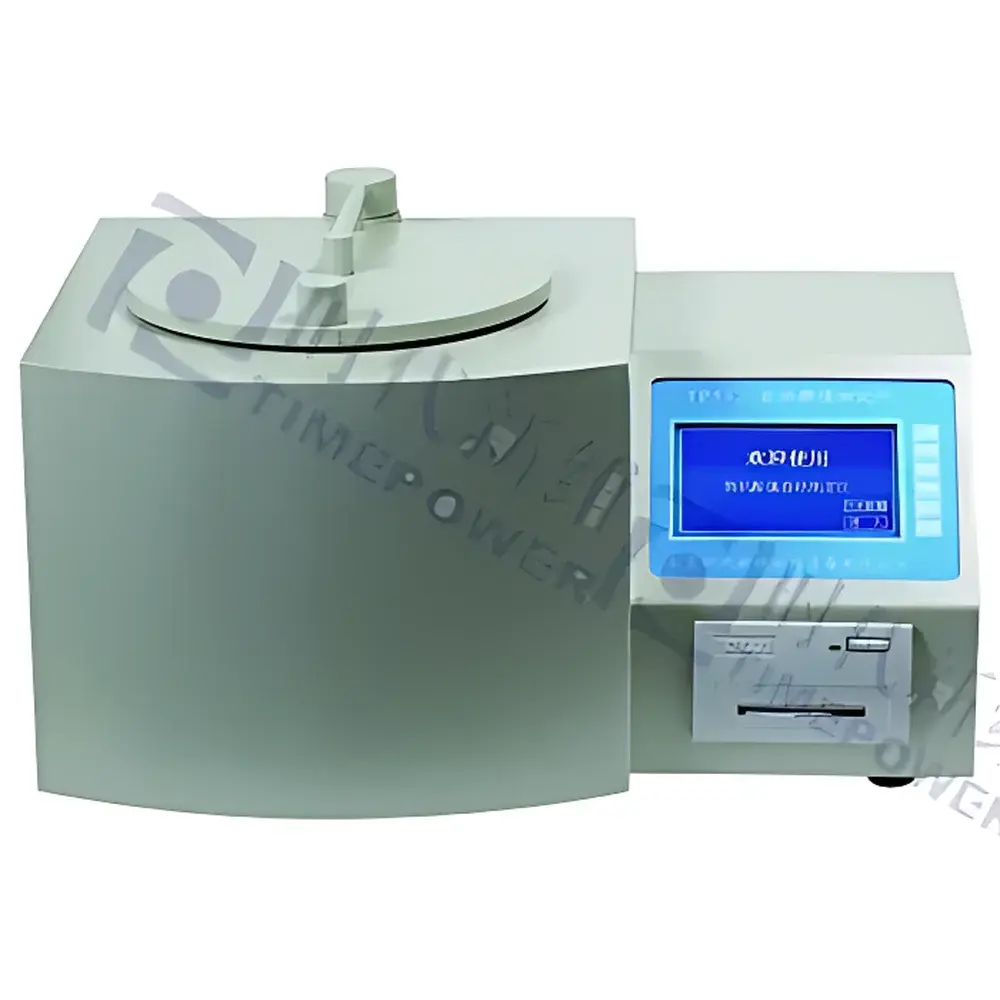
TimePower TP532 Automatic Acid Number Analyzer
| Brand | TimePower |
|---|---|
| Model | TP532 |
| Origin | Beijing, China |
| Manufacturer Type | Direct Manufacturer |
| Regional Classification | Domestic (China) |
| Measurement Principle | Potentiometric Titration with Endpoint Detection |
| Measurement Range | 0.0001–0.9999 mg KOH/g |
| Accuracy | ±0.01 mg KOH/g (for acid number 0.001–0.100 mg KOH/g) |
| Repeatability | 0.02 mg KOH/g |
| Resolution | 0.0001 mg KOH/g |
| Sample Capacity | 6 positions |
| Display | 480×272 pixel LCD |
| Power Supply | AC 220 V ±10%, 50 Hz ±10% |
| Operating Temperature | 5–40 °C |
| Relative Humidity | ≤85% RH |
| Dimensions (W×D×H) | 480 × 340 × 200 mm |
| Thermal Printer | Integrated |
| Power Consumption | 60 W |
| Weight | 12.5 kg |
Overview
The TimePower TP532 Automatic Acid Number Analyzer is a fully automated potentiometric titration system engineered for precise and reproducible determination of acid number (AN) in petroleum-based insulating oils—primarily transformer oil and turbine oil—according to internationally referenced standard test methods, including ASTM D974, ASTM D664, GB/T 264, and GB/T 7599. Acid number quantifies the milligrams of potassium hydroxide (KOH) required to neutralize acidic constituents per gram of sample, serving as a critical indicator of oxidative degradation, contamination, and service life expectancy in high-voltage electrical insulation systems. The TP532 implements a closed-loop titration architecture with real-time pH potential monitoring via a calibrated glass electrode pair, enabling robust endpoint detection without reliance on subjective colorimetric interpretation. Its dual-CPU control architecture ensures deterministic timing for sequential operations—including solvent extraction, sample transfer, titrant delivery, endpoint validation, and result calculation—minimizing operator intervention while maintaining full traceability per GLP and ISO/IEC 17025 requirements.
Key Features
- Dual-CPU microprocessor control for synchronized coordination of mechanical, electrochemical, and thermal subsystems
- Potentiometric endpoint detection using a high-stability, low-drift glass reference electrode and sensing electrode assembly
- Integrated six-position carousel accommodating standard 100-mL titration cups with automatic indexing and positional calibration
- Automated solvent extraction (using xylene or toluene per ASTM D664), sample homogenization, and titrant delivery via precision peristaltic pump
- Thermal line printer with non-volatile memory buffer for immediate hardcopy output of results, method ID, date/time stamp, and operator ID
- 480×272-pixel backlit LCD interface with icon-driven navigation and tactile feedback keypads—no printed labels, optimized for glove-compatible operation in laboratory and substation environments
- Low-power optical detection module (imported laser diode source) supporting long-term stability of photometric auxiliary functions where applicable
Sample Compatibility & Compliance
The TP532 is validated for use with mineral-based transformer oils (e.g., naphthenic and paraffinic types), turbine oils, hydraulic fluids, and other non-aqueous petroleum distillates exhibiting kinematic viscosity below 100 cSt at 40 °C. It excludes samples containing suspended solids, emulsified water (>100 ppm), or strong oxidizers that may interfere with electrode response or titrant stability. Method compliance includes full alignment with GB/T 264–2019 (Petroleum Products—Determination of Acid Number by Titration), GB/T 7599–2019 (Mineral Insulating Oil—Determination of Acid Number), and technical equivalency to ASTM D974 (Color-Indicator Method) and ASTM D664 (Potentiometric Method). All firmware and calibration routines support audit-ready data integrity: timestamps are hardware-generated, results are immutable post-analysis, and system logs record all user actions, method changes, and calibration events—enabling compliance with FDA 21 CFR Part 11 (electronic records/signatures) when deployed in regulated QC laboratories.
Software & Data Management
While the TP532 operates as a standalone instrument with embedded firmware, its RS-232 serial interface supports bidirectional communication with LIMS or SCADA platforms using ASCII-based command protocols. Raw titration curves (mV vs. volume), calculated acid numbers, intermediate values (e.g., blank correction, titer factor), and diagnostic flags (e.g., electrode drift warning, insufficient endpoint slope) are exportable in CSV format. Internal memory retains up to 1,000 test records with time/date stamping, method version, and operator code. Firmware updates are performed via USB flash drive using signed binary packages; each update triggers automatic checksum verification and rollback-safe partitioning to preserve configuration integrity.
Applications
- Pre-commissioning acceptance testing of new transformer oil per IEC 60296 and IEEE C57.106
- Routine condition monitoring of in-service power transformers and generators in utility and industrial substations
- Quality assurance screening of bulk oil deliveries from refineries and blenders
- Research-grade oxidation stability assessment under accelerated aging protocols (e.g., ASTM D2440)
- Root-cause analysis of corrosive sulfur formation or organic acid accumulation in sealed systems
- Supporting maintenance decision-making per IEEE Std 1068 (Guide for Maintenance of Mineral Oil-Filled Electrical Equipment)
FAQ
What standards does the TP532 comply with?
It complies with GB/T 264, GB/T 7599, ASTM D974, and ASTM D664, and supports method validation per ISO/IEC 17025 Clause 7.2.
Can the TP532 measure samples with high water content?
No—samples must contain ≤100 ppm dissolved water; higher levels require pre-drying via vacuum dehydration or Karl Fischer titration prior to AN analysis.
Is calibration traceable to national standards?
Yes—electrode calibration uses certified NIST-traceable pH buffer solutions (pH 4.01, 7.00, 10.01), and KOH titrant concentration is verified against potassium hydrogen phthalate (KHP) primary standard per ISO 6353-2.
Does the system support remote diagnostics?
Remote firmware updates and log retrieval are supported via serial connection; however, real-time remote control requires optional Ethernet gateway integration (not included standard).
How often should the electrodes be cleaned and reconditioned?
Electrodes should be rinsed with deionized water after each run and soaked in 0.1 M HCl for 5 minutes weekly; full reconditioning (glass membrane polishing) is recommended every 6 months under continuous operation.