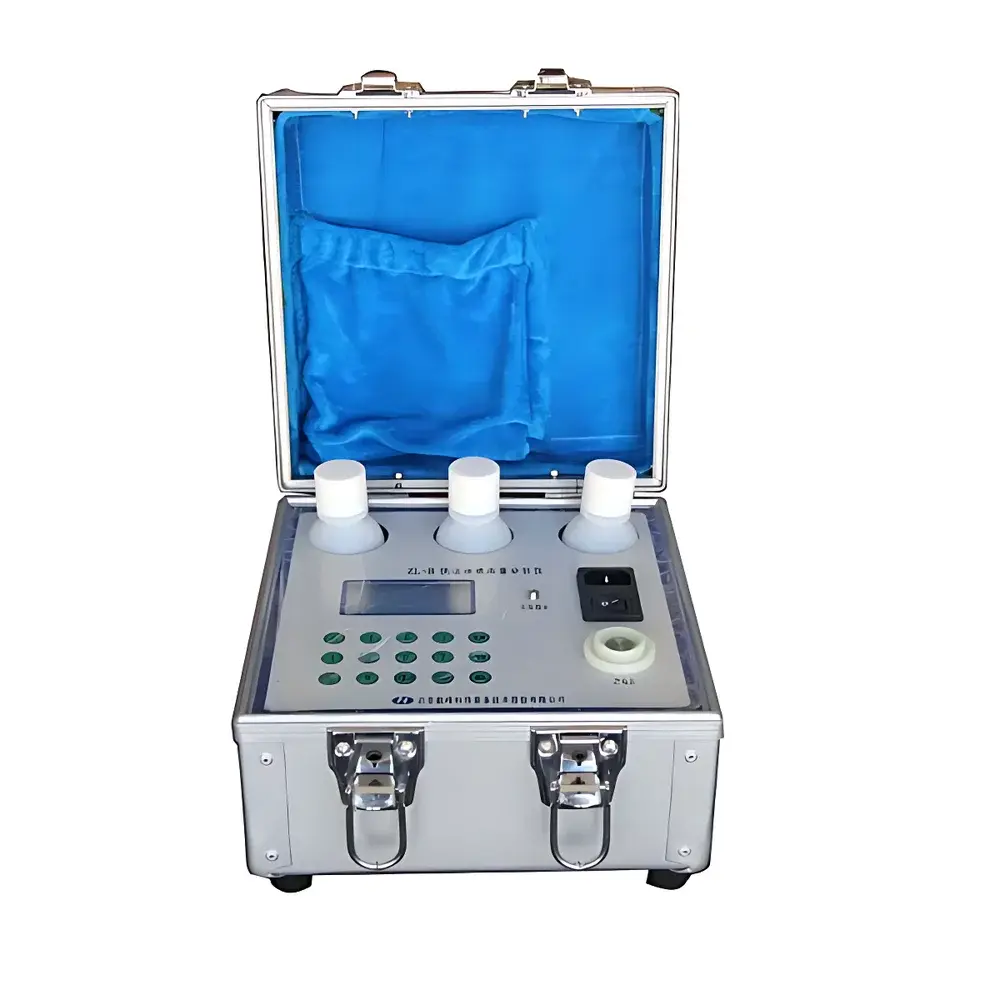
English Product Name
| Brand | TimePower |
|---|---|
| Origin | Beijing, China |
| Manufacturer Type | Direct Manufacturer |
| Country of Origin | China |
| Model | TP656 |
| Heating Power | 200 W |
| Temperature Control Accuracy | ≤ ±1 °C |
| Magnetic Stirring Power | 3 W |
| Electric Stirring Power | 30 W |
| Magnetic Stirring Speed Range | 0–2400 rpm |
| Electric Stirring Speed Range | 0–3000 rpm |
| Total Power Consumption | ≤ 1200 W |
| Supply Voltage | AC 220 V ±10%, 50 Hz ±10% |
| pH Measurement Range | 0.00–14.00 pH |
| pH Accuracy | ±0.02 pH |
| pH Resolution | 0.01 pH |
| pH Repeatability | ≤1% |
| pH Stability | ±1% F.S./4 h |
| pH Response Time (T90) | <1 min at 25 °C |
| Temperature Control Range | Ambient to 100 °C |
| Temperature Compensation Range | 0.1–60.0 °C |
| Sample Temperature Range | 5–60 °C |
| Operating Ambient Temperature | 5–40 °C |
| Relative Humidity | ≤85% |
Overview
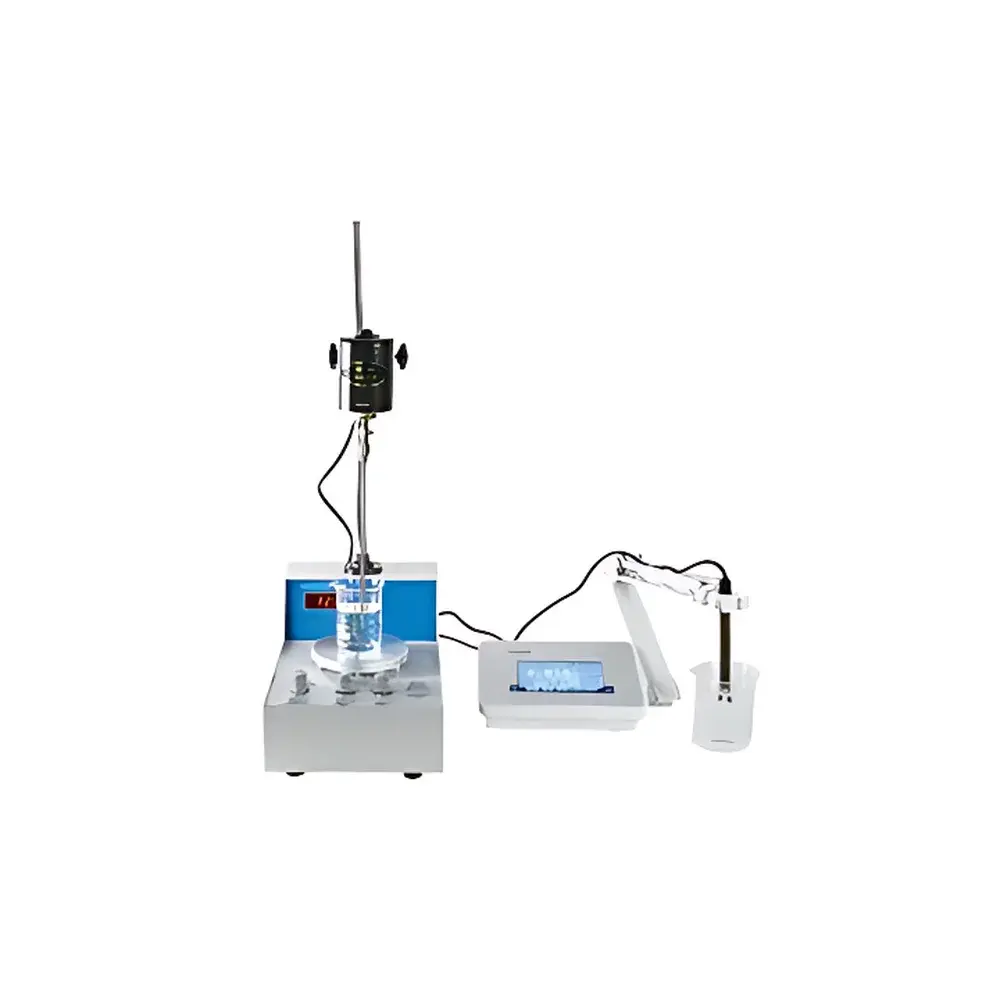
The TimePower TP656 Water-Soluble Acid and Alkali Analyzer is a dedicated benchtop instrument engineered for the quantitative determination of water-soluble acidic and alkaline components in petroleum products and lubricants, in strict accordance with GB/T 511—2010 “Standard Test Method for Mechanical Impurities in Petroleum Products (Gravimetric Method)” and aligned with related principles referenced in ASTM D974 (acid number) and ISO 6618 (determination of water-soluble acids and alkalis in petroleum products). Unlike general-purpose pH meters, the TP656 integrates sample conditioning, controlled aqueous extraction, and precision potentiometric measurement into a single workflow. It employs a standardized two-phase extraction protocol: petroleum samples are mixed with preheated distilled water under precisely regulated thermal and mechanical agitation, enabling partitioning of ionizable acidic (e.g., naphthenic acids, phenols) or basic (e.g., amines, pyridines) species into the aqueous phase. The resulting aqueous extract is then measured using a calibrated glass pH electrode, delivering trace-level detection sensitivity and metrological traceability suitable for QC laboratories operating under GLP or ISO/IEC 17025 frameworks.
Key Features
- Integrated triple-function thermal-mechanical unit combining thermostatic water bath, magnetic stirring (0–2400 rpm), and high-torque electric stirring (0–3000 rpm) — all operable simultaneously to ensure homogeneous dispersion and reproducible extraction kinetics.
- Dual-mode temperature control: digital PID-based electronic thermostat with ±1 °C accuracy across 0–100 °C range; real-time compensation applied during pH measurement (0.1–60.0 °C).
- High-fidelity signal acquisition via 24-bit A/D converter, minimizing quantization error and supporting stable baseline readings essential for low-conductivity aqueous extracts.
- Dedicated industrial-grade pH meter module featuring 0.01 pH resolution, ±0.02 pH accuracy, and T90 response <60 s at 25 °C — optimized for low-ionic-strength extracts typical of petroleum-water systems.
- Compliance-ready architecture: supports audit trails for calibration records, user logins, and measurement timestamps — compatible with internal documentation requirements for ISO 9001, ASTM D664, and refinery QA/QC SOPs.
Sample Compatibility & Compliance
The TP656 accommodates a broad spectrum of petroleum-based matrices including gasoline, kerosene, diesel, base oils, turbine oils, hydraulic fluids, greases, paraffin waxes, and additive packages. For viscous or waxy samples (e.g., lubricating greases or solidified waxes), the system enables pre-melting and hot-water extraction protocols per GB/T 511 Annex B. Light fractions (e.g., naphthas, solvents) are processed unheated to prevent volatilization losses. All glassware conforms to ASTM E200 specifications for borosilicate laboratory glass. The analyzer meets CE electromagnetic compatibility (EMC) directives and operates within IEC 61010-1 safety limits for laboratory electrical equipment. It supports method validation per USP and EP 2.2.2 guidelines where aqueous extract pH serves as a surrogate indicator for corrosivity potential.
Software & Data Management
While the TP656 operates via embedded firmware with Chinese-language menu navigation, its measurement outputs — including pH value, temperature, time stamp, and operator ID — are logged internally and exportable via USB to CSV format. The system stores up to 500 test records with full metadata, enabling retrospective review for internal audits or regulatory inspections. Calibration data (slope, offset, buffer recognition) is retained with date/time stamps and can be printed or exported for GLP-compliant recordkeeping. Optional RS-232 interface allows integration with LIMS platforms supporting ASTM E1384 or HL7 messaging standards.
Applications
- Monitoring acid number drift in in-service turbine and transformer oils to assess oxidation degradation.
- Verifying neutralization efficiency of amine-based corrosion inhibitors in refinery process streams.
- Quality release testing of new lubricant batches against OEM specifications (e.g., Caterpillar EC-1, API SP).
- Investigating souring mechanisms in crude oil storage tanks by tracking water-phase acidity evolution.
- Supporting ASTM D664 titration method development through rapid screening of extract pH prior to formal potentiometric titration.
FAQ
What types of petroleum products can be tested on the TP656?
Gasoline, jet fuel, diesel, lubricating oils, greases, paraffin wax, and specialty additives — provided appropriate sample preparation (e.g., dilution, melting, or solvent blending) is performed per GB/T 511 procedures.
Is the instrument compliant with international standards beyond GB/T 511?
Yes — its operational methodology aligns with ASTM D974 (acid number), ASTM D664 (potentiometric titration), ISO 6618, and IP 177; pH measurement performance meets ISO 7027 and IUPAC recommendations for routine aqueous extract analysis.
Can the TP656 be used for non-petroleum applications such as biodiesel or bio-oils?
It may be adapted for fatty acid methyl ester (FAME) analysis with method verification; however, users must validate extraction efficiency, electrode compatibility, and interference from glycerol or methanol residues before routine deployment.
Does the system support automated calibration or electrode diagnostics?
Manual two-point (pH 4.01/7.00 or 7.00/10.01) calibration is required; no built-in electrode impedance or slope diagnostic function is provided, though stability and repeatability metrics are displayed post-measurement.
What maintenance is recommended for long-term reliability?
Daily rinsing of glassware and pH electrode with deionized water; monthly cleaning of stirrer shafts and thermal bath chamber; annual verification of temperature sensor drift and A/D reference voltage stability using NIST-traceable standards.