
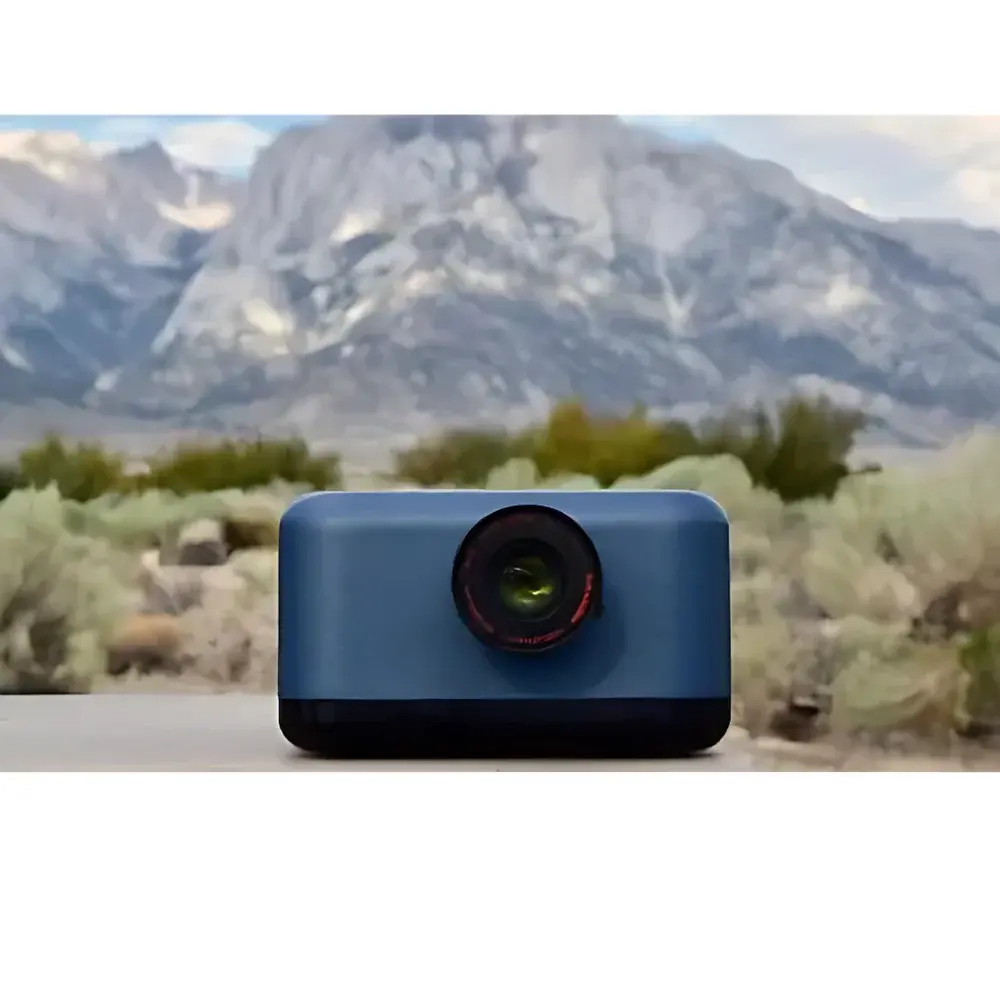
SOC SurfaceOptics SOC 710E Hyperspectral Imaging Spectrometer
| Brand | SOC/SurfaceOptics |
|---|---|
| Origin | USA |
| Manufacturer Type | Authorized Distributor |
| Import Status | Imported |
| Model | SOC 710E |
| Operating Principle | Push-broom |
| Deployment Mode | Ground-based |
| Spectral Range | 400–1000 nm |
| Spectral Resolution | 1.2 nm (adjustable) |
| Spatial Resolution | 1392 × 1392 pixels |
| Spectral Bands | 520 or 260 (selectable) |
| A/D Conversion | 12–16 bit |
| Scan Rate | 60–120 lines/sec |
| Detector | Dual integrated CCD array |
| Stray Light | <0.5% |
| Optical Throughput | >85% across 400–1000 nm |
| Lens Mount | C-mount, focal length optional |
| Operating Temperature | −30 to +50 °C |
| Relative Humidity | 0–100% RH |
| Weight | 5 kg |
| Interface | USB 3.0 |
Overview
The SOC SurfaceOptics SOC 710E Hyperspectral Imaging Spectrometer is a ground-based, push-broom scanning instrument engineered for high-fidelity spectral-spatial data acquisition across the visible to near-infrared (VNIR) range (400–1000 nm). Unlike frame-based or whiskbroom systems, its push-broom architecture employs a linear slit and dual-CCD detector array to capture full spectral profiles line-by-line as the sensor or sample moves along a translation axis—ensuring geometric fidelity, minimal spatial distortion, and high radiometric consistency. The integrated dual-CCD design enables real-time preview of the target region prior to acquisition, supporting precise region-of-interest selection and eliminating registration errors common in externally scanned configurations. Designed for operational flexibility, the SOC 710E functions equally well in laboratory, field, or microscopic environments without mechanical reconfiguration—making it suitable for both controlled experiments and long-term unattended monitoring under variable ambient conditions (−30 to +50 °C, 0–100% RH).
Key Features
- Integrated Push-Broom Scanning: Built-in precision translation stage eliminates external motion-induced image warping; delivers distortion-free hyperspectral cubes with sub-pixel alignment stability.
- Dual-CCD Architecture: One CCD provides live preview imaging at full spatial resolution (1392 × 1392), while the second captures calibrated spectral data—enabling true “what-you-see-is-what-you-get” acquisition.
- Modular Deployment: Compatible with tripod, flux tower, microscope (C-mount interface), dark chamber, goniometer, or custom motion platforms; no additional scan stages or adapters required.
- Intelligent Automation: Auto-dark current subtraction, exposure saturation warning, adaptive scan-speed matching, and scheduled batch acquisition support GLP-compliant unattended operation over extended durations.
- High Optical Performance: >85% throughput across 400–1000 nm, stray light <0.5%, and selectable spectral sampling (260 or 520 bands) with 1.2 nm resolution (adjustable via software-defined binning).
- Lightweight & Portable: Total system mass of 5 kg, USB 3.0 interface, and low power consumption enable rapid deployment in remote or resource-constrained settings.
Sample Compatibility & Compliance
The SOC 710E accommodates diverse sample geometries—from intact plant canopies and soil plots to excised leaves, seeds, fruit surfaces, thin sections, and microscopic tissue preparations. Its C-mount lens interface supports standard macro, telecentric, and microscope objectives, enabling seamless transition between macro- and micro-scale analysis. The system meets essential environmental robustness requirements per IEC 60529 (IP20 equivalent for indoor use) and operates within ASTM E275–22 spectral measurement guidelines for VNIR reflectance spectroscopy. Data integrity protocols—including hardware timestamping, non-volatile metadata embedding, and raw binary storage—support audit readiness for ISO/IEC 17025-accredited laboratories and FDA 21 CFR Part 11–aligned workflows when paired with validated software environments.
Software & Data Management
Bundled acquisition and processing software provides native support for ENVI, MATLAB, Python (via HDF5 and BSQ/BIL export), and Excel-compatible tabular output. Core capabilities include real-time spectral curve visualization, radiometric calibration (white/dark reference correction), reflectance conversion, spectral angle mapper (SAM) classification, band math operations, single-band slice extraction, 3D spectral cube rendering, and automated ROI statistics. All raw data are stored in open-format binary files (BSQ layout) with embedded JSON metadata describing acquisition parameters, GPS coordinates (when external GNSS is connected), and instrument configuration—ensuring full traceability and interoperability with FAIR (Findable, Accessible, Interoperable, Reusable) data principles. Mechanical stage control (optional motorized translation) is fully scriptable via API for integration into automated phenotyping pipelines.
Applications
- Plant Phenotyping & Stress Detection: Quantification of chlorophyll, carotenoid, anthocyanin, and water content indices (e.g., NDVI, PRI, WI) from leaf-level to canopy-scale measurements.
- Precision Agriculture: In-field mapping of nutrient status, disease onset, irrigation deficits, and yield prediction using supervised and unsupervised classification models.
- Seed & Fruit Quality Assessment: Non-destructive detection of internal defects, sugar content (Brix estimation), firmness, and varietal identification via spectral fingerprinting.
- Ecological Remote Sensing: Ground-truthing of airborne/satellite sensors; spectral library development for species discrimination in mixed vegetation communities.
- Materials Characterization: Pigment identification in cultural heritage artifacts, polymer degradation analysis, and mineralogical mapping of geological samples.
- Microspectroscopy: Cellular-level spectral profiling of stained/unstained histological sections, algae cultures, or biofilm structures when coupled with inverted or upright microscopes.
FAQ
What spectral calibration standards are supported?
The SOC 710E supports NIST-traceable reflectance standards (e.g., Spectralon® panels) and user-defined dark references; factory calibration certificates include wavelength accuracy (±0.3 nm) and radiometric linearity (R² > 0.9998).
Can the system operate on battery power in the field?
Yes—when paired with a regulated 12 V DC portable power supply (e.g., LiFePO₄ battery pack), the SOC 710E achieves >4 hours of continuous operation without thermal drift.
Is hyperspectral data export compatible with machine learning frameworks?
All acquired cubes are exported in ENVI-compatible formats (BSQ/BIL) with header files containing full spectral and spatial metadata, enabling direct ingestion into scikit-learn, TensorFlow, or PyTorch pipelines.
Does the software support multi-user role-based access control?
While the base acquisition software does not include RBAC, the raw data architecture allows integration with LIMS or ELN systems that enforce user permissions, audit trails, and electronic signatures per 21 CFR Part 11 requirements.
How is spatial resolution affected when using microscope objectives?
Effective pixel size scales inversely with objective magnification; for example, a 10× objective yields ~1.4 µm/pixel at the sensor plane, preserving diffraction-limited resolution across the 400–1000 nm band.



