
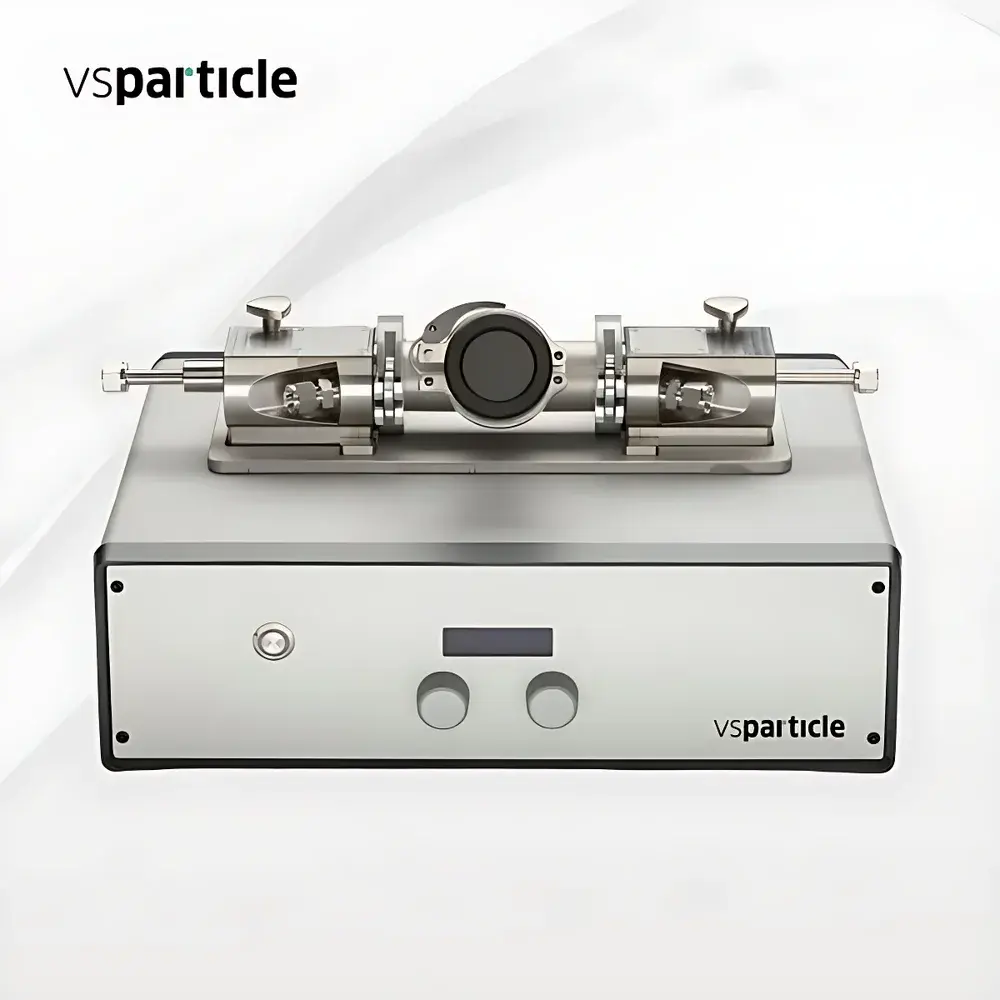
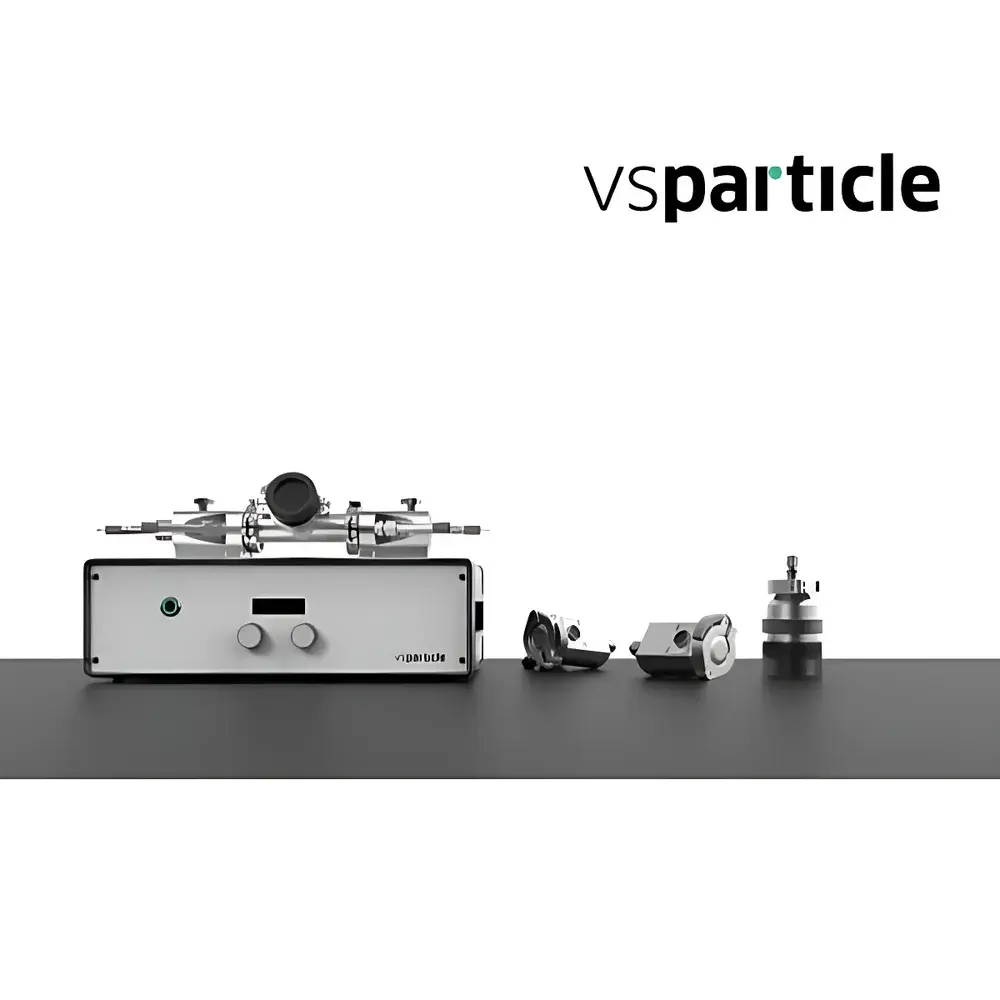
VSParticle VSP G1 Nanoparticle Generator
| Brand | VSParticle |
|---|---|
| Origin | Netherlands |
| Model | VSP G1 |
| Particle Size Range | 1–20 nm |
| Operating Pressure | Ambient (1 atm) |
| Generation Principle | Spark Ablation in Gas Phase |
| Electrode-Based Feedstock | Pure Metal, Metal Oxide, or Alloy Targets |
| Modular Integration | Yes (Compatible with Deposition Modules) |
| Control Parameters | Carrier Gas Flow Rate, Discharge Power (Voltage/Current), Electrode Material Composition |
Overview
The VSParticle VSP G1 Nanoparticle Generator is a compact, benchtop spark ablation system engineered for the synthesis of ligand-free, ultra-pure metallic, metal oxide, and alloy nanoparticle aerosols under ambient pressure. Unlike wet-chemical or vacuum-based vapor-phase methods, the VSP G1 operates via pulsed spark ablation—where high-voltage discharges between two conductive electrodes (target materials) generate transient plasma channels exceeding 20,000 K. This extreme localized thermal energy fully atomizes bulk electrode material without requiring precursors, solvents, surfactants, or reactive gases. The resulting atomic vapor rapidly nucleates and coagulates in an inert or reactive carrier gas stream (e.g., Ar, N₂, O₂, or air), forming monodisperse or tunable polydisperse aerosols in the 1–20 nm diameter range. Its ambient-pressure operation enables direct coupling to downstream characterization or deposition tools—eliminating vacuum interface complexity while preserving particle integrity and surface cleanliness.
Key Features
- True ligand-free nanoparticle synthesis: No organic capping agents, solvents, or decomposition by-products.
- Real-time size tuning: Average primary particle diameter controlled via carrier gas flow rate—lower flow extends residence time in the nucleation zone, promoting coagulation and larger sizes; higher flow yields smaller particles.
- Compositional flexibility: Dual-electrode configuration supports binary or multi-element nanoparticles—including immiscible systems (e.g., Fe–Au, Cu–Ag) and metastable alloys unattainable via bulk metallurgy.
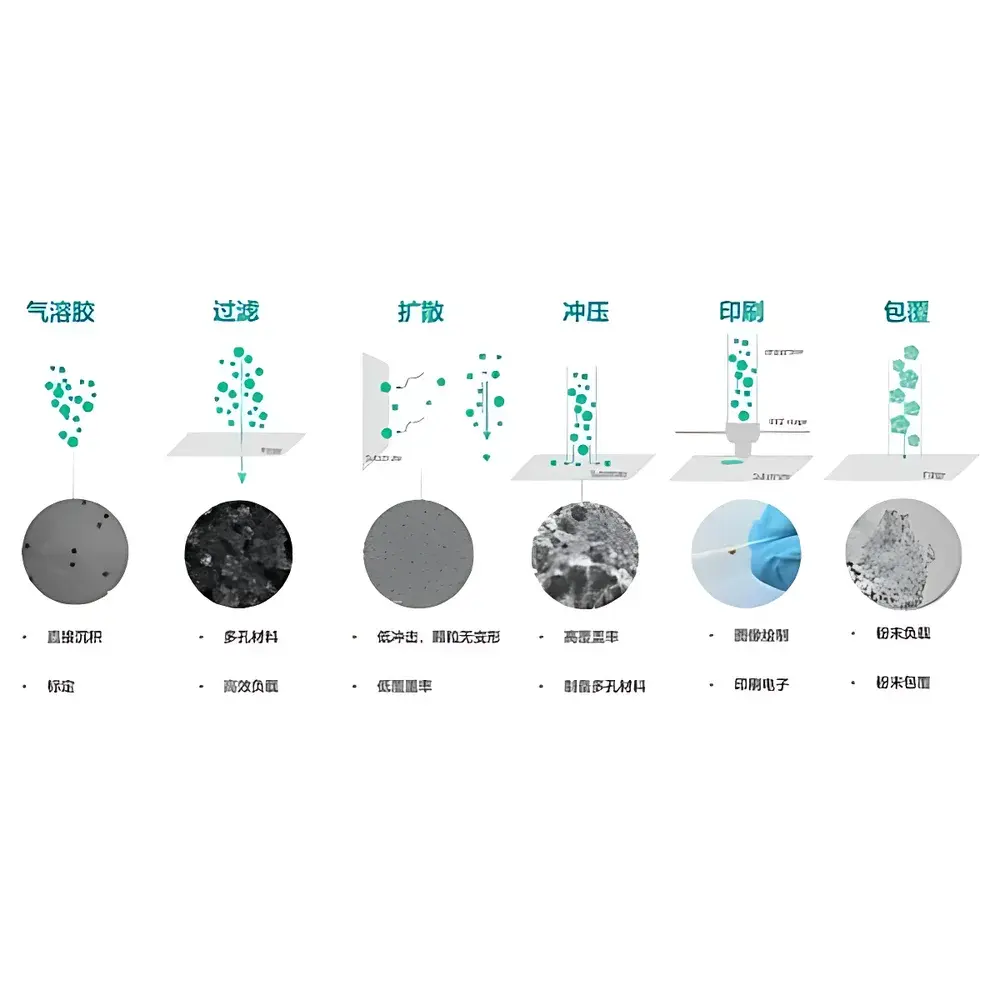
- Modular architecture: Designed as a standalone aerosol source or as an integrated module within custom nanomaterial synthesis platforms (e.g., combined with electrostatic precipitators, thermophoretic depositors, or TEM grid coaters).
- Scalable process control: Adjustable discharge power (voltage/current) governs ablation rate and influences both particle yield and secondary growth kinetics.
- Electrode compatibility: Accepts rods or discs of conductive materials (metals, intermetallics, oxides) up to Ø6 mm × 50 mm; alloy electrodes enable stoichiometric feedstock control.
Sample Compatibility & Compliance
The VSP G1 accommodates a broad spectrum of electrically conductive feedstocks—including elemental metals (Au, Pt, Ni, Ti), transition metal oxides (TiO₂, ZnO, Fe₃O₄), and pre-alloyed targets (NiCr, CoFe, CuZn). It complies with standard laboratory safety protocols for high-voltage equipment (IEC 61010-1) and electromagnetic compatibility (EN 61326-1). As a research-grade instrument, it supports GLP-aligned workflows when paired with validated deposition modules and calibrated aerosol monitors (e.g., SMPS, CPC). While not certified for GMP manufacturing, its reproducible spark parameters, electrode traceability, and parameter logging capability facilitate audit-ready documentation for academic and industrial R&D environments.
Software & Data Management
The VSP G1 is operated via a dedicated Windows-based control interface that logs all critical process parameters—including pulse frequency, peak current, voltage waveform, total spark count, gas flow setpoint, and real-time pressure monitoring. Timestamped datasets are exported in CSV format for post-processing and correlation with offline characterization (e.g., HR-TEM, XRD, XPS). The software architecture supports sequential multi-electrode runs and synchronized triggering with external devices (e.g., shutter controls for in-situ deposition, signal inputs from aerosol spectrometers). Audit trails meet basic requirements for traceability in ISO/IEC 17025-compliant laboratories; optional integration with LIMS platforms is available via TCP/IP API.
Applications
- Catalysis research: Synthesis of unsupported, surface-clean bimetallic nanoparticles for CO oxidation, HER/OER, and selective hydrogenation studies.
- Advanced materials development: Fabrication of core–shell, Janus, and layered heterostructures via synchronized dual-VSP-G1 operation or sequential ablation–deposition cycles.
- Nanotoxicology & inhalation science: Generation of well-characterized, respirable metal oxide aerosols for in vitro and in vivo exposure models.
- In-situ TEM sample preparation: Direct deposition of freshly generated nanoparticles onto electron-transparent grids for atomic-scale structural analysis.
- Functional thin film prototyping: Integration with thermophoretic or diffusion-based deposition modules to fabricate catalyst-coated substrates, gas sensor layers, or plasmonic coatings.
FAQ
What types of materials can be used as electrodes?
Conductive solids only—metals, intermetallics, doped oxides, and pre-alloyed rods. Insulating ceramics (e.g., pure Al₂O₃) require conductive doping or composite fabrication.
Can the VSP G1 produce oxide nanoparticles without post-synthesis oxidation?
Yes—by introducing controlled O₂ into the carrier gas stream during ablation, in-flight oxidation yields native oxide shells (e.g., NiO on Ni cores) or fully oxidized particles (e.g., CuO), depending on residence time and O₂ concentration.
Is particle size distribution narrow or broad, and how is it measured?
Primary particle size distribution is typically log-normal (GSD ≈ 1.4–1.8); it is characterized offline via TEM image analysis or online using scanning mobility particle sizing (SMPS) coupled to the outlet.
How does the system handle electrode erosion over time?
Electrode wear is monitored via spark impedance drift and visual inspection; typical service life exceeds 10⁶ sparks per electrode pair under standard operating conditions.
Can multiple VSP G1 units be synchronized for combinatorial synthesis?
Yes—via TTL-triggered master–slave configuration, enabling precise temporal alignment of ablation events from dissimilar electrode pairs to form hybrid aerosols or spatially resolved deposits.




