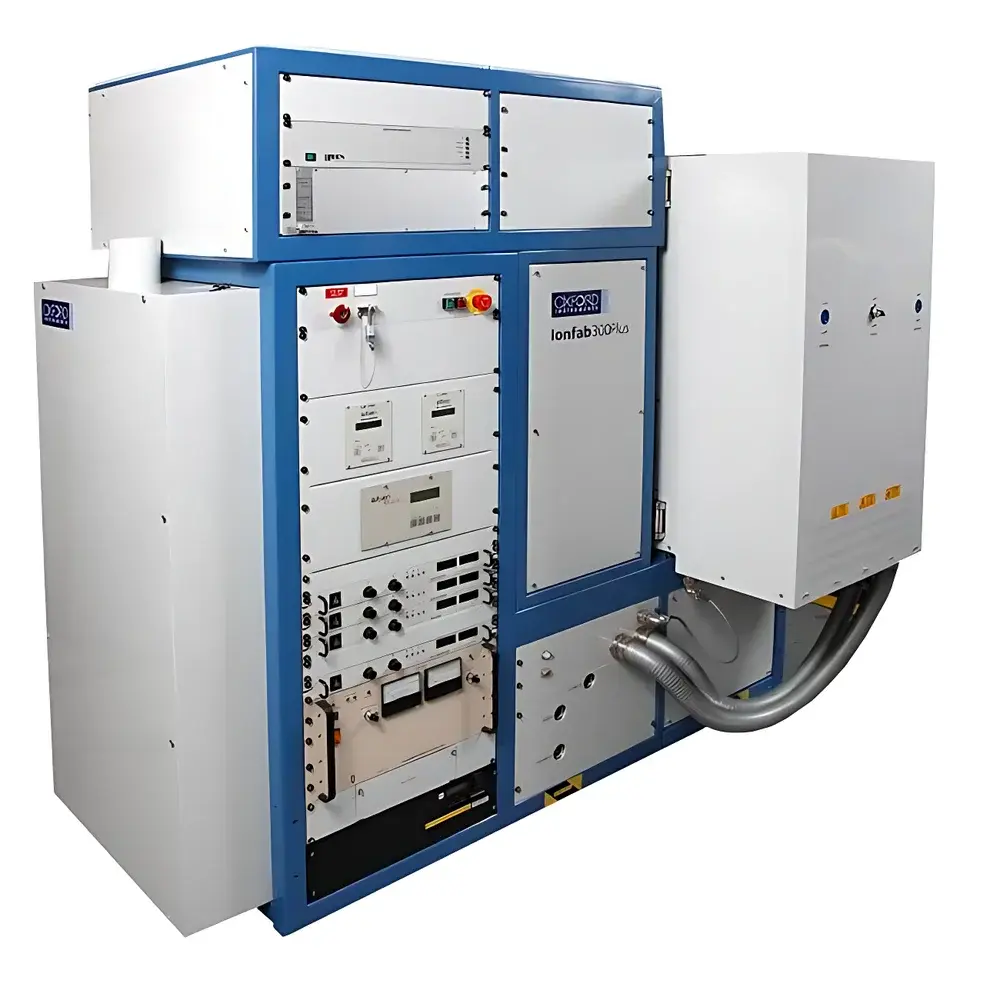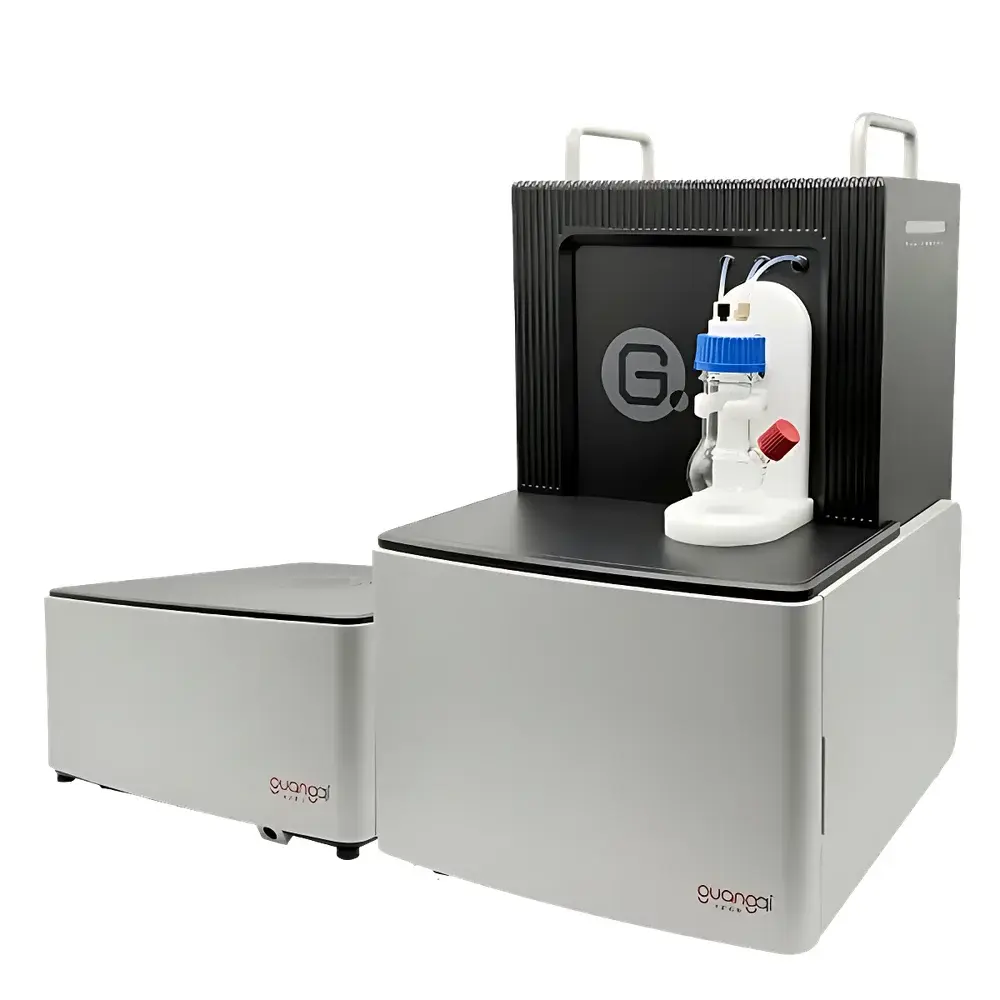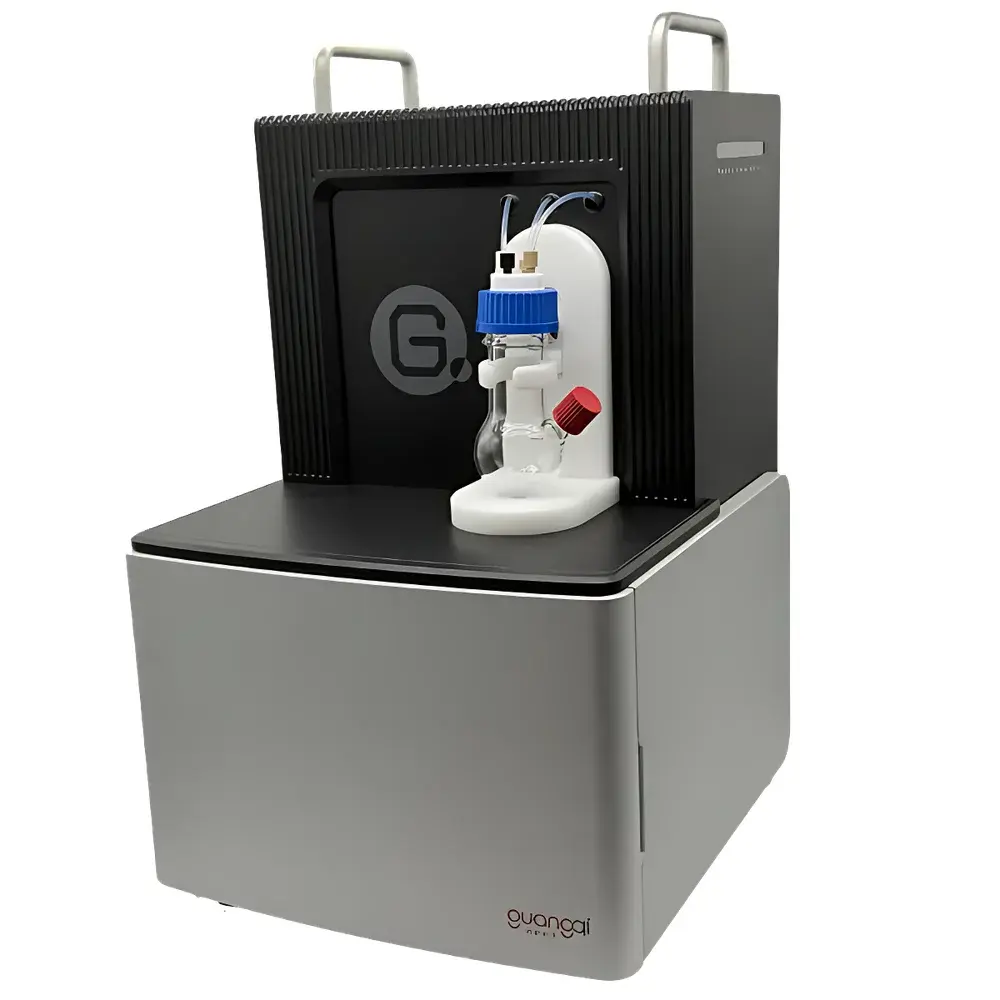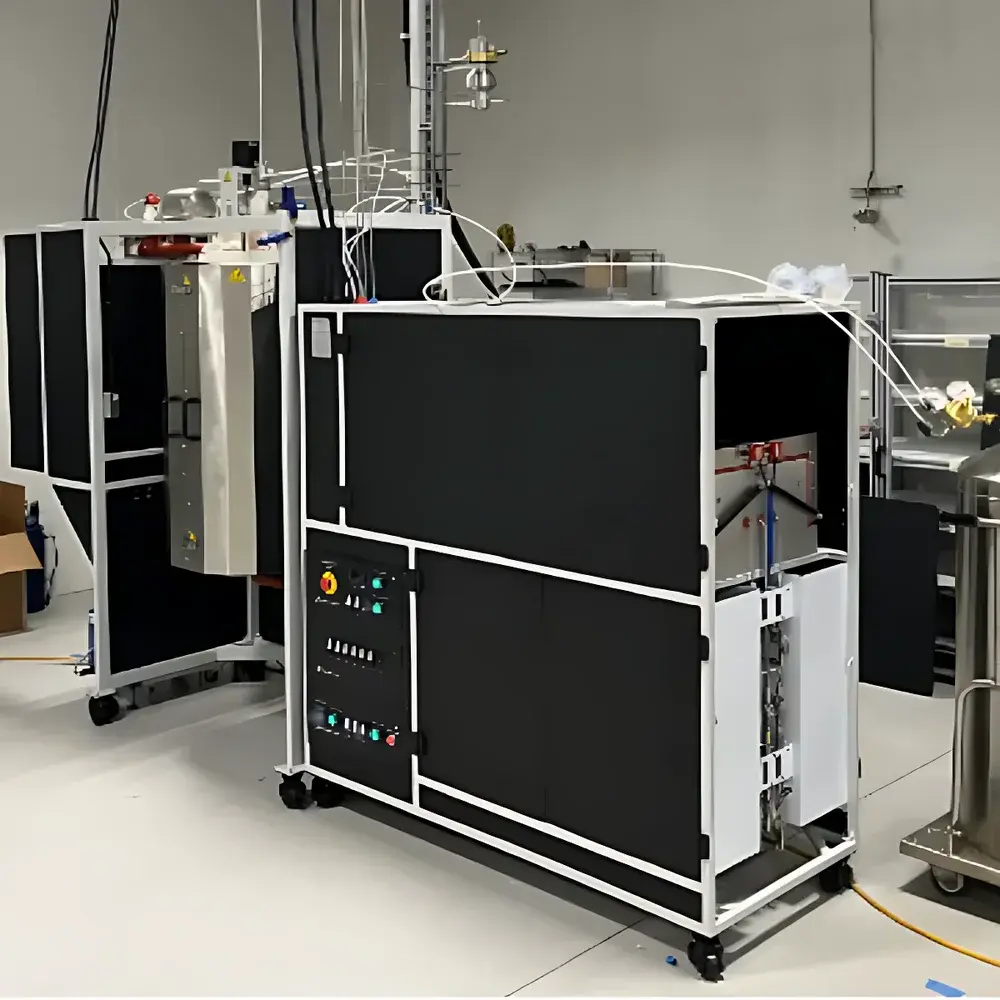
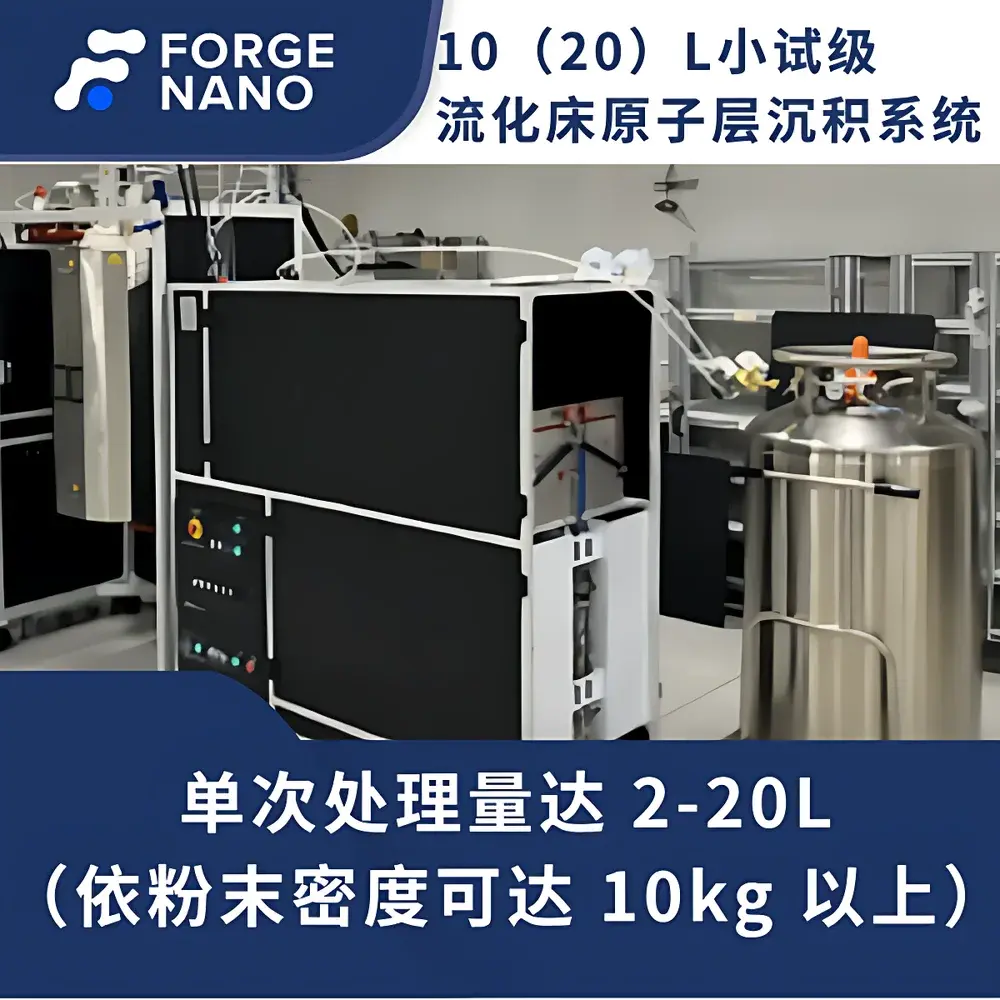
Forge Nano Prometheus XL 10(20)L Bench-Scale Fluidized-Bed Atomic Layer Deposition System
| Brand | Forge Nano |
|---|---|
| Origin | USA |
| Equipment Type | Import |
| Model | Prometheus XL 10(20)L Bench-Scale Fluidized-Bed ALD System |
| Process Temperature | up to 400 °C |
| Precursor Channels | 2–8 |
| Powder Capacity | up to 10 kg per batch |
| Coating Uniformity | sub-nanometer (nm-level) |
Overview
The Forge Nano Prometheus XL 10(20)L is a bench-scale fluidized-bed atomic layer deposition (ALD) system engineered for precision surface functionalization of particulate materials. Unlike planar ALD systems designed for wafers or flat substrates, the Prometheus XL leverages gas-phase, self-limiting surface reactions within a dynamically fluidized powder bed to achieve true 3D conformal coating at atomic scale. Its core principle relies on sequential, saturative exposures of gaseous precursors—each reacting exclusively with available surface sites—ensuring monolayer-by-monolayer growth independent of particle geometry, porosity, or agglomeration state. This enables reproducible sub-nanometer film thickness control (<1 nm per cycle), pinhole-free coverage, and exceptional batch-to-batch consistency across heterogeneous powder populations. Designed explicitly to meet the U.S. Department of Industry and Information Technology’s “Atomic-Scale Manufacturing Challenge” targets—including ≥10 kg/batch throughput and <1 nm coating uniformity—the system bridges the critical gap between laboratory discovery and scalable process validation in energy, catalysis, pharmaceuticals, and advanced metallurgy.
Key Features
- Fluidized-bed reactor with integrated vibration and high-shear jet dispersion to eliminate particle clustering and ensure full volumetric exposure of all powder surfaces—including internal pores and complex morphologies.
- Thermal operating range from ambient to 400 °C, supporting both thermally sensitive organometallic precursors and high-temperature oxide/nitride depositions (e.g., Al₂O₃, TiN, SiO₂).
- Modular precursor delivery architecture accommodating 2–8 independently controlled channels, enabling multi-step co-deposition, gradient coatings, and sequential hybrid inorganic–organic functionalization.
- Real-time residual gas analysis (RGA) integration for in situ monitoring of precursor consumption, byproduct evolution, and reaction completion—critical for endpoint detection and GLP-compliant process documentation.
- Automated inert-atmosphere handling: vacuum/pneumatic transfer modules maintain O₂/H₂O < 1 ppm during loading/unloading, essential for air-sensitive powders such as Li-metal anodes, pyrophoric catalysts, or energetic materials.
- Embedded alumina-based scrubber system for abatement of reactive metalorganic effluents, complying with EPA Method 25A and ISO 14001 emission control requirements.
Sample Compatibility & Compliance
The Prometheus XL accommodates a broad spectrum of particulate feedstocks—including battery cathode/anode powders (NCM, LFP, Si), supported metal catalysts (Pd/Al₂O₃, Pt/C), magnetic nanoparticles (Fe₃O₄, NdFeB), pharmaceutical excipients, and metal powders for additive manufacturing (Ti-6Al-4V, Inconel 718). All wetted surfaces are electropolished 316L stainless steel or quartz-lined to prevent contamination and ensure compatibility with corrosive precursors (e.g., TMA, DEZ, NH₃). The system meets mechanical safety standards per ASME BPE-2021 and electrical compliance per UL 61010-1. For regulated environments, optional audit-trail logging, user access controls, and electronic signature capability align with FDA 21 CFR Part 11 and EU Annex 11 requirements.
Software & Data Management
Operation is managed via a touchscreen HMI running embedded Linux with deterministic real-time control firmware. Each deposition recipe includes programmable parameters for purge duration, pulse time, temperature ramp rate, pressure setpoints, and RGA spectral acquisition intervals. All process data—including mass flow controller outputs, thermocouple readings, pressure transients, and RGA ion intensities—are timestamped and stored in HDF5 format for traceability. Export options include CSV, MATLAB .mat, and direct API integration with LabArchives ELN or DeltaV DCS platforms. Version-controlled recipe libraries support GMP-style change management, with automatic backup to network-attached storage or cloud repositories (AWS S3 or Azure Blob).
Applications
- Lithium-ion battery materials: Atomic-scale Al₂O₃ or Li₃PO₄ coatings on NCM811 improve interfacial stability, suppress transition-metal dissolution, and extend cycle life beyond 1,200 cycles at 4.3 V cutoff.
- Heterogeneous catalysis: Sub-2 nm ZrO₂ overlayers on Pd nanoparticles inhibit sintering at >500 °C, maintaining >92% initial activity after 100 h of continuous hydrogenation.
- Powder metallurgy: SiO₂ or AlN encapsulation enhances flowability and die-fill uniformity of stainless steel powders for binder-jet 3D printing.
- Pharmaceuticals: Controlled-release polymer coatings (e.g., poly-β-amino ester) applied via ALD-inspired molecular layer deposition (MLD) enable pH-triggered drug elution profiles.
- Magnetic materials: Insulating MgO or AlN barriers reduce eddy-current losses in soft magnetic composites while preserving saturation magnetization.
FAQ
What is the maximum particle size the Prometheus XL can uniformly coat?
The system achieves uniform coverage on particles ranging from 50 nm to 500 µm, provided fluidization dynamics are optimized for the specific density and morphology—validated via SEM-EDS line scans and XPS depth profiling.
Can the system perform plasma-enhanced ALD (PE-ALD)?
Not natively; however, optional RF or microwave plasma sources can be retrofitted into the reactor chamber for low-temperature nitrogen incorporation or radical-assisted oxidation steps.
Is remote diagnostics and software update support available?
Yes—Forge Nano provides secure TLS-encrypted remote access for troubleshooting, firmware updates, and performance calibration using proprietary diagnostic protocols compliant with IEC 62443-3-3.
How is coating thickness verified post-process?
Standard verification employs cross-sectional TEM combined with EELS quantification; alternative methods include XRR, ellipsometry on planar reference samples, or BET surface area reduction analysis for porous substrates.
Does the system support DOE-based process optimization?
Yes—the embedded software includes built-in factorial design tools and integrates with JMP and Python-based scikit-learn pipelines for multivariate analysis of precursor dose, temperature, and residence time effects.