
DENSsolutions Lightning Arctic In Situ Cryo-Electro-Thermal TEM Holder
| Brand | DENSsolutions |
|---|---|
| Origin | Netherlands |
| Model | Lightning Arctic |
| Temperature Range | ≤ –160 °C to 800 °C (up to 1300 °C with optional chip) |
| Electrical Current Range | 1 pA to 100 mA |
| Application Domain | Semiconductor Materials Research |
| Compliance | Compatible with Standard JEOL & Thermo Fisher TEM Goniometer Interfaces |
| Sample Tilt | Dual-tilt (α/β), 10°–25° depending on pole piece configuration |
Overview
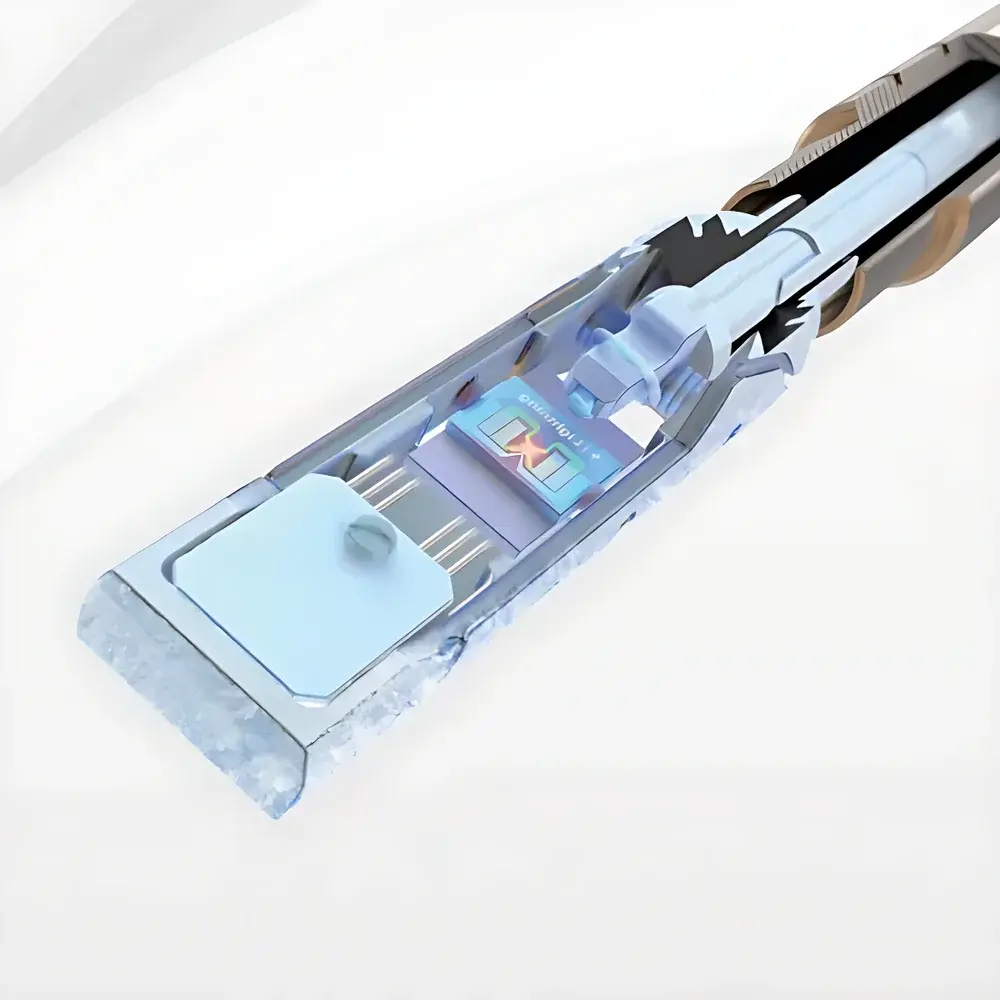
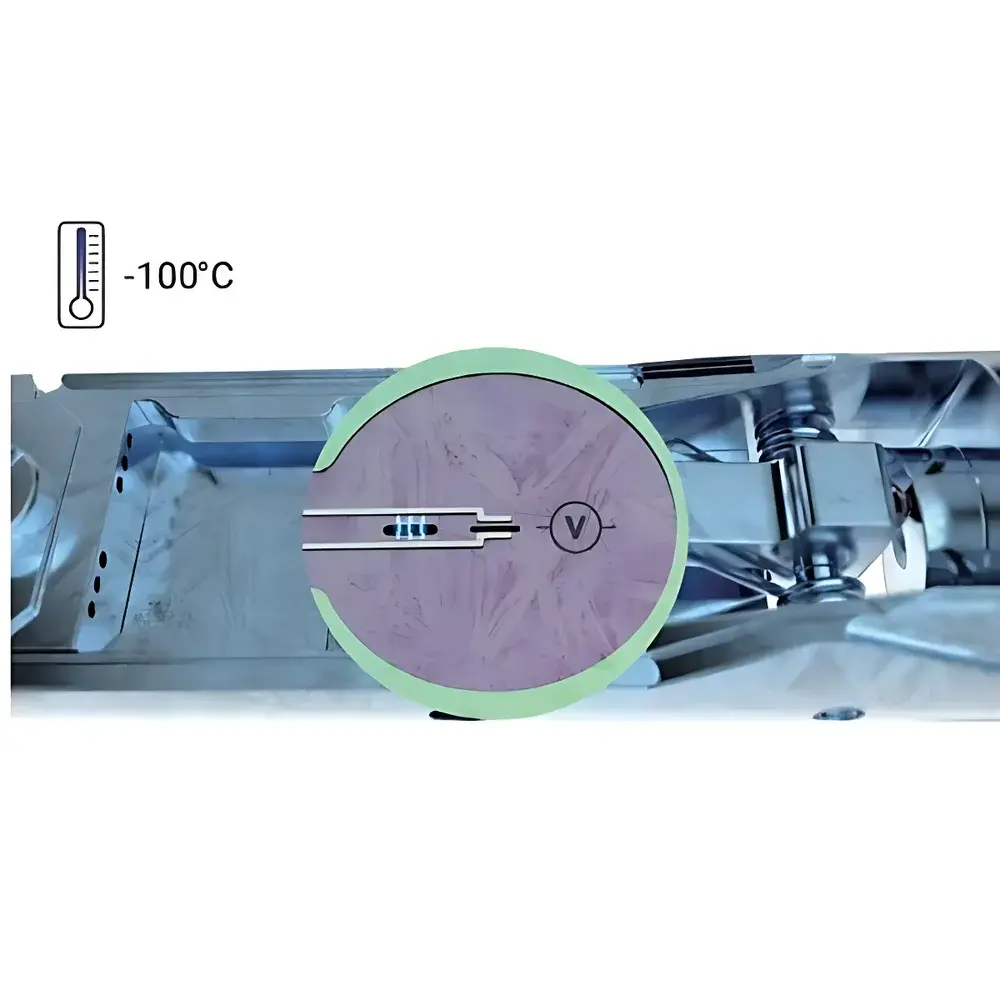
The DENSsolutions Lightning Arctic In Situ Cryo-Electro-Thermal TEM Holder is a high-precision, MEMS-based in situ transmission electron microscopy (TEM) platform engineered for simultaneous cryogenic cooling, resistive heating, and controlled electrical biasing—while preserving atomic-resolution imaging stability. Unlike conventional thermal or electrochemical holders, the Lightning Arctic integrates a proprietary four-terminal nanochip architecture that decouples thermal and electrical pathways, enabling independent, real-time modulation of temperature (down to ≤ –160 °C via liquid nitrogen cooling) and electrical stimulus (from sub-picoampere leakage currents to 100 mA drive levels) without cross-talk or thermal drift-induced image degradation. Its operational principle relies on Joule heating within patterned platinum or tungsten microheaters embedded in silicon nitride membranes, combined with active cold conduction through a thermally anchored copper cooling rod interfaced with an external liquid nitrogen dewar. This dual-mode capability—cryo-electrical and thermo-electrical—makes it uniquely suited for investigating phase transitions, defect dynamics, interfacial reactions, and carrier transport mechanisms in functional materials under realistic operational conditions.
Key Features
- True dual-mode operation: Independent cryogenic cooling (≤ –160 °C) and resistive heating (up to 800 °C standard; 1300 °C with high-temp chip option)
- Four-terminal nanochip design enables precise voltage/current control and eliminates lead resistance errors during electrical measurements
- Integrated multi-stage temperature regulation: Dedicated controllers manage cryogen flow stability, holder-to-TEM thermal equilibration, and localized sample-zone thermal inertia
- Dual-axis mechanical tilt (α/β) with 10°–25° range (dependent on microscope pole piece geometry), enabling crystallographic alignment along desired zone axes
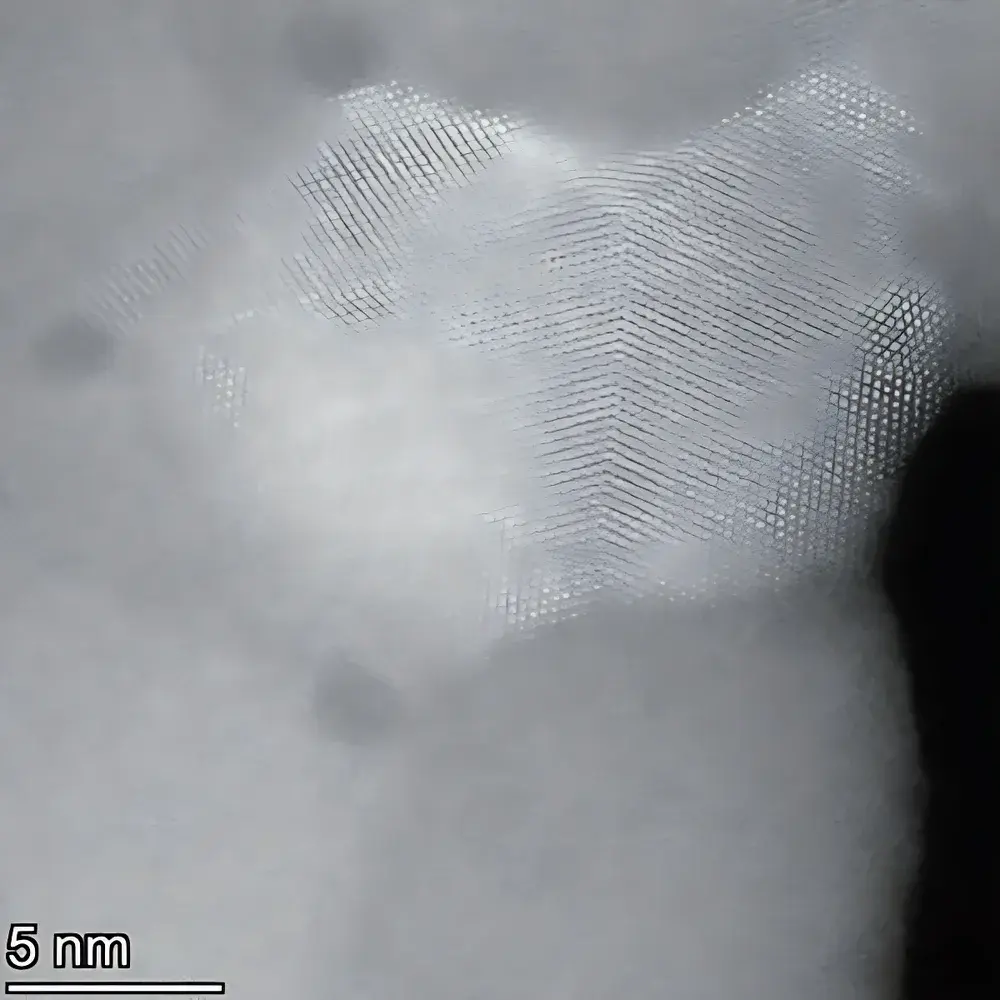
- Optimized for low-drift atomic imaging: External LN₂ dewar minimizes bubble-induced vibration; thermal mass buffering and active feedback suppress thermal drift to < 0.5 nm/min under steady-state conditions
- FIB-compatible chip architecture with pre-patterned electrode layouts and standardized FIB lift-out fiducials for reliable, short-circuit-free specimen preparation
Sample Compatibility & Compliance
The Lightning Arctic holder accepts standard 3 mm TEM half-grid specimens mounted on DENSsolutions’ proprietary MEMS chips. It is fully compatible with JEOL JEM-F200, JEM-ARM300F, and Thermo Fisher Scientific Talos F200X, Glacios, and Krios G4 platforms equipped with standard double-tilt goniometers. All chips comply with ISO 9001-certified fabrication protocols and undergo rigorous pre-shipment calibration for thermal uniformity (±2 °C across 10 µm field of view) and electrical insulation (>1014 Ω at –160 °C). The system supports GLP-compliant experimental logging when paired with DENSsolutions’ Stream Engine software, meeting traceability requirements for semiconductor process development and academic reproducibility standards.
Software & Data Management
Control and synchronization are managed via DENSsolutions Stream Engine v4.x—a modular, Python-API-accessible platform that coordinates temperature ramping, current/voltage sourcing, and synchronized acquisition from TEM detectors (e.g., Gatan OneView, TVIPS TemCam). The software enforces audit-trail generation per FDA 21 CFR Part 11 guidelines, including user authentication, electronic signatures, and immutable parameter logs. Real-time thermal maps and I–V curves are overlayed onto live STEM/HRTEM frames, enabling correlation between structural evolution and electrothermal stimuli. Export formats include HDF5, TIFF stack, and CSV metadata bundles for downstream analysis in MATLAB, Python (NumPy/Pandas), or commercial TEM data suites.
Applications
- Atomic-scale observation of solid-state electrolyte decomposition in all-solid-state battery cathodes under cryogenic cycling conditions
- In situ study of dislocation nucleation and grain boundary migration in SiC power devices during thermal shock (–160 °C → 800 °C in < 60 s)
- Correlating resistive switching behavior in HfOx-based RRAM cells with local oxygen vacancy redistribution visualized via ABF-STEM
- Probing superconducting transition dynamics in FeSe monolayers on SrTiO3, combining cryogenic biasing with 4D-STEM strain mapping
- Process-relevant evaluation of gate oxide integrity in advanced FinFET nodes under combined thermal stress and gate leakage current injection
FAQ
What vacuum compatibility does the Lightning Arctic holder support?
The holder maintains UHV compatibility (≤ 1 × 10⁻⁹ mbar) during operation and is bakeable to 120 °C for extended column integration.
Can the same chip be used for both cryo and high-temperature experiments?
Yes—standard chips operate across the full –160 °C to 800 °C range; high-temp variants extend upper limits to 1300 °C but are not rated for cryogenic use.
Is electrical noise performance characterized at low temperatures?
Yes—current measurement noise floor is 0.3 pA RMS at –160 °C (10 kHz bandwidth), validated per IEEE Std 117–2015 test protocols.
How is sample drift compensated during rapid thermal transients?
Drift compensation combines hardware-level thermal inertia buffering with software-driven image registration using sub-pixel cross-correlation on reference lattice features.
Does DENSsolutions provide application-specific chip customization?
Yes—custom electrode geometries, insulator thicknesses, and window configurations are available under NDA for qualified industrial partners and academic consortia.




