
Dynaflow ABS Acoustic Bubble Spectrometer
| Origin | USA |
|---|---|
| Manufacturer Type | Authorized Distributor |
| Origin Category | Imported |
| Model | ABS Acoustic Bubble Spectrometer |
| Pricing | Available Upon Request |
Overview
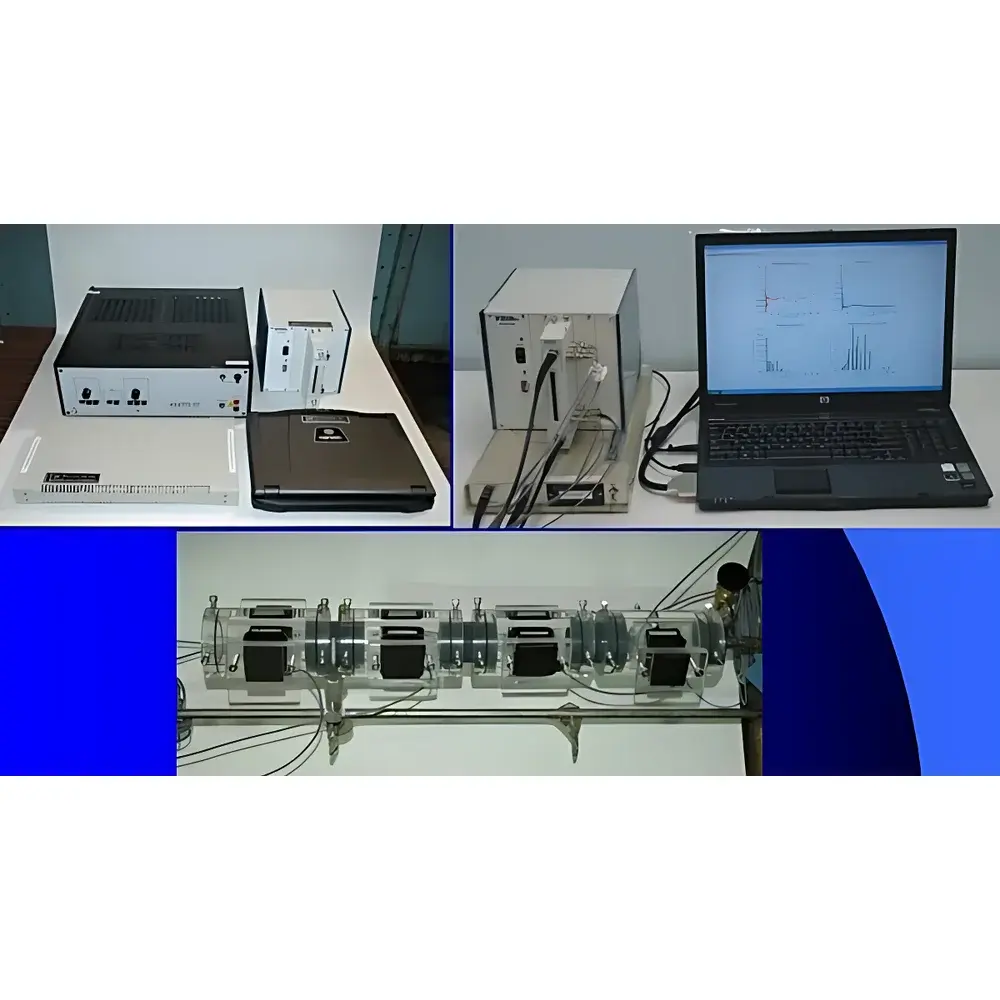
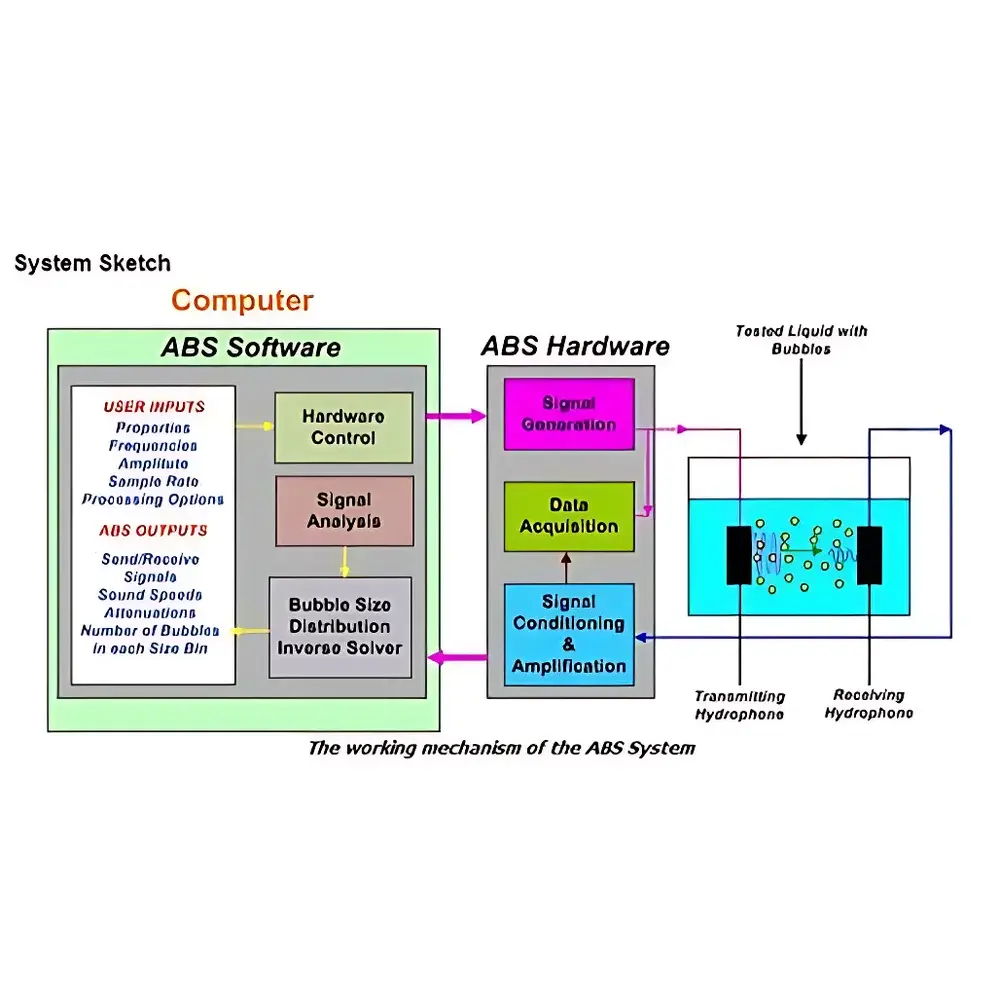
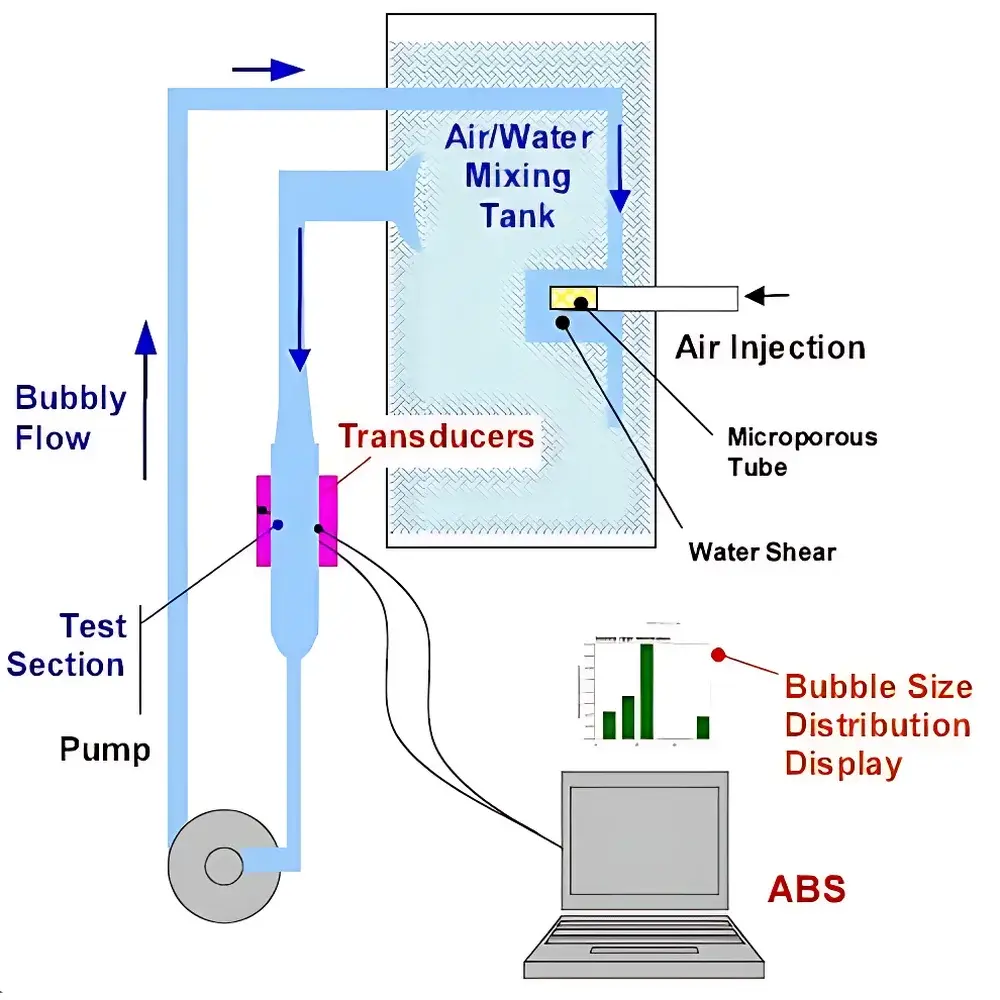
The Dynaflow ABS Acoustic Bubble Spectrometer is a precision-engineered, non-optical multiphase flow characterization instrument designed for quantitative in-situ analysis of microbubble populations in liquids. Operating on the principle of broadband ultrasonic backscatter spectroscopy (UBS), the ABS detects and resolves gas bubbles ranging from sub-10 µm to several hundred micrometers in diameter by analyzing frequency-dependent acoustic attenuation and scattering signatures. Unlike optical methods—including high-speed microscopy, laser diffraction, or phase-Doppler anemometry—the ABS imposes no requirement for optical transparency of the liquid medium or containment vessel, enabling robust measurements in opaque, turbid, colored, or highly scattering fluids such as seawater, blood plasma, polymer melts, slurry suspensions, and industrial process streams. Its transducer-based architecture supports both intrusive (probe-mounted) and non-intrusive (external coupling via immersion or clamped transducers) configurations, delivering high reproducibility across dynamic flow conditions without perturbing the local hydrodynamics.
Key Features
- Ultrasonic detection sensitivity down to ~5 µm bubble diameter under typical aqueous conditions, with resolution sufficient to distinguish bubble populations from solid particles based on compressibility contrast
- Real-time spectral acquisition at up to 100 Hz frame rate, enabling time-resolved tracking of bubble nucleation, growth, coalescence, and collapse dynamics
- Integrated pulse-echo and through-transmission modes for simultaneous void fraction estimation and size distribution deconvolution
- Windows-based software platform compliant with Windows 10/11 (64-bit), featuring intuitive graphical interface with drag-and-drop calibration workflows and customizable display layouts
- Modular hardware design supporting multiple transducer frequencies (1–10 MHz range) and configurable beam geometries for optimized application-specific performance
- Factory-calibrated against NIST-traceable reference standards; validation protocols include cross-correlation with high-magnification microphotography and resonant mass measurement where applicable
- Compliant with IEC 61000-6-3 (EMC) and CE marking requirements; suitable for integration into ISO 17025-accredited laboratories and GLP/GMP environments
Sample Compatibility & Compliance
The ABS spectrometer accommodates a broad spectrum of liquid-phase media—ranging from deionized water and saline solutions to viscous oils, cryogenic propellants, and bioreactor broths—without modification. It tolerates temperatures from 0 °C to 80 °C and pressures up to 10 bar (gauge), with optional high-pressure housings available for subsea or industrial pipeline applications. The system meets ASTM E2921-22 (Standard Guide for Acoustic Characterization of Bubbles in Liquids) and aligns with ISO 20486:2021 (Ultrasonics — Characterization of Bubble Populations in Liquids). Data integrity safeguards include audit-trail logging, user-access controls, and export formats compatible with FDA 21 CFR Part 11-compliant LIMS integration.
Software & Data Management
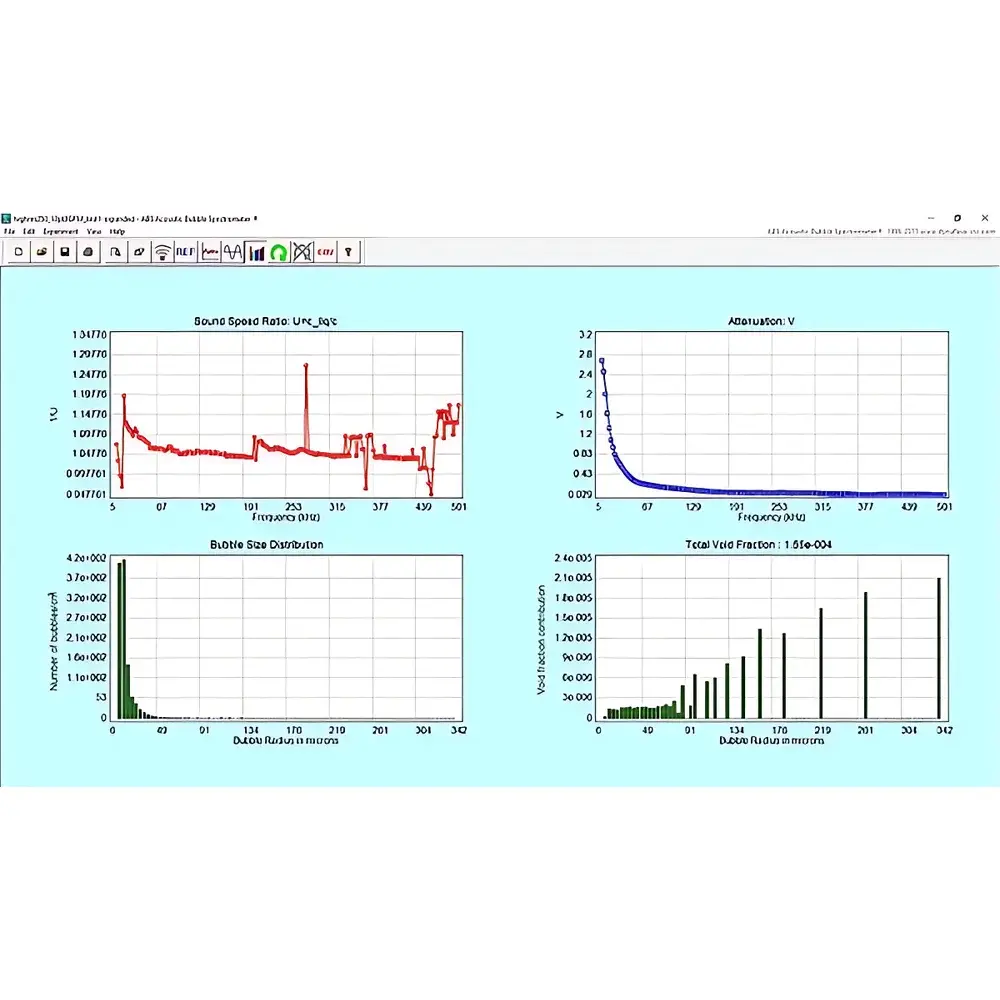
The ABS Control Suite provides comprehensive post-processing capabilities: raw RF signal visualization, inverse scattering modeling (using Mie theory and effective medium approximations), cumulative/differential bubble size distribution plots (dN/dd, dV/dd), time-series void fraction tracking, and statistical summaries (mean Sauter diameter, modal size, polydispersity index). All datasets are stored in HDF5 format with embedded metadata (timestamp, transducer ID, temperature, pressure, calibration coefficients). Export options include CSV, MATLAB .mat, and XML for third-party analysis. Software updates are delivered via secure HTTPS channel with SHA-256 signature verification.
Applications
- Maritime Engineering: Cavitation inception mapping on propeller blades, hydrodynamic noise source identification, and entrained air quantification in ship hull boundary layers
- Biomedical Research: Monitoring microbubble persistence in ultrasound contrast agents, emboli detection in extracorporeal circulation, and decompression bubble kinetics in hyperbaric physiology studies
- Space Fluid Physics: Quantifying bubble behavior under microgravity (e.g., ISS Fluid Physics Facility experiments) and low-pressure boiling transitions
- Oceanography: Air-sea gas exchange modeling, subsurface plume characterization, and ambient noise baseline correction using bubble spectral fingerprints
- Industrial Multiphase Flow: Aeration efficiency monitoring in wastewater treatment, foam stability assessment in food processing, and cavitation damage prediction in pump impellers
- Academic Research: Validation of CFD two-fluid models, nucleation site density measurement in water tunnels, and interfacial instability studies in microfluidic devices
FAQ
Can the ABS measure bubbles in opaque or conductive fluids?
Yes. Acoustic sensing eliminates dependence on optical path length or electrical conductivity—making it uniquely suited for molten metals, carbon-black slurries, and saline biological matrices.
Is calibration required before each measurement?
No. Factory calibration remains stable over time; however, a quick reference check using a known bubble standard (e.g., calibrated glass microsphere suspension) is recommended prior to critical experiments.
Does the system support automated data logging for long-duration tests?
Yes. Scheduled acquisition, trigger-based capture, and watchdog timers enable unattended operation for periods exceeding 72 hours.
Can ABS data be integrated into existing SCADA or LabVIEW environments?
Yes. Native TCP/IP and DLL API interfaces allow bidirectional communication with industrial control systems and custom instrumentation frameworks.
What level of technical support is provided post-purchase?
Dynaflow-certified application engineers provide remote diagnostics, protocol development assistance, and on-site training—backed by a 24-month hardware warranty and extended service contracts.







