
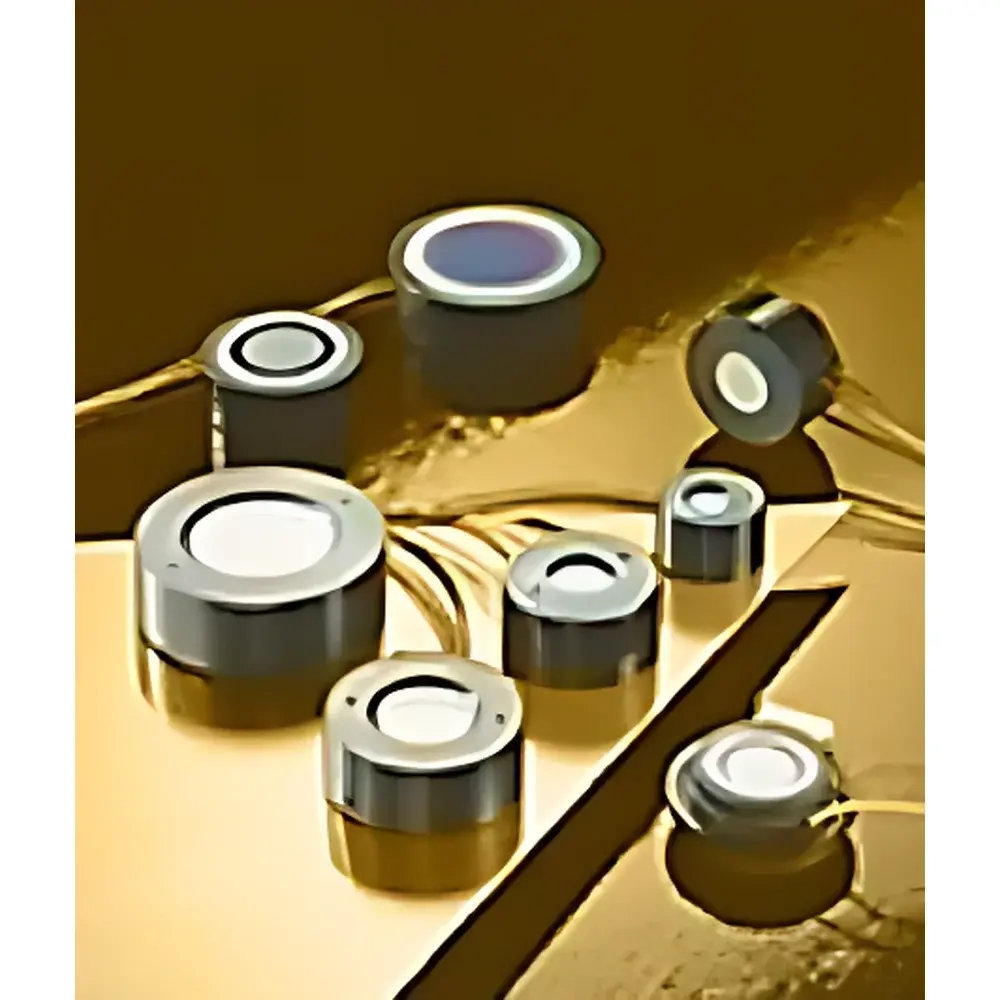

PLS Neutron Camera
| Brand | MMR |
|---|---|
| Origin | United Kingdom |
| Manufacturer Type | Authorized Distributor |
| Origin Category | Imported |
| Model | PLS |
| Pricing | Upon Request |
Overview
The PLS Neutron Camera is a high-performance, thermoelectrically cooled InGaAs (Indium Gallium Arsenide) short-wave infrared (SWIR) imaging camera engineered for demanding scientific, industrial, and defense applications requiring photon-limited detection in the 0.9–1.7 µm spectral band. Despite its designation as a “Neutron Camera” in legacy nomenclature—originating from early neutron-induced scintillation imaging configurations—the PLS system functions exclusively as a SWIR imager; it does not detect neutrons directly nor incorporate neutron-sensitive scintillators or converters. Instead, it is optimized for high quantum efficiency, ultra-low dark current, and deep-cooled operation to maximize signal fidelity in low-flux scenarios such as laser beam profiling, night vision enhancement, semiconductor inspection, and optical coherence tomography (OCT) reference arm monitoring. Its core sensor employs a monolithic InGaAs focal plane array (FPA) with back-illuminated architecture, enabling >95% peak quantum efficiency across the SWIR band and supporting both global shutter and precise electronic gating.
Key Features
- Deep thermoelectric cooling: Achieves stable sensor temperatures at ΔT = –45 °C and –70 °C below ambient, significantly suppressing thermal dark current and enabling long-exposure integration without saturation.
- High-speed readout: 10 MHz pixel clock supports real-time frame rates up to 120 fps at full resolution (640 × 512), with programmable region-of-interest (ROI) modes for higher temporal resolution.
- Exceptional dynamic range: >1000:1 (measured at 30 ms integration), achieved through low-noise analog signal chain design and 16-bit digitization.
- Ultra-low dark current: <0.4 pA per pixel at –70 °C, ensuring minimal background contribution during extended integrations.
- Precise electronic shuttering: Gate width adjustable from 1 µs to >1 s with sub-microsecond timing accuracy, ideal for time-resolved spectroscopy and gated imaging applications.
- High pixel operability: >99.5% functional pixels post-factory correction, with non-uniformity correction (NUC) and bad-pixel replacement applied in firmware.
- Flexible thermal management: Supports both forced-air convection and liquid cooling interfaces, enabling stable operation in environments with variable ambient temperature or space-constrained enclosures.
Sample Compatibility & Compliance
The PLS Neutron Camera is compatible with standard C-mount and F-mount optical interfaces, allowing seamless integration with off-the-shelf SWIR lenses, microscope objectives, and custom collimation assemblies. It complies with CE marking requirements for electromagnetic compatibility (EMC Directive 2014/30/EU) and low-voltage safety (LVD Directive 2014/35/EU). While not certified for nuclear instrumentation or radiation-hardened operation, the camera meets ISO 10110 optical interface standards and supports GLP/GMP-aligned workflows via timestamped metadata embedding (including exposure time, sensor temperature, gain setting, and NUC calibration epoch). For regulated environments, optional firmware enables audit-trail logging compliant with FDA 21 CFR Part 11 when used with validated host software.
Software & Data Management
The camera ships with MMR’s proprietary SDK (Windows/Linux/macOS), providing native support for GenICam-compliant drivers (USB3 Vision and GigE Vision variants available upon request). Raw image data is output in 16-bit TIFF or HDF5 format with embedded EXIF-style metadata. Third-party integration is supported via MATLAB Image Acquisition Toolbox, Python (using PySpin or OpenCV bindings), and LabVIEW IMAQdx. All firmware updates are signed and version-controlled; configuration files include checksum validation to ensure traceability in validated systems. Real-time streaming supports lossless compression (JPEG-LS) and hardware-accelerated ROI cropping without CPU overhead.
Applications
- Laser diagnostics: High-fidelity beam profiling of 1064 nm, 1550 nm, and tunable OPO sources.
- Defect inspection: Non-destructive evaluation of silicon wafers, solar cells, and polymer composites using SWIR transmission contrast.
- Biomedical imaging: Visualizing subsurface vasculature and lipid distribution in preclinical models via SWIR reflectance.
- Remote sensing: Standoff identification of chemical signatures using active illumination and spectral filtering.
- OEM integration: Embedded into portable spectrometers, hyperspectral line-scan engines, and adaptive optics wavefront sensors.
FAQ
Does the PLS Neutron Camera detect neutrons?
No. The name reflects historical usage in neutron-scintillator coupling setups. The PLS is a pure SWIR imaging device based on an InGaAs sensor and cannot detect neutrons without external scintillation conversion layers.
Is the camera suitable for vacuum or cleanroom environments?
Yes—its sealed aluminum housing and absence of outgassing elastomers make it compatible with Class 1000 cleanrooms. Vacuum operation requires optional feedthrough modifications and is subject to thermal management validation.
Can I perform radiometric calibration with this camera?
Yes. MMR provides NIST-traceable responsivity calibration certificates (per ISO 15739) upon request, covering absolute irradiance sensitivity across the 0.9–1.7 µm band.
What cooling method is recommended for continuous operation?
For duty cycles exceeding 8 hours/day or ambient temperatures above 30 °C, liquid cooling is strongly recommended to maintain sensor stability at –70 °C and prevent thermal drift in gain and offset parameters.




