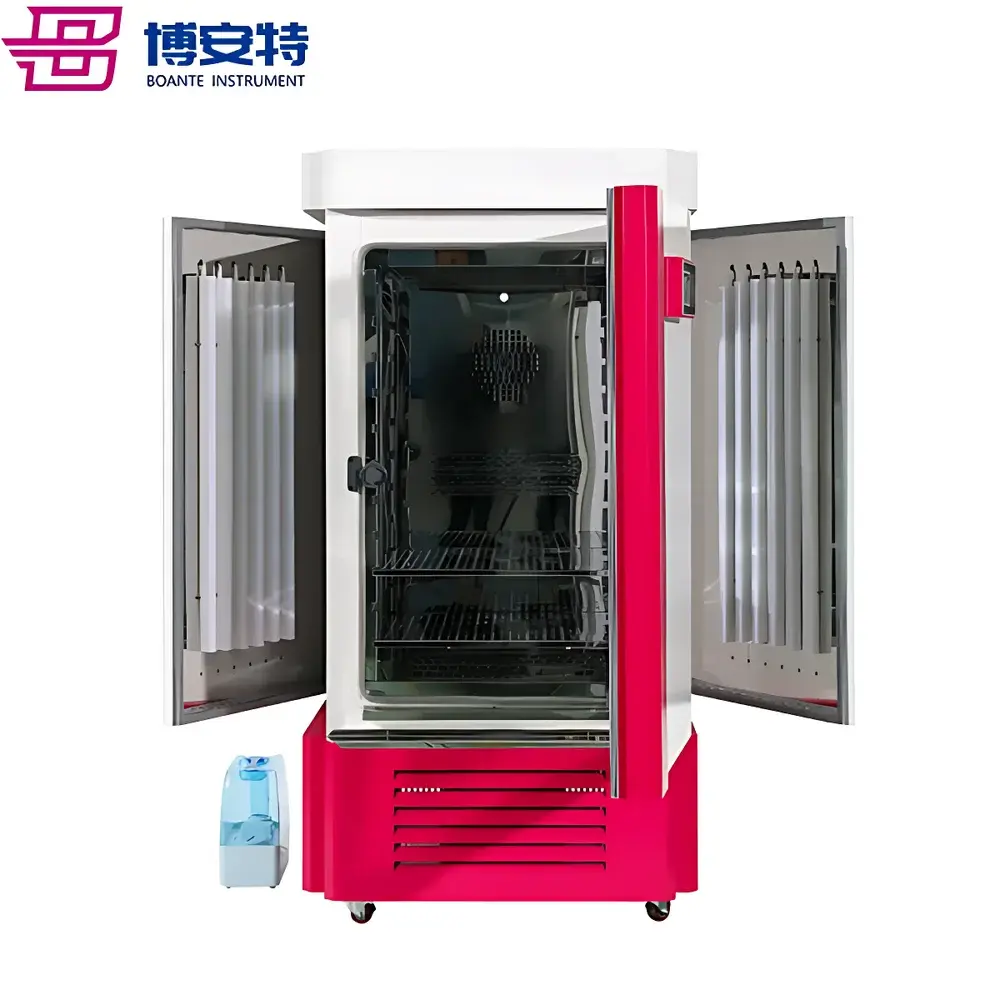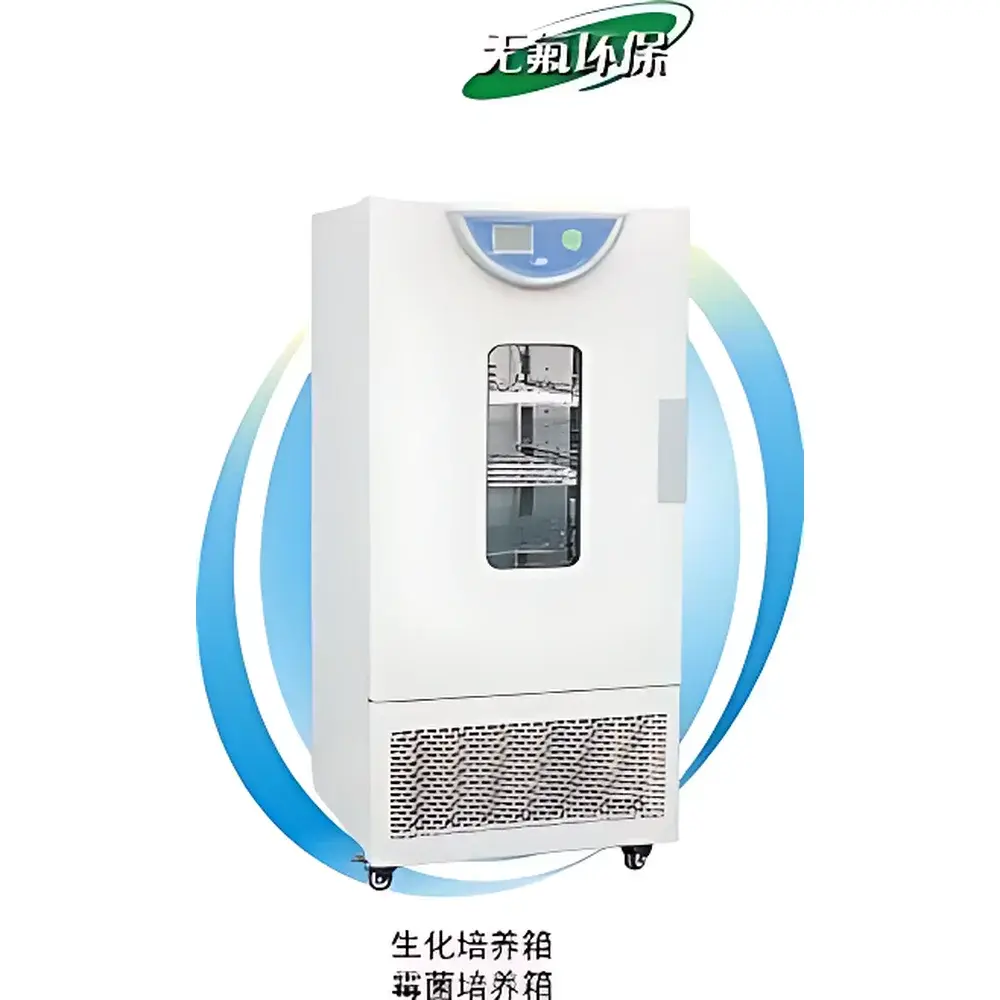
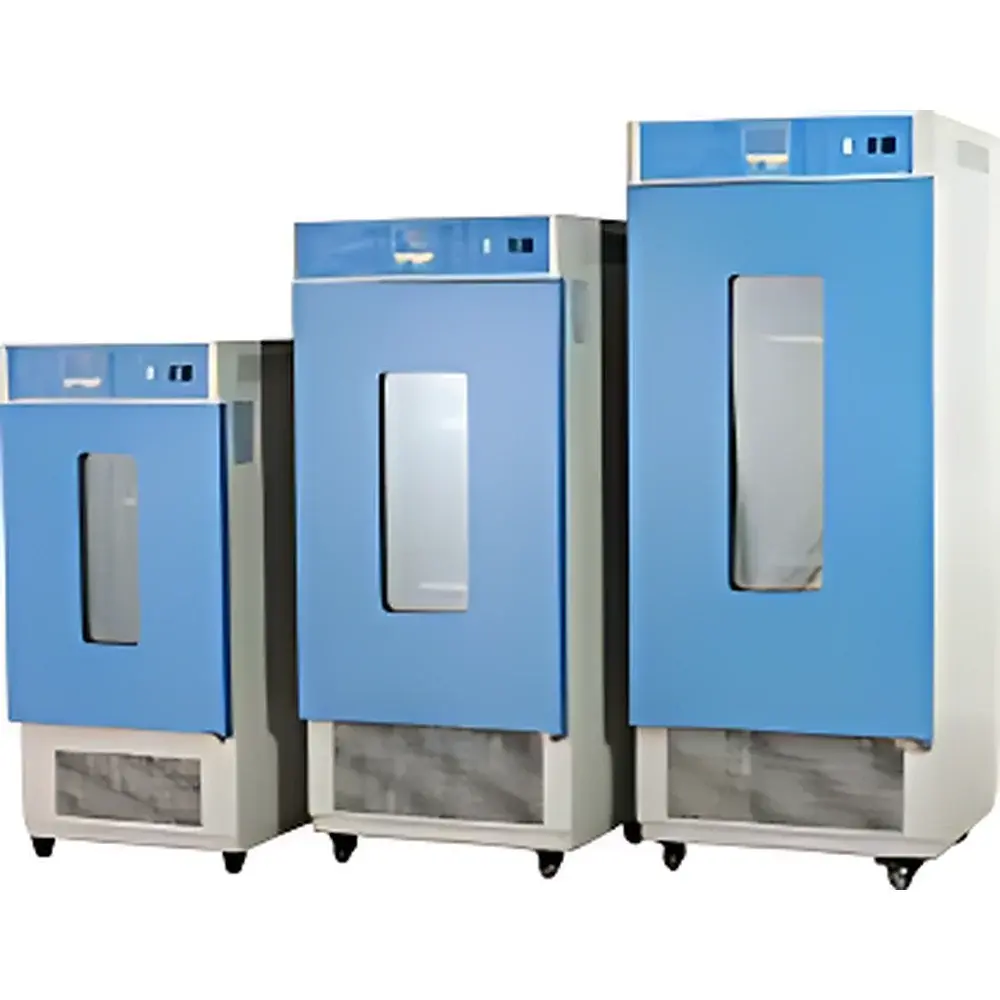
Yiheng MJ/BPMJ Series Mold Incubator
| Brand | Yiheng |
|---|---|
| Model | MJ/BPMJ Series |
| Temperature Range | 0–60 °C (with humidity control: 15–45 °C |
| without humidity | 10–45 °C) |
| Humidity Range | 60–85 %RH |
| Humidity Accuracy | ±5–8 %RH |
| Temperature Resolution | 0.1 °C |
| Temperature Uniformity | ±0.3 °C (high temp), ±0.5 °C (low temp) |
| Power Input | 350–900 W (model-dependent) |
| Internal Dimensions (W×D×H, mm) | 400×350×500 to 600×600×835 |
| External Dimensions (W×D×H, mm) | 530×560×1080 to 740×705×1510 |
| Standard Shelves | 2–3 pcs |
| Timer Range | 1–9999 min |
| Compressor & Circulation Fan | International-brand components |
| Control System | Microprocessor-based PID controller with LCD interface |
| Optional Features | Multi-segment programmable control, USB data export (U-disk), RS-485 interface, printer connectivity, independent over-temperature alarm, UV sterilization lamp |
Overview
The Yiheng MJ/BPMJ Series Mold Incubator is a precision-engineered environmental chamber designed specifically for controlled fungal culture, mycological research, and stability testing of biological samples under regulated temperature and humidity conditions. Built upon over a decade of iterative design refinement in laboratory incubation systems, this series adheres strictly to modern biosafety and energy-efficiency standards—including fluorine-free refrigerant technology compliant with international environmental protocols (e.g., Montreal Protocol Annexes). The incubator operates on the principle of forced-air convection with microprocessor-regulated thermal and hygric feedback loops, ensuring stable, repeatable, and traceable environmental profiles across its operational range. Its architecture supports both static and dynamic cultivation workflows—compatible with optional internal shakers for simultaneous temperature-controlled agitation—making it suitable for ISO 17025-accredited microbiology labs, pharmaceutical QC environments, and academic mycology facilities requiring GLP-compliant documentation.
Key Features
- Microprocessor-based PID temperature and humidity controller with intuitive LCD interface displaying real-time values for temperature, humidity, elapsed time, and setpoints—all on a single screen.
- Mirror-finish stainless steel interior (304 grade) with seamless, radius-rounded corners and removable adjustable shelving for full cleanability and compliance with ISO 14644-1 Class 5 cleanroom-compatible maintenance practices.
- Dual-mode operation: configurable for either humidified incubation (15–45 °C / 60–85 %RH) or dry incubation (0–60 °C), with humidity deviation maintained within ±5–8 %RH per IEC 60068-3-5 test methodology.
- Intelligent airflow management system featuring auto-adjusting fan speed to minimize evaporative loss from agar plates or liquid cultures—critical for long-term filamentous fungal growth assays.
- Integrated self-diagnostic firmware that displays error codes (e.g., E01: sensor fault, E03: compressor overload) directly on the LCD, enabling rapid troubleshooting without external service tools.
- Standard 25 mm diameter utility port on left sidewall for external probe routing, gas line integration, or sensor feedthrough—designed to accommodate ASTM D5517-compliant monitoring configurations.
Sample Compatibility & Compliance
The MJ/BPMJ series accommodates standard Petri dishes (90–150 mm), multi-well plates, slant tubes, and Erlenmeyer flasks up to 2 L volume. Its uniform temperature distribution (±0.3 °C at 37 °C per ISO 15378 Annex A) and controlled humidity gradient support reproducible sporulation studies of Aspergillus, Penicillium, and Cladosporium spp. The unit conforms to key regulatory expectations including USP Chapter <1111> (Microbiological Attributes of Nonsterile Products), EU GMP Annex 1 (for environmental monitoring chambers), and FDA 21 CFR Part 11 when paired with validated data logging software. Optional UV-C (254 nm) germicidal lamps mounted on rear wall provide periodic decontamination cycles aligned with CLSI M22-A3 recommendations for incubator hygiene validation.
Software & Data Management
- USB flash drive interface enables direct export of time-stamped temperature/humidity logs (CSV format) for offline analysis in Excel or statistical packages (e.g., JMP, R).
- RS-485 serial port supports Modbus RTU protocol for integration into centralized building management systems (BMS) or LIMS platforms such as LabVantage or STARLIMS.
- Optional thermal printer module provides hard-copy output of continuous trend curves—fully compliant with ALCOA+ principles (Attributable, Legible, Contemporaneous, Original, Accurate, Complete, Consistent, Enduring, Available) for audit readiness.
- Multi-segment programming mode (up to 30 steps) allows automated ramp-soak-hold sequences—for example: 25 °C/70 %RH for 48 h → ramp to 30 °C/80 %RH over 2 h → hold for 72 h—reducing manual intervention in multi-phase mold development studies.
Applications
This incubator serves critical functions across regulated and research settings: fungal identification and susceptibility testing per CLSI M38; environmental isolate characterization in water and air quality labs; accelerated stability studies of biologics per ICH Q1A(R2); spore viability assays under variable hygric stress; and routine QC of raw materials in food safety laboratories (ISO 21527-1). Its precise low-temperature capability (down to 0 °C) also supports psychrotolerant mold isolation, while the high-end 60 °C limit enables thermotolerant species screening relevant to HVAC biofilm investigations.
FAQ
Does the MJ/BPMJ series meet ISO/IEC 17025 requirements for accredited microbiology testing?
Yes—when used with documented calibration certificates (NIST-traceable probes), validated cleaning SOPs, and audit-ready data export features, it satisfies clause 6.4.10 (Environmental conditions) and 7.7 (Ensuring validity of results).
Can the incubator operate continuously for extended periods (e.g., 30-day stability tests)?
Yes—the industrial-grade hermetic compressor and redundant thermal cutoffs support unattended 24/7 operation; mean time between failures (MTBF) exceeds 25,000 hours per component reliability testing.
Is third-party IQ/OQ/PQ validation support available?
Yiheng provides template protocols and factory-verified performance qualification reports; site-specific PQ execution requires local metrology partner engagement per ISO/IEC 17025 Clause 6.6.
What is the recommended recalibration interval for temperature and humidity sensors?
Annual recalibration is advised per ISO/IEC 17025 and internal quality policy; humidity sensors require verification against saturated salt solutions (e.g., Mg(NO₃)₂ for 53 %RH, NaCl for 75 %RH) at minimum quarterly intervals.