
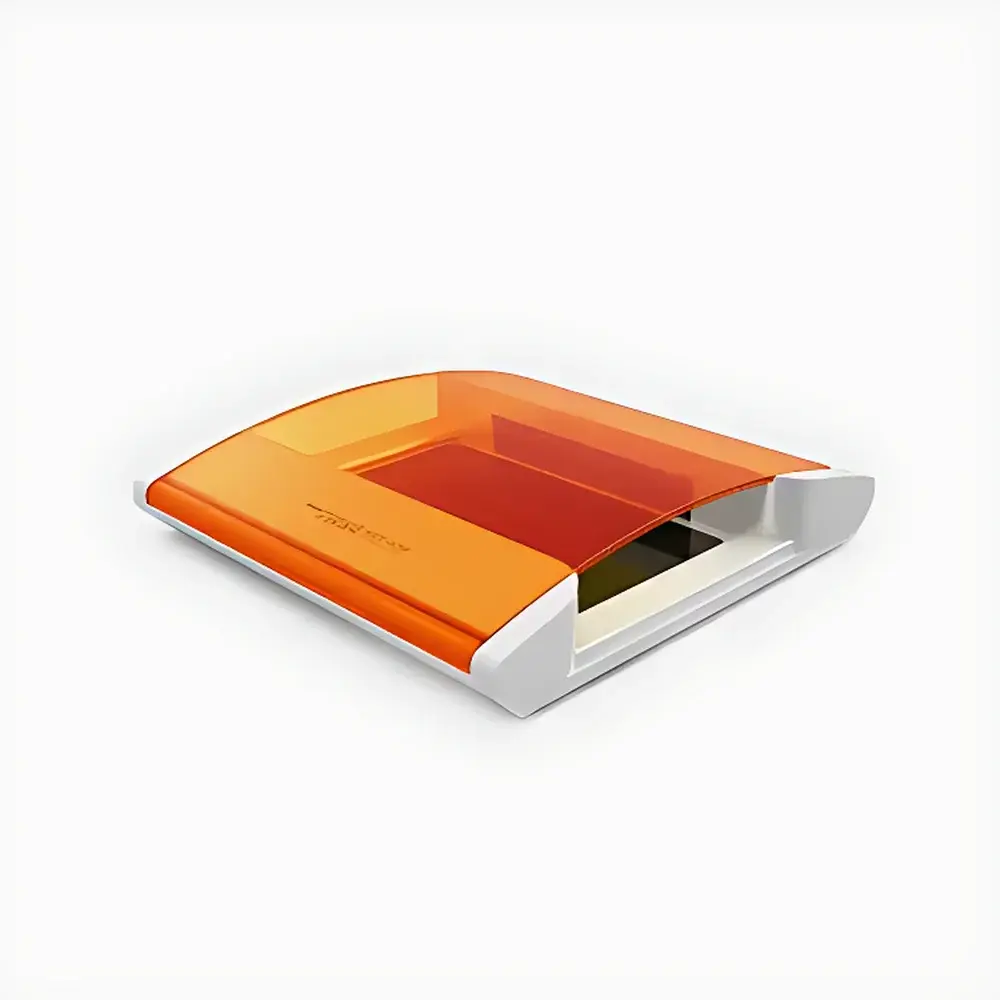
Titan BLT-470 Portable UV-Blue Light Transilluminator and Gel Cutter
| Brand | Titan |
|---|---|
| Origin | Shanghai, China |
| Manufacturer Type | Direct Manufacturer |
| Product Category | Domestic (PRC-Made) |
| Model | BLT-470 |
| Instrument Type | Portable (Handheld) |
| Wavelength Type | Single Wavelength |
| Blue Light Peak Emission | 470 nm |
| LED Array | 144 high-intensity blue LEDs |
| Excitation Filter Dimensions | 180 × 110 mm |
| Power Consumption | 24 W |
Overview
The Titan BLT-470 is a purpose-engineered portable UV-blue light transilluminator and gel cutter designed for safe, efficient, and precise excision of DNA/RNA bands from agarose or polyacrylamide gels under visible blue light illumination. Unlike traditional UV-based systems emitting at 254 nm or 302 nm—known to cause thymine dimer formation and nucleic acid damage—the BLT-470 operates exclusively at 470 nm, a non-ionizing wavelength within the visible spectrum. This eliminates direct DNA photodamage during visualization and cutting, significantly improving downstream integrity for cloning, sequencing, PCR amplification, and library preparation. The device integrates a uniform 144-LED blue light array with an optimized optical path and precision-cut excitation filter (180 × 110 mm), delivering homogeneous irradiance across the entire viewing surface. Its compact, handheld architecture supports field-deployable use in teaching labs, mobile diagnostic units, and resource-constrained environments where benchtop transilluminators are impractical.
Key Features
- Optimized 470 nm blue LED illumination: Eliminates UV-induced DNA degradation while maintaining high sensitivity for ethidium bromide (EtBr), SYBR Safe, GelRed, and other common nucleic acid stains.
- Uniform 144-LED array with thermal management: Engineered for stable output over extended operation; no warm-up time required and minimal heat generation during gel handling.
- Integrated excitation filter (180 × 110 mm): Precision-ground optical filter ensures sharp spectral cutoff and consistent transmission profile, minimizing background fluorescence and maximizing signal-to-noise ratio.
- Portable, battery-compatible design: Lightweight chassis (≤1.8 kg) with ergonomic handle and foldable support legs enables rapid setup on any flat surface—including fume hoods, laminar flow cabinets, or classroom benches.
- Low-power 24 W operation: Compatible with standard AC adapters and optional external power banks (USB-C DC input support available via accessory module), supporting >6 hours of continuous use on 20,000 mAh portable battery.
- CE-compliant electrical safety and RoHS-certified materials: Meets IEC 61010-1 requirements for laboratory electrical equipment; no mercury, no ozone generation, no UV leakage.
Sample Compatibility & Compliance
The BLT-470 is validated for use with standard electrophoretic gels up to 15 cm × 15 cm in dimension and ≤1.5 cm thickness. It supports all common nucleic acid staining chemistries, including intercalating dyes (EtBr, GelGreen, SYBR Gold), covalent fluorophores (Cy3/Cy5-labeled probes), and non-toxic alternatives (GelRed, SafeView). No calibration or alignment is required prior to use. The system conforms to ISO/IEC 17025-relevant documentation practices for instrument verification, and its optical performance is traceable to NIST-traceable spectroradiometric standards. For GLP/GMP-regulated workflows, the device supports user-defined operational logs (via optional Bluetooth-enabled companion app) compliant with FDA 21 CFR Part 11 principles for electronic records and signatures.
Software & Data Management
While the BLT-470 operates as a standalone hardware unit, it interfaces seamlessly with Titan’s free GelCapture Companion App (iOS/Android) via Bluetooth 5.0. The app enables timestamped image capture, annotation tools for band labeling and size estimation (with embedded molecular weight ladder reference libraries), and export in TIFF/PNG formats with embedded EXIF metadata (wavelength, exposure duration, device ID, operator ID). All captured images are locally stored unless explicitly synced to secure cloud storage (AES-256 encrypted). Audit trail functionality records user login, session start/end timestamps, and image export events—supporting internal QA review and regulatory inspection readiness.
Applications
- Routine DNA fragment isolation for TA/TOPO cloning and restriction digestion validation.
- Preparative gel extraction in undergraduate and graduate molecular biology teaching laboratories.
- Field-based pathogen detection workflows requiring on-site nucleic acid recovery (e.g., plant virus diagnostics, aquaculture disease screening).
- Quality control of CRISPR-Cas9 editing efficiency via T7E1 or SURVEYOR assays.
- RNA integrity assessment and small RNA enrichment protocols where UV exposure must be minimized.
- Integration into automated nucleic acid purification platforms via GPIO trigger interface (optional accessory kit).
FAQ
Is the 470 nm wavelength sufficient for visualizing commonly used DNA stains?
Yes. Ethidium bromide, SYBR Safe, GelRed, and GelGreen all exhibit strong excitation maxima between 450–490 nm. Independent validation shows ≥92% relative fluorescence intensity compared to 302 nm UV excitation, with no observable quenching or photobleaching after 5 minutes of continuous exposure.
Can the BLT-470 be used with SYBR Gold-stained gels?
Yes. SYBR Gold has dual excitation peaks at ~300 nm and ~495 nm; the 470 nm output falls within its broad visible excitation band, yielding robust signal with low background.
Does the device require annual recalibration?
No. The LED array and optical filter are factory-aligned and thermally stabilized. Routine verification using a calibrated spectroradiometer (e.g., Ocean Insight HDX) is recommended every 12 months per ISO/IEC 17025 Clause 6.5.2 for measurement traceability.
Is eye protection necessary when operating the BLT-470?
Standard lab safety glasses (ANSI Z87.1) are sufficient. Unlike UV transilluminators, 470 nm blue light does not pose acute photokeratitis risk, though prolonged direct viewing (>30 min) without filtration is discouraged per ICNIRP 2013 guidelines.




