
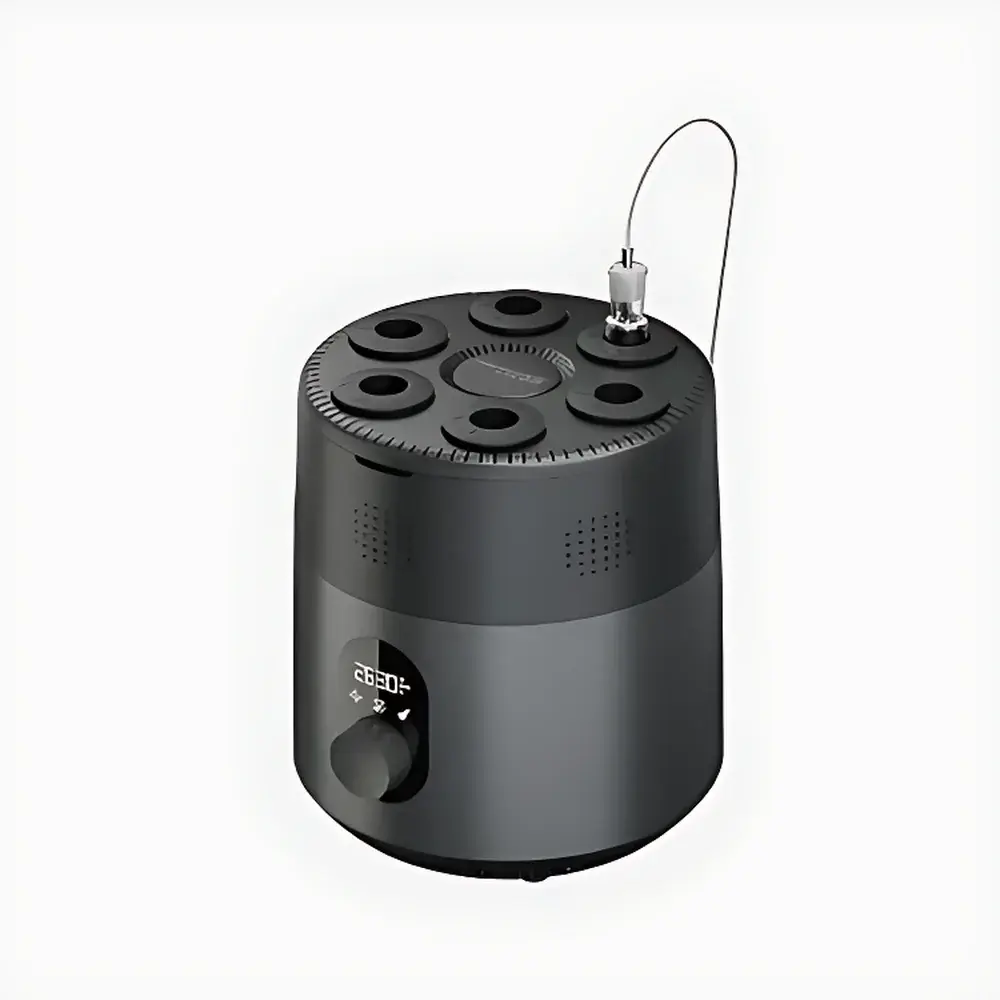
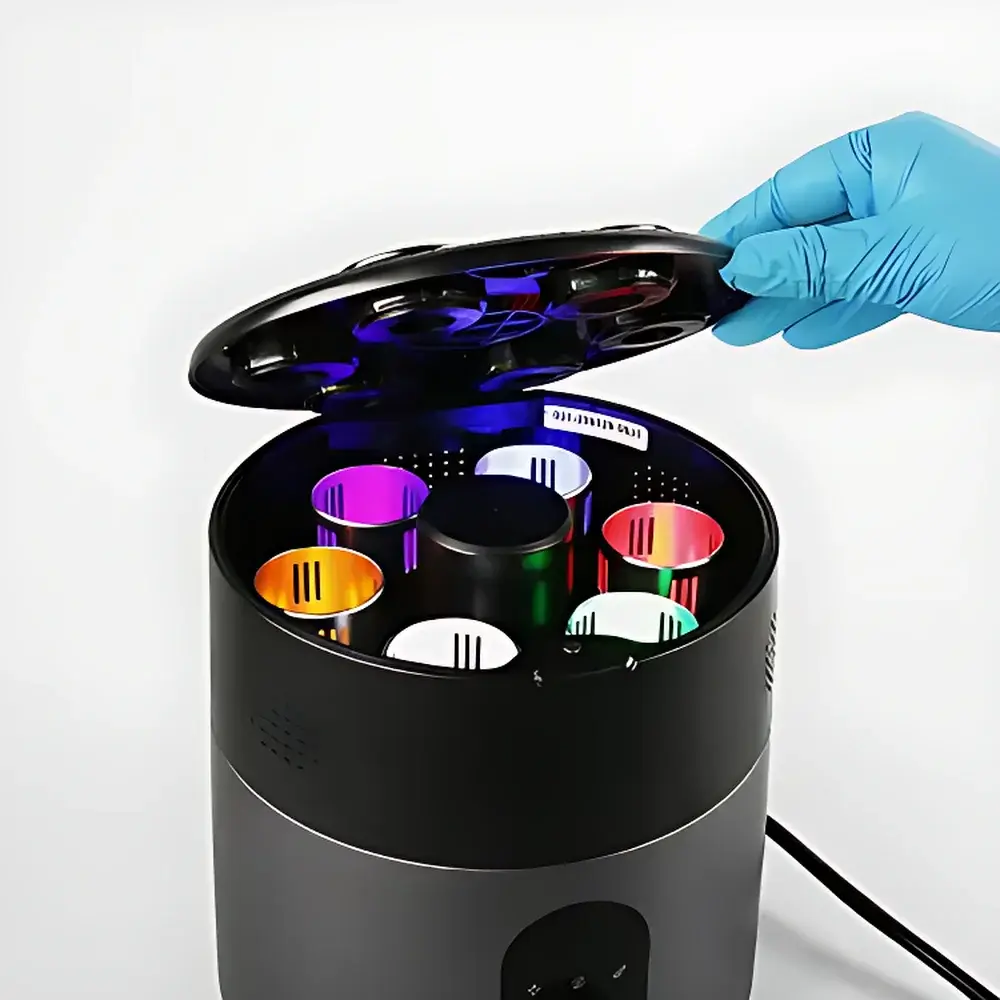
Titan PR-6 Six-Position Parallel Photocatalytic Reactor
| Brand | Titan |
|---|---|
| Origin | Shanghai, China |
| Manufacturer Type | Direct Manufacturer |
| Country of Origin | China |
| Model | PR-6 |
| Temperature Range | Ambient to 50 °C |
Overview
The Titan PR-6 Six-Position Parallel Photocatalytic Reactor is an engineered platform for controlled, reproducible photocatalytic screening under identical irradiation and thermal conditions across six independent reaction vessels. It operates on the principle of simultaneous UV–visible light irradiation (typically via high-stability LED arrays or mercury/xenon lamp systems with optical filters) coupled with precise temperature regulation—enabling quantitative comparison of catalyst performance, reaction kinetics, and quantum yield across multiple samples in a single experimental run. Designed for synthetic chemistry, materials science, and environmental catalysis laboratories, the PR-6 supports standardized photocatalytic evaluation protocols aligned with ISO 10678:2010 (determination of photocatalytic activity of surfaces) and ASTM E2914–13 (standard guide for evaluating photocatalytic materials).
Key Features
- Six independently sealed quartz or borosilicate glass reaction tubes (standard 10–25 mL capacity), each equipped with magnetic stirring and gas-tight septa for inert atmosphere control (N₂, Ar) or reactive gas introduction (O₂, CO₂).
- Integrated high-uniformity LED light source array (optional wavelength configurations: 365 nm, 405 nm, 450 nm, or full-spectrum white), with adjustable intensity (0–100 %) and real-time irradiance monitoring via calibrated photodiode sensor.
- Precise Peltier-based temperature control system maintaining ±0.5 °C stability across the entire 20–50 °C operating range; ambient-start capability ensures compatibility with exothermic or low-activation-energy reactions.
- Modular reactor block with quick-release clamping mechanism and integrated cooling fan for thermal dissipation—optimized for long-duration (>24 h) continuous operation without drift.
- Front-panel digital interface with programmable time-lapse protocol storage (up to 10 user-defined methods), real-time temperature/irradiance logging, and USB data export for post-run analysis.
Sample Compatibility & Compliance
The PR-6 accommodates heterogeneous suspensions (e.g., TiO₂, g-C₃N₄, MOFs), homogeneous molecular photocatalysts (e.g., Ru(bpy)₃²⁺, Ir(ppy)₃), and gas–liquid–solid triphasic systems (e.g., CO₂ reduction in aqueous media). All wetted parts comply with USP Class VI biocompatibility standards; quartz reaction tubes meet ASTM E438 Type I, Class A specifications for optical clarity and thermal shock resistance. The system supports GLP-compliant workflows through optional audit-trail-enabled firmware (21 CFR Part 11 ready with electronic signature module).
Software & Data Management
Optional Titan PhotoControl Suite (v2.1+) provides PC-based remote monitoring, multi-parameter synchronization (temperature setpoint, irradiance output, elapsed time), and automated CSV/TXT export compatible with MATLAB, OriginLab, and Python pandas workflows. Data logs include timestamped irradiance (mW/cm²), block temperature (°C), and cumulative photon dose (Einstein/L), enabling direct calculation of apparent quantum efficiency (AQE) per ASTM E2914. Firmware updates are delivered via secure HTTPS portal with SHA-256 verification.
Applications
- High-throughput screening of photocatalyst libraries for H₂ evolution, CO₂ reduction, and organic pollutant degradation (e.g., methylene blue, phenol).
- Kinetic modeling of photoinduced electron transfer pathways using time-resolved sampling and GC-MS/HPLC quantification.
- Stability assessment of photocatalytic coatings under accelerated aging conditions (ISO 22197-2:2016 compliant illumination cycles).
- Optimization of reaction parameters—including light intensity, catalyst loading, pH, and co-catalyst ratio—in DOE (Design of Experiments) frameworks.
- Educational use in advanced physical chemistry and materials engineering labs for teaching semiconductor bandgap excitation principles and surface redox thermodynamics.
FAQ
Can the PR-6 accommodate custom tube geometries or volumes beyond standard 25 mL?
Yes—interchangeable reactor blocks support optional 5 mL micro-vial and 50 mL cylindrical tube configurations (part numbers available upon request).
Is ozone generation suppressed during UV-C irradiation?
The standard 365 nm LED array emits negligible <200 nm output; ozone-free operation is confirmed by onboard ozone sensor calibration (detection limit: 10 ppb).
Does the system support external gas flow control for continuous-feed experiments?
Yes—six independent mass flow controllers (MFCs) can be integrated via 0–5 V analog input ports; Titan offers certified MFC modules (Bronkhorst EL-FLOW Select compatible).
What maintenance intervals are recommended for optical components?
LED arrays require no recalibration; annual photodiode sensor verification and quartz tube cleaning with piranha solution (under fume hood) are advised per ISO/IEC 17025 laboratory maintenance schedules.



