
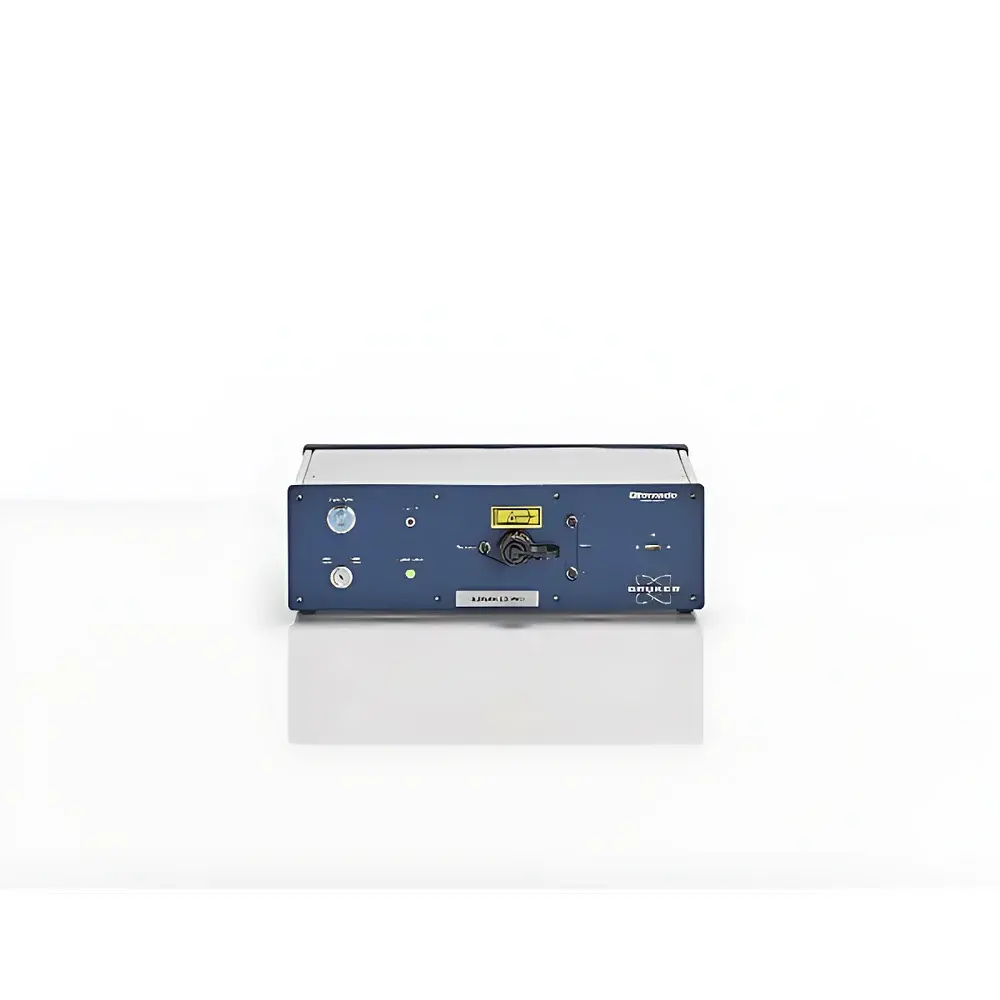
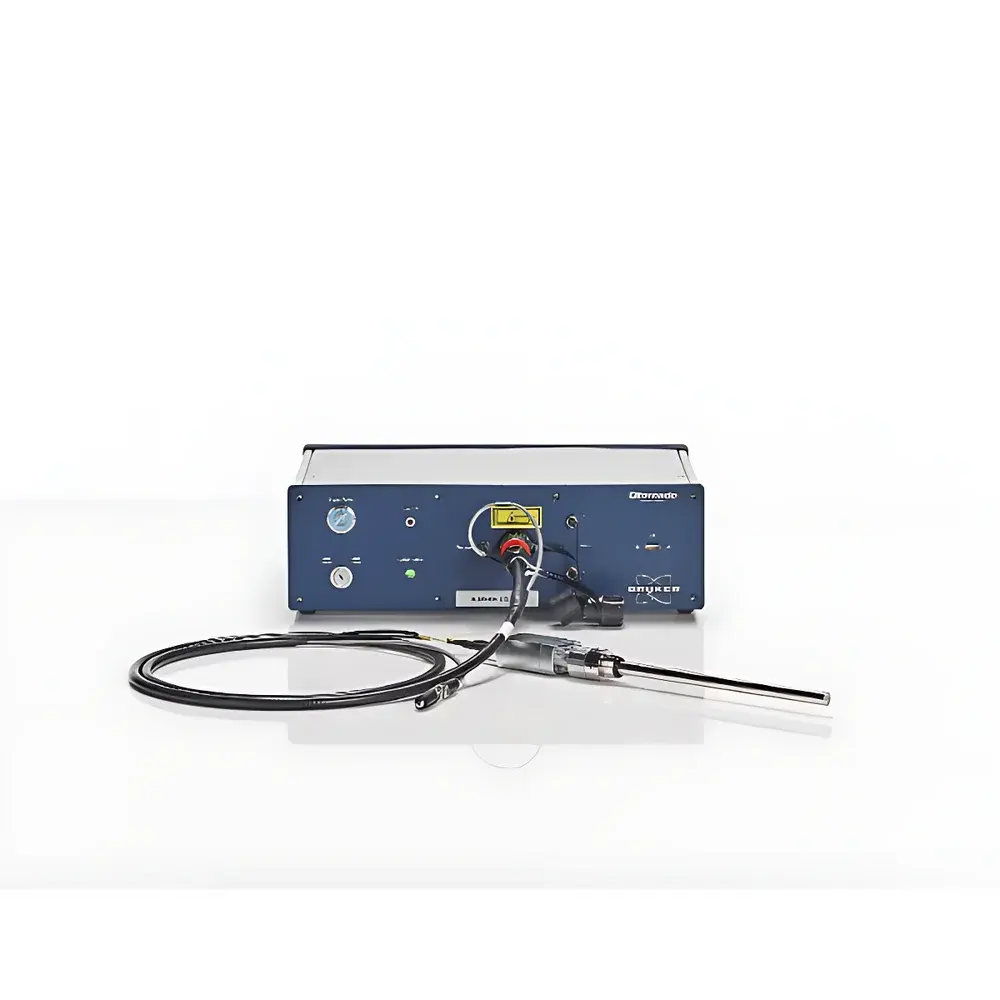
Brookfield SuperFlux™ Online Raman Spectrometer
| Brand | Bruker |
|---|---|
| Origin | Germany |
| Model | SuperFlux™ |
| Instrument Type | Online Raman Spectrometer |
| Laser Wavelength | 785 nm |
| Optical Architecture | HTVS™ (High-Throughput Virtual Slit) Technology |
| Safety Features | Integrated laser fiber break detection and hardware interlock |
| Compliance | FDA 21 CFR Part 11 ready |
| Enclosure Rating | Suitable for hazardous (explosion-proof) areas |
| Form Factor | Standalone, compact benchtop unit |
Overview
The Brookfield SuperFlux™ Online Raman Spectrometer (SFx) is a purpose-engineered, process-integrated analytical instrument designed for real-time molecular characterization in regulated industrial environments. Operating on the principle of inelastic light scattering—Raman spectroscopy—the SFx delivers non-destructive, reagent-free chemical identification and quantification by measuring vibrational energy shifts induced when monochromatic 785 nm laser light interacts with molecular bonds. Unlike dispersive spectrometers constrained by physical slit limitations, the SFx leverages Bruker’s proprietary HTVS™ (High-Throughput Virtual Slit) optical architecture. This technology replaces mechanical slits with computational aperture synthesis, enabling >10× higher photon throughput while preserving spectral resolution (typically ≤4 cm⁻¹ FWHM). The result is accelerated acquisition times—critical for high-speed continuous manufacturing—and significantly improved signal-to-noise ratio (SNR), detection limits, and measurement reproducibility across batch and continuous processes.
Key Features
- HTVS™ optical design delivering >10× photon throughput vs. conventional slit-based Raman systems without compromising spectral resolution
- Integrated 785 nm diode laser with thermoelectric cooling and active wavelength stabilization for long-term intensity and frequency consistency
- Self-contained, fanless enclosure with IP65-rated front panel and optional ATEX/IECEx certification for Zone 1/21 hazardous area deployment
- Dual-fiber connector interface with embedded fiber-break detection and hardware-level laser interlock—compliant with IEC 60825-1 Class 1 safety requirements
- No moving parts in the optical path; solid-state detector (back-illuminated CCD or sCMOS, depending on configuration) ensures operational robustness under vibration and thermal cycling
- Onboard ARM-based controller running real-time Linux OS, eliminating dependency on external PCs for basic operation and alarm-triggered data logging
Sample Compatibility & Compliance
The SuperFlux™ supports direct in-line, at-line, and remote probe-based measurements via industry-standard 200–600 µm core multimode fibers (up to 5 m length). Compatible probe configurations include immersion, flow-cell, reflective, and gas-phase sampling variants, enabling analysis of liquids, slurries, powders, gases, and heterogeneous mixtures in stainless steel, glass-lined, or polymer process vessels. All firmware and software modules are developed and validated per GAMP 5 guidelines. Data integrity controls—including electronic signatures, audit trails, role-based access, and immutable raw-data archiving—are fully aligned with FDA 21 CFR Part 11, EU Annex 11, and ISO/IEC 17025 requirements. System validation documentation packages (IQ/OQ/PQ protocols) are provided for GMP-compliant pharmaceutical, biotech, and fine chemical manufacturing.
Software & Data Management
The SFx ships with Bruker’s OPUS® Raman Process Edition—a dedicated platform for method development, multivariate calibration (PLS, PCR, SVM), real-time spectral monitoring, and PAT (Process Analytical Technology) dashboard integration. Calibration models built on one SFx unit can be transferred to others using Bruker’s standardized model portability framework, reducing method revalidation effort across multi-site deployments. Raw spectra are stored in HDF5 format with embedded metadata (timestamp, temperature, pressure, operator ID, instrument status). Data export supports ASTM E1382-compliant CSV, .dx, and .jdx formats. Optional OPC UA server enables seamless connectivity to DCS, MES, and LIMS platforms for closed-loop process control and automated release testing.
Applications
- Real-time reaction endpoint detection and kinetic profiling in API synthesis and polymerization reactors
- In-line concentration monitoring of active pharmaceutical ingredients (APIs), excipients, and solvents during crystallization and drying
- Blend uniformity assessment in solid-dose manufacturing (per USP and FDA PAT guidance)
- Raw material identity verification (ID) and assay quantification in incoming QC laboratories
- Contamination detection in bioreactor feeds and downstream purification streams (e.g., residual ethanol, acetone, host cell proteins)
- Gas composition analysis in syngas, flare gas, or fermentation off-gas monitoring applications
FAQ
Is the SuperFlux™ suitable for use in explosion-proof environments?
Yes—the SFx is available with ATEX II 2G Ex db IIB T4 Gb and IECEx Ex db IIB T4 Gb certifications for installation in Zone 1 hazardous locations.
Does it support transfer of chemometric models between instruments?
Yes—Bruker’s standardized spectral preprocessing and model packaging protocol ensures quantitative model transfer across SuperFlux™ units without recalibration.
What level of regulatory support is provided for GMP validation?
Comprehensive IQ/OQ/PQ documentation templates, 21 CFR Part 11 compliance reports, and on-site validation assistance are included in the GxP Support Package.
Can the system operate without a connected PC?
Yes—the onboard controller handles full spectral acquisition, real-time processing, alarm generation, and local data storage independently.
What fiber optic specifications are recommended for remote probing?
Standard configuration uses 400 µm core, 0.22 NA, solarization-resistant silica-silica fibers with SMA 905 connectors; custom lengths and jacketing (e.g., stainless steel armored) are available.






