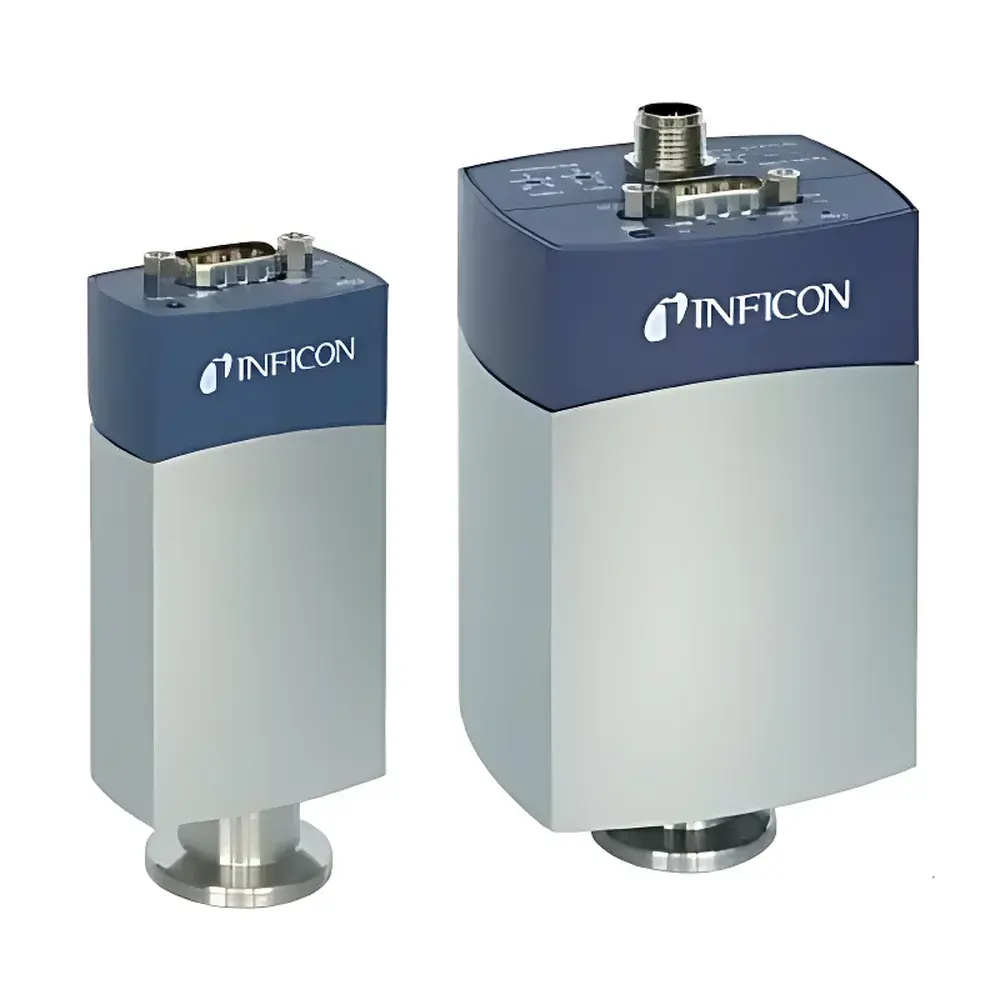
INFICON PCG550 / PCG552 / PCG554 Ceramic Capacitance Manometer & Pirani Hybrid Vacuum Gauge
| Origin | Switzerland |
|---|---|
| Manufacturer Type | Authorized Distributor |
| Origin Category | Imported |
| Model | PCG550, PCG552, PCG554 |
| Pricing | Available Upon Request |
Overview
The INFICON PCG550, PCG552, and PCG554 are hybrid vacuum measurement instruments engineered for high-reliability pressure monitoring across the rough to medium vacuum range (10 mbar to atmospheric pressure, i.e., ~1000 mbar). These gauges integrate two complementary sensing principles in a single, compact housing: a ceramic capacitance manometer for absolute, gas-independent pressure measurement and a thermally based Pirani sensor for enhanced sensitivity and dynamic response at lower pressures. The ceramic diaphragm—fabricated from chemically inert, low-thermal-expansion alumina—is hermetically sealed against a reference vacuum cavity, delivering long-term stability, minimal zero drift, and immunity to gas composition effects. This dual-sensor architecture enables continuous, seamless measurement without mode switching artifacts, making the PCG55x series suitable for applications demanding traceable, repeatable, and process-critical pressure data under variable gas environments—including air, N₂, Ar, O₂, and aggressive mixtures containing HCl, Cl₂, or HF.
Key Features
- Ceramic capacitance manometer core with <10 ppm/°C thermal zero shift and <0.1% FS long-term stability (typical over 12 months)
- Pirani element with tungsten filament (PCG550), nickel filament (PCG552), or fully ceramic-coated sensor head (PCG554) for corrosion resistance in aggressive chemical environments
- Gas-independent accuracy above 10 mbar—enabling safe venting of mixed-process gases without recalibration
- Full-scale repeatability better than ±0.05% FS at atmospheric pressure; response time <100 ms for step changes
- Mounting orientation independent—no gravitational influence on ceramic diaphragm deflection or Pirani thermal equilibrium
- Plug-in sensor module with embedded calibration coefficients stored in EEPROM—ensures metrological continuity after field replacement
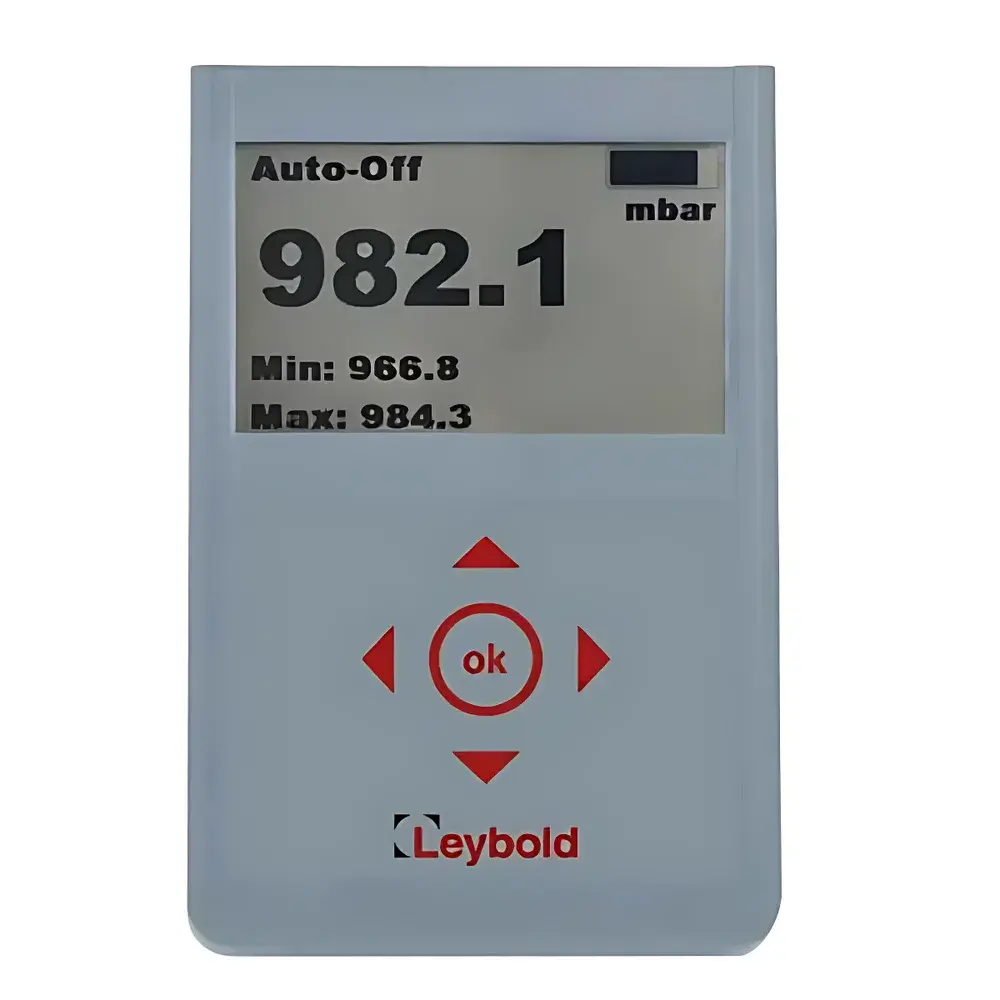
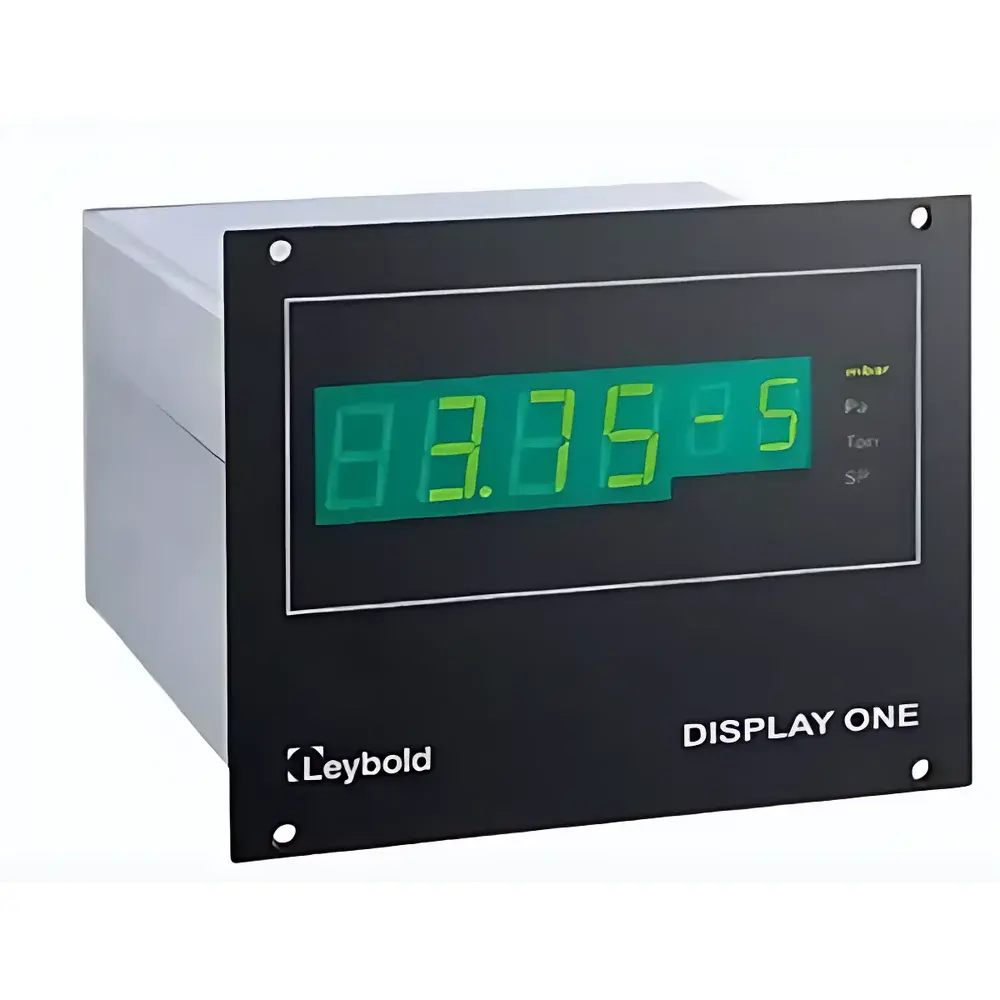
- Analog output (0–10 V or 4–20 mA) compliant with industrial control systems; optional digital interface (RS485/Modbus RTU) and local display unit available
- Integrated diagnostic port supporting real-time sensor health monitoring, temperature compensation status, and fault logging per IEC 61508 SIL2-readiness guidelines
Sample Compatibility & Compliance
The PCG55x series is compatible with non-condensable gases and dry vapor environments typical in semiconductor tool chambers, vacuum metallurgy furnaces, coating systems (PVD/CVD), and analytical instrument forelines. It is not rated for condensable vapors (e.g., water, solvents) or particulate-laden streams without upstream filtration. All models comply with CE marking requirements under the EU Electromagnetic Compatibility Directive (2014/30/EU) and Low Voltage Directive (2014/35/EU). The ceramic sensor assembly meets ISO 3567:2022 for vacuum gauge construction integrity and is qualified for use in Class 100 cleanroom environments per ISO 14644-1. For regulated industries, the analog output signal path supports 21 CFR Part 11-compliant data acquisition when integrated with validated SCADA or MES platforms featuring audit-trail-enabled firmware.
Software & Data Management
While the PCG55x operates as a standalone analog/digital transducer, INFICON provides the optional Vacuum Manager™ PC software suite (v4.2+) for configuration, real-time trending, and calibration report generation. The software supports import/export of calibration certificates in ASTM E29-compliant format and enables user-defined alarm thresholds with timestamped event logging. When connected via RS485, the gauge supports Modbus register mapping for integration into PLC-based vacuum sequencing logic—particularly valuable for safety interlock loops requiring dual-redundant pressure verification. Raw sensor diagnostics (e.g., Pirani resistance drift, ceramic bridge offset, ambient temperature deviation) are accessible via dedicated Modbus addresses, facilitating predictive maintenance scheduling in accordance with ISO 55001 asset management frameworks.
Applications
- Pre-vacuum and roughing stage monitoring in semiconductor etch and deposition tools
- Atmospheric break detection in vacuum lock systems—enabling rapid cycle recovery without manual reset
- Safety-critical interlocks for vacuum chamber overpressure protection (e.g., preventing mechanical damage during uncontrolled venting)
- Process endpoint detection in vacuum drying and degassing operations where pressure stabilization correlates with moisture removal completion
- Reference-grade pressure validation in calibration laboratories performing ISO/IEC 17025-accredited vacuum instrument verification
- Continuous monitoring in pilot-scale vacuum distillation units handling corrosive organohalides or acidic feedstocks
FAQ
Is the PCG554 suitable for chlorine-containing process gases?
Yes—the PCG554 features a fully ceramic-coated sensor head (including filament support structure and thermal shielding), providing proven resistance to halogen-based chemistries per ASTM G152 accelerated corrosion testing protocols.
Can the sensor be recalibrated in-field without returning to INFICON?
No full recalibration is possible in-field; however, the plug-in module retains factory NIST-traceable calibration coefficients, and zero-point verification (at known atmospheric pressure) can be performed using the diagnostic port and Vacuum Manager™ software.
What is the maximum allowable ambient temperature for continuous operation?
The standard version is rated for 0–50 °C ambient; an extended-range variant (PCG55x-ER) supports operation up to 70 °C with derated long-term stability specifications.
Does the gauge meet requirements for SIL2-certified safety instrumented systems (SIS)?
While the PCG55x itself is not SIL2-certified, its diagnostic port output and failure mode reporting enable integration into SIL2 architectures when combined with certified logic solvers and redundancy schemes per IEC 61511.
How does the hybrid architecture improve measurement continuity compared to standalone Pirani or capacitance gauges?
Unlike traditional dual-gauge setups requiring external switching logic—and introducing hysteresis or dead zones—the PCG55x fuses both signals algorithmically within the transducer electronics, ensuring uninterrupted, gap-free pressure data across the entire 10 mbar–1000 mbar span.