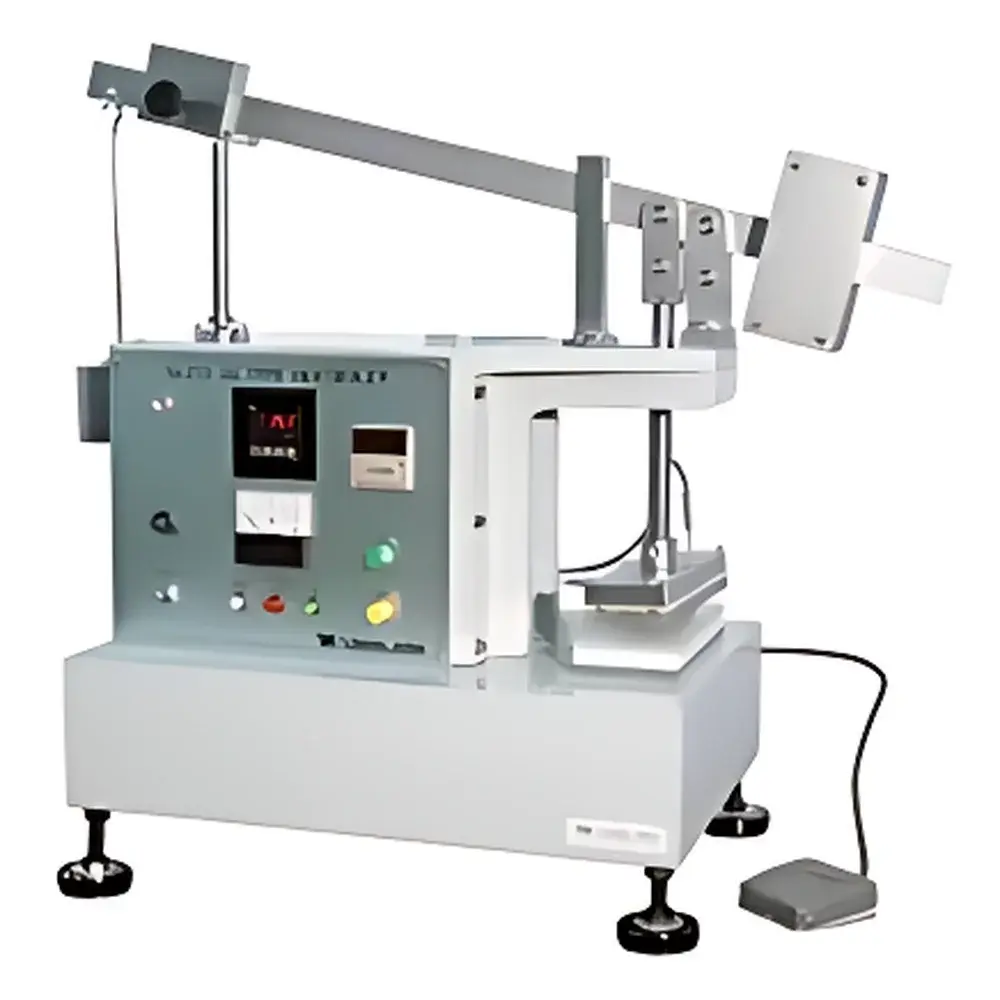
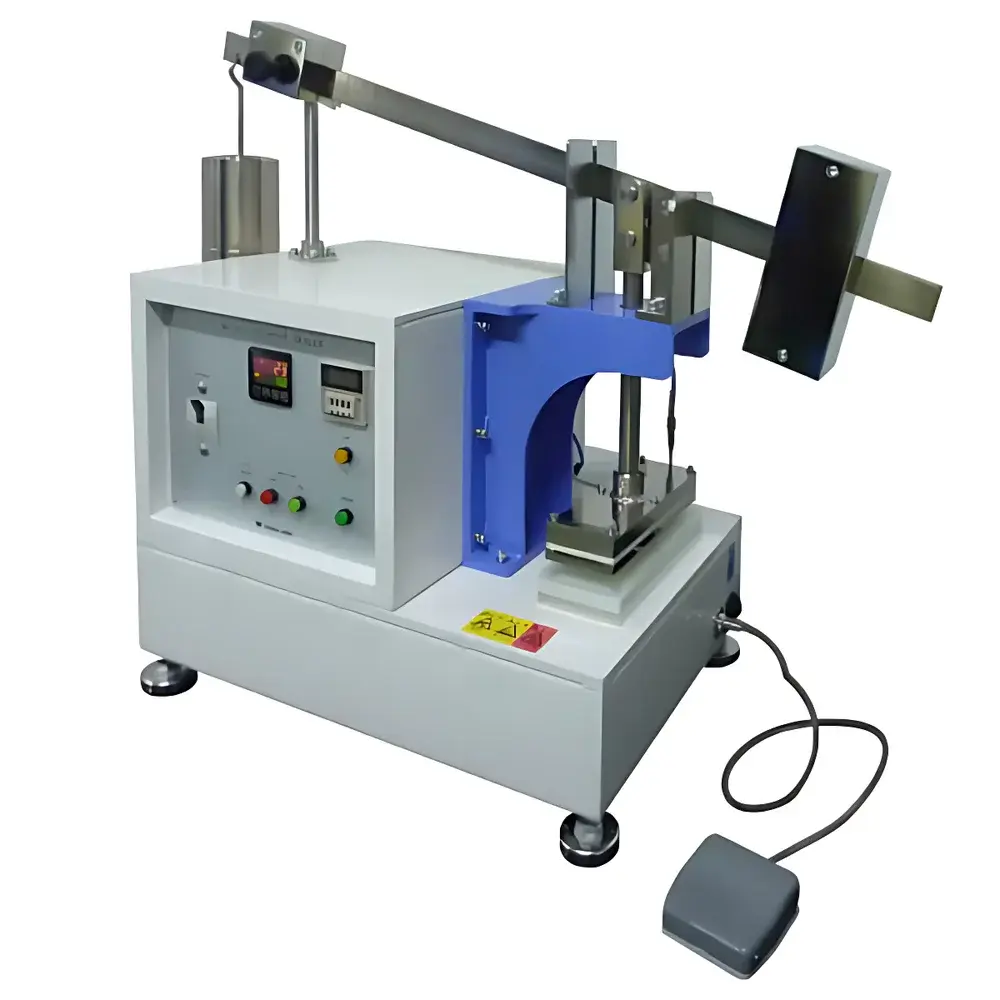
Yasuda No.213 JIS Heat Sealer
| Brand | Yasuda |
|---|---|
| Origin | Japan |
| Model | No.213 |
| Standard Compliance | JIS Z1514, JIS Z1521, JIS Z1707 |
| Sealing Area Options | 20 × 40 mm (3-row) or 20 × 180 mm (single-row) |
| Max Temperature | 300 °C (user-specified setpoint) |
| Pressure Application Method | True-load direct-acting pneumatic/hydraulic system |
| Platen Gap | 8 mm |
| Pressure Range | 49–294 kPa (0.5–3.0 kgf/cm²) |
| Timer Range | 0.01–99.99 s |
| Power Supply | AC 100 V, 1-phase, 10 A, 50/60 Hz |
| Dimensions (W×D×H) | Approx. 750 × 350 × 670 mm |
| Weight | Approx. 65 kg |
Overview
The Yasuda No.213 JIS Heat Sealer is a precision-engineered thermal sealing instrument designed explicitly for compliance-driven quality control in flexible packaging development and production environments. It operates on the fundamental principle of controlled heat, pressure, and dwell time application to evaluate the thermoseal integrity of laminated films, cellophane, polyolefin-based pouches, and other thermoplastic packaging substrates. Unlike simplified benchtop sealers, the No.213 implements a true-load pressure delivery system—where applied force is mechanically transmitted without hydraulic amplification or spring compensation—ensuring high reproducibility across repeated sealing cycles. Its design strictly adheres to Japanese Industrial Standards JIS Z1514 (general requirements for heat-sealed packaging), JIS Z1521 (test methods for seal strength of plastic film packages), and JIS Z1707 (requirements for packaging materials for foodstuffs), making it suitable for laboratories performing pre-shipment validation, supplier qualification, or internal process capability studies under regulated manufacturing frameworks.
Key Features
- True-load pressure actuation mechanism delivering calibrated, traceable force across the full 49–294 kPa range—eliminating variability from ambient temperature drift or mechanical hysteresis.
- Dual-configurable sealing platens: interchangeable tooling supports either triple 20 × 40 mm parallel seals or a single extended 20 × 180 mm seal line, enabling both comparative multi-condition testing and continuous seam evaluation.
- Precise digital temperature control with ±1.5 °C stability over the full 0–300 °C operating range; user-selectable setpoints accommodate low-melt LDPE, medium-range PP, and high-temperature PET/AL laminates.
- High-resolution timer (0.01 s resolution, up to 99.99 s) synchronized with pressure application onset—critical for evaluating transient sealing kinetics in fast-form-fill-seal (FFS) process simulation.
- 8 mm fixed platen gap ensures consistent film thickness accommodation without manual adjustment; eliminates operator-induced compression variance during sample loading.
- Foot-switch operation enables hands-free, repeatable activation—reducing ergonomic strain and improving inter-operator consistency during high-throughput testing protocols.
Sample Compatibility & Compliance
The No.213 is validated for use with standard packaging films including but not limited to cellulose-based cellophane, biaxially oriented polypropylene (BOPP), cast polypropylene (CPP), low- and high-density polyethylene (LDPE/HDPE), polyester (PET), and aluminum-laminated composites. Its sealing geometry and thermal profile align directly with test specimen dimensions specified in JIS Z1521 Annex B and ASTM F88 (though not certified for ASTM use without calibration verification). The instrument’s mechanical architecture supports GLP-aligned documentation practices: all operational parameters (temperature setpoint, pressure value, dwell time) are manually recorded per test, and physical output—sealed specimens—are retained as primary evidence for audit trails. While the device itself does not include electronic data logging, its deterministic mechanical behavior permits full traceability when integrated into laboratory SOPs compliant with ISO/IEC 17025 or pharmaceutical packaging validation protocols per ICH Q5C.
Software & Data Management
The Yasuda No.213 is a hardware-only, analog-digital hybrid instrument with no embedded firmware, network interface, or proprietary software suite. All parameter inputs are executed via front-panel dials and push-button controls; timing and temperature feedback are displayed on discrete LED indicators. This architecture intentionally avoids software validation complexity, making it suitable for environments where regulatory scrutiny of electronic records is constrained (e.g., non-GMP R&D labs, academic packaging research, or tier-2 supplier QC labs operating under simplified quality systems). Users integrate test outputs into broader data ecosystems by pairing sealed specimens with tensile testers (e.g., Instron 5940 series) and importing force-displacement curves into LIMS or Excel-based statistical process control (SPC) templates. For laboratories requiring 21 CFR Part 11 compliance, external USB data loggers may be employed to record switch activation timestamps and correlate them with environmental chamber logs—though such configurations fall outside Yasuda’s factory validation scope.
Applications
- Development and optimization of heat-seal initiation temperature (HIT) and hot-tack performance windows for new film formulations.
- Validation of sealing parameter robustness across batch-to-batch resin variability in blown-film extrusion lines.
- Root-cause analysis of delamination or seal creep in retortable pouches subjected to elevated temperature/pressure sterilization cycles.
- Comparative assessment of seal integrity between different adhesive primers, corona treatment levels, or metallization thicknesses.
- Supporting packaging validation packages for medical device sterile barrier systems per ISO 11607-2 Annex C.
- Teaching laboratories demonstrating fundamental polymer chain mobility and interfacial diffusion kinetics during thermal bonding.
FAQ
Does the No.213 support automatic data export or USB connectivity?
No. It is a standalone electromechanical instrument with no digital communication ports or internal memory.
Can it be used for ASTM F88 seal strength testing?
It produces specimens compatible with ASTM F88 geometry requirements; however, users must verify temperature uniformity and pressure distribution per ASTM F1884 before claiming conformance.
Is calibration certification included with shipment?
Factory calibration certificates for temperature and pressure transducers are available upon request at additional cost; on-site calibration services require authorized Yasuda service partners.
What maintenance is required for long-term accuracy?
Annual verification of platen parallelism, thermocouple drift, and load-cell linearity is recommended; consumables include replaceable heating element cartridges and silicone-rubber sealing gaskets.
Is CE or UL marking applied to this unit?
The No.213 complies with JIS B 9942 (safety requirements for industrial heating equipment) but is not CE-marked or UL-listed for North American or EU general-purpose use without supplementary risk assessment.