
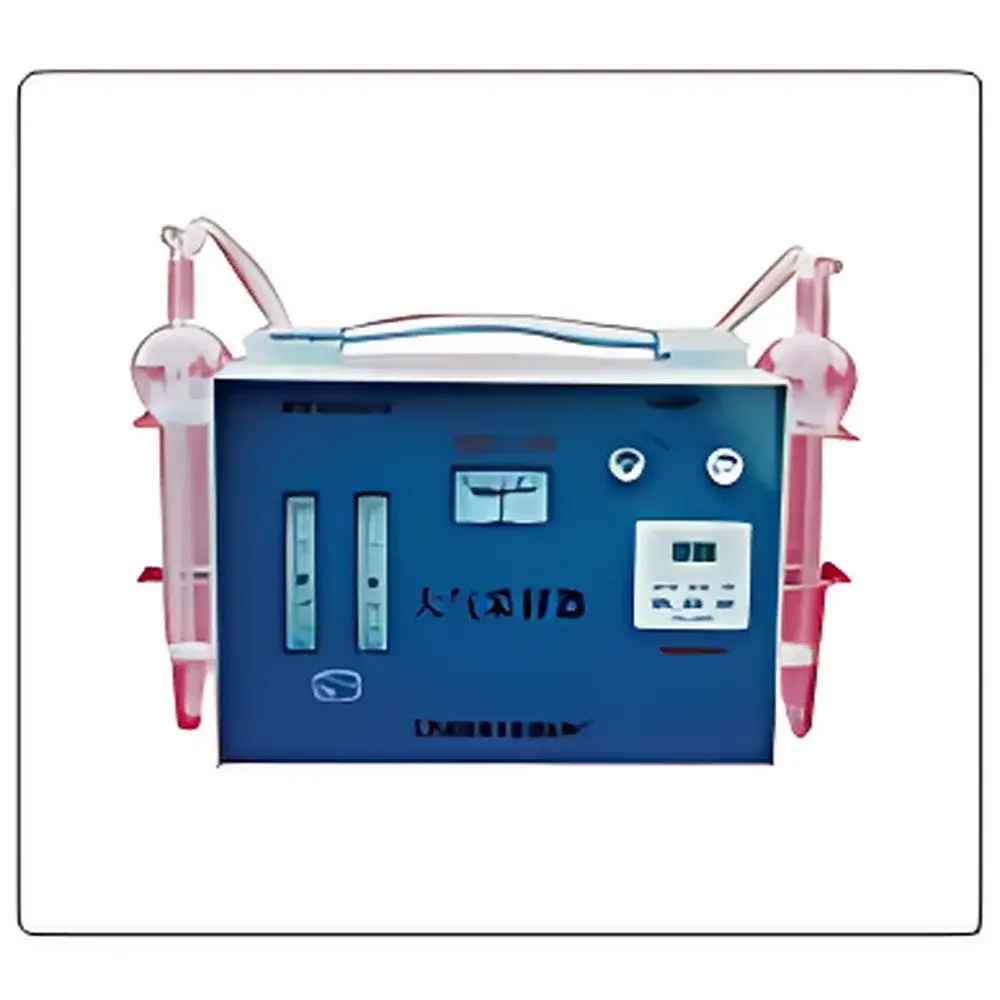
English Product Name
| Origin | Jiangsu, China |
|---|---|
| Manufacturer Type | Authorized Distributor |
| Domestic Production | Yes |
| Model | SQC-1000 |
| Pricing | Available Upon Request |
| Flow Range Options | 0.1–1.5 L/min, 0.1–2.0 L/min, or 0.1–3.0 L/min |
| Flow Accuracy | ≤ ±5% |
| Timing Accuracy | ≤ ±1% |
| Maximum Negative Pressure | ≥25 kPa |
| Power Supply | 10 V DC (rechargeable Ni-Cd battery) / 220 V AC, 50 Hz |
| Operating Temperature | –10 to +45 °C |
| Relative Humidity | ≤85% RH |
| Weight | ~2.0 kg |
Overview
The Yinhe SQC-1000 Dual-Channel Portable Air Sampler is an engineered solution for simultaneous, independent collection of two parallel air samples in occupational hygiene and environmental monitoring applications. Designed in accordance with standard methods for gaseous contaminant sampling—such as those referenced in NIOSH Manual of Analytical Methods (NMAM), OSHA Method 003, and ISO 16000-17—the instrument employs two physically isolated sampling circuits, each driven by a dedicated diaphragm pump. This dual-pump architecture eliminates cross-flow interference and ensures metrological independence between channels, enabling statistically robust duplicate or control/reference sampling protocols. The microprocessor-based timing system supports programmable sampling durations from 1 minute to 15 hours and 59 minutes, with real-time countdown display and automatic power cutoff upon completion. Its compact form factor (~2.0 kg), integrated rechargeable Ni-Cd battery (10 V DC), and dual-mode power compatibility (AC/DC) make it suitable for both field-deployed and fixed-location monitoring workflows under variable ambient conditions (–10 to +45 °C; ≤85% RH).
Key Features
- Dual independent sampling channels with separate pumps—no flow coupling or pressure crosstalk
- Three selectable flow ranges: 0.1–1.5 L/min, 0.1–2.0 L/min, and 0.1–3.0 L/min—calibrated per channel for trace-level gas and vapor collection
- High-precision timing control: ≤±1% deviation over full duration range (1 min to 15 h 59 min)
- Robust flow regulation: ≤±5% accuracy across operating range, verified at ambient temperature and load conditions up to 25 kPa backpressure
- Integrated Ni-Cd battery system: 14–16 h standard charge time; supports ≥8 h cumulative runtime per full charge
- Real-time voltage monitoring: Onboard voltmeter displays battery status during sampling and charging (fully charged ≈12 V; recharge recommended below 8 V)
- Field-ready mechanical design: Includes tripod mount, dual absorption bottle holders, safety bottles (2×), 0.5 m silicone tubing, and protective carry case
Sample Compatibility & Compliance
The SQC-1000 is compatible with standard sorbent tubes (e.g., charcoal, silica gel, Tenax), impingers, and bubblers used in EPA TO-17, NIOSH 1501/1600 series, and ISO 6887-1 methodologies. Its ≥25 kPa maximum negative pressure capability accommodates high-resistance media such as packed-bed cartridges and diffusion samplers. While the device itself does not bear CE or UKCA marking, its electrical design conforms to IEC 61010-1 safety requirements for portable laboratory equipment. All operational parameters align with GLP-compliant field sampling practices, including documented time-stamped start/stop events and battery-status logging. For regulated environments (e.g., OSHA-mandated workplace exposure assessments), users are advised to perform pre- and post-calibration using primary flow standards traceable to NIST or equivalent national metrology institutes.
Software & Data Management
The SQC-1000 operates as a standalone hardware platform without embedded firmware-based data logging or wireless connectivity. All timing and operational parameters are controlled via tactile membrane switches (ON/OFF, HOUR, MIN) and displayed on a 4-digit LED screen. While no proprietary software is required, users may integrate sampling metadata—including start time, duration, flow setting, and battery voltage—into LIMS or electronic lab notebooks (ELN) using standardized templates compliant with ISO/IEC 17025 documentation requirements. For audit readiness, manual logs should include instrument ID, calibration certificate number, operator name, sampling location, and environmental conditions recorded at initiation. No FDA 21 CFR Part 11 functionality is provided, as the device lacks user authentication, electronic signatures, or audit-trail generation.
Applications
- Occupational exposure assessment of volatile organic compounds (VOCs), aldehydes, sulfur dioxide, nitrogen oxides, and acid gases in industrial workplaces
- Parallel sampling for quality control of sorbent tube recovery efficiency and method validation studies
- Indoor air quality (IAQ) surveys requiring co-located reference and test sampling points
- Short-term exposure limit (STEL) and time-weighted average (TWA) monitoring per ACGIH TLV® guidelines
- Field validation of fixed-site continuous monitors through grab-sample correlation
- Environmental compliance sampling for regulatory submissions under local air quality management frameworks
FAQ
What flow calibration standards are recommended for routine verification?
Primary calibrations should be performed using a bubble flowmeter or electronic dry-calibration system traceable to NIST SRM 2820 or equivalent. Daily field checks are advised before sampling using a secondary rotameter calibrated against the primary standard.
Can the SQC-1000 be used with conductive tubing for static-sensitive sampling?
Yes—provided the tubing material maintains chemical inertness for target analytes and does not exceed the instrument’s maximum backpressure specification. Conductive silicone or PTFE-lined tubing is commonly employed for halogenated VOCs and electrostatic-prone environments.
Is battery replacement user-serviceable?
The Ni-Cd battery pack is field-replaceable using standard service tools. Replacement units must match original specifications (10 V nominal, ≥2.5 Ah capacity) and be installed by trained personnel to preserve IP rating and electrical isolation integrity.
Does the instrument support external trigger or synchronization signals?
No—the SQC-1000 has no auxiliary I/O ports, TTL triggers, or RS-232/USB interfaces. Synchronization across multiple units requires manual time alignment using GPS-synchronized watches or network time protocol (NTP)-enabled mobile devices.
How often should the diaphragm pumps be serviced?
Under typical usage (≤4 h/day, moderate dust load), pump maintenance—including valve inspection and diaphragm replacement—is recommended every 6 months or after 500 operating hours, whichever occurs first. Service intervals decrease in high-humidity or particulate-laden environments.







