
b.safe Exhaust Filter
| Brand | b.safe |
|---|---|
| Origin | Germany |
| Manufacturer Type | Authorized Distributor |
| Product Category | Imported Laboratory Safety Equipment |
| Model | b.safe Exhaust Filter |
| Pricing | Upon Request |
Overview
The b.safe Exhaust Filter is an engineered safety component designed for secure venting of solvent waste containers in laboratory and pilot-scale chemical handling environments. It operates on the principle of adsorptive gas-phase filtration, utilizing granular activated carbon (GAC) as the primary sorbent medium to capture volatile organic compounds (VOCs), halogenated solvents, alcohols, ketones, esters, and other hazardous vapors generated during liquid waste accumulation. Unlike passive vent caps or unfiltered lids, the b.safe filter integrates flow-optimized geometry with high-surface-area carbon media—ensuring laminar, low-resistance airflow while maintaining >95% adsorption efficiency across a broad spectrum of common lab solvents under typical ambient conditions (20–25 °C, 40–60% RH). Its function is critical in preventing vapor buildup, mitigating explosion risk, reducing occupational exposure, and supporting compliance with OSHA 1910.1200 (Hazard Communication), ISO 14001 environmental management protocols, and institutional chemical hygiene plans.
Key Features
- High-efficiency activated carbon core with large internal adsorption surface area and minimal dust generation—prevents channeling, maintains structural integrity, and avoids carbon fines entering downstream systems.
- UL 94 V-0 certified polypropylene (PP) housing—resistant to temperatures from 0 °C to +110 °C and exhibiting excellent chemical compatibility (++ rating) with acids, bases, alcohols, chlorinated solvents, and esters.
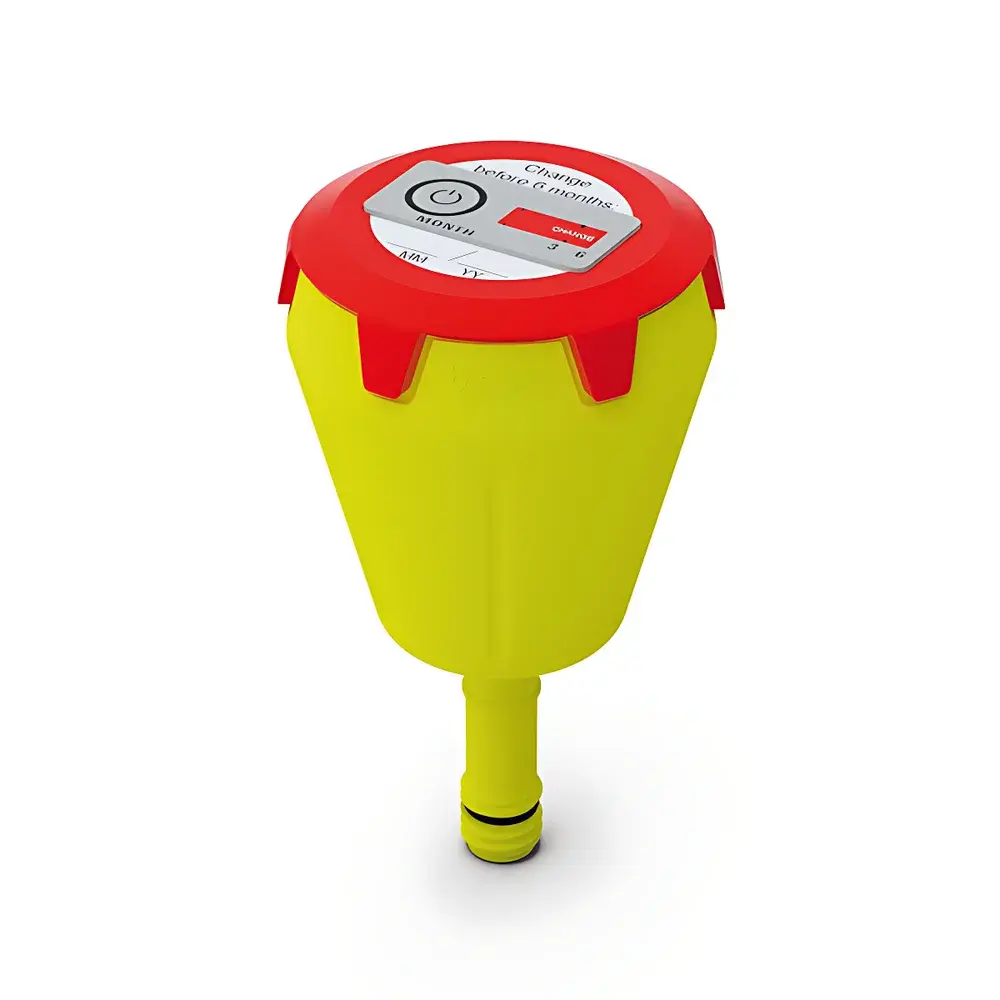
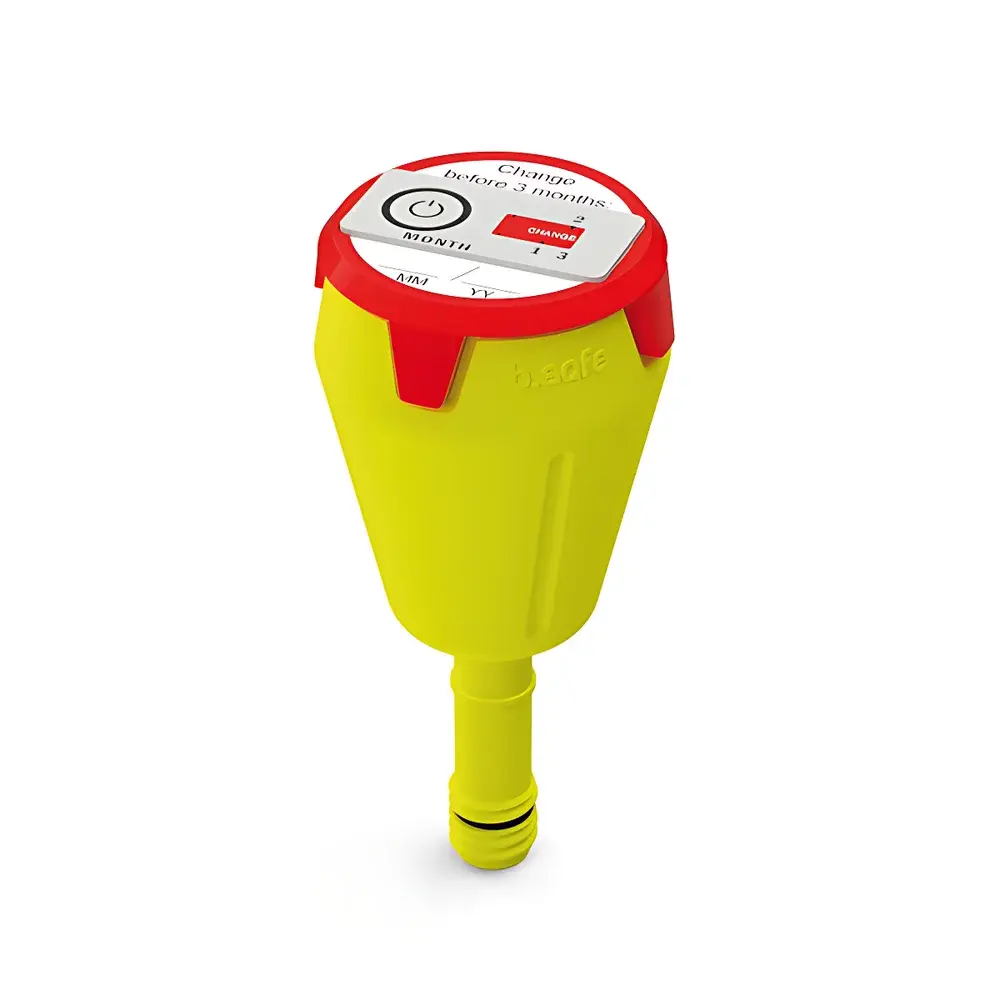
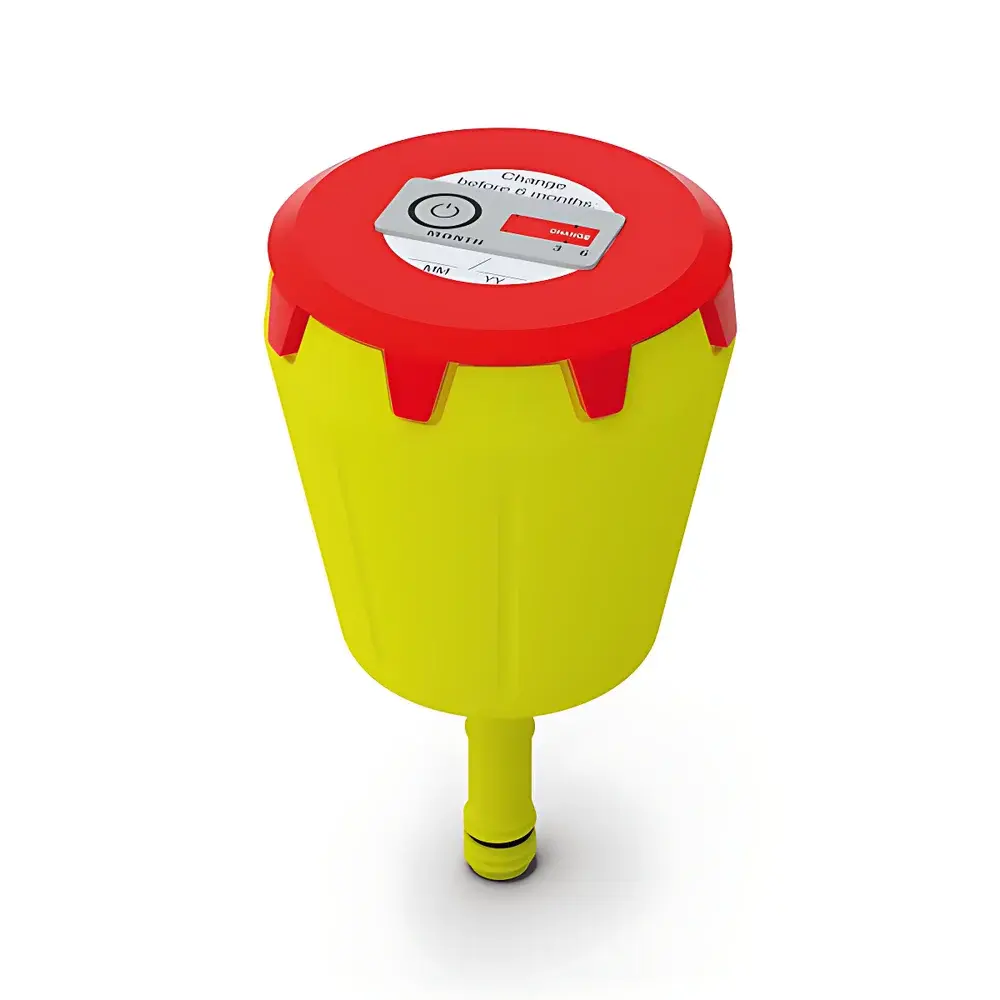
- Integrated service life indicator on the cap—changes progressively from green to red; full red indicates end-of-service and mandatory replacement.
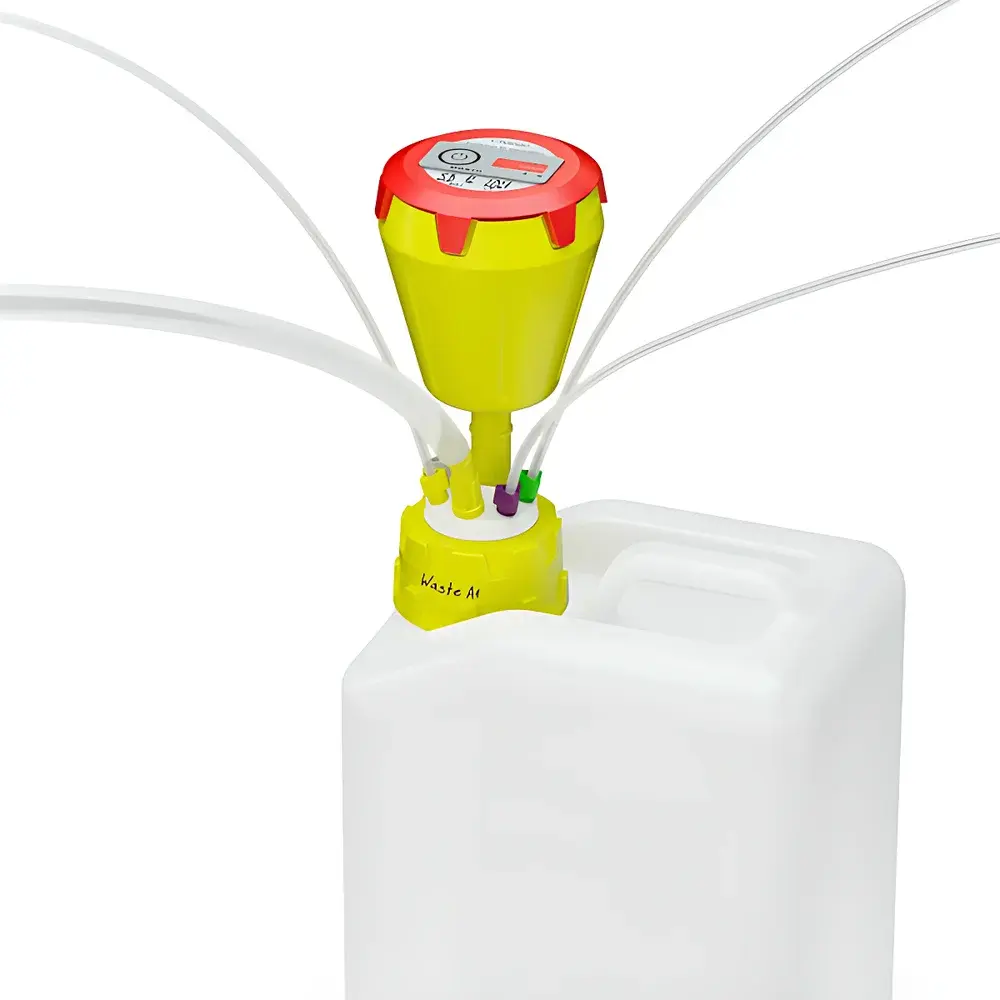
- GL14 threaded connection (DIN 13) ensures secure, leak-tight attachment to standard b.safe waste caps and compatible solvent collection vessels.
- Angled filter body design enables rapid installation, accommodates multiple tubing connections (including capillary lines), and improves alignment with cylindrical thread start positions and O-ring sealing zones.
- Rugged PP construction with textured surface and optimized clamping grooves ensures dimensional stability and reliable hand-tightening without tools.
Sample Compatibility & Compliance
The b.safe Exhaust Filter is validated for use with common laboratory solvents including acetone, ethanol, methanol, ethyl acetate, dichloromethane, hexane, toluene, and acetonitrile. It is not intended for continuous exposure to strong oxidizers (e.g., concentrated nitric acid), hydrogen sulfide, or ammonia vapors. All variants comply with EU Directive 2014/34/EU (ATEX) for non-sparking construction in Zone 2 environments and meet material traceability requirements per REACH Annex XIV. The PP housing conforms to USP Class VI biocompatibility testing criteria and supports GLP-aligned documentation workflows when paired with b.safe’s traceable lot-numbered packaging.
Software & Data Management
While the b.safe Exhaust Filter is a passive mechanical device without embedded electronics or connectivity, its service life indicator supports manual audit trails required under FDA 21 CFR Part 11 Annex 11 and ISO/IEC 17025 quality systems. Users may log replacement dates in electronic lab notebooks (ELNs) such as LabArchives or Benchling using the filter’s unique part number (e.g., M 506-02) and batch-coded expiration guidance. Optional integration with b.safe’s digital inventory module (via API) allows automated low-stock alerts and calibration-maintenance scheduling aligned with institutional asset management platforms.
Applications
- Solvent waste collection in fume hoods, gloveboxes, and ventilated enclosures.
- Venting of reaction quench vessels, extraction funnels, and distillation receivers.
- Secondary containment systems where vapor suppression is mandated by local EHS policies.
- Pharmaceutical QC labs requiring VOC control during sample preparation and residual solvent analysis (ICH Q3C).
- Academic teaching labs implementing ALARA (As Low As Reasonably Achievable) exposure reduction strategies.
FAQ
What determines the service life of the b.safe Exhaust Filter?
Service life depends on solvent type, concentration, temperature, airflow rate, and cumulative vapor load—not calendar time alone. The indicator reflects real-time carbon saturation; replace immediately upon full red transition.
Can the filter be regenerated or cleaned?
No. Activated carbon filters are single-use, non-regenerable components due to irreversible adsorption and potential desorption risks during thermal or solvent-based attempts.
Is the GL14 thread compatible with non-b.safe waste containers?
Yes—GL14 is a standardized conical glass joint thread (DIN 13); however, optimal sealing requires matching O-ring geometry and torque specifications provided in b.safe Technical Note TN-EXF-01.
Does the filter meet fire safety standards for flammable storage cabinets?
Yes—the UL 94 V-0 rating certifies flame self-extinguishment within 10 seconds after ignition source removal, satisfying NFPA 30 and local fire code requirements for cabinet-integrated waste systems.
How should spent filters be disposed?
Treat as hazardous waste per EPA 40 CFR 261 and local regulations. Carbon saturated with halogenated solvents must undergo incineration or licensed recovery; retain SDS and usage logs for disposal manifesting.
Related Products



