
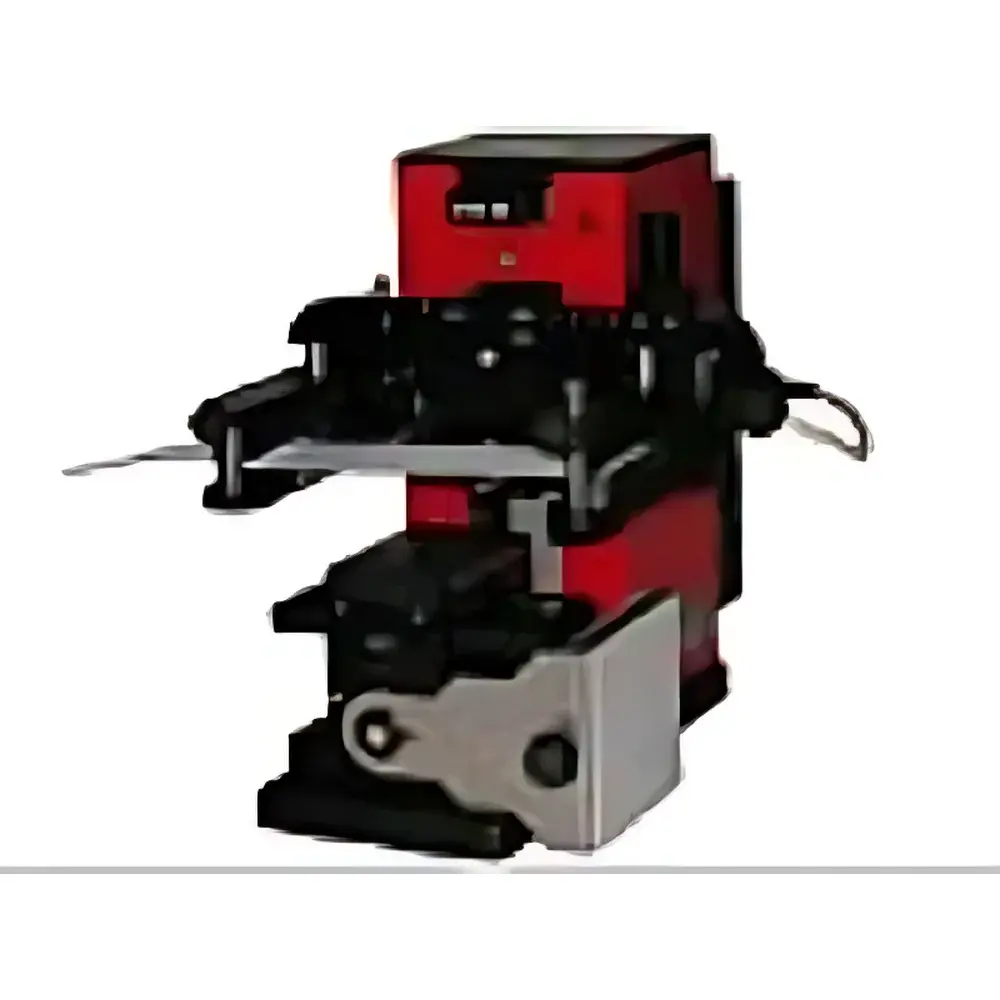
HSA Thermal Shrinkage Analyzer
| Origin | Germany |
|---|---|
| Manufacturer Type | Authorized Distributor |
| Origin Category | Imported Instrument |
| Model | HSA |
| Pricing | Available Upon Request |
| Max Heating Temperature | 230 °C ±0.3% |
| Bidirectional Measurement | MD & CD |
| Thermal Expansion Range | up to 27% |
| Thermal Shrinkage Range | up to 5% |
| Sample Dimensions | 60 mm × 200 mm (MD or CD) |
| Resolution | 0.013% |
| Power Supply | 220 V / 50 Hz |
| Dimensions (H×W×D) | 295 mm × 280 mm × 320 mm |
| Weight | 15 kg |
Overview
The HSA Thermal Shrinkage Analyzer is a precision-engineered instrument designed for quantitative evaluation of dimensional stability in polymeric films, coated papers, and corrugated board under controlled thermal exposure. It operates on the principle of dynamic dimensional monitoring during rapid, uniform heating—enabling real-time acquisition of shrinkage kinetics as a function of temperature and time. Unlike static oven-based methods, the HSA employs a contact-heating configuration where the specimen is suspended taut between two fixed support axes and brought into direct thermal contact with a calibrated heated plate. This design ensures rapid, reproducible heat transfer while maintaining mechanical constraint conditions representative of industrial processing environments (e.g., lamination, drying, or thermoforming). The system captures continuous strain data at sub-percent resolution, generating time–shrinkage and temperature–shrinkage profiles essential for material qualification, process window definition, and comparative benchmarking against ASTM D2732, ISO 11501, and TAPPI T 460 standards.
Key Features
- High-precision contact-heating platform with ±0.3% temperature stability up to 230 °C, enabling accurate simulation of high-temperature processing conditions.
- Bidirectional measurement capability: independent quantification of machine direction (MD) and cross direction (CD) shrinkage—critical for anisotropic polymer films and laminates.
- Integrated tension control: pre-set mechanical load application ensures consistent initial stress state prior to thermal exposure, improving inter-laboratory reproducibility.
- Real-time data acquisition at 10 Hz sampling rate, delivering high-fidelity shrinkage–time curves with 0.013% dimensional resolution.
- Compact benchtop architecture (295 × 280 × 320 mm) with low power demand (220 V / 50 Hz), optimized for QC laboratories with space constraints.
- Modular sample holder accommodates standard specimens of 60 mm × 200 mm—compatible with common film slitting and paper sheeting workflows.
Sample Compatibility & Compliance
The HSA supports a broad range of flexible packaging and converting substrates, including biaxially oriented polypropylene (BOPP), polyester (PET), polyethylene (PE), cellulose acetate, metallized films, coated papers, and fiberboard. Its measurement protocol aligns with internationally recognized test methodologies: ASTM D2732 (Standard Test Method for Unrestrained Linear Thermal Shrinkage of Plastic Film and Sheeting), ISO 11501 (Plastics — Film and Sheet — Determination of Thermal Shrinkage), and TAPPI T 460 (Shrinkage of Paper and Paperboard). All hardware and software components are engineered to support GLP-compliant documentation, including user-accessible audit trails, electronic signatures, and timestamped raw data export—facilitating regulatory readiness for ISO/IEC 17025-accredited labs and FDA-regulated packaging validation (21 CFR Part 11 compliant data handling optional via licensed software module).
Software & Data Management
The HSA is operated via dedicated Windows-based software featuring intuitive workflow navigation, multi-curve overlay, and parametric analysis tools. Raw dimensional displacement data is captured in native .csv format with embedded metadata (operator ID, date/time stamp, sample ID, environmental conditions). The software enables automatic calculation of key metrics: onset temperature of shrinkage, peak shrinkage rate, total shrinkage at specified time intervals (e.g., 60 s, 120 s), and derivative-based inflection points. Export functions support PDF report generation with customizable templates, and data can be imported directly into LIMS or statistical process control (SPC) platforms via ODBC connectivity. All software updates and calibration logs are version-controlled and stored locally with SHA-256 integrity verification.
Applications
- Quality assurance of shrink-sleeve labels and tamper-evident packaging films.
- R&D screening of novel biopolymer blends for heat-seal stability and post-forming dimensional fidelity.
- Validation of coating adhesion and substrate compatibility under thermal stress.
- Root-cause analysis of warping or curl defects in printed flexible packaging rolls.
- Supplier qualification testing per OEM technical specifications (e.g., automotive interior trim films, medical device pouches).
- Correlation studies between DSC-measured glass transition (Tg) and macroscopic shrinkage onset behavior.
FAQ
What sample preparation is required prior to testing?
Standard specimens must be cut to 60 mm × 200 mm with clean, parallel edges; no conditioning is mandatory unless specified by internal SOPs or referenced standards (e.g., ISO 291 preconditioning at 23 °C / 50% RH for 48 h).
Can the HSA measure shrinkage under controlled humidity?
The base configuration operates under ambient laboratory humidity; optional environmental chamber integration (sold separately) enables concurrent RH control from 10–90% RH at temperatures up to 180 °C.
Is calibration traceable to national standards?
Yes—each unit ships with a factory calibration certificate traceable to PTB (Physikalisch-Technische Bundesanstalt, Germany) for temperature and dimensional metrology, with annual recalibration recommended.
Does the system support automated batch testing?
The software includes sequence programming functionality for unattended execution of up to 24 sequential tests with auto-save and pass/fail threshold alerts.
How is thermal contact consistency ensured across repeated measurements?
A pneumatic actuation mechanism delivers repeatable contact force (±0.5 N tolerance) between specimen and heating plate, verified during installation and validated quarterly using NIST-traceable load cells.
Related Products





