
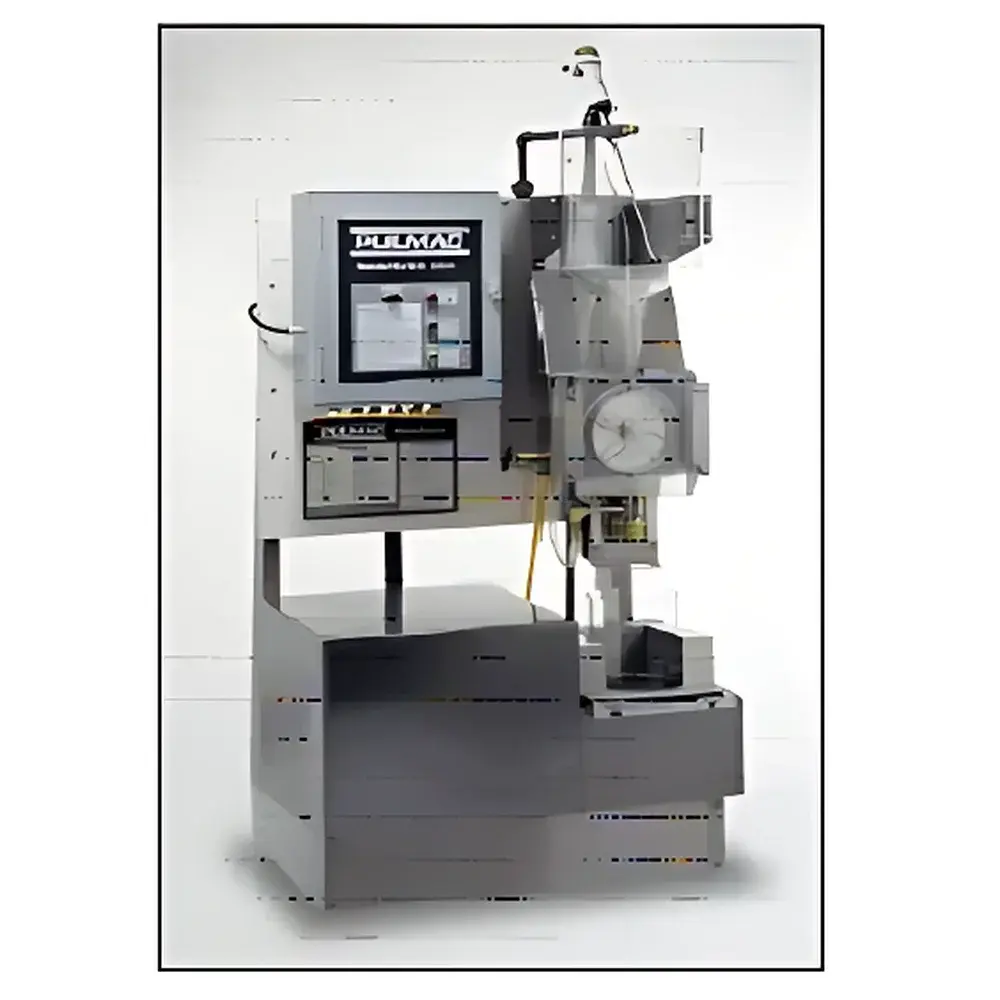
Masterscreen Adhesive Contaminant Analyzer by PULMAC
| Origin | Canada |
|---|---|
| Manufacturer Type | Authorized Distributor |
| Origin Category | Imported |
| Model | Masterscreen |
| Pricing | Available Upon Request |
Overview
The Masterscreen Adhesive Contaminant Analyzer, engineered by PULMAC (Canada), is a dedicated mechanical separation system designed for the quantitative and morphological assessment of adhesive contaminants, stickies, and macro-fibrillar debris in pulp and paper process streams. Operating on the principle of controlled gravitational sedimentation under dewatering conditions, the instrument directs a standardized slurry sample through a vertically mounted precision mesh screen into a defined filtration chamber. As water is rapidly evacuated via vacuum-assisted drainage, suspended contaminants—including thermoplastic adhesives, hot-melt residues, polymeric coatings, and aggregated fiber bundles—sediment uniformly onto a standardized 8-inch (204 mm) diameter filter paper. This physical separation enables subsequent gravimetric quantification or high-resolution digital image analysis for particle count, size distribution (equivalent circular diameter, ECD), shape factor, and color-based classification—providing objective, repeatable metrics essential for pulp quality assurance and contaminant source tracing.
Key Features
- Vertically oriented stainless-steel mesh screen assembly, ensuring consistent hydraulic flow profile and eliminating sedimentation bias due to lateral flow asymmetry
- Integrated volumetric slurry metering system that precisely controls and records the volume of pulp suspension introduced into the screening chamber
- Rapid, gravity-aided contaminant deposition onto filter media—achieving full sedimentation within <60 seconds post-dewatering initiation
- Engineered uniform dispersion mechanism that minimizes agglomeration and promotes even spatial distribution of particles across the entire 204 mm filtration area
- Tool-free, ergonomic filter paper retention system enabling rapid exchange (<15 seconds) without calibration drift or positional misalignment
- Automated back-flush cycle during operation: pressurized water jets clean the reverse side of the mesh screen between tests to prevent cross-contamination and maintain hydraulic integrity
- Laser-cut mesh plates available in two standard aperture configurations (e.g., 75 µm and 150 µm nominal openings) to accommodate varying pulp freeness and contaminant size ranges
- Compatible with all recycled fiber grades—including OCC, ONP, mixed office waste, and deinked pulp—as well as mechanical and chemi-thermomechanical pulps
Sample Compatibility & Compliance
The Masterscreen analyzer supports slurries with consistency up to 1.2% (w/w), pH 4–9, and temperature range 15–40°C—covering standard wet-end conditions across deinking, repulping, and screening operations. It complies with core methodology principles referenced in TAPPI T 276 “Stickies Content in Papermaking Furnish” and ISO 18737 “Determination of Dispersed Sticky Particles in Pulp.” While not a direct regulatory compliance device, its output data meets traceability and documentation requirements for GLP-aligned quality control environments. Filter paper mass measurements adhere to ASTM D646 “Standard Test Method for Tensile Properties of Paper and Paperboard,” and image analysis workflows support audit-ready metadata logging per FDA 21 CFR Part 11 when integrated with validated third-party software platforms.
Software & Data Management
The Masterscreen operates as a standalone hardware platform; however, it is fully compatible with industry-standard image analysis suites (e.g., ImageJ with custom macros, Olympus Stream, or Keyence VHX software) via USB-connected digital microscopy or flatbed scanning. Raw images are saved in TIFF or PNG format with embedded EXIF metadata including timestamp, operator ID, sample ID, and filter lot number. Gravimetric results are logged manually or exported via CSV from connected analytical balances. For enterprise integration, optional RS-232/USB-serial interfaces enable bidirectional communication with LIMS systems supporting ASTM E1384 or HL7 messaging protocols. All measurement sessions generate immutable audit trails when used in conjunction with 21 CFR Part 11-compliant electronic lab notebooks.
Applications
- Root-cause analysis of sheet defects (e.g., holes, spots, caliper variation) linked to sticky deposition in paper machine press sections and dryer cans
- Pre-screening evaluation of incoming recovered paper bales to assess adhesive load prior to repulping
- Validation of dispersion chemistry efficacy in deinking flotation cells and washers
- Monitoring seasonal variability in hot-melt adhesive content from mail-order packaging waste streams
- Supporting ISO 9001:2015 Clause 8.5.1 (Control of Production) through documented contaminant trend reporting
- Calibration verification of inline NIR or fluorescence-based stickies sensors using reference samples prepared on Masterscreen
FAQ
What types of adhesive contaminants can the Masterscreen detect?
It detects thermoplastic adhesives (e.g., EVA, PSA residues), hot-melt glues, wax components, and hydrophobic polymer aggregates—provided they retain sufficient density and particle integrity during dewatering.
Is operator training required to achieve reproducible results?
Yes—standardized slurry preparation (e.g., disintegration time, deflaking protocol) and filter handling technique significantly impact inter-laboratory repeatability; PULMAC provides certified operator qualification modules.
Can the system be validated for GMP environments?
While the hardware itself is not GMP-certified, IQ/OQ protocols are available, and the workflow satisfies Annex 11 principles when paired with validated software and procedural controls.
What filter paper specifications are recommended?
Grade 589½ (blue ribbon) or equivalent ashless qualitative filter papers with nominal retention of 2–3 µm are routinely used; pore size selection depends on downstream imaging resolution requirements.
Does the Masterscreen measure dissolved or colloidal stickies?
No—it isolates only insoluble, filterable particulate contaminants; colloidal or dissolved species require complementary techniques such as solvent extraction followed by GC-MS or SEC-MALS.





