
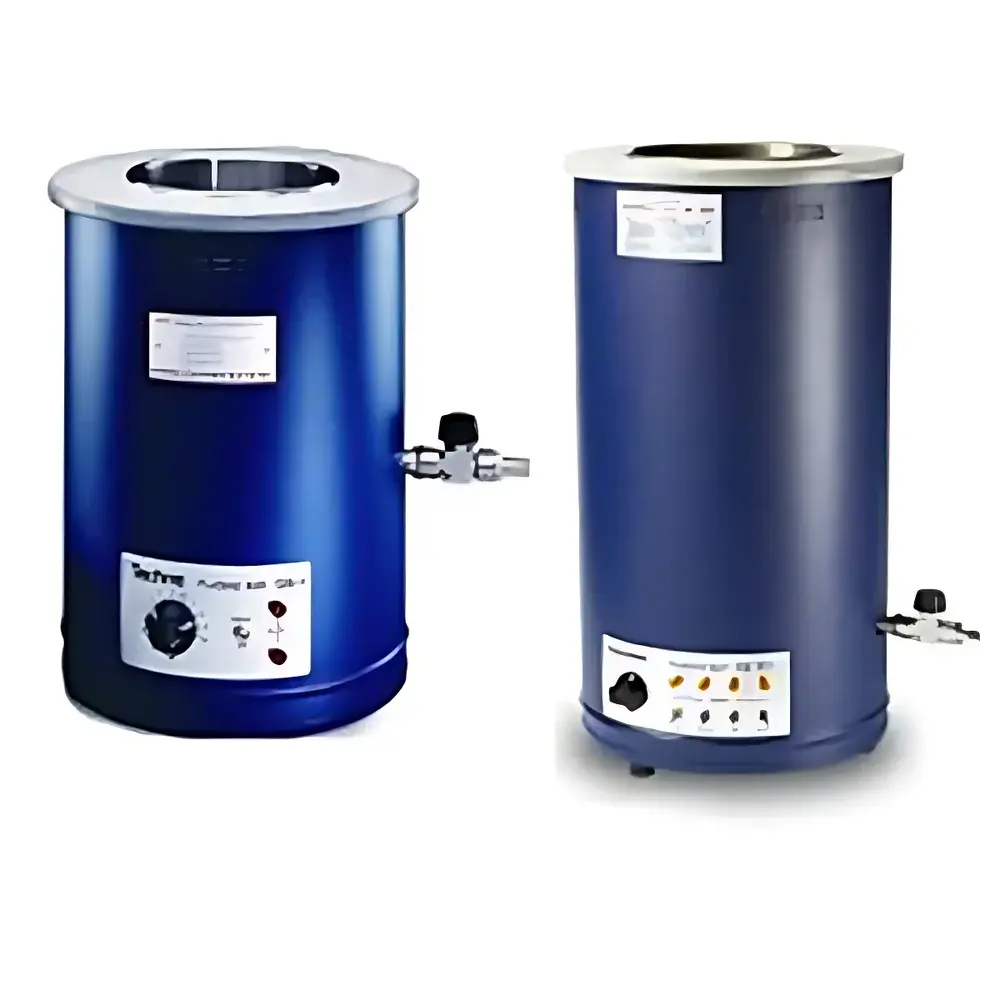
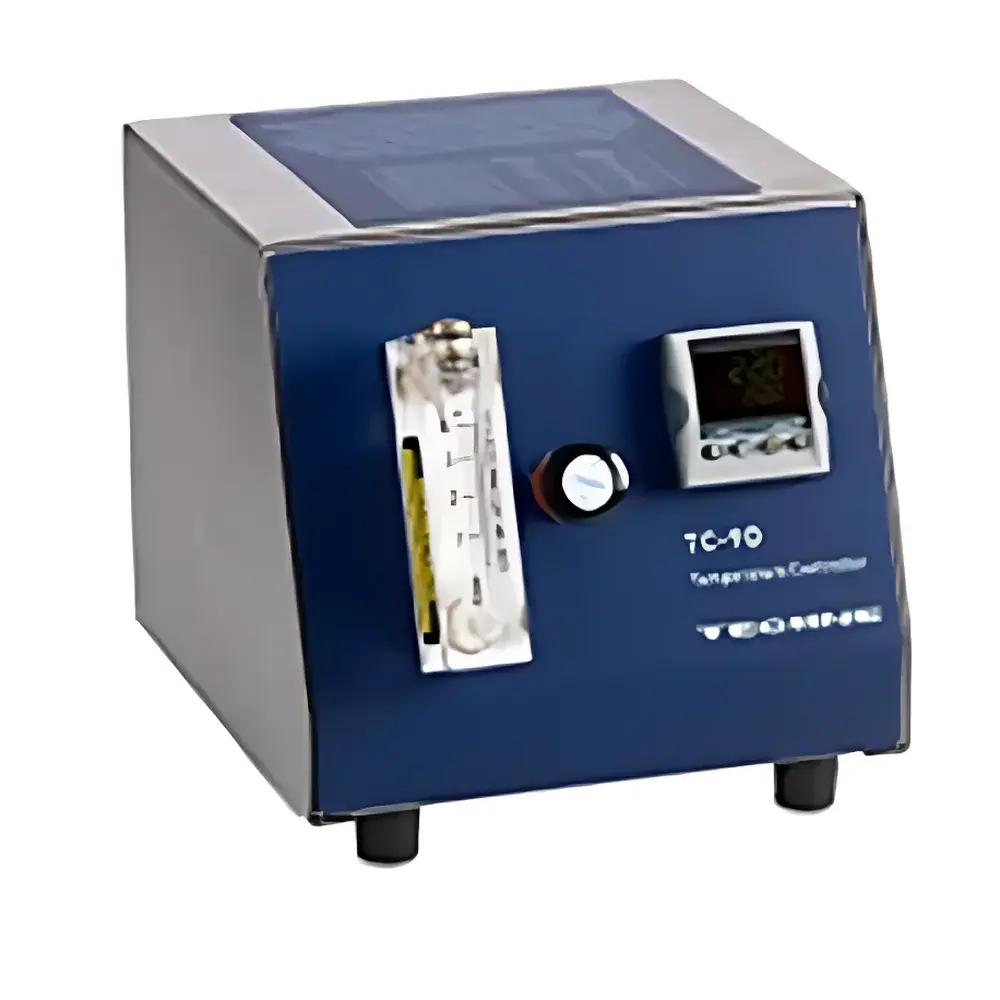
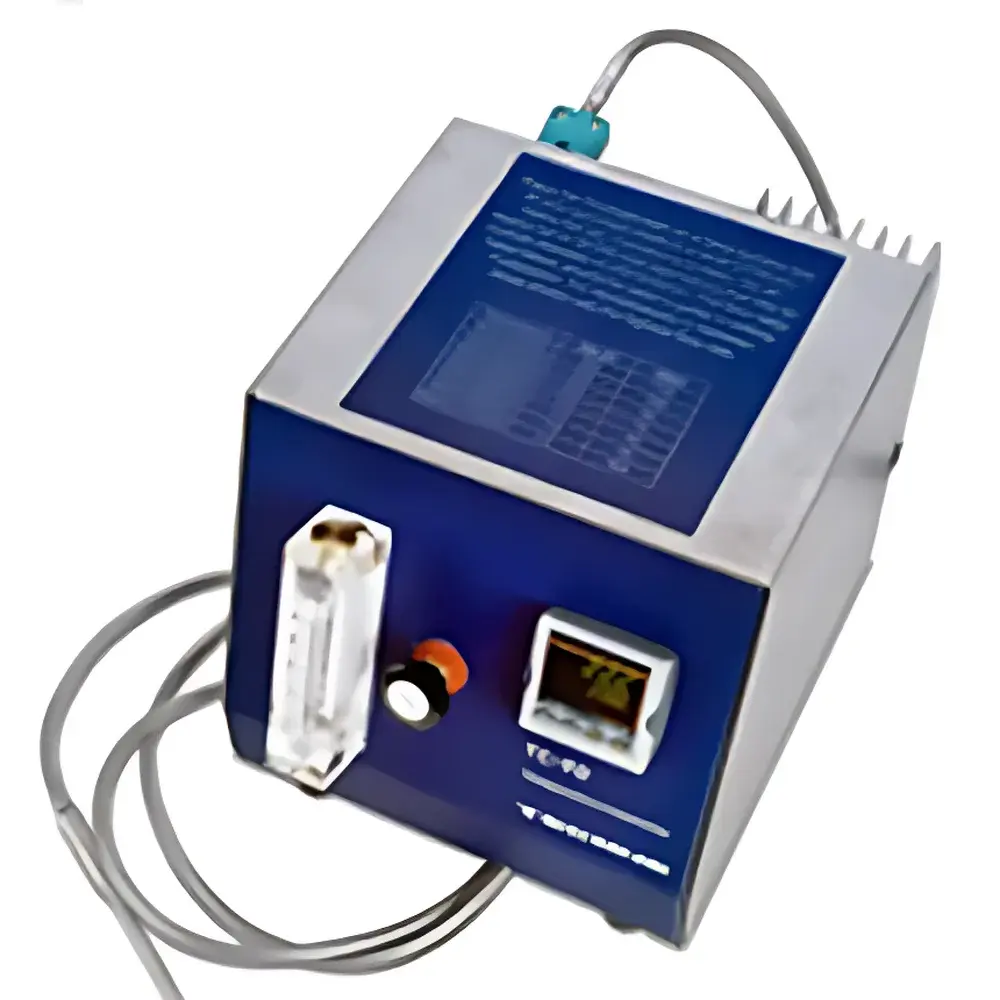
Techne SBS-4 & SBL-2D Fluidized Bed Sand Baths with TC-9D Temperature Controller
| Origin | USA |
|---|---|
| Manufacturer Type | Authorized Distributor |
| Origin Category | Imported |
| Model | F7805 |
| Temperature Range | 50–600 °C |
| Temp. Uniformity at 100 °C | ±0.4 °C (SBS-4) / ±0.2 °C (SBL-2D) |
| Heating Time (20→600 °C) | 90 min (SBS-4) / 105 min (SBL-2D) |
| Cooling Time (600→200 °C) | 330 min |
| Max. Air Inlet Pressure | 1.03 bar (15 psi) |
| Max. Air Flow Rate | 85 L/min (SBS-4) / 57 L/min (SBL-2D) |
| Al₂O₃ Media Required | 9 kg (SBS-4) / 32 kg (SBL-2D) |
| Chamber Dimensions (Ø × D) | 17.8 × 14 cm (SBS-4) / 22.8 × 35 cm (SBL-2D) |
| External Dimensions (Ø × H) | 34 × 47 cm (SBS-4) / 39 × 70 cm (SBL-2D) |
| Power Supply | 240 V, 6.2 A (SBS-4) / 240 V, 17 A (SBL-2D) |
| Power Consumption | 1.5 kW (SBS-4) |
| Weight | 24 kg (SBS-4) / 49 kg (SBL-2D) |
| TC-9D Controller Range | 0–620 °C |
| TC-9D Resolution | 1 °C |
| TC-9D External Dimensions (W×H×D) | 20.3 × 30.5 × 19.1 cm |
| TC-9D Power Input | 85–250 V AC, 4000 W |
| Includes | K-type thermocouple (2.4 m), rotameter, dual programmable setpoints, Celsius/Fahrenheit toggle, single-point calibration, stainless steel sand bath vessel, alumina fluidization medium (Al₂O₃), overflow guard ring, and compatible mesh basket (F7805 for SBL-2D) |
Overview
The Techne SBS-4 and SBL-2D Fluidized Bed Sand Baths represent a specialized class of high-temperature thermal processing systems engineered for precise, non-contact, and chemically inert sample heating. Unlike conventional liquid or oil baths, these units employ finely powdered aluminum oxide (Al₂O₃) as the heat transfer medium—fluidized by controlled, filtered compressed air—to generate a uniform, low-turbulence thermal environment. This principle leverages gas-solid fluidization dynamics to achieve rapid thermal response and exceptional temperature homogeneity across the working zone. The system operates on a three-component architecture: a stainless-steel sand bath vessel, a dedicated TC-9D digital temperature controller with dual-stage programmability and K-type thermocouple feedback, and an integrated or externally mounted air supply system—including pressure regulation, moisture/oil filtration, and flow control via calibrated rotameter. Designed for laboratory-scale thermal treatment of sensitive or reactive materials, the SBS-4 and SBL-2D are widely deployed in metallurgical annealing (e.g., NiTi shape-memory alloys, Pt-based catalysts), PCB reflow simulation, ceramic sintering pre-studies, and thermal stability testing under inert, non-wetting conditions.
Key Features
- Stainless-steel inner chamber rated for continuous operation up to 600 °C, with reinforced thermal insulation and integrated overflow guard ring for media containment
- Chemically inert, electrically insulating, and non-abrasive Al₂O₃ fluidization medium—non-toxic, non-corrosive, non-flammable, and free of surface tension effects
- TC-9D microprocessor-based controller with ±1 °C resolution, dual independent setpoint programming, real-time display in °C/°F, and user-accessible single-point calibration
- Integrated rotameter for precise volumetric air flow adjustment (0–85 L/min for SBS-4; 0–57 L/min for SBL-2D), ensuring reproducible fluidization velocity and thermal mass transfer
- Robust power architecture: 240 V input with dedicated circuit requirements (6.2 A for SBS-4; 17 A for SBL-2D); TC-9D supports universal 85–250 V AC input and delivers up to 4000 W output capacity
- Configurable system integration: Compatible with standard lab-grade oil-free compressors (e.g., Techne model 705535), vacuum-rated Saint-Gobain PTFE-reinforced tubing (ACF00030), and application-specific mesh baskets (F7805 for SBL-2D)
Sample Compatibility & Compliance
The SBS-4 and SBL-2D are optimized for solid-state samples requiring uniform thermal exposure without immersion, oxidation, or mechanical abrasion. Common applications include heat-treating small metal components, thermal cycling of electronic substrates, pre-sintering of ceramic green bodies, and accelerated aging of polymer composites. The absence of liquid phase eliminates capillary action, hydrolysis risk, and electrical conductivity concerns—making the system suitable for conductive or electrostatic-sensitive materials. All structural components comply with CE marking requirements for electrical safety (EN 61010-1) and electromagnetic compatibility (EN 61326-1). While not inherently GLP/GMP-certified, the TC-9D controller supports manual audit trail documentation; users may implement supplemental procedures for 21 CFR Part 11 compliance where required for regulated environments.
Software & Data Management
The TC-9D controller operates as a standalone analog-digital hybrid system with no embedded firmware-based data logging. Temperature data is monitored in real time via front-panel LED display and may be recorded externally using the provided 2.4 m K-type thermocouple output (mV signal). For automated data acquisition, users integrate the thermocouple into third-party DAQ systems (e.g., National Instruments, Keysight, or LabVIEW-compatible platforms) supporting Type-K input and cold-junction compensation. No proprietary software, drivers, or cloud connectivity are included. All calibration and operational parameters are retained in non-volatile memory during power cycling. System configuration adheres to ASTM E220 and ISO 17025 traceability principles when paired with NIST-traceable reference thermometers.
Applications
- Controlled annealing of nickel-titanium (NiTi) shape-memory alloys for phase transformation studies
- Thermal stress screening of printed circuit board (PCB) assemblies prior to solder reflow qualification
- Pre-sintering of alumina or zirconia ceramic compacts under oxygen-limited, non-reactive conditions
- Thermal desorption and outgassing profiling of aerospace-grade adhesives and encapsulants
- Calibration verification of high-temperature RTDs and thermocouples per IEC 60751
- Accelerated thermal aging of lithium-ion battery separator films under inert, dry-air atmosphere
FAQ
What distinguishes fluidized sand baths from conventional oil or molten salt baths?
Fluidized sand baths eliminate liquid-phase hazards (splashing, degradation, fire risk) and provide superior thermal uniformity without surface tension or wetting artifacts—critical for delicate or hygroscopic samples.
Can the TC-9D controller be used with other Techne baths or third-party heaters?
The TC-9D is specifically calibrated for Techne sand bath thermal dynamics and Al₂O₃ media characteristics; cross-platform use is not supported or validated.
Is the Al₂O₃ media reusable, and how often does it require replacement?
Yes—alumina powder is chemically stable and thermally robust. Replacement is only necessary if contamination (e.g., metal residue, organic carryover) or particle agglomeration compromises fluidization performance.
Does the system support ramp-soak profiles beyond two setpoints?
No—the TC-9D offers only two discrete programmable setpoints. For multi-segment thermal profiles, external programmable logic controllers (PLCs) or DAQ-integrated scripting are required.
What safety interlocks are built into the SBS-4/SBL-2D system?
Over-temperature cut-off (620 °C hardware limit), open-circuit thermocouple detection, and over-current protection are embedded in the TC-9D. No door or airflow interlock is present; users must ensure proper ventilation and compressed air supply integrity per OSHA 1910.169 guidelines.
Related Products



