
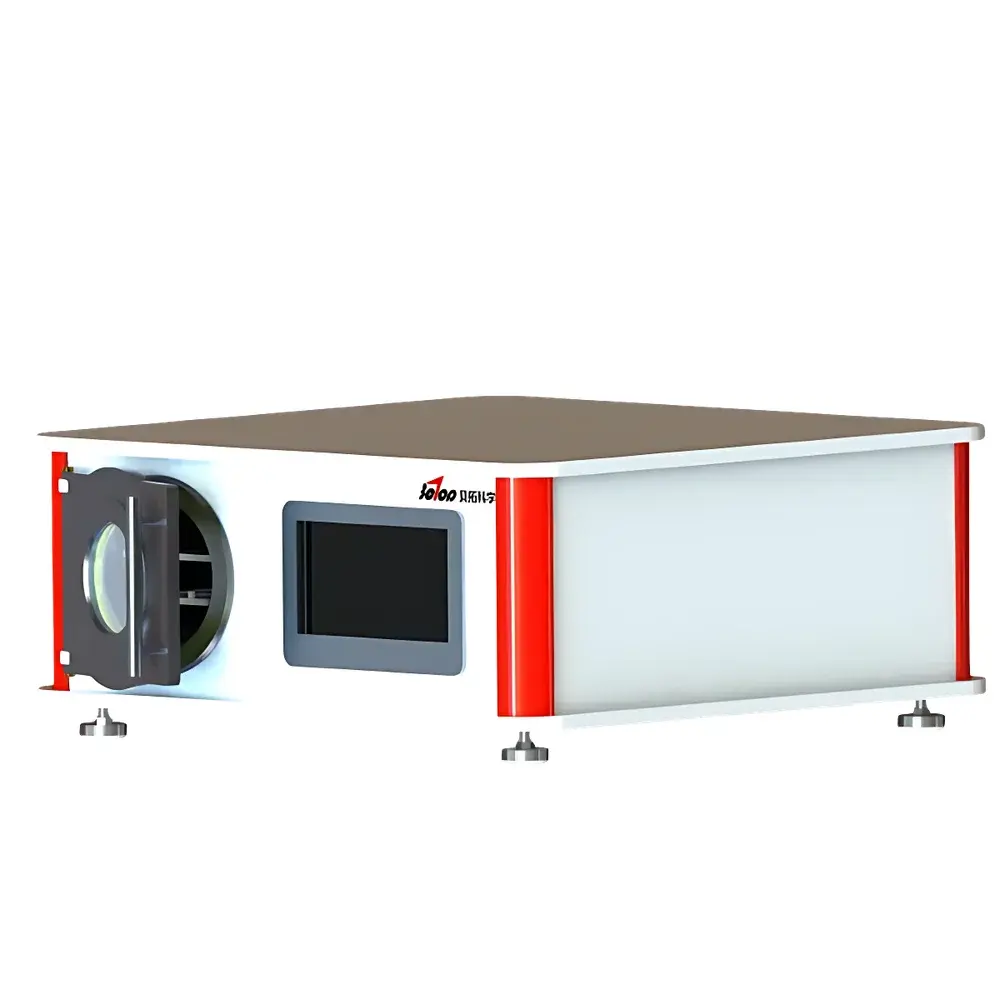
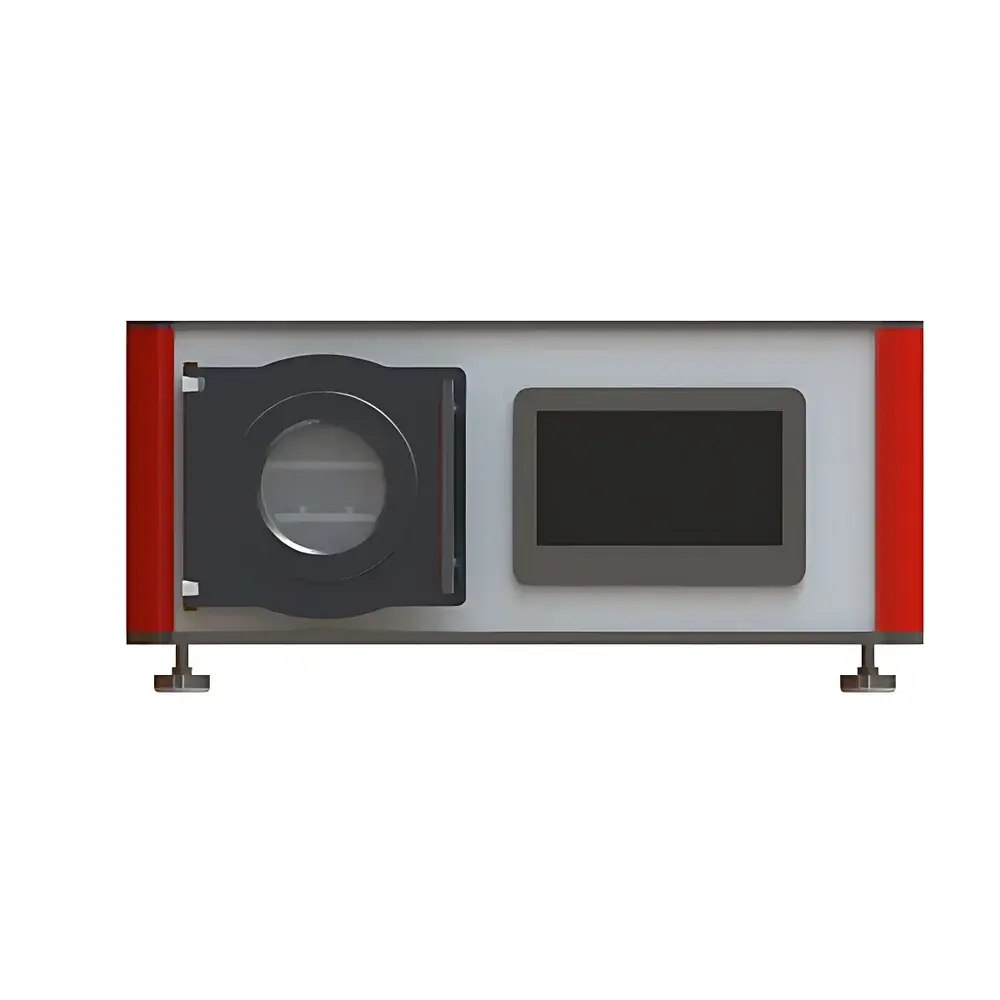
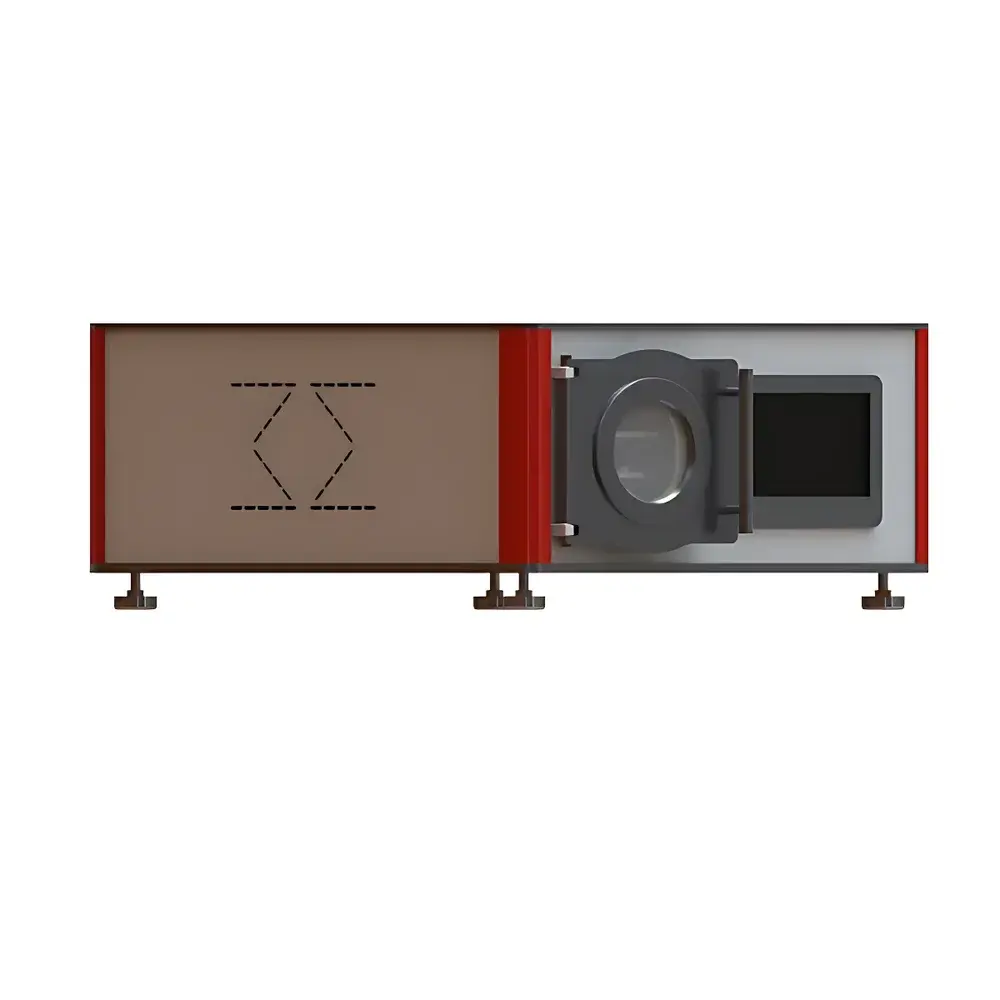
Betop Scientific VPC30A RF Plasma Cleaner
| Brand | Betop Scientific |
|---|---|
| Origin | Guangdong, China |
| Manufacturer Type | Direct Manufacturer |
| Country of Origin | China |
| Model | VPC30A |
| Instrument Type | Domestic RF Plasma Cleaner |
| RF Frequency | 13.56 MHz |
| Power Range | 0–150 W (adjustable) |
| Chamber Volume | 2.4 L |
| Dimensions (W×D×H) | 50 × 54 × 24 cm |
| Chamber Material | 6061 Aluminum Alloy |
| Electrode Type | Flat-plate Water-Cooled Aluminum Electrode |
| Gas Inlets | 1 MFC-controlled channel (optional dual-channel configuration) |
| Gas Flow Range | 0–500 mL/min |
| Flow Accuracy | ±1% FS |
| Operating Vacuum Range | 20–60 Pa |
| Ultimate Vacuum (no load) | ≤0.5 Pa |
| Pump-down Time (no load) | ≤40 s |
| Venting Time | ≤20 s |
| Control Mode | Fully Automatic Touchscreen Interface with Real-time Parameter Monitoring |
| Rated Power Consumption | 1 kW |
| Input Voltage | AC 220 V |
| Net Weight | ~48 kg |
Overview
The Betop Scientific VPC30A RF Plasma Cleaner is a benchtop vacuum plasma surface treatment system engineered for precision surface modification, organic contaminant removal, and functionalization of substrates in research and quality control laboratories. It operates on the principle of radiofrequency (13.56 MHz) capacitive-coupled plasma generation under low-pressure conditions (20–60 Pa), where inert or reactive process gases—such as argon, oxygen, nitrogen, or air—are ionized to produce a stable, low-temperature plasma discharge. Unlike thermal or chemical cleaning methods, this non-destructive physical-chemical process relies on energetic ions, electrons, UV photons, and reactive radicals to break C–H, C–O, and C=O bonds on material surfaces—effectively removing hydrocarbons, photoresist residues, lubricants, and adventitious carbon layers without substrate damage or secondary contamination. The system’s aluminum chamber (6061 alloy) ensures high thermal conductivity, electromagnetic shielding, and long-term vacuum integrity, while its water-cooled flat-plate electrode design enables uniform power coupling and stable plasma ignition across diverse sample geometries.
Key Features
- 13.56 MHz RF generator with 0–150 W continuous power adjustment, supporting reproducible plasma density control for both gentle surface activation and moderate etching applications
- Modular RF matching network with integrated impedance tuning for optimal energy transfer and plasma stability across varying gas compositions and pressures
- 2.4 L vacuum chamber fabricated from anodized 6061 aluminum—corrosion-resistant, non-magnetic, and compatible with ultra-high purity gas handling requirements
- High-speed vacuum architecture: achieves operational pressure (≤60 Pa) in ≤40 seconds using a dedicated rotary vane pump (not included); venting completes in ≤20 seconds via solenoid-controlled air admission
- Intuitive 7-inch TFT touchscreen interface with pre-programmable recipes, real-time display of RF forward/reflected power, chamber pressure, gas flow rate, and elapsed process time
- Single-channel mass flow controller (MFC) with 0–500 mL/min range and ±1% full-scale accuracy; optional dual-MFC configuration available for mixed-gas processes (e.g., O₂/Ar blends)
- No consumables required—no filaments, no electrodes to replace—ensuring low cost of ownership and compliance with ISO 14644 cleanroom-compatible operation
Sample Compatibility & Compliance
The VPC30A accommodates substrates up to 150 mm in diameter—including silicon wafers, glass slides, polymer films (PET, PC, PI), metal foils, ceramic substrates, and biomedical devices. Its flat-plate electrode geometry supports uniform treatment of planar and mildly curved samples. The system meets fundamental safety and performance benchmarks for laboratory plasma equipment, including IEC 61000-6-3 (EMC emission limits), IEC 61000-6-2 (immunity), and UL/CSA electrical safety standards. While not certified for GMP production environments, its programmable process logging, parameter traceability, and consistent output make it suitable for GLP-compliant R&D workflows, ASTM F2519-19 (standard practice for plasma surface treatment of polymeric biomaterials), and ISO 15883-5 (reprocessing validation for reusable medical instruments).
Software & Data Management
The embedded control firmware supports data logging of all critical process parameters—including timestamped RF power profiles, pressure curves, gas flow histories, and cycle completion status—with export capability via USB to CSV format. No proprietary software installation is required; raw logs are human-readable and compatible with third-party statistical process control (SPC) platforms. Audit trail functionality records operator ID (via manual entry), start/stop times, and any parameter modifications—supporting basic 21 CFR Part 11 readiness when paired with institutional electronic signature policies. Remote monitoring is not natively supported; however, optional RS-232 or Ethernet modules (upon request) enable integration into centralized lab automation systems.
Applications
- Surface activation of polymers (e.g., PDMS, PP, PE) prior to bonding, coating, or printing—increasing surface energy from 70 mN/m within 5–10 minutes
- Resist stripping and post-lithography residue removal from semiconductor wafers without undercutting or metal line erosion
- Cleaning optical components (lenses, mirrors, filters) to eliminate sub-monolayer hydrocarbon adsorption affecting transmission or laser damage thresholds
- Preparing biofunctionalized surfaces for cell culture—enhancing fibronectin adsorption and improving NIH/3T3 adhesion kinetics
- Pre-treatment of PTFE and fluoropolymers to enable inkjet printing or adhesive bonding via micro-oxidation of surface CF₂ groups
- Decontamination of surgical tools and microfluidic chips where autoclaving or solvent immersion is impractical or damaging
FAQ
What gases are compatible with the VPC30A?
Argon, oxygen, nitrogen, air, and forming gas (N₂/H₂) are routinely used. Reactive gases (e.g., O₂) enhance organic removal; inert gases (e.g., Ar) favor physical sputtering and surface activation. Gas compatibility must align with chamber material specifications and safety protocols.
Can the VPC30A perform plasma etching?
Yes—within controlled limits. Using O₂ or CF₄/O₂ mixtures at elevated power (100–150 W) and optimized pressure (30–50 Pa), shallow isotropic etching of polymers (e.g., PMMA, SU-8) or native oxide thinning on Si can be achieved. Etch rates are substrate- and chemistry-dependent and typically range from 10–100 nm/min.
Is vacuum pump included?
No—the VPC30A requires an external two-stage rotary vane pump capable of reaching ≤0.5 Pa base pressure. Recommended models include Edwards RV8, Agilent IDP-10, or equivalent.
How often does maintenance require?
Under normal use (≤4 hours/day), routine maintenance includes quarterly O-ring inspection, annual RF connector torque verification, and biannual calibration of the capacitance manometer and MFC—per manufacturer-recommended service intervals.
Does the system support automated batch processing?
Not natively. Sample loading/unloading is manual. However, the programmable recipe engine allows repeatable multi-step sequences (e.g., purge → pump-down → plasma → vent), enabling unattended single-cycle operation.



