
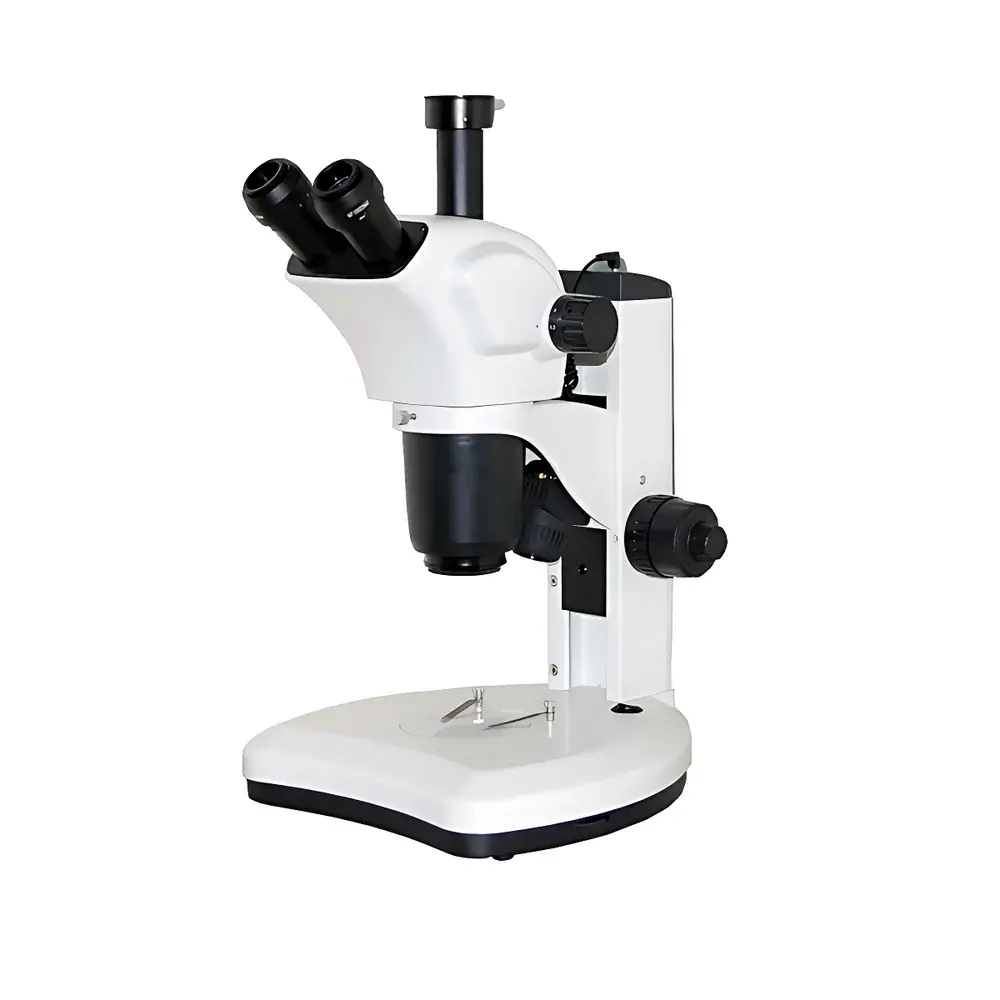
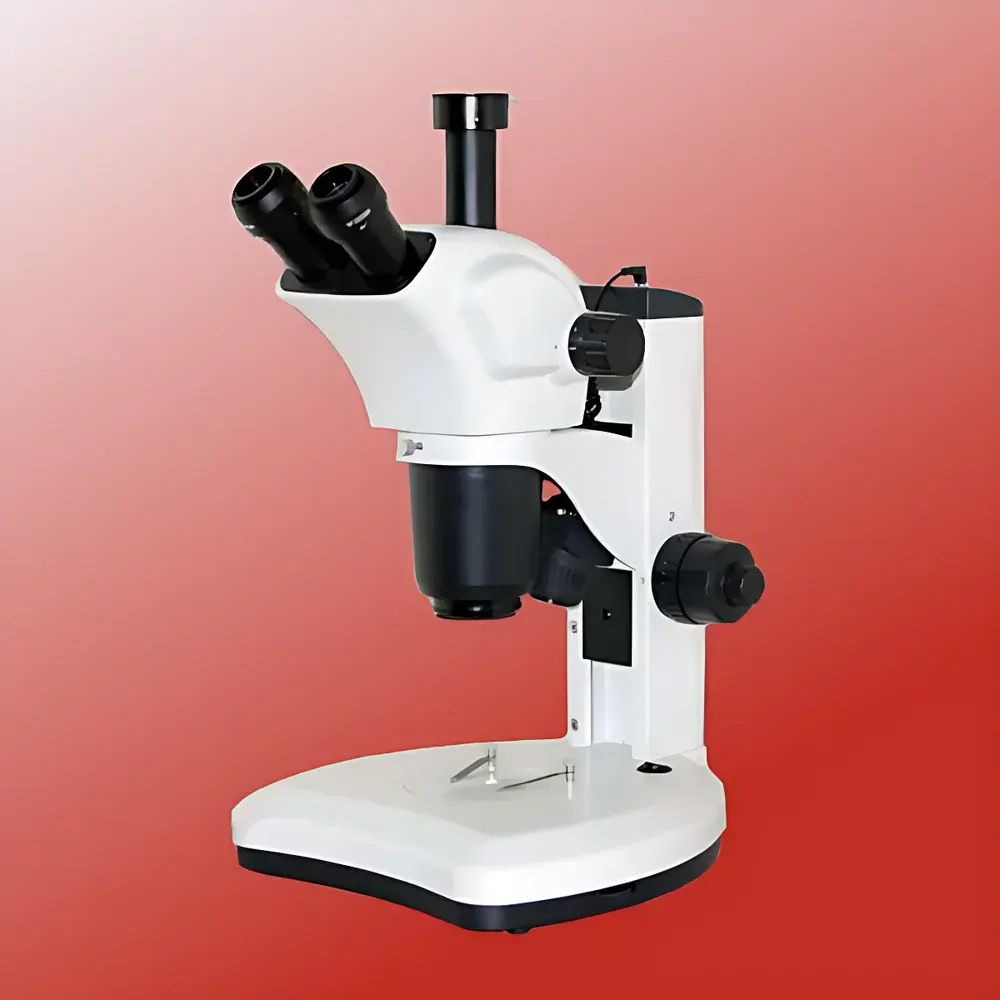
Betop Scientific XTL-201 Continuous Zoom Stereo Microscope
| Brand | Betop Scientific |
|---|---|
| Origin | Guangdong, China |
| Manufacturer Type | Direct Manufacturer |
| Model | XTL-201 |
| Total Magnification Range | 7×–63× |
| Zoom Ratio | 1:9 |
| Field Diameter | 7.66 mm |
| Working Distance | 110 mm |
| Objective Type | Continuous Zoom Objective |
| Illumination | LED Epifluorescence Illuminator / Ring Fluorescence Illuminator |
| Depth of Field | 220 mm |
| Numerical Aperture | 0.06–0.63 |
Overview
The Betop Scientific XTL-201 Continuous Zoom Stereo Microscope is an ergonomically engineered optical instrument designed for high-fidelity three-dimensional visualization of macro-to-mesoscale specimens. Based on the Greenough optical architecture—dual independent optical paths with angled objectives—the XTL-201 delivers true stereoscopic imaging with natural depth perception and minimal parallax. Its continuous zoom system (0.7×–6.3×) enables seamless magnification adjustment without discrete steps, preserving focus stability and optical alignment across the entire range. With a fixed 45° inclined binocular tube and adjustable interpupillary distance (48–75 mm) plus ±5 diopter eyepiece correction, the microscope accommodates diverse user anatomies while maintaining visual comfort during extended observation sessions. The 110 mm working distance facilitates hands-on manipulation of samples—ideal for dissection, soldering, quality inspection, or micro-assembly tasks—while the 220 mm vertical travel allows flexible sample positioning under both transmitted and reflected illumination modes.
Key Features
- Continuous zoom objective (0.7×–6.3×) with 1:9 zoom ratio ensures smooth, stepless magnification transitions and consistent image fidelity.
- Widefield 10× eyepieces (WF10×, field number 22) provide expansive, edge-to-edge sharpness and reduced eye strain during prolonged use.
- Dual LED illumination system: top-mounted 3 W white LED for incident light and bottom-mounted 5 W white LED for transmitted light—each independently controllable with analog dimming.
- Modular fluorescence capability via optional LED epifluorescence or ring-type fluorescence illuminators, supporting standard fluorophore sets (e.g., DAPI, FITC, TRITC) without requiring mercury or xenon lamps.
- Robust mechanical design featuring cylindrical roller-guided vertical focusing mechanism with adjustable coarse-focus tension for precise, backlash-free movement.
- Standard C-mount interface (1×) and optional reduction lenses (0.4×, 0.5×) enable direct integration with industrial CMOS/CCD cameras (130–1000 MP), USB-enabled digital capture systems, or DSLR adapters (Canon EF/Nikon F mount).
Sample Compatibility & Compliance
The XTL-201 supports a broad spectrum of non-destructive inspection applications across regulated and research environments. Its long working distance and large depth of field (220 mm at lowest magnification) accommodate bulky or irregularly shaped specimens—including PCBs, botanical sections, mineralogical thin sections, entomological preparations, and small mechanical assemblies—without requiring vacuum or conductive coating. While not certified for ISO 17025 accredited calibration out-of-the-box, the system complies with general optical safety standards (IEC 61010-1, EN 60825-1 Class 1 for LED sources) and supports GLP-compliant documentation when paired with timestamped digital imaging software. Optional auxiliary objectives (0.5×, 1.5×, 2×) extend working distance or magnification range to meet ASTM E2906 (standard guide for stereo microscope use in forensic toolmark analysis) and ISO 8549 (stereomicroscopy terminology and performance criteria) requirements.
Software & Data Management
The XTL-201 interfaces seamlessly with industry-standard imaging platforms including Olympus cellSens, Leica LAS X Lite, and open-source alternatives such as FIJI/ImageJ via UVC-compliant USB video class drivers. When used with Betop’s DV-series digital cameras (DV-300/DV-500), the system supports real-time measurement annotation, multi-frame stacking for extended depth of field (EDOF), and export of calibrated TIFF/AVI files with embedded metadata (magnification, illumination mode, timestamp). Audit trails, user access control, and electronic signatures can be implemented through third-party LIMS or ELN integrations—enabling partial compliance with FDA 21 CFR Part 11 when configured with appropriate validation protocols and secure storage.
Applications
- Electronics manufacturing: solder joint inspection, component placement verification, and PCB trace continuity assessment.
- Agricultural & botanical research: seed morphology analysis, fungal hyphae observation, and leaf epidermal structure mapping.
- Geological sample characterization: mineral grain boundary delineation, fracture surface analysis, and thin-section petrography support.
- Educational laboratories: comparative anatomy studies, insect dissection, and materials science demonstrations.
- Forensic document examination: ink differentiation, paper fiber analysis, and latent impression enhancement under fluorescence mode.
- Quality assurance in precision machining: surface finish evaluation, burr detection, and dimensional verification of micro-components.
FAQ
What is the maximum usable magnification before resolution degradation occurs?
At 63× total magnification (6.3× objective × 10× eyepiece), the practical resolution limit is governed by the system’s effective NA (0.63) and visible light wavelength (~550 nm), yielding theoretical resolution near 0.44 µm—though optimal detail recognition typically occurs between 20×–40× for most macroscopic specimens.
Can the XTL-201 be integrated into automated inspection workflows?
Yes—via TTL-compatible shutter triggers, RS-232/USB serial control, and programmable GPIO signals (when using DV-series cameras), enabling synchronization with motorized XY stages or robotic handling systems.
Is fluorescence imaging quantitative or qualitative?
Fluorescence observation with the optional LED illuminators is primarily qualitative; for quantitative intensity measurements, external calibration with NIST-traceable reference standards and spectrally matched emission filters are recommended.
Does the microscope support DIC or polarization contrast?
No—DIC and polarized light contrast require specialized objective prisms and analyzers not included in the base configuration; however, the modular stand accepts aftermarket polarizing filter kits compatible with standard 30 mm thread mounts.
What maintenance is required for long-term optical stability?
Annual verification of coaxial alignment and collimation is advised; cleaning should follow ISO 10110-7 guidelines using lens-grade acetone and anti-static wipes—avoid alcohol-based solutions on coated optics.



