
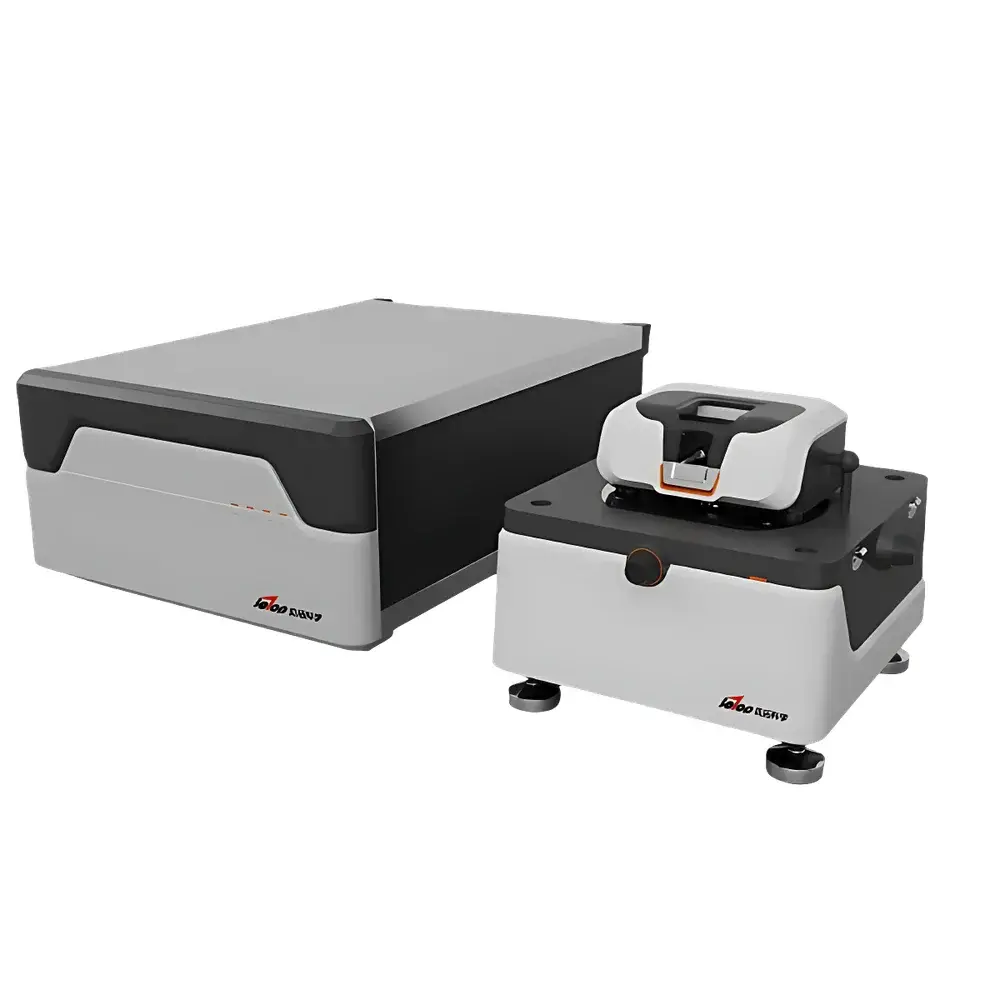
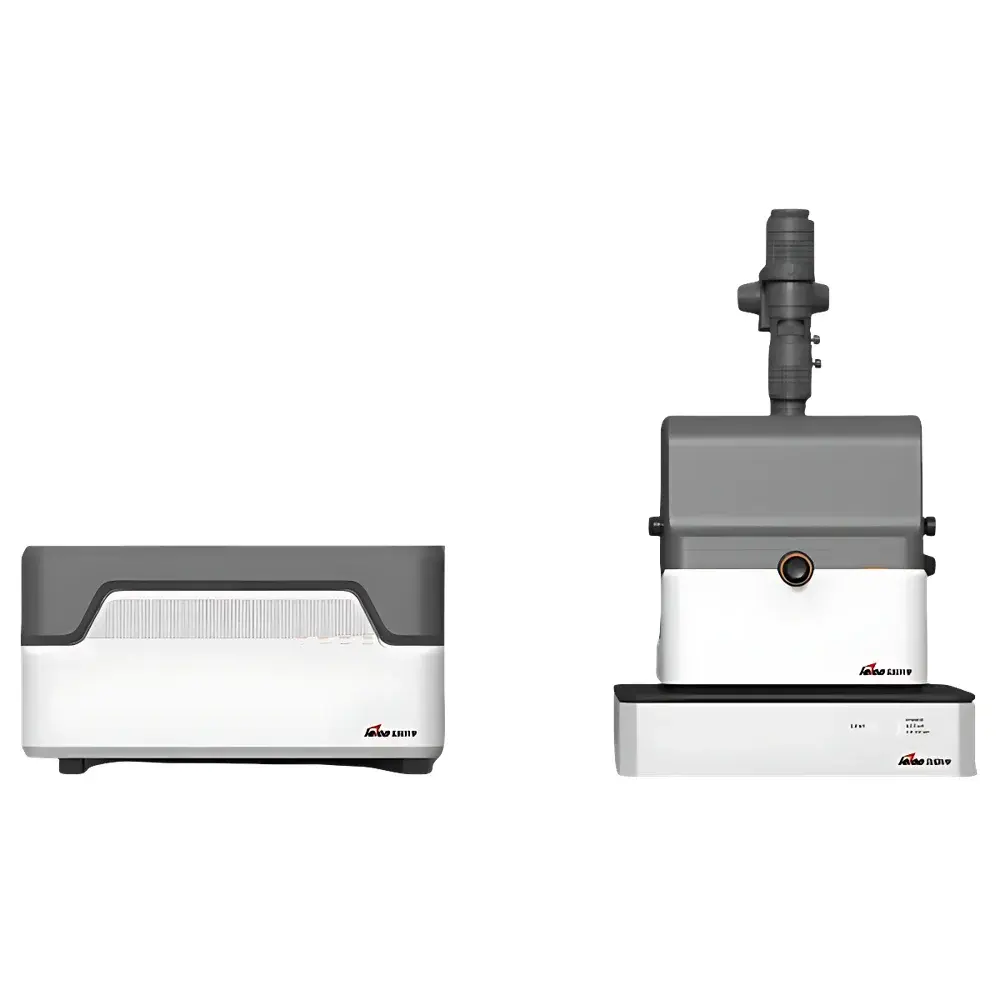
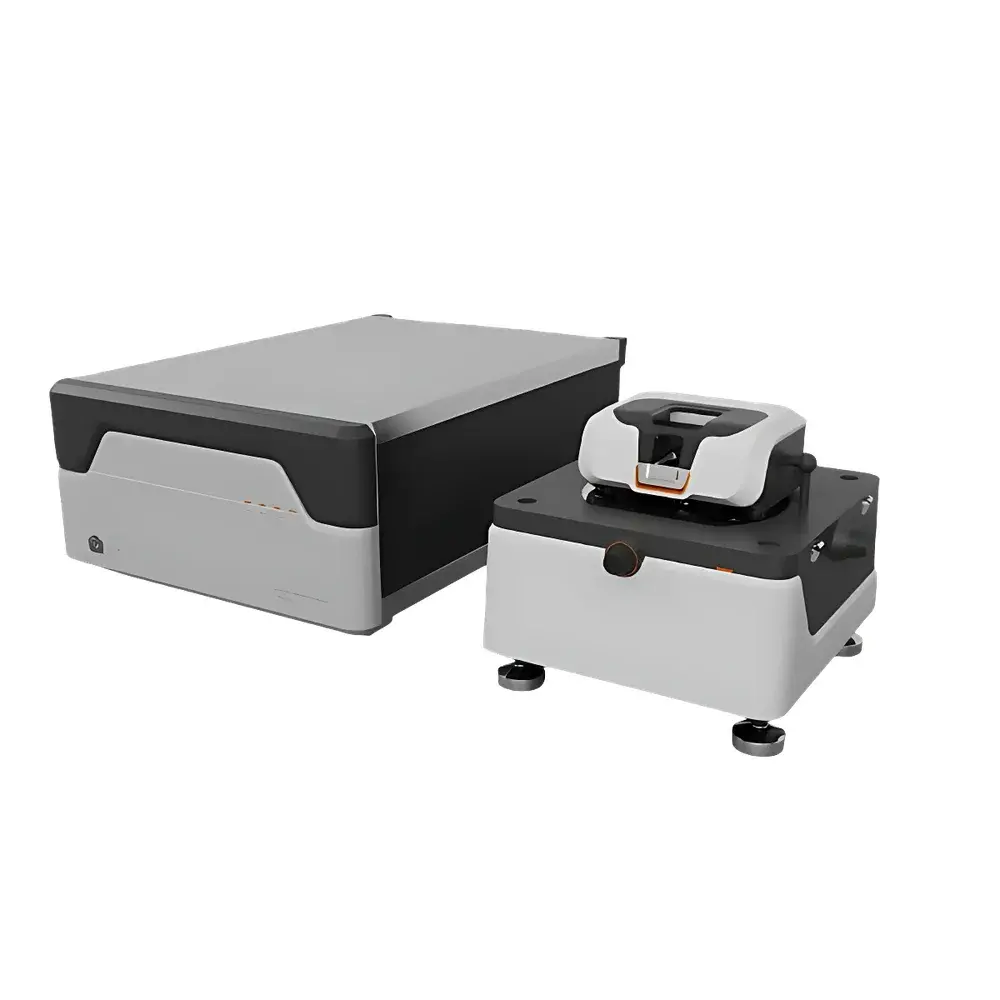
Betop Scientific TopSPM Self-Sensing Probe Atomic Force Microscope
| Brand | Betop Scientific |
|---|---|
| Origin | Beijing, China |
| Manufacturer Type | Manufacturer |
| Product Category | Domestic |
| Model | TopSPM |
| Price Range | USD 84,000 – 182,000 |
| Instrument Type | Atomic Force Microscope (AFM) |
| Application Class | Materials Science AFM |
| Z-direction RMS System Noise | ≤0.05 nm (calibrated on graphite monolayer step height) |
| Maximum Sample Diameter | ≤30 mm |
| Maximum Sample Thickness | ≤20 mm |
| Auto-Approach Travel Range | ≥23 mm |
| Minimum Approach Step Resolution | ≤50 nm |
| Closed-Loop XY Scan Range | ≥30 µm × 30 µm |
| Closed-Loop Z Scan Range | ≥8 µm |
| Scan Resolution | <1.5 nm |
| Line Rate | 0.1–30 lines/sec |
| PID Feedback Response Time | <10 µs |
| Max Pixel Density per Image | 4000 × 4000 |
| Real-Time Simultaneous Data Channels | ≥5 |
| Control Architecture | Dual-Core Embedded System (ARM + DSP) |
| Communication Protocol | TCP/IP |
| Detection Mode | Frequency Modulation (FM-AFM) |
| Integrated Lock-in Amplifier | Analog-Digital Hybrid Structure |
| Probe Compatibility | Self-Sensing Probes & Conventional Laser-Detected Cantilevers |
Overview
The Betop Scientific TopSPM Self-Sensing Probe Atomic Force Microscope is a high-precision, research-grade scanning probe microscope engineered for atomic-resolution surface topography and nanomechanical property mapping in materials science laboratories. Operating on the principle of frequency-modulated atomic force microscopy (FM-AFM), the TopSPM leverages self-sensing microcantilevers—where piezoresistive or piezoelectric transduction is integrated directly into the probe—to eliminate optical alignment dependencies and reduce thermal drift. This architecture enables stable, quantitative force-distance spectroscopy and true sub-nanometer Z-noise performance (≤0.05 nm RMS, calibrated against graphite’s atomic step height), critical for characterizing 2D materials, thin films, polymers, and soft biological interfaces under ambient or controlled environments.
Key Features
- Self-sensing probe platform with integrated analog-digital hybrid lock-in amplifier for high-fidelity phase and amplitude detection in FM-AFM mode
- Plane-closed-loop piezoelectric scanner with ≥30 µm × 30 µm XY range and ≥8 µm Z range, delivering <1.5 nm spatial resolution and sub-50 nm approach step precision
- One-click automated sample approach mechanism with ≥23 mm travel range and programmable approach velocity profiles
- Dual-core embedded control system (ARM + DSP) enabling real-time feedback processing with <10 µs PID loop response time
- Multi-modal imaging and spectroscopy support: AFM topography, lateral force microscopy (LFM), current–voltage (I–V), current–distance (I–Z), and force–distance (F–d) acquisition within a single scan sequence
- TCP/IP-based communication protocol ensuring seamless integration into networked lab environments and compatibility with third-party automation frameworks
- Simultaneous acquisition and display of ≥5 independent data channels—including topography, error signal, phase, amplitude, and user-defined auxiliary inputs—enabling correlative nanoscale analysis
Sample Compatibility & Compliance
The TopSPM accommodates standard solid samples up to 30 mm in diameter and 20 mm in thickness, with manual coarse positioning over ±8.0 mm in X/Y. Its open-stage design supports custom sample holders, electrical contact pads, and environmental cells (e.g., liquid, vacuum-compatible variants upon request). The instrument meets fundamental metrological requirements outlined in ISO/IEC 17025 for calibration traceability and is routinely validated using NIST-traceable reference standards including HOPG, Si grating, and colloidal silica. While not pre-certified for GMP or FDA 21 CFR Part 11 compliance out-of-the-box, its embedded audit trail logging, user-access controls, and raw-data export capabilities provide a foundation for laboratory-specific validation under GLP or quality management systems.
Software & Data Management
The proprietary TopSPM Control & Analysis Suite runs on Windows-based workstations and provides real-time 3D surface rendering, multi-channel overlay, and batch-processing workflows. All acquired images and spectra retain full metadata—including timestamp, scanner voltage maps, PID parameters, and probe resonance characteristics—for reproducible reprocessing. Raw data is stored in HDF5 format, supporting direct import into MATLAB, Python (via h5py), or commercial analysis platforms such as Gwyddion and SPIP. Image reconstruction tools include tip-shape deconvolution, blind tip estimation, and iterative image restoration algorithms. Export functions preserve original pixel-level fidelity for publication-grade figure generation and inter-laboratory comparison.
Applications
The TopSPM serves advanced research and industrial QA/QC applications across disciplines: characterization of graphene and transition metal dichalcogenide monolayers; nanomechanical mapping of polymer blends and block copolymers; surface charge distribution analysis via Kelvin probe force microscopy (KPFM) add-on modules; adhesion and elasticity profiling of hydrogels and biomembranes; defect inspection in semiconductor wafers and photovoltaic thin films; and in situ electrochemical AFM during battery electrode cycling. Its low-noise Z-sensitivity and closed-loop stability make it suitable for long-duration drift-critical experiments, including time-lapse nanoscale morphological evolution studies.
FAQ
Does the TopSPM support both contact and non-contact AFM modes?
Yes—the system natively supports tapping mode, frequency modulation (non-contact), and contact mode via software-selectable feedback configurations and compatible probe types.
Can conventional laser-detected cantilevers be used alongside self-sensing probes?
Yes—the instrument features dual detection pathways and includes interchangeable optical path components for seamless transition between self-sensing and laser Doppler interferometry detection schemes.
Is the software compatible with Linux or macOS operating systems?
The primary control and analysis suite is Windows-native; however, HDF5 data exports are fully cross-platform and can be processed on Linux/macOS using open-source libraries.
What level of technical support is provided post-purchase?
Betop Scientific offers remote diagnostics, application consulting, and on-site training by field application scientists. Firmware updates and software patches are delivered quarterly via secure customer portal access.
Are calibration standards and traceability documentation included?
A certified graphite reference sample (for Z-noise verification) and Si grating standard (for XY linearity) are supplied with each system, accompanied by factory calibration reports referencing ISO 10012 and ISO/IEC 17025 guidelines.




