
Saprete HS-6H Automated Sulfide Analyzer
| Brand | Saprete |
|---|---|
| Origin | Beijing, China |
| Manufacturer Type | Direct Manufacturer |
| Instrument Type | Laboratory Benchtop Analyzer |
| Model | HS-6H |
| Method Options | Methylene Blue Spectrophotometry & Iodometric Titration (per Chinese National Standards HJ 1226–2021 and HJ 1227–2021) |
| Sample Capacity | 6 positions |
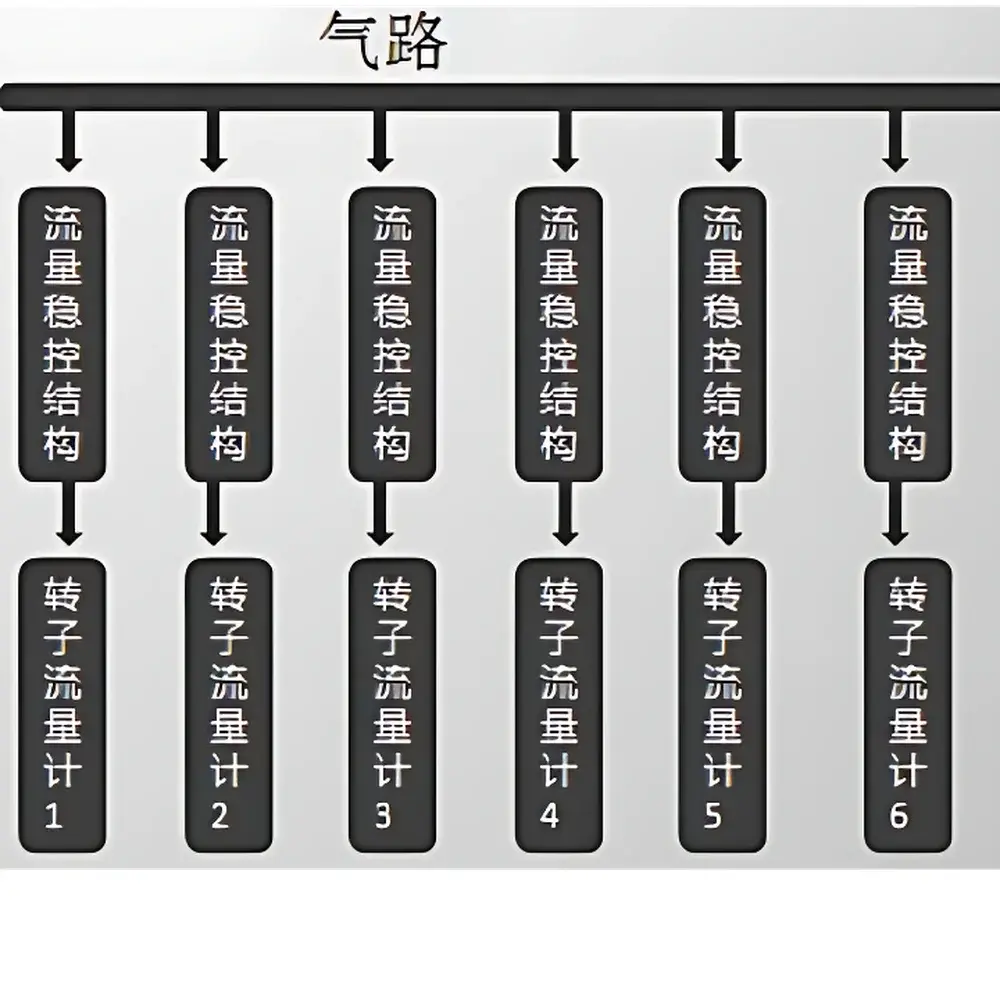
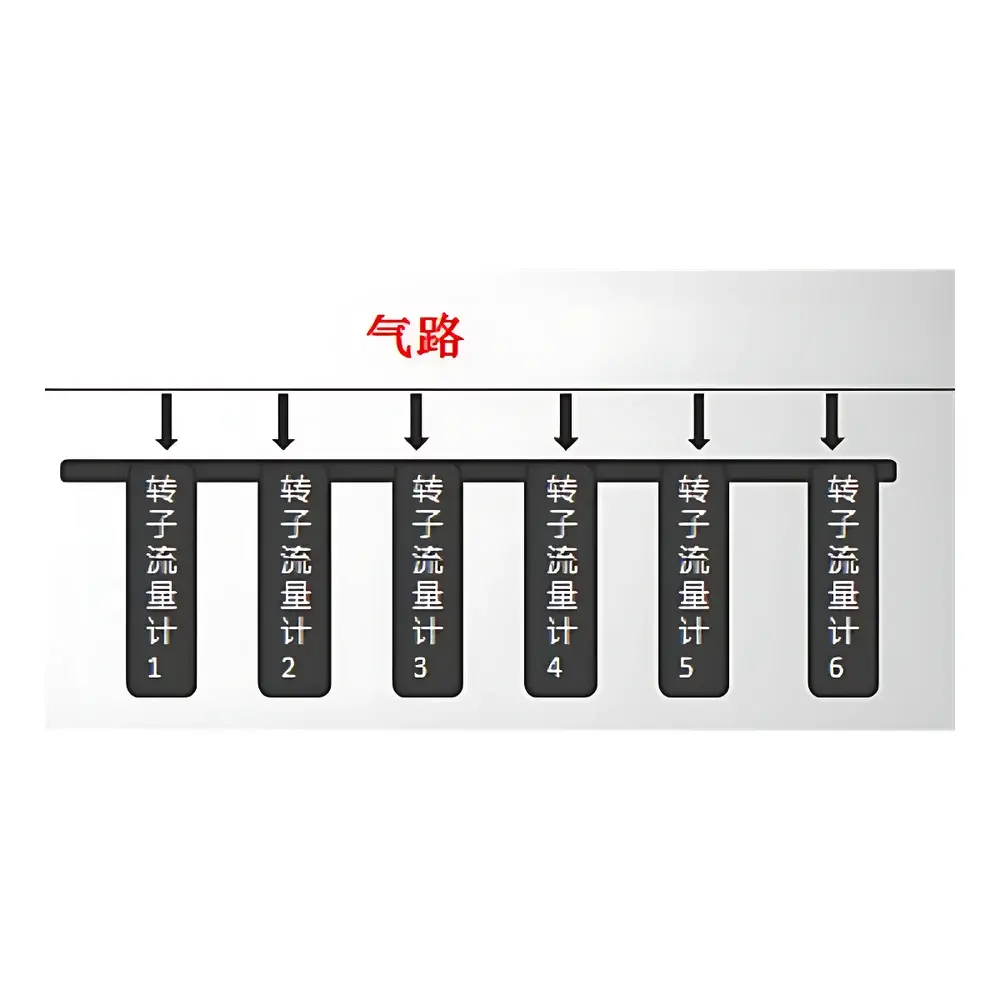
| Gas Control | Independent N₂ flow regulation per sample station |
| Pneumatic Integrity | Fully enclosed gas circuit with real-time supply pressure monitoring |
| Safety Features | Anti-suckback traps, integrated wash reservoir, no fume hood required |
| Interface | 7-inch capacitive touchscreen with embedded control logic |
| Compliance | Designed for GLP-compliant water quality laboratories conducting regulatory testing under China’s Ministry of Ecology and Environment (MEE) frameworks |
Overview
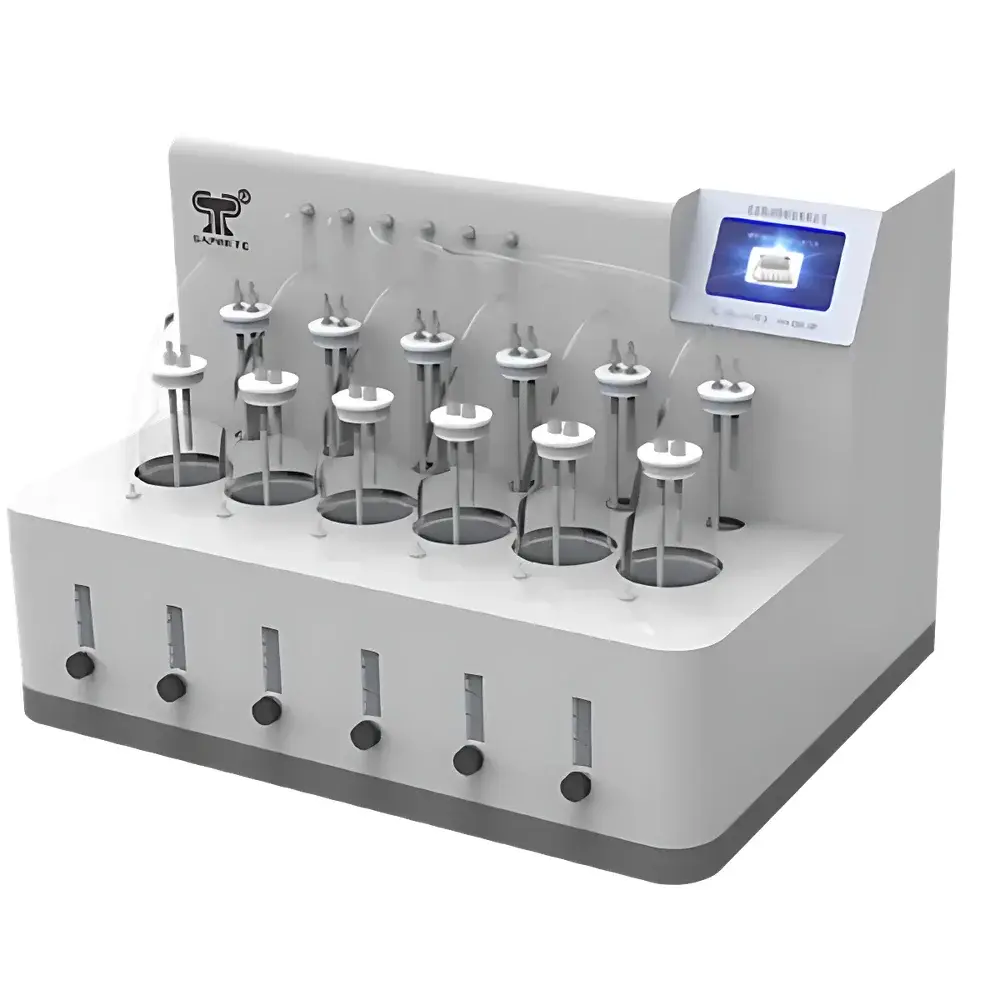
The Saprete HS-6H Automated Sulfide Analyzer is a dedicated benchtop instrument engineered for precise, reproducible quantification of dissolved and acid-volatile sulfide (AVS) in environmental water samples—including surface water, groundwater, wastewater effluents, and sediment porewater extracts. It operates on two standardized wet-chemical principles: the methylene blue spectrophotometric method (HJ 1226–2021) and the iodometric titration method (HJ 1227–2021), both officially adopted by China’s Ministry of Ecology and Environment. The analyzer employs a nitrogen-purged, closed-loop distillation and reaction manifold to liberate sulfide species under controlled acidic conditions, followed by either colorimetric detection at 665 nm or redox titration with standardized iodine solution. Its architecture eliminates manual gas-flow balancing and reagent addition errors—critical sources of inter-operator variability in traditional manual protocols.
Key Features
- Six independent sample stations with individual mass-flow-controlled nitrogen delivery—enabling method-specific optimization (e.g., 50–200 mL/min per vial) without cross-contamination or flow drift.
- Automated reagent dispensing and timed reaction sequence execution, synchronized with distillation temperature ramping and condensate collection timing per HJ 1226–2021 Annex A requirements.
- Integrated pressure transducer continuously monitors inlet N₂ supply pressure; system halts operation if pressure falls outside 0.2–0.6 MPa range, preventing incomplete volatilization.
- Modular quick-connect fluidic path with fluoropolymer tubing and PTFE-coated fittings ensures long-term chemical resistance to HCl, NaOH, and sulfide-rich matrices.
- Self-contained wash cycle using deionized water or dilute HNO₃, programmable between samples or post-batch, minimizing carryover risk below 0.5 µg S/L (verified per spike-recovery validation).
- 7-inch industrial-grade touchscreen interface running deterministic real-time OS—supports multi-language UI (English/Chinese), audit-trail-enabled user authentication, and method parameter locking for QA/QC compliance.
Sample Compatibility & Compliance
The HS-6H accepts standard 100–500 mL glass digestion vials (with ground-glass or PTFE-lined screw caps) and accommodates turbid, high-suspended-solid, or saline samples up to 35 g/L TDS without pre-filtration—provided AVS extraction is validated per ISO 16264:2003. All pneumatic and liquid pathways comply with ISO 8573-1 Class 2 compressed air purity specifications when connected to certified N₂ sources. The instrument’s design meets fundamental safety requirements outlined in IEC 61010-1:2010 for laboratory electrical equipment, including overpressure protection and thermal cutoffs. While not CE-marked for EU deployment, its operational logic and data handling align with core principles of FDA 21 CFR Part 11 for electronic records—particularly through timestamped, operator-locked method logs and immutable raw data export (.CSV/.XLSX with metadata headers).
Software & Data Management
Firmware v3.2 embeds an on-device database storing ≥10,000 test records with full traceability: operator ID, calibration certificate reference, blank/substance spike values, raw absorbance/titration endpoints, and calculated sulfide concentration (µg/L or mg/L as S²⁻). Data export occurs via USB 2.0 port or optional Ethernet/Wi-Fi module (IEEE 802.11n), generating files compatible with LIMS platforms such as LabWare LIMS or Thermo Fisher SampleManager. Calibration curves are stored per method and lot-numbered reagent batch; slope/intercept drift alerts trigger automatic recalibration prompts. Audit trails record all configuration changes—including flow rate modifications, method switches, and user logins—with SHA-256 hashed integrity verification.
Applications
- Regulatory compliance monitoring for municipal wastewater treatment plants discharging to sensitive aquatic ecosystems (per GB 3838–2002 Class III/IV limits).
- Industrial effluent characterization in petrochemical, pulp & paper, and metal finishing facilities where sulfide interference affects COD/BOD assays.
- Research-grade speciation studies coupling HS-6H output with IC-ICP-MS for sulfur isotopic ratio (δ³⁴S) correlation in biogeochemical cycling models.
- Validation of field-deployable sulfide sensors (e.g., electrochemical probes) through rigorous lab-based reference measurement.
- Method transfer support for ISO/IEC 17025-accredited environmental testing laboratories seeking scope expansion into sulfide analysis.
FAQ
Does the HS-6H support ASTM D4129 or ISO 11733 for sulfide determination?
No—the HS-6H implements only Chinese national standards HJ 1226–2021 and HJ 1227–2021. ASTM D4129 (for total recoverable sulfide in solids) and ISO 11733 (for wastewater) require distinct digestion apparatus and filtration protocols not supported by this platform.
Can the instrument be integrated into a fully automated sample preparation line?
Not natively—the HS-6H requires manual vial loading and cap sealing. However, its RS-232 and Modbus TCP interfaces enable external PLC coordination for start/stop signaling and status polling in semi-automated workflows.
What maintenance intervals are recommended for the gas manifold and optical components?
N₂ flow sensors should be zero-calibrated quarterly using certified flow meters; spectrophotometer lamp intensity must be verified monthly per internal reference filter; all O-rings and trap frits require replacement every 6 months under continuous operation.







