
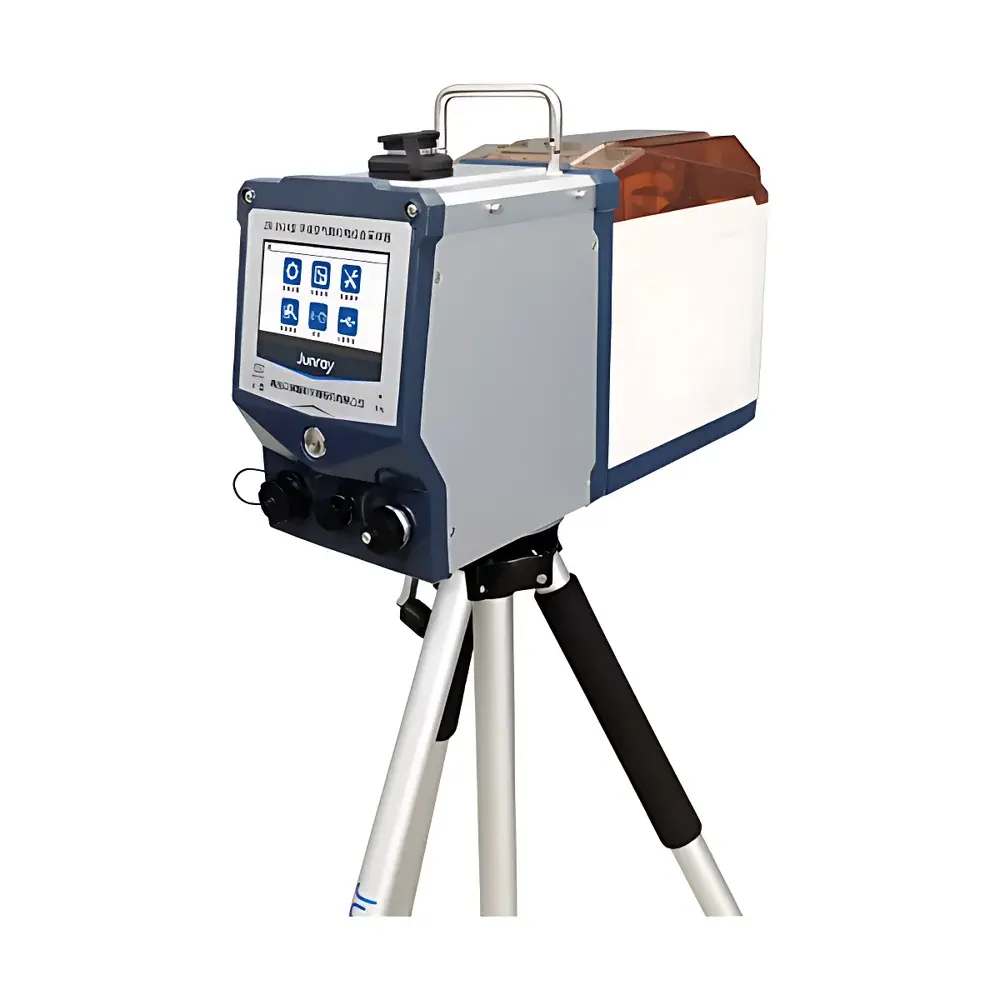
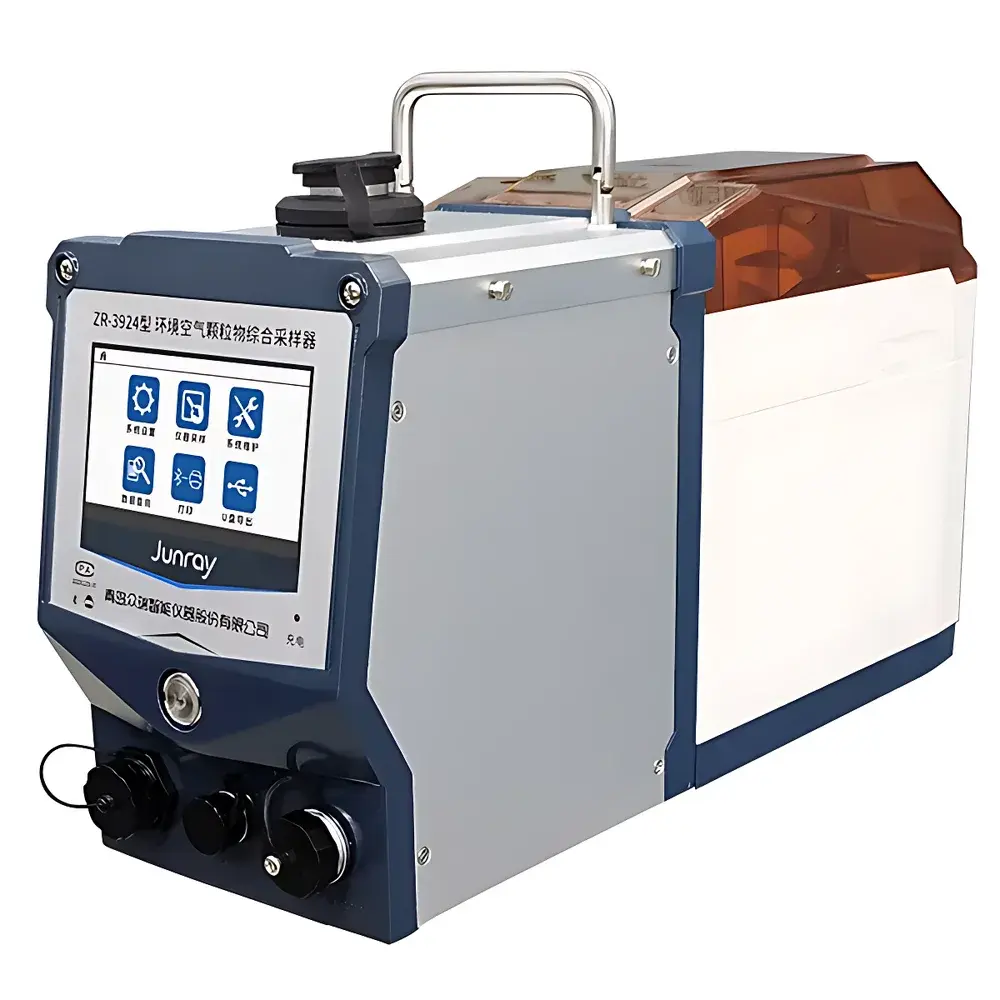
Junray ZR-3924 Environmental Air Particulate & Gaseous Multi-Channel Sampler
| Brand | Junray |
|---|---|
| Origin | Shandong, China |
| Manufacturer Type | Direct Manufacturer |
| Instrument Type | 24-Hour Constant-Temperature & Constant-Flow Gas Sampler |
| Instrument Architecture | Multi-Channel Gas Sampler |
| Flow Range | 0.1–1.5 L/min |
| Flow Stability | ≤±5% over 1 h |
| Flowmeter Accuracy | ≤±2% |
| Pump Service Life at Max Flow & Backpressure | >5000 h |
Overview
The Junray ZR-3924 Environmental Air Particulate & Gaseous Multi-Channel Sampler is an integrated, field-deployable monitoring instrument engineered for simultaneous, gravimetric collection of airborne particulate matter (TSP, PM10, PM2.5) and gaseous pollutants via solution absorption, solid-phase adsorption (e.g., Tenax, activated carbon), or thermal desorption-compatible sampling media. It operates on the principle of controlled volumetric aspiration through standardized impactor-based size-selective inlets and chemically inert sampling trains, ensuring compliance with internationally referenced gravimetric and sorbent-based air quality measurement protocols. Designed for unattended 24-hour operation under variable ambient conditions, the ZR-3924 meets the functional and metrological requirements of multiple Chinese environmental standards—including HJ 618-2011 (PM10/PM2.5 gravimetric determination), HJ 644-2013 (VOCs by thermal desorption–GC/MS), HJ 93-2013 (performance specifications for PM samplers), and HJ/T 375-2007 (general atmospheric sampler requirements)—making it suitable for regulatory monitoring networks, occupational hygiene surveys, and research-grade ambient air characterization.
Key Features
- Multi-channel parallel sampling: Five independent sampling channels support concurrent collection of particulate fractions (via TSP/PM10/PM2.5 aluminum alloy cyclones with anti-static surface treatment) and gaseous analytes (using impingers, sorbent tubes, or diffusion denuders).
- Dual thermal management options: Model A includes a built-in constant-temperature insulation chamber (maintaining filter temperature within ±2 °C of setpoint across −20 °C to 45 °C ambient); Model B integrates active heating (up to 50 °C) for reliable low-temperature operation in freezing climates.
- High-reliability flow control: Precision electronic mass flow sensors (corrosion- and humidity-resistant) deliver stable flow rates from 0.1 to 1.5 L/min with ≤±2% full-scale accuracy and ≤±5% deviation over 1-hour intervals—validated per JJG 956-2013 calibration procedures.
- Ruggedized field architecture: IP54-rated enclosure with rain-, dust-, electrostatic-, and impact-resistant design; operational capability confirmed under high-humidity, snow, sandstorm, and heavy haze conditions.
- Intelligent power and data management: Integrated high-capacity Li-ion battery enables ≥6 h standalone operation; automatic power-fail recovery preserves time-stamped sampling parameters and resumes interrupted sequences without manual reconfiguration.
- Human-centered interface: 4.3-inch capacitive color touchscreen with tactile key backup; real-time display of ambient pressure (via calibrated piezoresistive sensor), temperature, flow rate, elapsed time, and remaining battery life.
Sample Compatibility & Compliance
The ZR-3924 accommodates standard 47-mm and 90-mm quartz fiber or PTFE membrane filters for particulate gravimetry, as well as U-shaped silica gel impingers, stainless-steel sorbent tubes (e.g., Carbopack™, Tenax TA), and diffusion scrubbers for gaseous species including SO2, NOx, benzene homologues (per HJ 583–2010), halogenated VOCs (per HJ 645–2013), and carbonyl compounds. All gas pathways employ fluoropolymer-lined tubing and PTFE valves to minimize adsorption artifacts and cross-contamination. The system supports method-defined sampling durations (single-shift, 24-h, or multi-day integrated campaigns) and conforms to GLP-aligned data integrity principles: audit-trail-enabled parameter logging, tamper-evident timestamps, and non-volatile memory retention per IEC 62443-3-3 cybersecurity guidelines for environmental instrumentation.
Software & Data Management
Onboard firmware records second-by-second flow, pressure, temperature, and pump status to internal flash memory (≥100,000 data points). USB 2.0 interface enables direct export of CSV-formatted datasets compatible with EPA AQS, ISO 17025-compliant QA/QC workflows, and statistical analysis platforms (e.g., R, Python pandas). Optional GPRS module (firmware-upgradable) provides encrypted, TLS 1.2-secured remote telemetry for centralized network monitoring—supporting configurable alarm thresholds for flow deviation (>±8%), temperature excursion (>±3 °C), or power loss. Calibration logs, maintenance history, and operator ID entries are stored with cryptographic hash verification to satisfy FDA 21 CFR Part 11 electronic record requirements where applicable.
Applications
- Regulatory ambient air quality monitoring (PM2.5/PM10 compliance reporting under national air quality standards)
- Indoor air quality (IAQ) assessments in schools, hospitals, and office buildings
- Occupational exposure evaluation per OSHA/NIOSH criteria for respirable dust and organic vapors
- Source apportionment studies requiring co-located particulate and VOC sampling
- Method validation and inter-laboratory comparison exercises (e.g., reference method equivalence testing)
- Long-term trend analysis in ecological monitoring stations and background sites
FAQ
Does the ZR-3924 comply with U.S. EPA or EU EN standards?
While designed to meet Chinese HJ-series regulatory methods, its flow accuracy, thermal stability, and particulate separation performance align with core functional requirements of EPA Method IO-3.2 (PM2.5 reference samplers) and EN 12341:2014 (ambient PM10/PM2.5). Full equivalency requires site-specific validation per local accreditation bodies.
Can the instrument operate continuously for more than 24 hours?
Yes—when connected to AC power and configured for timed or interval sampling, the ZR-3924 supports uninterrupted operation for ≥7 days. Battery-only runtime is limited to ~6 hours at 1.0 L/min per channel.
Is the flow calibration traceable to national standards?
All factory calibrations are performed using NIST-traceable primary flow standards (e.g., dry calibrator with certified uncertainty <±0.5%). Certificate of Calibration includes as-found/as-left data and is supplied with each unit.
What maintenance is required for long-term reliability?
No routine sensor recalibration is needed—the piezoresistive pressure transducer and thermal mass flow elements are drift-compensated and sealed for life. Recommended quarterly inspection includes pump brush replacement, filter housing cleaning, and cyclone geometry verification per HJ 93-2013 Annex C.
How is data integrity ensured during field deployment?
All measurements are timestamped with GPS-synchronized RTC (optional external GNSS module), stored in write-protected memory partitions, and exported with SHA-256 checksums. Firmware enforces role-based access control (operator/admin modes) and disables unauthorized parameter modification during active sampling.
Related Products







