
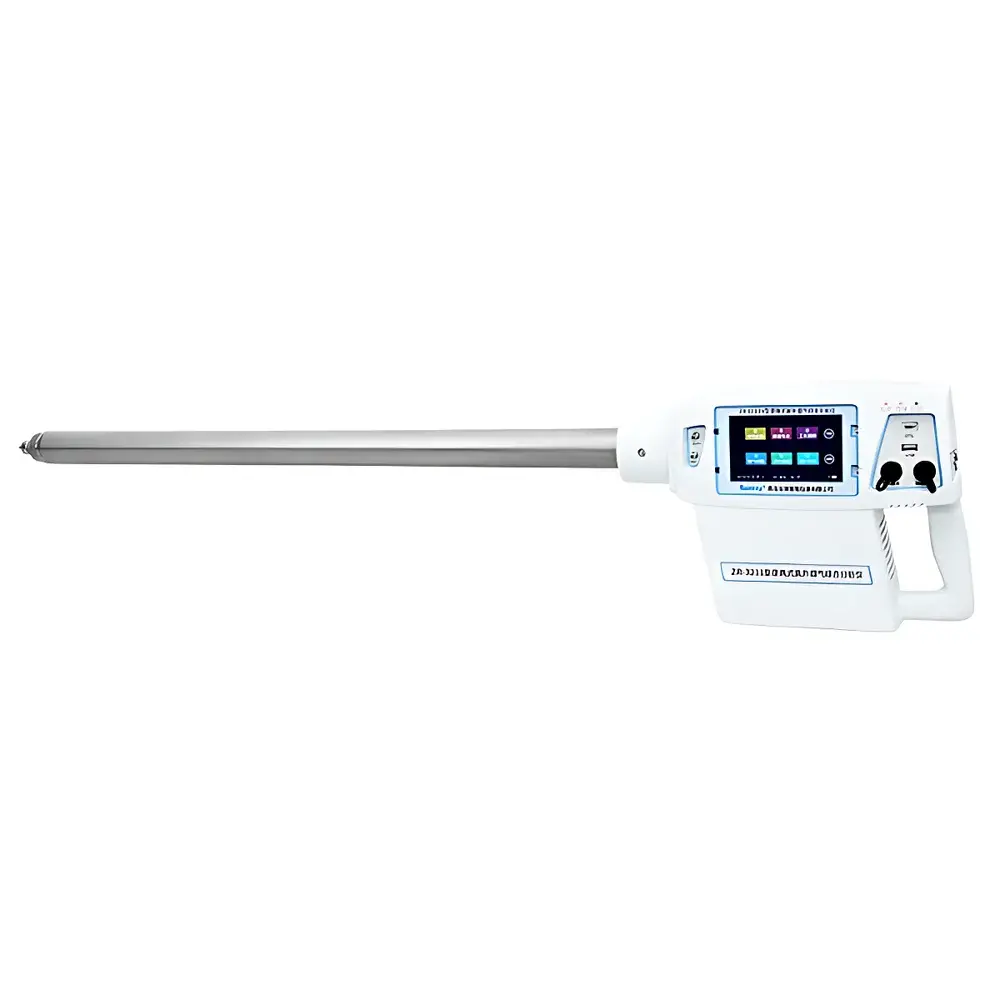
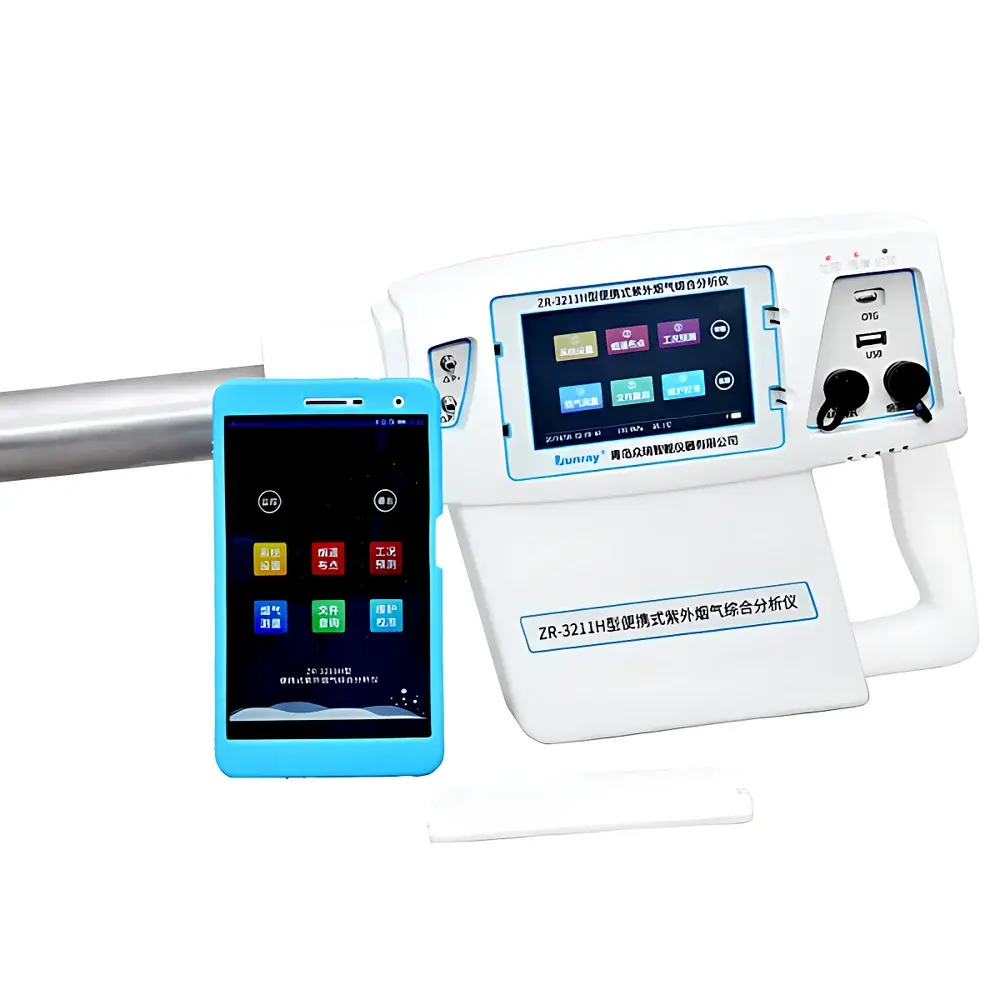
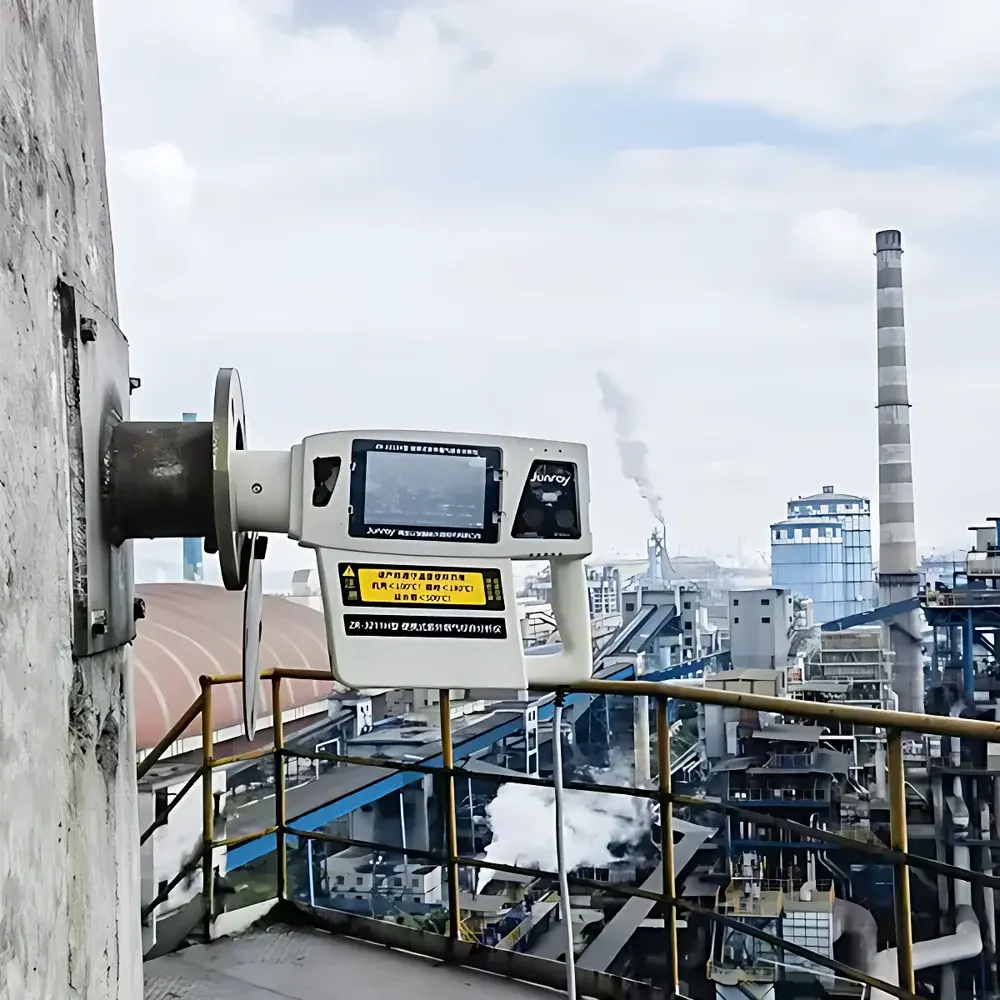
Junray ZR-3211H Portable UV Differential Optical Absorption Spectroscopy (DOAS) Flue Gas Analyzer
| Brand | Junray |
|---|---|
| Origin | Shandong, China |
| Manufacturer | Junray Instruments Co., Ltd. |
| Type | Portable Flue Gas Analyzer |
| Measurement Principle | UV Differential Optical Absorption Spectroscopy (UV-DOAS) |
| Measured Gases | SO₂, NO, NO₂, NH₃ (standard) |
| Accuracy | ±5% of reading |
| Repeatability | ≤2.0% |
| Response Time | ≤90 s |
| Drift | <5% within 1 hour |
| Operating Temperature Range | -20 °C to 50 °C |
| Sample Gas Temperature Handling | Up to 200 °C (with heated probe & heated sampling line) |
| Moisture Tolerance | Full-range operation under high-humidity conditions (up to 100% RH), no condensation-induced bias |
| Compliance Standards | HJ 1131–2020, HJ 1132–2020, HJ 1045–2019, GB/T 37186–2018, JJF 1362–2012, JJG 968–2002 |
Overview
The Junray ZR-3211H is a field-deployable flue gas analyzer engineered for regulatory-grade measurement of key combustion pollutants in stack emissions. It employs ultraviolet differential optical absorption spectroscopy (UV-DOAS) — a reference-grade optical technique that quantifies gaseous analytes based on their unique absorption cross-sections in the 190–400 nm spectral range. Unlike extractive systems relying on cold-dry sample conditioning, the ZR-3211H implements a hot-wet measurement strategy: the entire gas path — from the titanium alloy vacuum-insulated sampling probe through the heated optical cell — remains above the dew point, eliminating water condensation and preserving reactive species (e.g., NH₃, SO₂) that would otherwise be lost during chilled impinger or permeation dryer treatment. This architecture ensures traceable accuracy under high-moisture, low-concentration conditions typical of modern low-NOₓ burners, desulfurized coal boilers, and waste-to-energy incinerators. The instrument meets the metrological requirements defined in HJ 1131–2020 (SO₂), HJ 1132–2020 (NOₓ), and HJ 1045–2019 for portable UV-absorption analyzers used in Chinese environmental monitoring programs.
Key Features
- UV-DOAS optical module with dual-beam configuration and temperature-stabilized deuterium/halogen light source for long-term photometric stability.
- Fully integrated hot-wet sampling system: heated titanium probe (up to 200 °C), vacuum-insulated heated sampling line, and thermostatically controlled optical cell (maintained at ≥180 °C).
- Onboard resistive-capacitive (RC) humidity sensor enabling real-time wet-basis concentration measurement and automatic dry-standard conversion per HJ/T 397–2007.
- Integrated pitot tube and thermocouple for simultaneous stack temperature and velocity profiling — critical for volumetric flow and mass emission rate calculation.
- Internal rechargeable Li-ion battery supporting ≥4 hours of continuous operation; auto-initiated purge cycle post-analysis prevents residual gas accumulation in optical path.
- Heated condensate trap and Nafion-based moisture management system protect downstream electrochemical sensors (O₂, CO, H₂S) without compromising response fidelity.
- Graphical touchscreen interface with multilingual support (English/Chinese), displaying real-time concentration, emission rate (mg/m³, t/d), and standardized (dry, 6% O₂) values per GB 13233–2011.
Sample Compatibility & Compliance
The ZR-3211H is validated for use across diverse industrial emission sources including coal-fired power plants, cement kilns, steel reheating furnaces, municipal solid waste incinerators, and biomass boilers. Its UV-DOAS core exhibits minimal cross-sensitivity among SO₂, NO, NO₂, and NH₃ due to spectral deconvolution algorithms trained on high-resolution laboratory reference spectra. The system complies with national verification protocols (JJG 968–2002), type evaluation criteria (JJF 1362–2012), and method standards for field deployment (HJ/T 397–2007). All firmware and calibration routines adhere to traceability requirements under China’s Metrology Law, with documented uncertainty budgets aligned to ISO/IEC 17025 principles. While not certified to EU EN 15267 or US EPA PS-15, its measurement performance aligns with the technical benchmarks specified in EN 14181 for QAL1 validation when operated under controlled field conditions.
Software & Data Management
Data acquisition and reporting are managed via embedded Linux-based firmware with dual export pathways: Bluetooth 4.2 connectivity for direct thermal printing (supporting standard emission report templates), and USB 2.0 host interface for bulk data transfer to U disk (FAT32 formatted). Raw spectral data, calibration logs, zero/span records, and operator annotations are stored in encrypted CSV format with timestamped metadata (UTC +8). Audit trail functionality captures user login/logout events, parameter modifications, and calibration actions — satisfying GLP-aligned record-keeping expectations for third-party verification. Optional PC software (ZR-DataLink v3.x) enables advanced spectral fitting diagnostics, interference correction tuning, and batch generation of HJ-compliant PDF reports including QA/QC summaries and uncertainty statements.
Applications
- Regulatory stack testing by provincial Environmental Monitoring Centers (EMCs) conducting routine compliance checks under the “Blue Sky Defense Campaign” framework.
- Source emission inventory development for regional air quality modeling, particularly where NH₃ slip from SCR systems or low-level SO₂ from ultra-low-emission retrofits must be quantified.
- Commissioning and performance verification of flue gas desulfurization (FGD) and selective catalytic reduction (SCR) systems.
- Leak detection and fugitive emission assessment in coke oven batteries and sintering plants using rapid traverse mode.
- Research-grade monitoring of transient combustion events (e.g., boiler start-up/shutdown, load ramping) where thermal lag and condensation artifacts invalidate cold-dry methodologies.
FAQ
Does the ZR-3211H require external zero/span gases for daily calibration?
No — it features automated zero-air generation via internal catalytic converter and pressure-controlled span gas injection ports for manual verification; field calibrations follow HJ 1045–2019 procedures.
Can the instrument measure NOₓ as NO + NO₂ directly, or is separate quantification required?
It reports NO, NO₂, and calculated total NOₓ independently using spectrally resolved DOAS fitting; no chemical conversion step is involved.
Is the UV optical path susceptible to fouling in high-dust flue gas?
Yes — optional quartz window purge kit (N₂ or clean compressed air) is recommended for applications with particulate loading >50 mg/m³.
How is moisture interference mitigated without cold trapping?
By maintaining the full optical path above dew point and applying water vapor spectral subtraction during DOAS inversion — validated per GB/T 37186–2018 Annex C.
What is the minimum detectable concentration (MDC) for SO₂ under field conditions?
Per HJ 1131–2020 test protocol, MDC is ≤2 mg/m³ at 101.3 kPa and 0% O₂, with signal-to-noise ratio ≥3:1 over 60-second integration.
Related Products







