
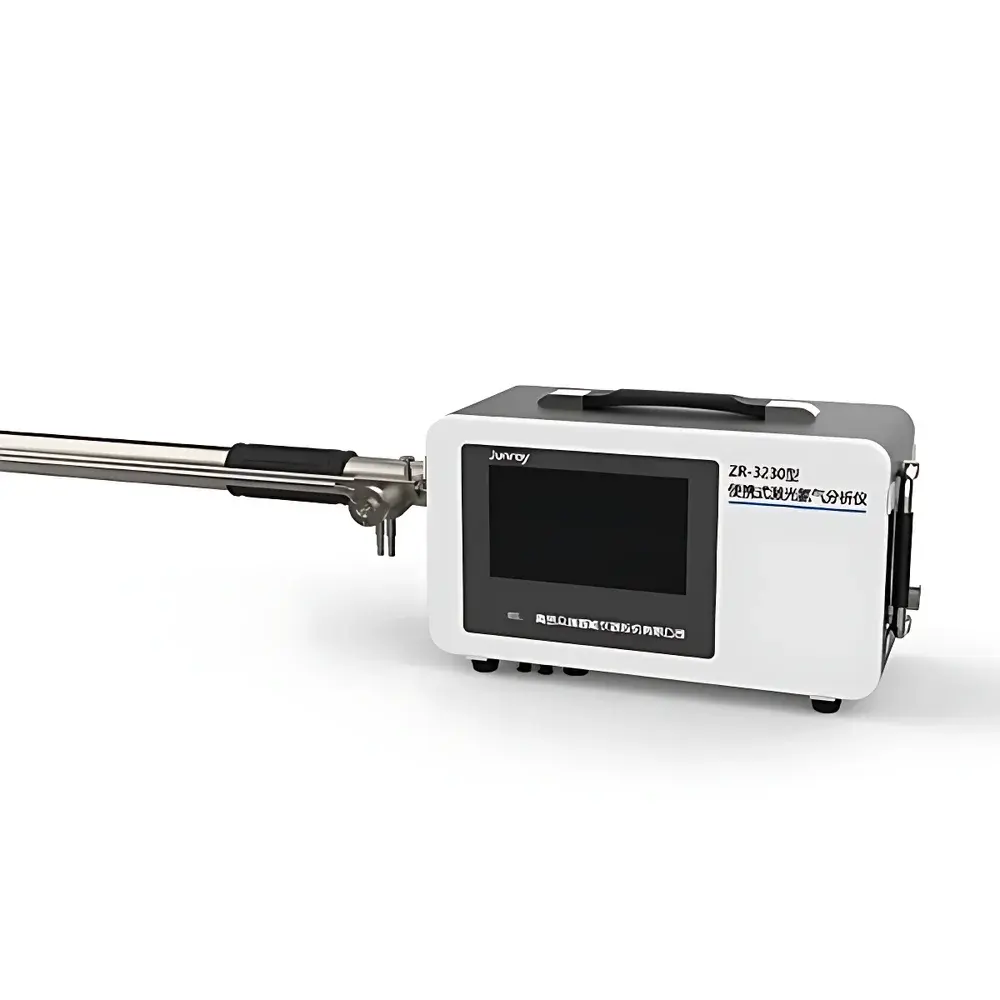
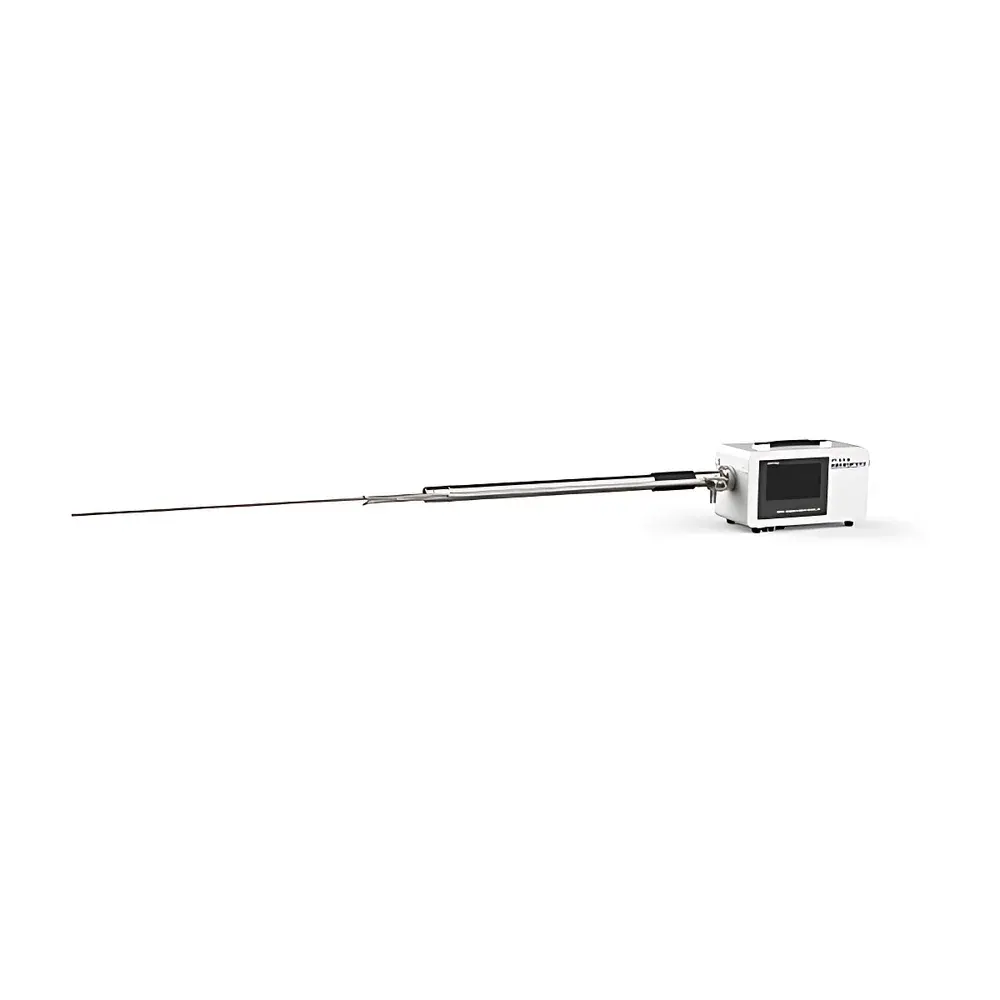
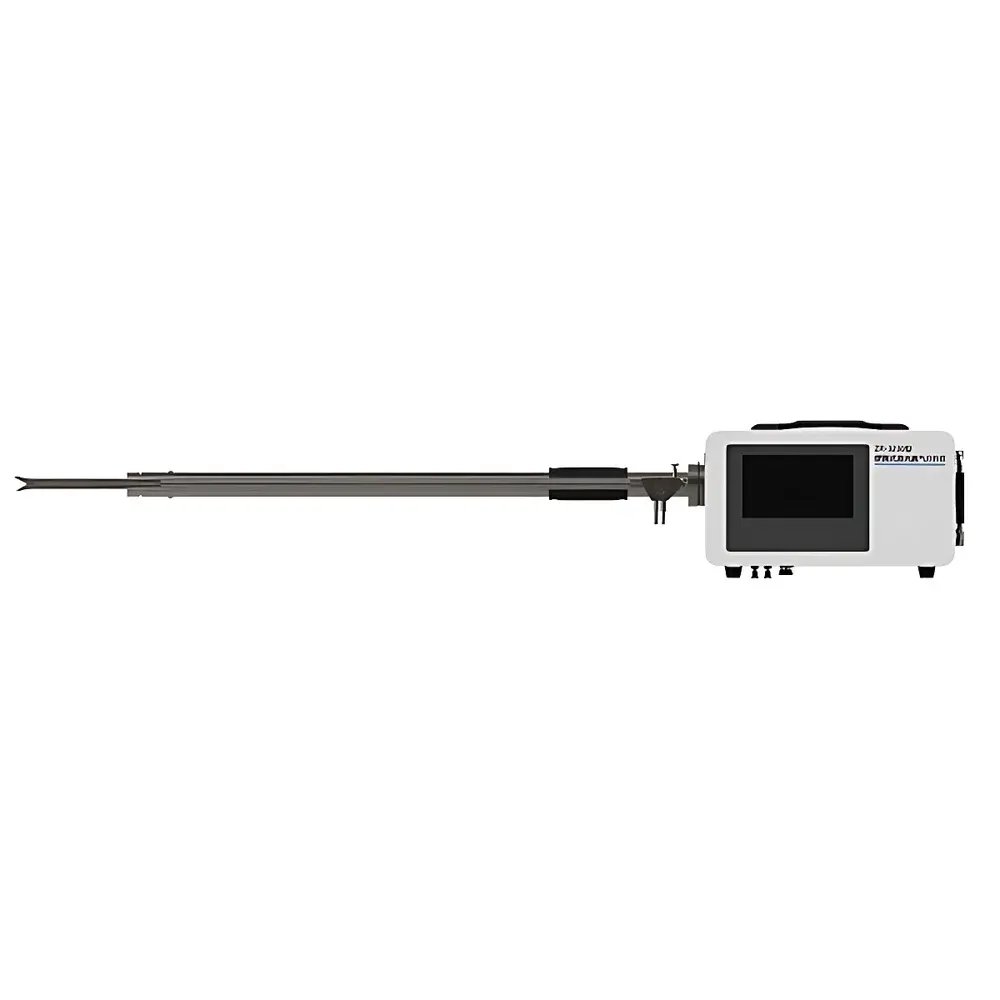
Junray ZR-3230 TDLAS Ammonia Slip Analyzer
| Brand | Junray |
|---|---|
| Origin | Shandong, China |
| Manufacturer Type | OEM Manufacturer |
| Country of Origin | Domestic (China) |
| Model | ZR-3230 TDLAS Ammonia Analyzer |
| Measurement Range | Configurable (ppm) |
| Accuracy | ±0.01 ppm |
| Response Time | ≤30 s |
| Repeatability | High (with heated sample path) |
| Operating Ambient Temperature | −20 to 45 °C |
Overview
The Junray ZR-3230 TDLAS Ammonia Slip Analyzer is a portable, in-situ gas analyzer engineered for high-precision, real-time measurement of ammonia (NH₃) concentration in flue gas streams from stationary emission sources—particularly downstream of selective catalytic reduction (SCR) or selective non-catalytic reduction (SNCR) systems. It employs Tunable Diode Laser Absorption Spectroscopy (TDLAS), a physics-based optical technique that exploits the narrow-line absorption features of NH₃ molecules in the near-infrared spectral region. By tuning the laser wavelength across a specific rotational-vibrational transition, the instrument quantifies NH₃ via Beer–Lambert law-based absorbance analysis—ensuring selectivity against cross-interfering gases (e.g., H₂O, CO₂, NOₓ) and eliminating calibration drift associated with electrochemical or metal-oxide sensors. The system operates on a hot-wet principle: all sampling components—including probe, transfer line, and optical cell—are maintained above 180 °C to prevent NH₃ adsorption, ammonium salt condensation, and water-induced signal attenuation. This architecture delivers robust performance in high-dust, high-humidity, and thermally variable industrial exhaust environments.
Key Features
- Integrated hot-wet sampling and analysis platform: Combines NH₃ and O₂ measurement with real-time flue gas parameter acquisition (temperature, pressure, velocity via detachable Pitot tube) in a single portable unit.
- Onboard moisture content sensor enables automatic dry/wet basis concentration conversion per ISO 14644-1 and EPA Method 3A requirements.
- Active condensate management: Integrated Peltier-cooled condenser and peristaltic pump continuously remove liquid water without interrupting measurement continuity.
- Self-diagnostic functionality includes automated leak-check, optical path cleanliness verification, and gas flow integrity validation prior to each analysis cycle.
- Heated sample path (>180 °C) with replaceable multi-stage particulate filters ensures long-term operational stability in high-dust applications (e.g., cement kilns, sintering plants, waste incinerators).
- Color TFT touchscreen interface with intuitive menu navigation; displays real-time spectra, diagnostic status, and environmental parameters.
- Dual wireless connectivity (Wi-Fi 802.11n + Bluetooth 5.0) supports secure data export to LIMS, cloud dashboards, or field tablets compliant with IEEE 802.1X authentication.
- Embedded RFID tag enables traceability integration with inventory control and calibration management software per ISO/IEC 17025 quality system workflows.
- Power-fail recovery protocol automatically initiates purge-and-bake sequence upon restart to clear residual condensate and restore baseline stability.
Sample Compatibility & Compliance
The ZR-3230 is validated for use with flue gases containing up to 20 g/m³ total suspended particulates, dew points up to 120 °C, and H₂O concentrations up to 30 vol%. Its TDLAS methodology satisfies the selectivity and detection limit requirements of ASTM D6522 (Standard Test Method for Determination of Nitrogen Oxides, Carbon Monoxide, and Oxygen in Emissions from Stationary Sources), while its metrological performance aligns with JJG 1105–2015 (Ammonia Gas Detector Verification Regulation) and JJG 968–2002 (Flue Gas Analyzer Verification Regulation). For regulatory reporting, the instrument supports audit-ready data logging with time-stamped records, user access logs, and electronic signature capability—facilitating compliance with GLP, GMP, and EPA 40 CFR Part 60 PS-17 QA/QC protocols.
Software & Data Management
The embedded firmware provides configurable measurement modes: manual single-shot, timed auto-sequence (user-defined interval and repetition count), and continuous monitoring with configurable averaging windows (1–60 s). All raw spectral data, processed concentration values, and diagnostic flags are stored locally on industrial-grade microSD card with FAT32 formatting. Optional PC software (Junray DataLink v3.2) enables spectral visualization, calibration curve management, and report generation compliant with ISO 17025 clause 7.8. Data exports support CSV, XML, and PDF formats with embedded metadata (instrument ID, operator, location, timestamp, uncertainty budget). Firmware updates are delivered via signed OTA packages to ensure cryptographic integrity and version control traceability.
Applications
The ZR-3230 serves as both a reference-grade field verification tool and a standalone compliance monitor across thermal power generation (coal-, biomass-, and gas-fired boilers), iron & steel production (sinter plants, blast furnaces), non-ferrous metallurgy (aluminum smelting, zinc refining), cement manufacturing, municipal solid waste incineration, and chemical synthesis facilities (e.g., nitrogen fertilizer, caprolactam, polyamide production). Its portability and rapid deployment make it ideal for stack testing campaigns, SCR catalyst performance audits, CEMS validation studies (per EN 15267 and EPA PS-17), and fugitive emission surveys in ammonia-handling infrastructure.
FAQ
What is the minimum detectable NH₃ concentration under field conditions?
The instrument achieves a lower limit of detection (LOD) of 0.01 ppmv at 1-s integration time, verified per ISO 11843-1 using signal-to-noise ratio ≥3 criteria.
Does the ZR-3230 require daily zero/span calibration?
No—TDLAS is inherently drift-free; only periodic verification with certified NH₃ standard gas (recommended quarterly) is required per JJG 1105–2015.
Can the analyzer operate unattended for extended periods?
Yes—when powered by external 24 VDC supply and mounted in a weatherproof enclosure, it supports continuous operation for >72 h with full diagnostics logging.
Is the heated sampling probe compatible with ceramic-lined stacks?
Yes—the retractable probe assembly uses Inconel 600 sheathing and accommodates insertion depths up to 2 m, with optional flange adapters for ANSI/ISO pipe interfaces.
How is measurement uncertainty quantified and reported?
Uncertainty budgets include contributions from laser wavelength stability, temperature-controlled optical path length, pressure transducer accuracy, and H₂O interference correction—calculated per GUM (JCGM 100:2008) and documented in the calibration certificate.







