
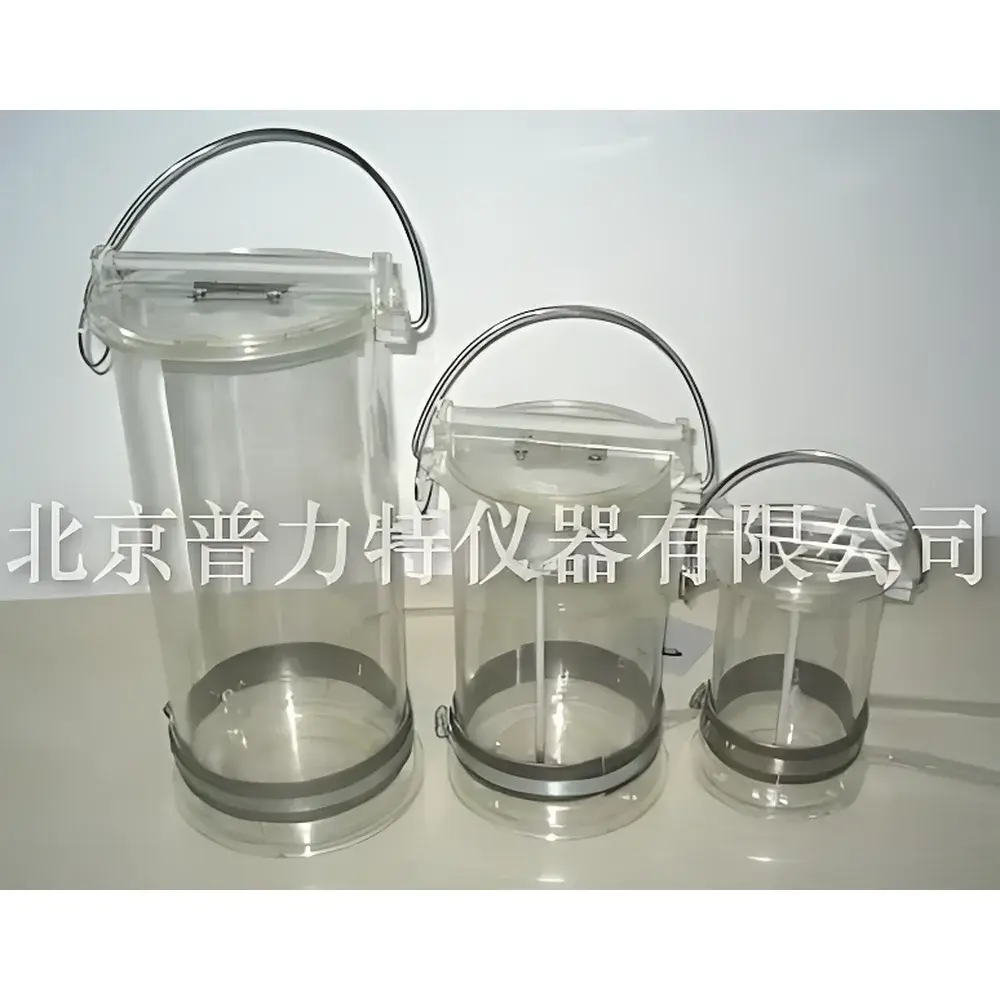
Acrylic Water Sampler WB-PM
| Origin | Beijing, China |
|---|---|
| Manufacturer Type | Distributor |
| Origin Category | Domestic |
| Model | WB-PM |
| Instrument Type | Laboratory Water Sampler |
| Material | Acrylic (Polymethyl Methacrylate, PMMA) |
| Capacity Options | 1000 mL / 2500 mL / 5000 mL |
| Ballast | Stainless Steel |
| Integrated Thermometer Range | -2 °C to 50 °C |
| Maximum Sampling Depth | 30 m |
| Operating Environment | Freshwater & Seawater (Surface to 30 m) |
Overview
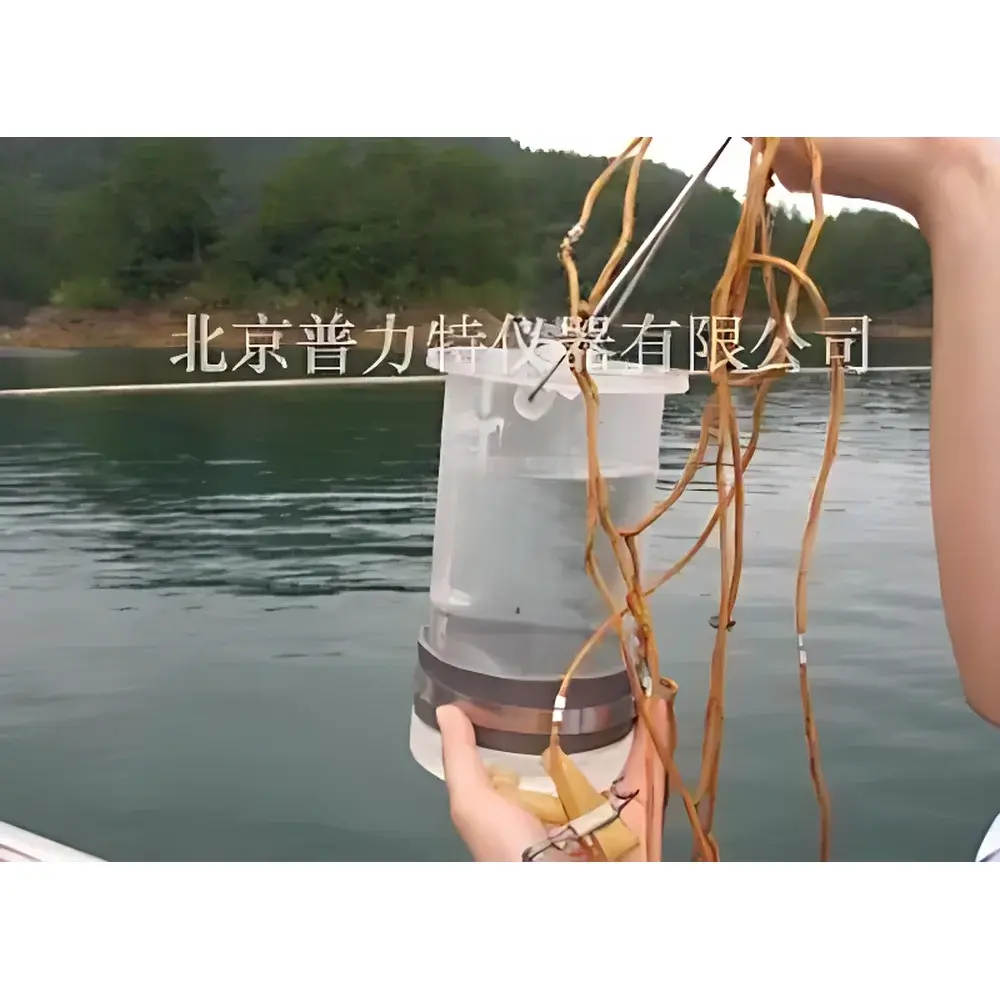
The WB-PM Acrylic Water Sampler is a manually deployed, depth-specific water sampling device engineered for reliable and contamination-minimized collection of discrete water samples from freshwater and marine environments. Designed in accordance with standard limnological and oceanographic field protocols, it operates on the principle of gravity-driven submersion and passive flow-through sampling. The sampler features a vertically oriented cylindrical body constructed from optical-grade polymethyl methacrylate (PMMA), offering high transparency for visual verification of sample integrity and absence of air entrapment. Its open-bottom configuration—comprising a removable floating plate and calibrated inlet orifices—ensures unobstructed water exchange during descent, minimizing flow turbulence and preventing sample compression or degassing. Upon reaching the target depth, the operator triggers closure via a surface-connected rope-and-pulley system, sealing the sample in situ. This methodology supports representative, depth-resolved characterization required for vertical profiling of physicochemical parameters including temperature, dissolved oxygen, nutrient gradients, and trace metal distribution.
Key Features
- Optically transparent PMMA construction enables real-time visual confirmation of fill status and sediment-free sampling.
- Modular capacity options (1000 mL, 2500 mL, and 5000 mL) accommodate varying analytical requirements—from routine QA/QC testing to multi-parameter research campaigns.
- Integrated stainless-steel ballast ensures consistent, stable descent rates across diverse water densities (fresh to full-strength seawater).
- Dual-hinged top cap with positive-latching mechanism provides secure closure while allowing rapid, tool-free access for cleaning and calibration verification.
- Embedded liquid-in-glass thermometer (-2 °C to 50 °C) permits concurrent in-situ temperature recording at time of retrieval—critical for thermal stratification studies and sensor cross-validation.
- Standardized rope attachment points and compatibility with manual crank reels facilitate repeatable deployment in vessels, piers, or ice-covered conditions.
Sample Compatibility & Compliance
The WB-PM is validated for use with common environmental analytes including but not limited to nitrate, phosphate, silicate, chlorophyll-a, heavy metals (e.g., Pb, Cd, Cu), and microbiological indicators. Its non-reactive PMMA surface minimizes adsorption of trace cations and organic compounds, supporting compliance with EPA Method 1664A (oil and grease), ISO 5667-3:2018 (sampling guidance for water quality), and ASTM D3370 (standard practices for sampling water). While not certified under GLP or GMP frameworks, its mechanical simplicity and traceable design enable full auditability in field logbooks and chain-of-custody documentation. Users are advised to perform pre-deployment rinsing with site water and post-retrieval decontamination using dilute HCl (1% v/v) followed by ultrapure water to prevent cross-sample carryover.
Software & Data Management
The WB-PM is a standalone mechanical instrument requiring no embedded electronics, firmware, or proprietary software. All operational data—including depth, ambient temperature, time of deployment/retrieval, and vessel position—are recorded manually in standardized field notebooks or digital electronic lab notebooks (ELNs) compliant with 21 CFR Part 11 when used in regulated environmental monitoring programs. Temperature readings from the integrated thermometer may be transcribed directly into LIMS-compatible spreadsheets or imported into GIS-enabled platforms (e.g., QGIS, ArcGIS) for spatial-temporal interpolation of thermal profiles. No drivers, cloud connectivity, or vendor-specific applications are involved—ensuring long-term data accessibility and platform independence.
Applications
- Vertical profiling of eutrophication indicators (e.g., phosphorus, chlorophyll-a) in stratified lakes and reservoirs.
- Baseline water quality assessment for regulatory reporting under EU WFD (Water Framework Directive) or U.S. Clean Water Act Section 305(b).
- Marine benthic zone characterization, including hypolimnetic anoxia mapping and redox gradient analysis.
- Calibration and validation of in-situ multiparameter sondes (e.g., YSI EXO, Hydrolab MS5) through discrete sample comparison.
- Field-based method validation for ISO/IEC 17025-accredited laboratories conducting environmental testing.
- Undergraduate and graduate hydrology field training, emphasizing principles of representative sampling and procedural reproducibility.
FAQ
Is the WB-PM suitable for sampling corrosive or highly saline environments?
Yes—the stainless-steel ballast and PMMA body exhibit excellent resistance to seawater corrosion and chemical degradation under normal field exposure durations (<24 h immersion). Avoid prolonged submersion beyond manufacturer-recommended intervals.
Can the sampler be sterilized for microbiological sampling?
PMMA is incompatible with autoclaving or ethylene oxide. For bacteriological applications, rinse thoroughly with 70% ethanol, followed by UV-C irradiation (254 nm, ≥15 min) and sterile deionized water rinse. Validate sterility per ISO 8573-7 prior to use.
What is the maximum recommended rope length for accurate depth targeting?
For optimal depth resolution within ±0.5 m, limit rope length to ≤35 m. Beyond this, stretch-induced error and current-induced lateral drift increase uncertainty—use acoustic depth sensors or pressure transducers for depths >30 m.
Does the thermometer require periodic recalibration?
Yes—calibrate annually against NIST-traceable reference standards (e.g., Fluke 724) using ice-point and stirred water-bath methods per ISO/IEC 17025 Clause 6.5.2.
How should the sampler be stored between deployments?
Store disassembled, inverted, and air-dried in low-UV environments. Avoid stacking or contact with solvents (e.g., acetone, chloroform) that cause PMMA crazing or stress cracking.







