
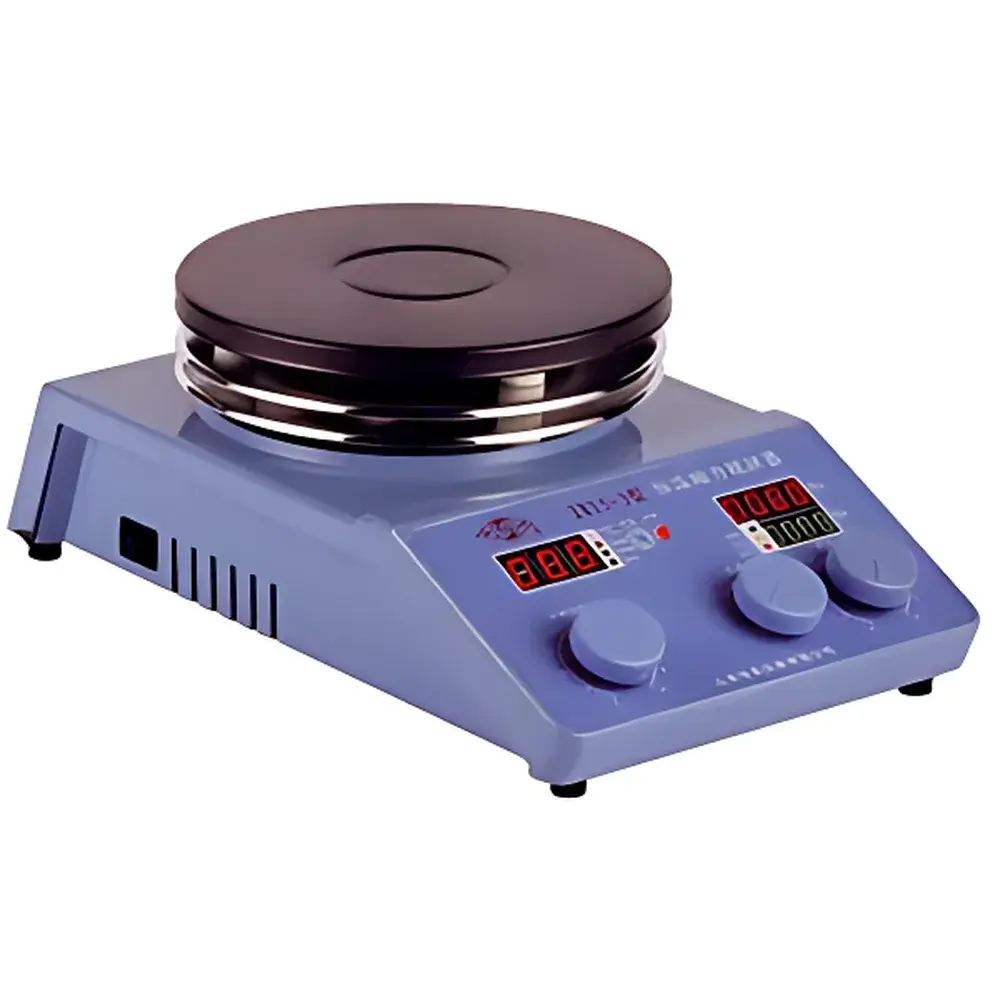
SiLe 2X15-3 Dual-Zone Digital Temperature-Controlled Magnetic Stirrer (10 L Capacity)
| Brand | SiLe |
|---|---|
| Origin | Shanghai, China |
| Model | 2X15-3 |
| Stirring Capacity | 10 L (water) |
| Speed Range | 0–1700 rpm |
| Heating Power | 800 W |
| Hotplate Temperature Range | Ambient to 350 °C |
| Liquid Medium Temperature Range | Ambient to 250 °C |
| Temperature Control Method | PID with PT100 Sensor |
| Control Precision | ±1 °C |
| Hotplate Surface | Φ170 mm Black-Coated Stainless Steel |
| Dimensions | 330 × 195 × 125 mm |
| Weight | 3.8 kg |
| Motor Torque | 80 mN·m |
| Power Supply | AC 220 V ±10% |
| Display | Dual digital LED (hotplate + medium temperature) |
| Accessories | Two-length support rods, PT100 sensor with holder, set of magnetic stir bars |
Overview
The SiLe 2X15-3 is a dual-zone, digitally controlled magnetic stirrer engineered for precision temperature management and robust mixing performance in research laboratories, quality control environments, and pilot-scale synthesis workflows. Unlike single-sensor magnetic stirrers, the 2X15-3 implements independent PID-controlled regulation of both the heating plate surface temperature and the actual liquid-phase temperature—measured via an integrated PT100 platinum resistance thermometer immersed directly in the sample. This dual-loop architecture ensures thermal stability critical for temperature-sensitive reactions (e.g., polymerization initiation, enzyme kinetics, or crystallization studies), where deviations >±1 °C may compromise reproducibility. The device operates on a brushless DC motor drive delivering consistent torque (80 mN·m) across its full speed range (0–1700 rpm), enabling stable agitation of viscous solutions up to 10 L volume (in aqueous media). Its black-coated stainless-steel hotplate (Φ170 mm) provides uniform heat distribution and corrosion resistance under prolonged exposure to solvents and reagents.
Key Features
- Dual independent temperature control channels: one for hotplate surface (ambient to 350 °C), one for liquid medium (ambient to 250 °C) — both digitally displayed and adjustable via front-panel keypad
- PID algorithm implementation ensures rapid thermal equilibration and minimal overshoot, validated per ISO/IEC 17025-compliant calibration procedures
- High-torque motor (80 mN·m) maintains rotational stability even at low speeds (<50 rpm) and under high-viscosity loads (up to ~5000 mPa·s in water-equivalent systems)
- PT100 Class B sensor (IEC 60751) included as standard; enables traceable, NIST-traceable temperature monitoring when paired with certified calibration equipment
- Black-anodized stainless-steel heating surface resists chemical etching from acids, bases, and organic solvents; surface max temperature limit (350 °C) complies with IEC 61000-4-2 ESD safety thresholds
- Continuous-duty operation rated for 24/7 use under ambient temperatures ≤40 °C and relative humidity ≤80% non-condensing
Sample Compatibility & Compliance
The 2X15-3 supports glass, PTFE-coated, and ceramic reaction vessels ranging from 50 mL beakers to 10 L jacketed reactors. Its open-frame design accommodates round-bottom flasks, crystallization dishes, and custom reactor geometries. The unit meets CE marking requirements (2014/30/EU EMC Directive and 2014/35/EU Low Voltage Directive) and conforms to RoHS 2011/65/EU material restrictions. While not classified as a medical device, its temperature accuracy (±1 °C) and data stability align with ASTM E2777-21 guidelines for laboratory thermal instrumentation used in method validation. For GLP/GMP-regulated environments, optional audit-trail-enabled firmware upgrades (via RS232 interface) support 21 CFR Part 11-compliant electronic recordkeeping when integrated with validated LIMS platforms.
Software & Data Management
The 2X15-3 operates autonomously via embedded microcontroller without external software dependency. All setpoints, real-time readings (hotplate temp, medium temp, RPM), and system status are displayed simultaneously on dual 4-digit LED screens. An RS232 serial port (DB9 male) enables connection to PCs or PLCs for remote parameter logging, alarm triggering (e.g., overtemperature or stall detection), and batch documentation. ASCII protocol documentation is provided for integration into LabVIEW, Python (pySerial), or MATLAB-based automation frameworks. No proprietary drivers or cloud services are required—data export is ASCII-text only, ensuring long-term archival integrity and IT security compliance.
Applications
- Synthesis of metal-organic frameworks (MOFs) requiring precise thermal ramping (e.g., 1 °C/min from 25 °C to 120 °C) under inert atmosphere
- Dissolution testing per USP , where solvent temperature must remain within ±0.5 °C of setpoint during 60-min agitation cycles
- Preparation of nanoparticle colloids (e.g., Fe3O4) where shear rate control prevents agglomeration
- Standardization of reference standards in analytical chemistry labs (ISO/IEC 17025 Clause 7.7)
- Teaching laboratories conducting Arrhenius kinetic experiments across 30–90 °C ranges
FAQ
Does the 2X15-3 support external temperature probes other than the supplied PT100?
Yes — the instrument accepts any two-wire or three-wire PT100 sensor compliant with IEC 60751 Class B, provided lead resistance compensation is applied manually during calibration.
Can the unit maintain 250 °C liquid temperature in a 10 L vessel continuously?
It can achieve and hold 250 °C in low-heat-loss configurations (e.g., insulated jacketed vessels); however, sustained operation above 200 °C requires active ventilation and adherence to local fire safety codes.
Is the RS232 interface optically isolated?
No — the RS232 port uses standard TTL-level signaling; for electrically noisy environments, users should install an external opto-isolator module (e.g., MAX1480B-based).
What is the recalibration interval recommendation?
Annual verification against NIST-traceable reference thermometers is advised; certificate of conformance (CoC) is supplied with each unit.
Are replacement stir bars available with PTFE/Alnico composite cores?
Yes — SiLe offers OEM-compatible stir bars in multiple geometries (cross, oval, disc) with maximum operating temperature ratings up to 300 °C.



