
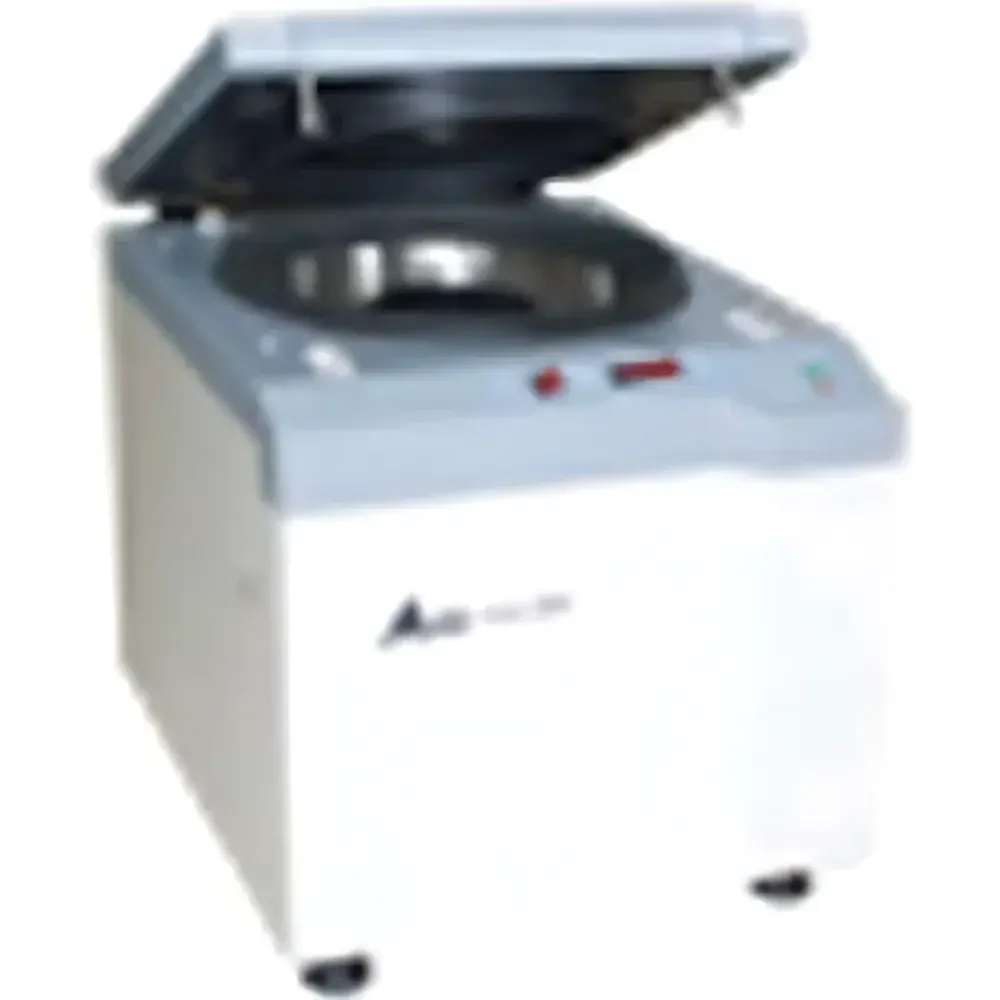
AnTing Feige TGL-20B High-Speed Benchtop Centrifuge
| Brand | AnTing Feige |
|---|---|
| Origin | Shanghai, China |
| Model | TGL-20B |
| Instrument Type | Benchtop Centrifuge |
| Speed Range | 10,000–30,000 rpm (Max. 20,000 rpm) |
| Max. RCF | 26,832 ×g |
| Max. Capacity | 6 × 100 mL |
| Dimensions | 500 × 540 × 570 mm |
| Drive System | AC Variable-Frequency Motor |
| Rotor Types | Fixed-angle (multiple configurations), Horizontal (microplate), Single-unit control with electronic safety lock |
| Compliance | Designed for GLP-aligned laboratory workflows |
Overview
The AnTing Feige TGL-20B is a high-speed benchtop centrifuge engineered for precision separation in life science and analytical laboratories. Utilizing a brushless AC variable-frequency motor, it delivers stable rotational dynamics across its operational range (up to 20,000 rpm), generating a maximum relative centrifugal force (RCF) of 26,832 ×g. Its compact footprint (500 × 540 × 570 mm) enables integration into space-constrained environments—such as biosafety cabinets, QC labs, or teaching facilities—without compromising thermal stability or mechanical integrity. The unit features microprocessor-based speed and time control, real-time RPM/RCF display, and automatic rotor identification logic that prevents overspeed operation. Unlike general-purpose low-speed units, the TGL-20B is optimized for high-resolution pelleting of subcellular components—including mitochondria, lysosomes, ribosomes, and viral particles—as well as rapid clarification of nucleic acid and protein preparations.
Key Features
- AC variable-frequency drive ensures consistent torque delivery and extended motor service life, with minimal heat generation during prolonged runs
- Electronic safety interlock system prevents lid opening during operation and automatically halts rotation upon door breach detection
- Intelligent rotor recognition via embedded encoding—each fixed-angle and horizontal rotor is pre-calibrated for accurate RCF calculation and speed limitation
- Low-noise operation (<65 dB(A) at maximum speed) achieved through balanced dynamic suspension and vibration-damping housing design
- Programmable protocols support up to 99 user-defined methods, including ramp-up/down profiles, hold times, and auto-brake selection
- Temperature management optimized for ambient lab conditions; no active refrigeration, but cavity design minimizes internal heat accumulation during sequential runs
Sample Compatibility & Compliance
The TGL-20B accommodates a broad spectrum of sample formats through nine interchangeable rotors: fixed-angle configurations for 1.5–100 mL tubes (including conical-bottom 15 mL and 50 mL variants), dual-row microcentrifuge carriers (24 × 1.5/2 mL and 48 × 1.5/2 mL), and a dual-position 96-well plate carrier for enzyme kinetics or ELISA workflow integration. All rotors are certified for autoclaving (121°C, 20 min) and constructed from anodized aluminum alloy meeting ISO 13485 material traceability requirements. While not a regulated medical device, the centrifuge’s control architecture supports audit-ready documentation practices aligned with GLP and GMP principles—particularly when paired with external data loggers for temperature, speed, and runtime verification per FDA 21 CFR Part 11 Annex 11 guidance.
Software & Data Management
The TGL-20B operates via an integrated LCD interface with tactile membrane keys and non-volatile memory for method retention. No proprietary software is bundled; however, the unit supports RS-232 serial output for connection to third-party LIMS or laboratory informatics systems. Time-stamped run logs—including start/stop timestamps, actual vs. set RPM, final RCF, and rotor ID—are stored internally for up to 500 cycles and exportable via ASCII text dump. For regulated environments, users may implement external validation protocols (e.g., IQ/OQ/PQ) using calibrated tachometers and RCF verification kits compliant with ASTM E2919-22 standards.
Applications
- Isolation of extracellular vesicles and exosomes from cell culture supernatants (100,000 ×g equivalent achievable via sequential spins)
- Pelleting of bacterial and yeast cells prior to lysis in molecular cloning workflows
- Clarification of crude tissue homogenates for subsequent Western blot or enzymatic assay analysis
- High-yield recovery of plasmid DNA following alkaline lysis and isopropanol precipitation
- Routine sedimentation of antibody-antigen complexes in immunoassay development
- Preparative separation of blood components (e.g., platelet-rich plasma) in translational research settings
FAQ
What safety certifications does the TGL-20B hold?
The unit complies with IEC 61010-1:2010 for electrical safety and IEC 61010-2-020:2016 for centrifuge-specific mechanical risk mitigation. CE marking is applied under the Low Voltage Directive (2014/35/EU) and EMC Directive (2014/30/EU).
Can the TGL-20B be validated for GMP use?
Yes—its repeatable speed accuracy (±10 rpm), programmable dwell timing (±1 s), and electronic audit trail enable full IQ/OQ/PQ execution when supported by documented calibration procedures and traceable reference standards.
Is rotor balancing required before each run?
Yes. Although the unit includes imbalance detection, manual mass balancing of opposing tubes to within ±0.1 g remains mandatory per ISO 21501-4 to ensure bearing longevity and rotational stability.
Does the TGL-20B support continuous operation?
It is rated for intermittent duty cycles only: maximum 30 minutes ON followed by ≥10 minutes OFF to maintain thermal equilibrium and prevent motor insulation degradation.
Are replacement rotors available with NIST-traceable calibration certificates?
Standard rotors ship with factory RCF verification reports. NIST-traceable calibration (per ISO/IEC 17025) is available as an optional service through authorized AnTing Feige service centers.



