
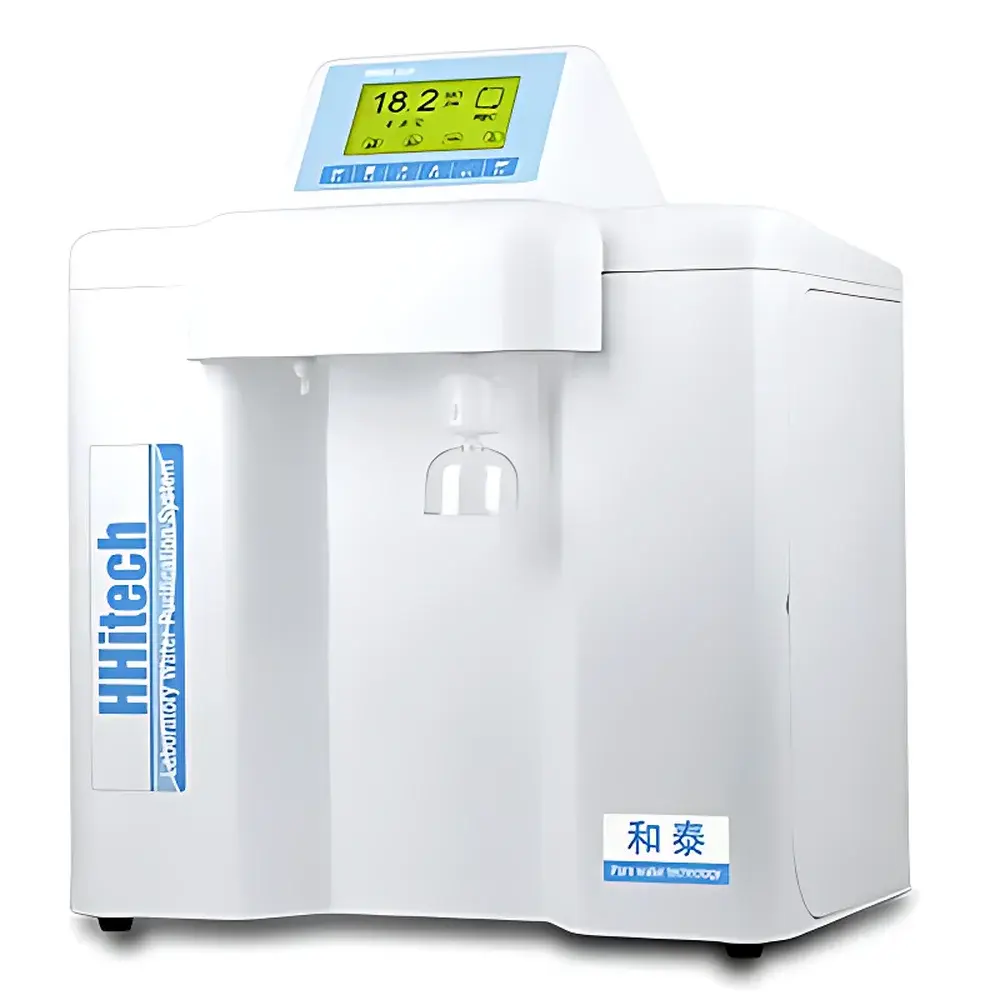
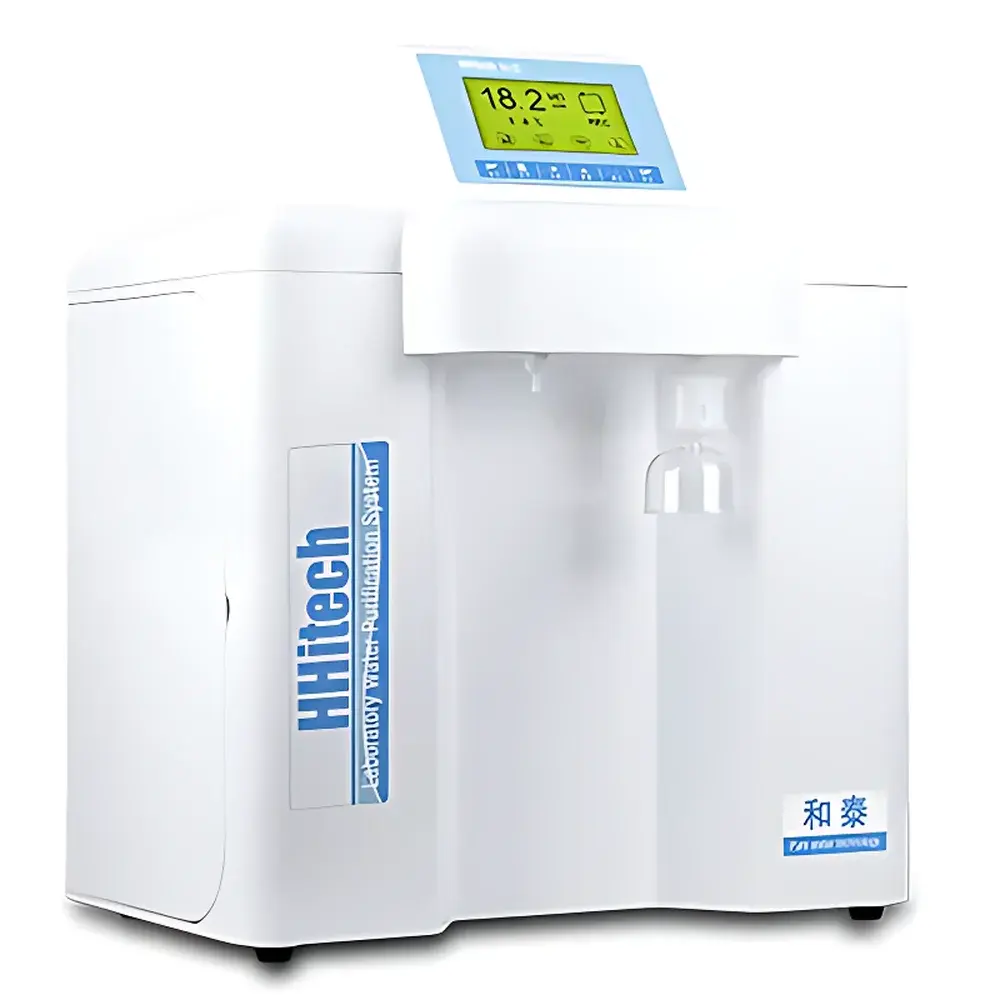
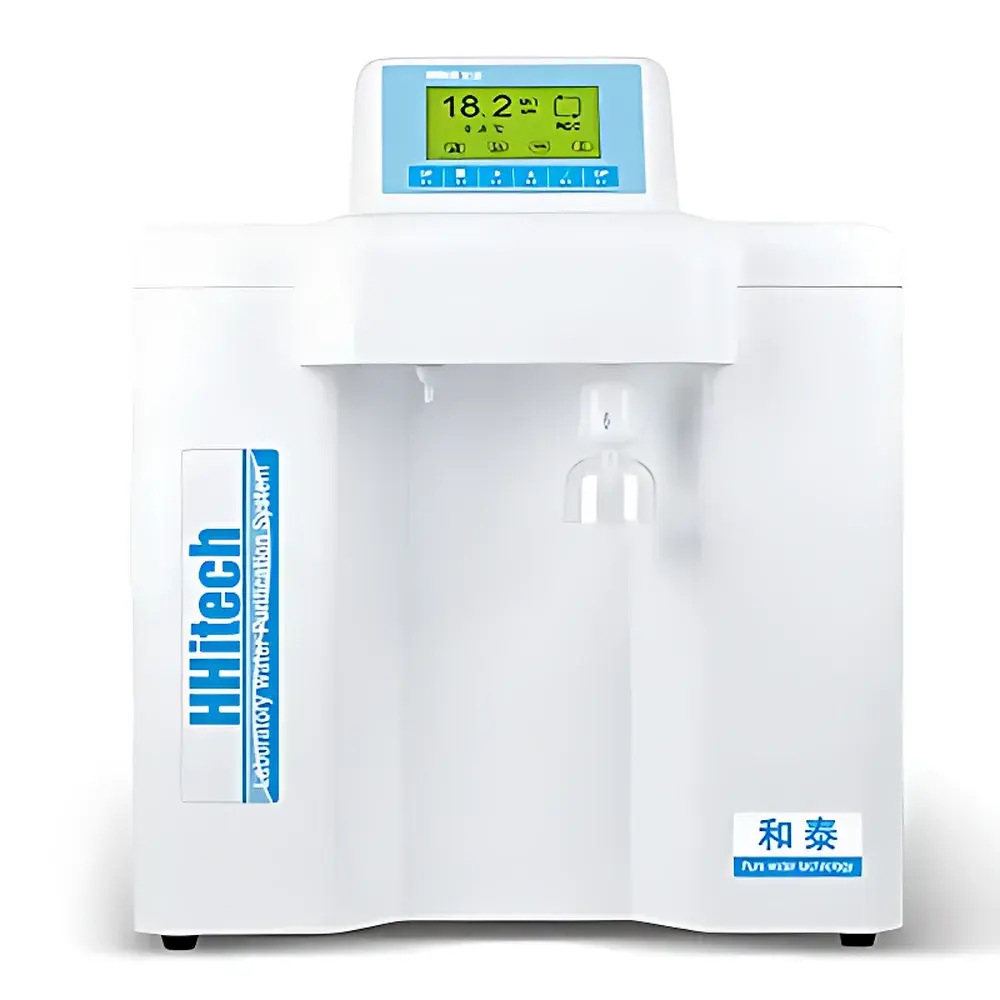
HHitech Master-D Ultra Pure Water System (Feed Source: Purified Water)
| Brand | HHitech |
|---|---|
| Origin | Shanghai, China |
| Manufacturer Type | Direct Manufacturer |
| Country of Origin | China |
| Model | Master-D |
| Price Range | USD 1,400 – 4,200 (est.) |
| Feed Water Requirement | RO/DI/ distilled water |
| Resistivity | 18.2 MΩ·cm @ 25°C |
| Heavy Metals & Soluble Silica | <0.01 ppb |
| Total Organic Carbon (TOC) | <3 ppb |
| Microbial Count / Endotoxins | <0.001 EU/mL |
| Particles (>0.1 µm) | <1 particle/mL |
Overview
The HHitech Master-D Ultra Pure Water System is a laboratory-grade, feed-water-dependent ultra-pure water generator engineered for precision applications requiring ASTM Type I, ISO 3696 Grade 1, CLSI A1, USP Purified Water and Water for Injection (WFI)-adjacent specifications. Unlike systems designed for municipal tap water input, the Master-D accepts pre-purified feed sources—such as reverse osmosis (RO), deionized (DI), or distilled water—enabling higher baseline stability, reduced membrane fouling, and tighter long-term control over critical parameters including resistivity, TOC, endotoxin, and sub-0.1 µm particle counts. Its core purification architecture integrates sequential activated carbon (AC), mixed-bed ion exchange (DI), dual-wavelength UV photooxidation (185 nm + 254 nm), and terminal 0.45 + 0.1 µm PES membrane filtration. The system delivers up to 2.0 L/min of UP water meeting GB/T 6682–2008 and GB/T 33087–2016 Class I requirements, with real-time monitoring across three independent water streams: feed, DI, and UP.
Key Features
- Triple-point online resistivity and TOC monitoring with configurable alarm thresholds for source water, DI water, and UP water
- Large 240 × 128 pixel LCD display with animated status visualization and multi-level menu navigation
- Programmable dispensing: time-based (1–99 min) and quality-based (0.1–18.2 MΩ·cm) delivery modes
- Intelligent consumables management: UV lamp and ultra-purification cartridge lifetime tracking with countdown timers and automated replacement alerts
- Integrated recirculation loop with adjustable frequency to suppress microbial proliferation in stored UP water
- One-touch full-loop sanitization protocol using NSF-certified disinfectant tablets—no manual disassembly required
- Modular 4-in-1 ultra-purification column assembly featuring Dow Chemical nuclear-grade ion exchange resins (USA-sourced)
- Dual-wavelength UV system (185 nm for TOC oxidation; 254 nm for germicidal action) with imported quartz sleeves
- Optional UF module (5,000 Da MWCO) for endotoxin removal (<0.001 EU/mL), validated for cell culture and IVF workflows
- NSF-certified fluid path components—including tubing, fittings, and terminal filters—ensuring material compatibility and leachate control
Sample Compatibility & Compliance
The Master-D is validated for use with sensitive analytical and life science applications where trace contaminants compromise integrity: HPLC mobile phase preparation, LC-MS solvent formulation, atomic absorption spectroscopy (AAS), ICP-MS calibration, PCR reagent preparation, mammalian cell culture, and monoclonal antibody purification. All wetted materials comply with USP , FDA 21 CFR Part 11 (when RS232/USB data logging is enabled), and GLP/GMP documentation requirements. The system supports audit-ready recordkeeping via optional USB/RS232 interface, retaining one year of timestamped conductivity, TOC, pressure, and alarm logs. It conforms to ISO 14644-1 Class 5 cleanroom-compatible installation standards when integrated with certified storage solutions (pressure tanks or level-controlled reservoirs).
Software & Data Management
While the Master-D operates via embedded microcontroller firmware (no external PC dependency), its optional digital interface enables secure, password-protected data export. Two-tier access control—factory and user levels—protects configuration changes per GLP Annex 11 principles. Logged parameters include instantaneous resistivity (µS/cm), temperature-compensated values, UV intensity output, flow rate, and cumulative runtime for each consumable. Data files are exported in CSV format compatible with LIMS integration. All alarms—low feed pressure, tank overflow, resistivity deviation, or end-of-life cartridge status—are timestamped and retained in non-volatile memory for root-cause analysis during internal audits.
Applications
- Preparation of blank solvents and calibration standards for trace metal analysis (ICP-MS, GF-AAS)
- Formulation of low-background buffers for next-generation sequencing (NGS) library prep
- Media and reagent preparation for primary neuronal culture and stem cell expansion
- Final rinse water for semiconductor wafer cleaning and photomask fabrication
- Feedstock for high-pressure liquid chromatography (HPLC) and ultra-high-performance LC (UHPLC) systems
- Source water for steam generators in clean steam applications compliant with EN 285
FAQ
What feed water quality is required to achieve specified UP water performance?
RO permeate (≥1 MΩ·cm), distilled water, or DI water with ≤50 ppb TOC and <100 CFU/mL microbial load is recommended. Feed water quality directly impacts resin service life and UP water consistency.
Can the Master-D be integrated with a pressurized storage tank?
Yes—the system supports both gravity-fed and pressure-tank configurations (up to 0.4 MPa inlet pressure); compatible with standard NSF-certified polyethylene or stainless steel reservoirs.
Is the UV lamp output monitored in real time?
Yes—the 254 nm germicidal intensity is continuously measured via integrated photodiode sensor; degradation triggers visual and audible alerts before performance falls below 70% nominal output.
How often must the ultra-purification cartridge be replaced?
Typical service life is 6–12 months depending on daily usage volume and feed water quality; the system calculates remaining life based on cumulative flow and resistivity drift trends.
Does the Master-D meet FDA 21 CFR Part 11 requirements for electronic records?
With the optional RS232/USB module enabled and appropriate user authentication protocols implemented, the system supports ALCOA+ data integrity principles—including attributable, legible, contemporaneous, original, and accurate records—as required for regulated biopharma environments.
Related Products



