
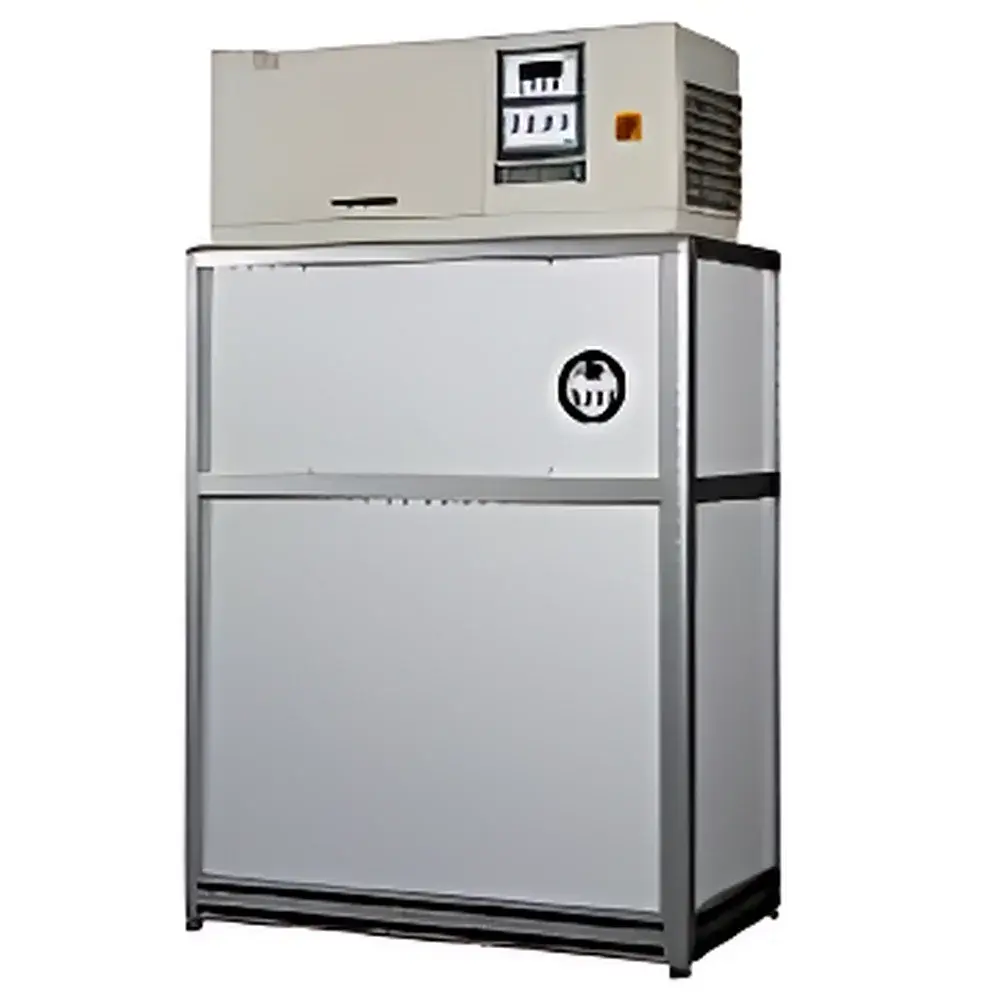
SOLARBOX e RH Series Xenon Arc Weathering Test Chamber by COFOMEGRA
| Brand | COFOMEGRA |
|---|---|
| Origin | Italy |
| Model | SOLARBOX 1500e RH / 3000e RH |
| Xenon Lamp Power | 1500 W / 2500 W |
| Irradiance Control Range | 300–1000 W/m² (300–800 nm) |
| UV Spectral Band Options | 295–400 nm, 340 nm, 420 nm |
| BST Temperature Range | Up to 100 °C |
| Relative Humidity Control | Yes, via ultrasonic humidifier |
| Humidifier Water Capacity | 50 L / 60 L |
| Water Purity Requirement | Deionized water (< 2 μS/cm) |
| Exposure Area | 280 × 200 mm / 420 × 200 mm |
| Dimensions (W×D×H) | 810×550×1600 mm / 950×550×1600 mm |
| Weight | 100 kg / 125 kg |
| Electrical Supply | 230 V AC ±10%, 50/60 Hz, 16 A max |
| Programmable Cycles | Up to 15 stored test protocols |
| Interface | RS232 serial port for data export and report printing |
Overview
The SOLARBOX e RH Series Xenon Arc Weathering Test Chamber, engineered and manufactured in Italy by COFOMEGRA, is a compact yet fully functional accelerated weathering instrument designed for precise simulation of natural sunlight, temperature, humidity, and wetting conditions. Based on xenon arc lamp technology, it replicates the full solar spectrum (300–800 nm) with high-fidelity spectral filtering—enabling accurate assessment of photodegradation, color fading, gloss loss, cracking, and embrittlement in materials exposed to outdoor or indoor environments. Unlike conventional benchtop lightfastness testers, the e RH series integrates real-time control of black standard temperature (BST), relative humidity (RH), and programmable spray cycles—functions traditionally reserved for large-scale, high-cost xenon chambers. Its modular architecture supports compliance with key international standards including ISO 11341, ISO 4892-2, ASTM G155, AATCC TM16, and GB/T 8427, making it suitable for R&D labs, quality assurance departments, and textile, polymer, coating, and automotive component manufacturers requiring reproducible, traceable, and auditable weathering data.
Key Features
- Integrated xenon arc illumination system with stabilized output (1500 W or 2500 W lamp options), delivering irradiance control from 300 to 1000 W/m² across the 300–800 nm band
- High-precision BST (Black Standard Thermometer) sensor for closed-loop sample surface temperature monitoring and regulation up to 100 °C
- Ultrasonic humidification system enabling stable RH control across the full operational range; compatible only with deionized water (< 2 μS/cm conductivity)
- Four-line alphanumeric LCD interface with intuitive menu navigation and real-time parameter display
- Microprocessor-based controller supporting user-defined test sequences—up to 15 pre-programmed protocols stored internally
- RS232 serial interface for direct connection to PC; enables automated report generation, historical data logging, and print-on-demand functionality
- Modular UV filter system—including borosilicate glass (outdoor), soda-lime glass (indoor), and IR-coated variants—to simulate diverse exposure conditions per ISO 4892-2 Annex B
- Optional immersion cycling module for synchronized wet/dry exposure phases, enhancing correlation with field aging behavior
Sample Compatibility & Compliance
The SOLARBOX e RH accommodates flat-panel specimens up to 280 × 200 mm (1500e RH) or 420 × 200 mm (3000e RH), with standardized mounting fixtures ensuring uniform irradiance distribution and thermal contact. Its design adheres to GLP-aligned operational principles: all critical parameters—including irradiance, BST, RH, and cycle timing—are continuously monitored and logged with timestamped records. The system supports audit-ready documentation required under ISO/IEC 17025-accredited testing laboratories and satisfies traceability requirements referenced in FDA 21 CFR Part 11 when paired with validated software and electronic signature protocols. It is routinely deployed in textile colorfastness validation (AATCC TM16, ISO 105-B02), polymer durability screening (ISO 4892-2), and automotive interior material qualification (SAE J2412).
Software & Data Management
While the SOLARBOX e RH operates autonomously via its embedded microcontroller, its RS232 interface allows seamless integration with third-party data acquisition platforms or custom LabVIEW/Python-based logging tools. Each completed test generates a structured ASCII log file containing irradiance setpoint vs. actual, BST readings at 1-minute intervals, RH profiles, and cycle phase timestamps. These logs are directly printable or exportable for inclusion in regulatory submissions, internal QA reports, or comparative analysis across material batches. Optional accessories—including narrowband (340 nm, 420 nm) and broadband (295–400 nm) irradiance sensors—enable spectral dose quantification aligned with ISO 4892-2 Annex D calibration practices. All firmware updates and configuration backups are performed via serial command protocol, ensuring version control and system integrity verification.
Applications
- Accelerated lightfastness evaluation of textiles, leather, and dyed fabrics per ISO 105-B02 and AATCC TM16
- UV stability screening of automotive interior trim, dashboards, and seat upholstery
- Weathering resistance validation of architectural coatings, sealants, and exterior plastics
- Photostability testing of packaging films, labels, and printed electronics
- Correlation studies between laboratory exposure and real-world service life using calibrated spectral filters and humidity profiles
- Pre-compliance screening prior to full-scale certification testing per IEC 61215 (PV modules) or ISO 11341 (paints and varnishes)
FAQ
What standards does the SOLARBOX e RH comply with?
It supports testing protocols defined in ISO 4892-2, ASTM G155, AATCC TM16, ISO 105-B02, and GB/T 8427 through configurable irradiance, temperature, humidity, and filtration settings.
Can the system operate without external water supply?
Yes—the integrated humidifier uses a sealed reservoir (50 L or 60 L capacity); refilling is manual and required only between extended test cycles.
Is BST temperature measurement traceable to NIST or PTB standards?
The BST sensor is factory-calibrated against reference thermometers compliant with ISO 4892-2 Annex E; users may perform periodic verification using certified transfer standards.
How is irradiance uniformity ensured across the exposure area?
Optical alignment of the xenon lamp, elliptical reflector geometry, and fixed sample-to-source distance are engineered to maintain ±15% irradiance uniformity over the specified exposure plane per ISO 4892-2 Section 6.3.
Does the system support remote monitoring or Ethernet connectivity?
No native Ethernet or Wi-Fi interface is provided; however, RS232-to-Ethernet gateways can be deployed externally for networked data acquisition in controlled lab environments.



