SPCC Laboratory Relocation Service for Analytical Instruments
| Brand | SPCC |
|---|---|
| Origin | Guangdong, China |
| Supplier Type | Authorized Distributor |
| Product Origin | Domestic (China) |
| Instrument Types Supported | HPLC, GC, LC-MS/MS, GC-MS, AAS, UV-Vis, ICP-OES, FTIR |
| Service Fee Range | USD 1,400 – 28,500 (based on instrument count, complexity, and site requirements) |
| Relocation Experience | 5+ years |
| Response Time | ≤12 hours |
| Service Coverage | Dongguan and Greater Pearl River Delta Region |
| Compliance Framework | GLP-aligned workflow, ISO/IEC 17025–informed handling protocols |
Overview
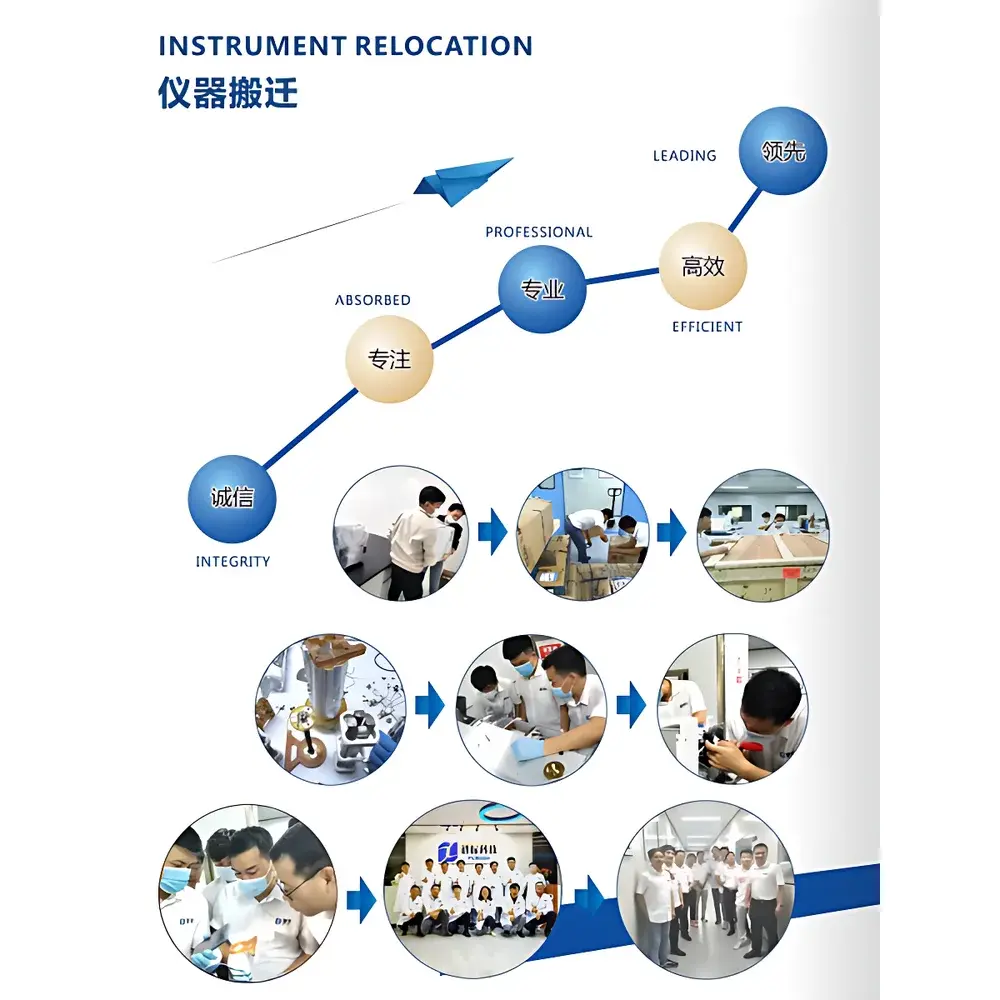
SPCC Laboratory Relocation Service is a specialized engineering support offering designed exclusively for the safe, compliant, and functionally validated relocation of high-value analytical instrumentation. Unlike generic moving services, this program applies metrology-aware handling protocols rooted in the operational physics and calibration sensitivity of chromatographic, spectroscopic, and mass spectrometric systems. Each relocation project follows a three-phase methodology: pre-move assessment (including instrument health verification, environmental log review, and utility mapping), precision disassembly with traceable component tagging, and post-move reinstallation accompanied by performance qualification (PQ) testing per manufacturer-specified parameters. The service targets laboratories operating under regulatory frameworks such as ISO/IEC 17025, FDA 21 CFR Part 11, and GLP, where continuity of measurement traceability and documented chain-of-custody are mandatory—not optional.
Key Features
- Instrument-Specific Disassembly Protocols: Customized workflows for ultra-high-pressure liquid chromatography (UHPLC) systems, triple-quadrupole mass spectrometers (LC-MS/MS), gas chromatograph–mass spectrometers (GC-MS), atomic absorption spectrometers (AAS), and Fourier-transform infrared (FTIR) analyzers—accounting for vibration sensitivity, vacuum integrity, optical alignment, and detector thermal stability.
- Calibration & Performance Verification Integration: On-site PQ testing conducted using certified reference standards; full documentation of baseline chromatograms, mass spectral fidelity, peak resolution, and signal-to-noise ratios pre- and post-relocation.
- Environmental Continuity Management: Real-time monitoring of temperature, humidity, and particulate levels during transit and installation; integration with lab HVAC commissioning reports to ensure compliance with instrument manufacturer environmental specifications (e.g., ±1°C ambient stability for MS detectors).
- Dedicated Technical Coordination: Single-point engineering contact assigned per project, with direct access to SPCC’s application support team familiar with Agilent, Thermo Fisher, Shimadzu, PerkinElmer, and Waters platform-specific firmware, communication interfaces, and diagnostic utilities.
- Audit-Ready Documentation Package: Includes equipment movement logs, torque records for critical fasteners, gas line leak-test certificates, electrical grounding validation reports, and signed instrument functionality sign-offs—structured for internal QA review or external accreditation audits.
Sample Compatibility & Compliance
The service supports relocation of core analytical platforms used in food safety, environmental testing, pharmaceutical QC, and clinical research labs. Verified compatibility includes: LC-MS/MS (e.g., Waters Xevo TQ-S, Thermo Q Exactive), GC-MS (Agilent 7010B, Shimadzu GCMS-QP2020), ICP-OES (PerkinElmer Optima 8300), AAS (Thermo iCE 3000), and HPLC/UHPLC systems with PDA, fluorescence, or CAD detection. All procedures align with ISO/IEC 17025:2017 Clause 6.4 (Equipment) and Annex A.2 (Handling of Equipment), and incorporate risk-based controls consistent with ICH Q9 principles. While not a certification body, SPCC’s relocation documentation is structured to support client-led GLP/GMP audit readiness.
Software & Data Management
No software installation or data migration is performed as part of standard scope—client data ownership and system integrity are preserved per ISO 27001-aligned handling. However, SPCC provides coordinated support for vendor-authorized software reactivation (e.g., Thermo Fisher Console, Waters Empower, Agilent OpenLab CDS) following hardware reinstallation. Network configuration assistance—including IP address reassignment, firewall exception coordination, and time-server synchronization—is available upon request. Full electronic record retention (ERR) of all relocation documentation is provided in PDF/A-1b format, with embedded metadata supporting long-term archival and retrieval per 21 CFR Part 11 Subpart B requirements.
Applications
This service is routinely engaged during laboratory facility upgrades, regulatory expansion (e.g., CNAS or CMA accreditation scope extension), consolidation of satellite testing sites, and post-acquisition integration of analytical assets. Recent deployments include relocation of a full-suite food contaminant testing lab (including LC-MS/MS for mycotoxin quantification and GC-MS for pesticide residue screening) from Shenzhen to a newly commissioned GLP-compliant facility in Dongguan—completed within 72 hours of notice, with zero downtime in method validation timelines.
FAQ
Does SPCC perform calibration after relocation?
Yes—performance qualification (PQ) testing is included; full calibration is available as an add-on service coordinated with accredited third-party providers.
Can relocation be scheduled outside normal business hours?
Yes—24/7 emergency response is available for time-critical moves, subject to advance notification and resource availability.
Is remote support provided during post-move system recommissioning?
Yes—SPCC engineers offer real-time screen-sharing diagnostics via secure TLS-encrypted channels for up to 8 hours post-installation.
Do you support international instrument relocation?
Currently limited to mainland China; cross-border moves require coordination with licensed freight forwarders and customs brokers—SPCC provides technical liaison support only.
What documentation is delivered upon project closeout?
A complete digital dossier including movement log, PQ test reports, environmental monitoring summary, and signed instrument functionality verification forms—all timestamped and digitally signed.
Related Products