
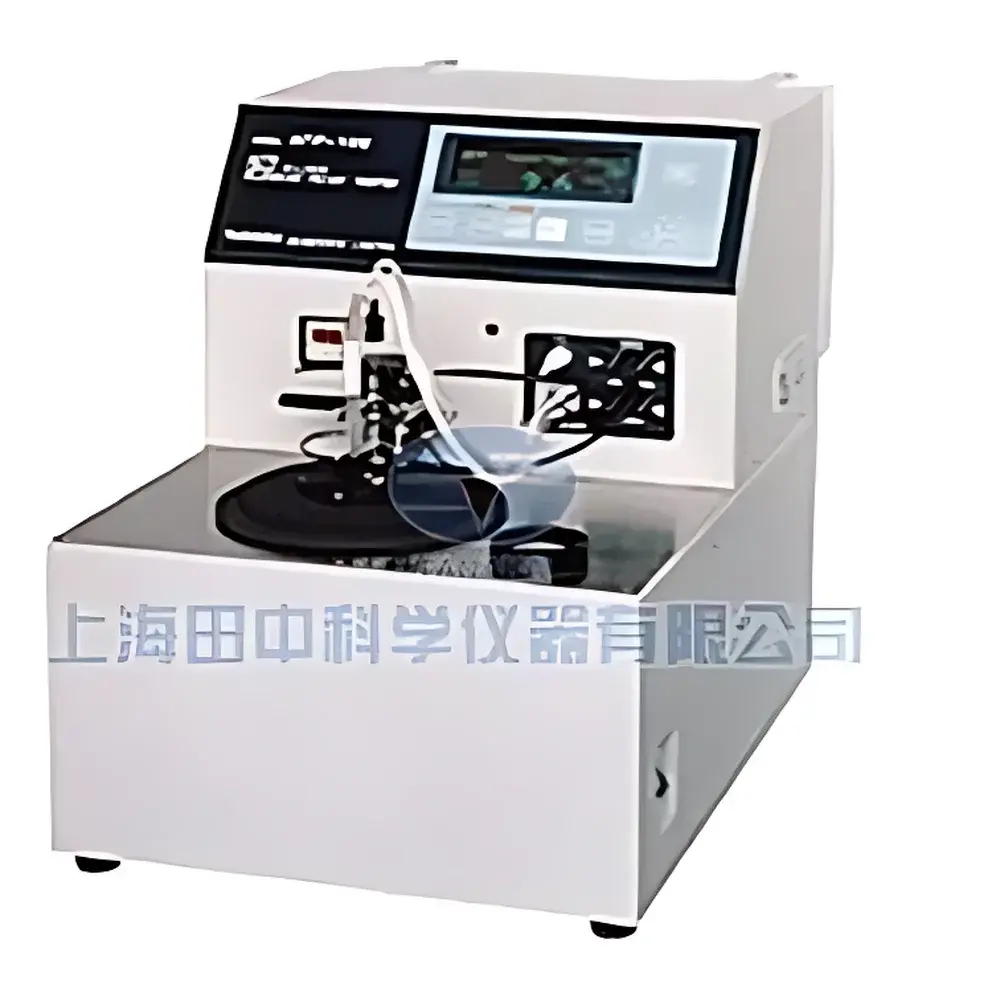
Tanaka AFP-102 Automated Cold Filter Plugging Point (CFPP) Tester
| Brand | Tanaka |
|---|---|
| Origin | Japan |
| Manufacturer Type | Authorized Distributor |
| Origin Category | Imported |
| Model | AFP-102 |
| Pricing | Available Upon Request |
Overview
The Tanaka AFP-102 Automated Cold Filter Plugging Point (CFPP) Tester is a precision-engineered benchtop instrument designed exclusively for the standardized determination of the Cold Filter Plugging Point of diesel fuels and middle distillates in accordance with ASTM D6371 and JIS K 2288. CFPP is a critical low-temperature performance parameter indicating the lowest temperature at which a given fuel can pass through a standardized wire mesh filter under vacuum within a specified time—directly correlating to operability in cold-climate diesel engines. The AFP-102 implements a fully automated, microprocessor-controlled cooling and suction sequence based on defined thermal ramping protocols. Its core measurement principle relies on real-time optical detection of liquid level displacement during vacuum-assisted filtration, synchronized with high-stability Pt100 temperature sensing in both sample and cooling bath environments. This architecture ensures traceable, repeatable, and operator-independent results—essential for quality control laboratories operating under ISO/IEC 17025, ASTM-compliant workflows, or refinery process validation protocols.
Key Features
- Integrated single-cup benchtop design combining control unit, measurement chamber, and aluminum cooling bath—minimizing footprint and thermal cross-talk
- High-efficiency thermoelectric cooling system using ethylene glycol/water coolant (freezing point ≤ −40 °C), eliminating hazardous refrigerants and reducing long-term operational cost
- Dual optical liquid-level detection: independent photodiode-based sensors monitor both upper (20 mL fill line) and lower (drain phase) meniscus positions during suction and atmospheric re-equilibration
- Vacuum-driven filtration using a 5 L stainless-steel vacuum reservoir, digitally regulated pressure controller, and solenoid-valve actuation—ensuring precise, reproducible differential pressure application
- Fluorescent VFD display with 0.1 °C resolution showing real-time sample temperature, selected test mode, user-defined cloud point input, elapsed suction time (in seconds), and flashing CFPP result with historical record of prior six suction intervals
- Three programmable cooling profiles: (a) multi-stage stepped ramp per ASTM/JIS (−34 ± 0.5 °C → −51 ± 1 °C → −67 ± 2 °C); (b) linear 1 °C/min ramp; (c) linear 2 °C/min ramp—supporting method development and interlaboratory comparison studies
- Comprehensive safety architecture including overheat protection (>60 °C bath cutoff), sensor fault diagnostics (Pt100 open-circuit, optical detector failure), and microcontroller watchdog circuitry
Sample Compatibility & Compliance
The AFP-102 is validated for use with light distillate fuels—including automotive diesel (EN 590), biodiesel blends (B5–B20), kerosene-type jet fuels (Jet A-1), and heating oils meeting ISO 8217 specifications. All wetted components comply with ASTM D6371 mechanical requirements: ASTM-grade Class I borosilicate glass test tube (31.5 mm ID, 120 mm height, 1.5 mm wall thickness, calibrated to 45 mL), brass mesh filter (specified pore geometry), and black synthetic resin annular holder and cap with dedicated ports for Pt100 probes, suction tube, and venting. The system supports full audit trail generation when interfaced with LIMS or validated data acquisition software—meeting GLP documentation requirements and aligning with FDA 21 CFR Part 11 principles for electronic records where configured with timestamped RS-232 output.
Software & Data Management
While the AFP-102 operates as a standalone instrument with embedded firmware, its standard RS-232 serial interface enables direct connection to laboratory PCs or thermal printers for automated result logging. Raw data streams include timestamp, setpoint temperature, actual bath and sample temperatures (recorded at 1 Hz), suction start/stop times, final CFPP value, and diagnostic status flags. When integrated into a validated QC environment, users may deploy third-party compliant software (e.g., LabArchives, Empower, or custom Python-based parsers) to enforce electronic signature workflows, data integrity checks, and revision-controlled report templates. Internal non-volatile memory retains calibration constants and user preferences—even during power loss—supported by a replaceable lithium backup battery.
Applications
- Refinery final product release testing against ASTM D6371 and JIS K 2288 specifications
- Blending optimization for winter-grade diesel formulations (e.g., cold flow improver efficacy assessment)
- Contract laboratory accreditation under ISO/IEC 17025 for petroleum testing scope
- Research into low-temperature crystallization behavior of paraffinic and naphthenic hydrocarbon fractions
- Field service verification of fuel storage stability during seasonal transitions
- Training platform for ASTM method instruction in technical academies and vocational institutions
FAQ
Does the AFP-102 require external cooling circulation equipment?
Yes—the integrated cooling bath requires an optional external chiller unit to maintain stable low-temperature operation; the instrument itself houses only the Peltier cooling module and aluminum thermal mass.
Can the instrument be used for fuels other than diesel?
It is specifically validated for middle distillates per ASTM D6371; use with gasoline, crude oil, or residual fuels is not supported and may compromise measurement validity.
What is the recommended maintenance interval for the optical sensors?
Optical emitter/receiver pairs should be inspected and cleaned with lint-free isopropyl alcohol swabs every 50 tests or quarterly—whichever occurs first—to prevent particulate interference.
Is the vacuum pump serviceable in-house?
The miniature diaphragm air pump is field-replaceable using standard Torx tools; spare kits including valves, seals, and pressure transducers are available from Tanaka authorized service centers.
How is calibration traceability established?
Temperature sensors are factory-calibrated against NIST-traceable standards; users must perform periodic verification using certified reference thermometers per ASTM E77 or ISO 17025 internal procedure requirements.




