Lihero Atmospheric Environmental Integrated Monitoring and Regulatory Platform
| Brand | Lihero |
|---|---|
| Origin | Hunan, China |
| Manufacturer Type | Authorized Distributor |
| Country of Origin | China |
| Model | Atmospheric Environmental Integrated Monitoring and Regulatory Platform |
| Pricing | Available Upon Request |
Overview
The Lihero Atmospheric Environmental Integrated Monitoring and Regulatory Platform is a centralized, web-based environmental information system engineered for continuous, multi-parameter atmospheric monitoring and regulatory decision support. It operates on a modular architecture integrating real-time data acquisition from fixed-site air quality monitoring stations (e.g., PM2.5, PM10, SO2, NOx, O3, CO, VOCs, meteorological parameters), mobile source tracking inputs, remote sensing data feeds (e.g., satellite-derived AOD), and emission inventory databases. The platform applies standardized data validation protocols—including QA/QC flagging per China’s HJ 653–2013 and HJ 193–2013 technical specifications—and supports source apportionment modeling (e.g., PMF, CMB) to quantify contributions from industrial, traffic, biomass burning, and regional transport sources. Designed for municipal environmental protection bureaus, ecological monitoring centers, and urban planning agencies, it delivers traceable, auditable data streams compliant with national environmental information system interoperability requirements (HJ 725–2014).
Key Features
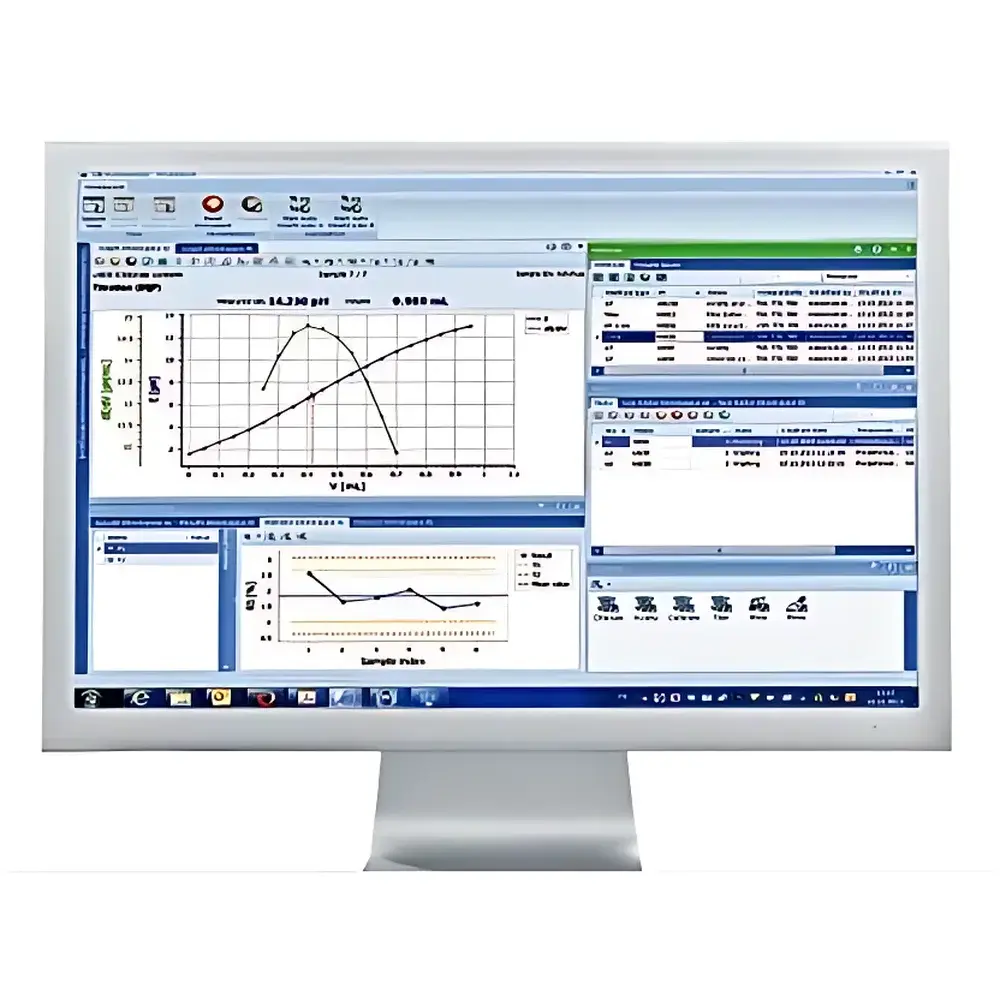
- Real-time graphical dashboard with customizable spatial–temporal visualizations: interactive maps, time-series plots, heatmaps, and exceedance alerts—rendered via WebGL-accelerated rendering engine for sub-second response at city-scale resolution.
- Template-driven reporting module supporting ISO/IEC 17025-aligned report generation; enables online editing, version control, digital signature integration, and automated PDF/Excel export with embedded metadata (timestamp, data provenance, QA status).
- Structured relational database (PostgreSQL with TimescaleDB extension) ensuring ACID compliance for time-series storage, enabling fast aggregation across sensor networks, temporal interpolation, and gap-filling using Kalman filtering algorithms.
- Role-based access control (RBAC) with granular permission tiers (e.g., operator, analyst, auditor, administrator), supporting LDAP/Active Directory integration and session timeout enforcement per GB/T 22239–2019 (China’s Cybersecurity Baseline Standard).
- API-first design: RESTful endpoints (OAuth 2.0 secured) for third-party integration with municipal GIS platforms, emergency response systems, and public-facing air quality index (AQI) portals.
Sample Compatibility & Compliance
The platform does not perform physical sample analysis but ingests and manages structured observational data from certified ambient air monitoring instruments meeting HJ 655–2013 (performance requirements for continuous emission monitoring systems) and CNAS-CL01:2018 accreditation criteria. Data ingestion adheres to the National Environmental Monitoring Network Data Transmission Protocol (HJ 212–2017), ensuring compatibility with China’s national environmental monitoring information system (EMIS). All stored datasets retain full audit trails—including instrument calibration logs, maintenance records, and manual intervention annotations—to satisfy GLP-compliant environmental data management requirements under HJ 972–2018.
Software & Data Management
Built on a containerized microservices architecture (Docker + Kubernetes), the platform ensures high availability and scalable deployment across on-premise or hybrid cloud environments. Data lifecycle management includes automated tiered archiving (hot/warm/cold storage), encryption-at-rest (AES-256) and in-transit (TLS 1.3), and immutable log retention for ≥18 months—meeting requirements for regulatory audits under China’s Environmental Information Disclosure Measures (MEP Order No. 35). Software updates follow a validated change control process aligned with ISO 9001:2015 Clause 8.5.3, with release notes documenting impact on data integrity, calculation logic, and interface behavior. Audit logs capture all user actions—including data modification, report generation, and configuration changes—with tamper-evident hashing (SHA-256) for forensic traceability.
Applications
- Supporting evidence-based air pollution control strategies by correlating high-resolution pollutant concentrations with emission source inventories and dispersion modeling outputs.
- Enabling dynamic AQI forecasting through integration with numerical weather prediction (NWP) models and machine learning–based short-term trend analysis (e.g., LSTM networks trained on historical diurnal cycles).
- Facilitating inter-agency coordination during heavy pollution episodes via shared situational awareness dashboards and automated alert escalation workflows to emergency management departments.
- Providing traceable data packages for environmental impact assessments (EIAs) associated with urban infrastructure projects, satisfying documentation requirements under HJ 2.2–2018 and GB/T 36687–2018.
- Serving as a foundational data layer for smart city initiatives, including traffic management optimization, green space planning, and health risk mapping using geospatial epidemiological analysis tools.
FAQ
Does the platform support integration with third-party air quality sensors or legacy monitoring hardware?
Yes—it accepts data via standard protocols including Modbus TCP, MQTT, and HJ 212–2017 compliant HTTP POST, with configurable data mapping and unit conversion rules.
Is the system validated for use in legally defensible environmental reporting?
Yes—its data handling workflows comply with HJ 972–2018 for environmental monitoring data management, and audit logs meet evidentiary standards for administrative litigation under China’s Administrative Litigation Law.
Can users define custom alert thresholds and notification channels (e.g., SMS, email, WeCom)?
Yes—threshold rules are configurable per parameter, location, and time window; notifications support SMTP, SMS gateways, and enterprise IM platforms via webhook integration.
What cybersecurity certifications does the platform hold?
The software development lifecycle follows GB/T 22239–2019 Level 3 requirements; penetration testing reports and vulnerability remediation logs are available upon NDA execution.
Is source apportionment modeling included, or is it an add-on module?
PMF and CMB modeling engines are embedded as licensed modules, pre-configured with region-specific species profiles and uncertainty propagation frameworks per EPA PMF 5.0 guidance.