
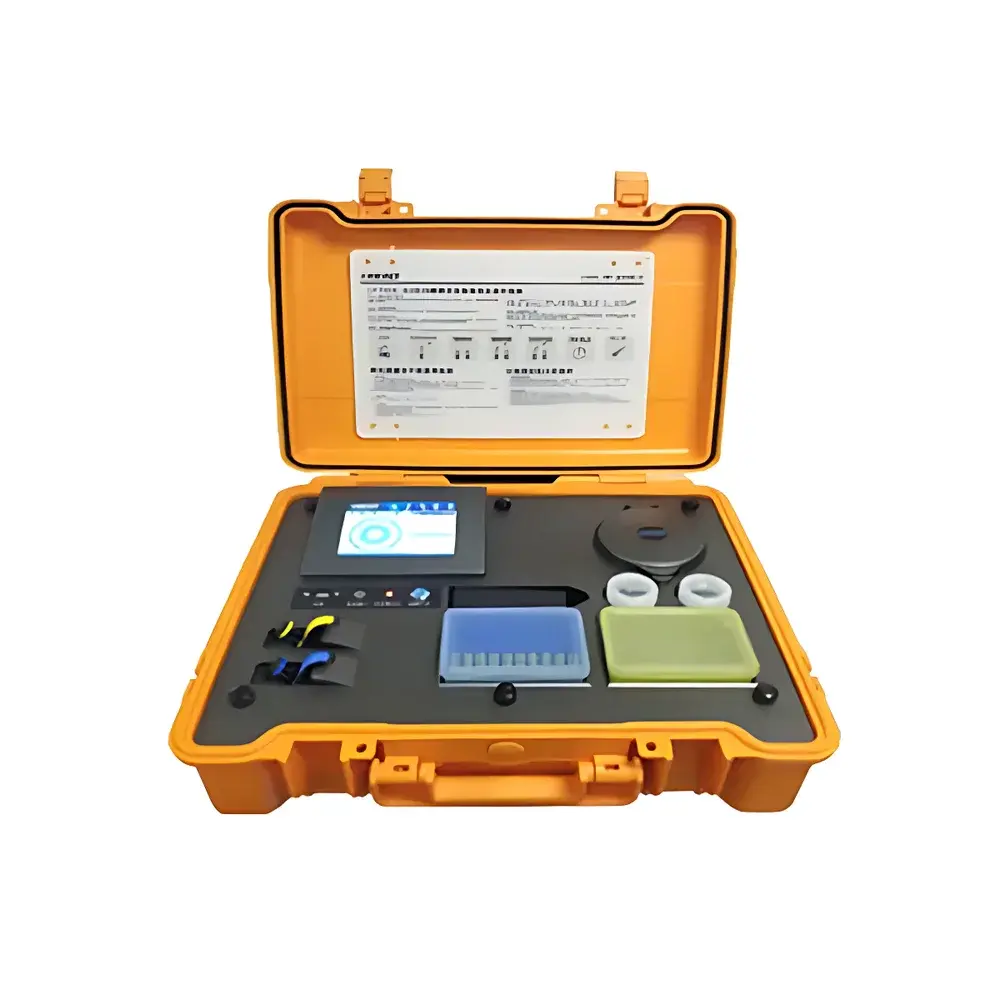
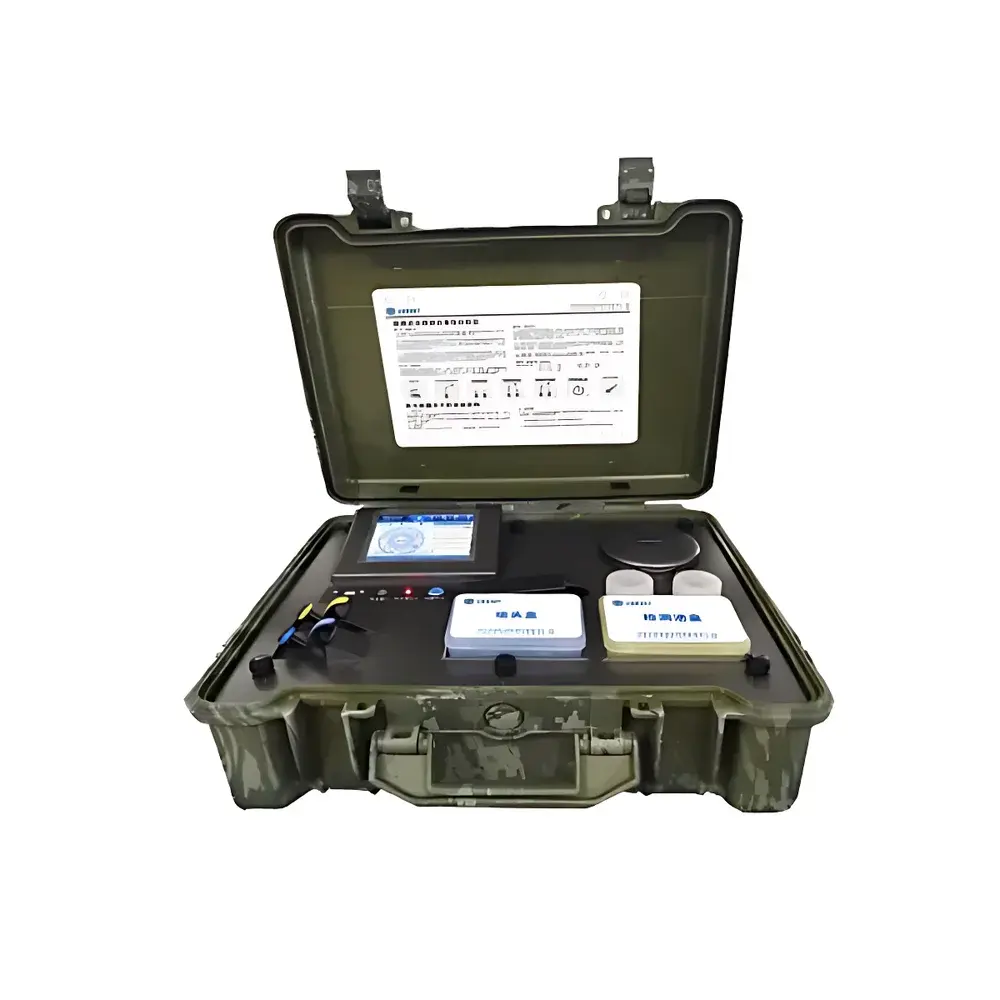
Lihero LFTOX-B2010 Portable Water Toxicity Analyzer
| Brand | Lihero |
|---|---|
| Model | LFTOX-B2010 |
| Type | Portable Toxicity Analyzer |
| Measurement Principle | Bioluminescent Bacterial Assay (ISO 11348-3) |
| Microorganism | Freeze-dried *Aliivibrio fischeri* (formerly *Vibrio fischeri*) |
| Reconstitution Time | <5 min |
| Shelf Life (lyophilized) | ≥6 months at ≤−20 °C |
| Working Stability (reconstituted) | 7–10 days at 2–8 °C |
| Detection Range | EC50 from 0.1% to 100% sample dilution (equivalent to broad-spectrum toxicity index) |
| Compliance | ISO 11348-3:2022, DIN 38412-30, EPA 600/R-95/125 |
Overview
The Lihero LFTOX-B2010 Portable Water Toxicity Analyzer is a field-deployable, bioluminescence-based instrument engineered for rapid, on-site assessment of the cumulative toxic effect of water samples. It implements the standardized bacterial luminescence inhibition assay as defined in ISO 11348-3:2022 — *Water quality — Determination of the inhibitory effect of water samples on the light emission of *Aliivibrio fischeri* (Method using freeze-dried bacteria)*. Unlike chemical-specific analytical methods, this system quantifies the integrated biological response to complex mixtures of organic and inorganic contaminants—including heavy metals, pesticides, pharmaceuticals, surfactants, and industrial metabolites—without requiring prior knowledge of individual compound identities. The analyzer measures the reduction in light output (measured in relative light units, RLU) from rehydrated, freeze-dried *A. fischeri* following exposure to test samples; toxicity is expressed as effective concentration (EC50) or percentage inhibition relative to a non-toxic control. Its compact, battery-powered architecture enables real-time decision-making during emergency response, wastewater discharge verification, drinking water source screening, and environmental impact assessments.
Key Features
- Pre-qualified, lyophilized *Aliivibrio fischeri* culture with documented strain lineage and batch-specific performance validation per ISO 11348-3 Annex A.
- Optimized freeze-drying and cryoprotectant formulation ensuring ≥90% viable cell recovery post-reconstitution and stable luminescence kinetics (CV ≤8% across triplicate assays).
- No pre-cultivation required: reconstituted bacteria are immediately assay-ready within 5 minutes using supplied sterile saline buffer.
- Integrated optical detection module with thermally stabilized photomultiplier tube (PMT), calibrated against NIST-traceable luminance standards.
- Onboard microprocessor with embedded assay protocol library, automatic ECx calculation (EC10, EC20, EC50), and real-time inhibition curve fitting (log-logistic 4-parameter model).
- Ruggedized IP65-rated enclosure, operating temperature range 5–35 °C, and 8-hour continuous operation on rechargeable Li-ion battery pack.
Sample Compatibility & Compliance
The LFTOX-B2010 accepts raw or filtered (0.45 µm) aqueous matrices including surface water, groundwater, wastewater effluents, leachates, and treated drinking water. Turbidity up to 50 NTU and residual chlorine ≤0.1 mg/L do not interfere with assay integrity when appropriate sample conditioning (e.g., sodium thiosulfate quenching) is applied. All procedures align with ISO 11348-3:2022 requirements for test validity criteria: control light emission must exceed 500 RLU, coefficient of variation among controls ≤15%, and inhibition response must be dose-dependent and reproducible across dilution series. The system supports GLP-compliant data recording, with audit-trail-enabled timestamped results exportable via USB-C or Bluetooth 5.0 to secure laboratory information management systems (LIMS). Method equivalence is documented for regulatory use under EU Water Framework Directive (WFD) monitoring programs and U.S. EPA Region 4 rapid bioassessment protocols.
Software & Data Management
The proprietary LFTOX Control Suite (v3.2) provides full instrument configuration, assay scheduling, and result visualization. Software features include automated QC flagging (e.g., out-of-range blank signal, insufficient inhibition slope), customizable report templates compliant with ISO/IEC 17025 documentation requirements, and encrypted CSV/PDF export with digital signature capability. All measurement metadata — including ambient temperature, operator ID, sample ID, dilution factor, and raw RLU time-series — are stored locally with write-protected memory retention for ≥10,000 assays. Remote firmware updates and method library synchronization are supported over secure HTTPS endpoints, satisfying FDA 21 CFR Part 11 requirements for electronic records and signatures when deployed in regulated environments.
Applications
- Emergency spill response: Rapid triage of unknown discharges at industrial sites or accident zones.
- Wastewater treatment plant (WWTP) influent/effluent monitoring to verify biological treatment efficacy and detect shock loads.
- Drinking water safety screening at intake points, distribution nodes, and after disinfection events.
- Ecotoxicological assessment of landfill leachate, agricultural runoff, and urban stormwater.
- Validation of advanced oxidation processes (AOPs) and activated carbon adsorption efficiency via toxicity removal tracking.
- Research-grade comparative toxicity profiling across sample sets in environmental chemistry and ecopharmacovigilance studies.
FAQ
What regulatory standards does the LFTOX-B2010 comply with?
It fully implements ISO 11348-3:2022 and is validated against DIN 38412-30 and U.S. EPA guidance document 600/R-95/125 for acute aquatic toxicity testing.
Can the instrument be used for saline or estuarine water samples?
Yes — with isotonic adjustment using supplied marine buffer solution to maintain osmotic compatibility for *A. fischeri* viability.
Is calibration traceable to national metrology institutes?
Photometric calibration is performed using NIST-traceable luminance standards (SRM 2222) prior to shipment; annual recalibration is recommended.
How is data integrity ensured during field deployment?
All measurements include cryptographic hash logging, operator authentication, and immutable timestamps; local storage meets IEC 62443-3-3 SL2 security requirements.
Does the system support multi-laboratory intercomparison studies?
Yes — the instrument includes built-in Z-score calculation mode and exports harmonized .tox files compatible with the OECD QSAR Toolbox and EUROTOX databases.







