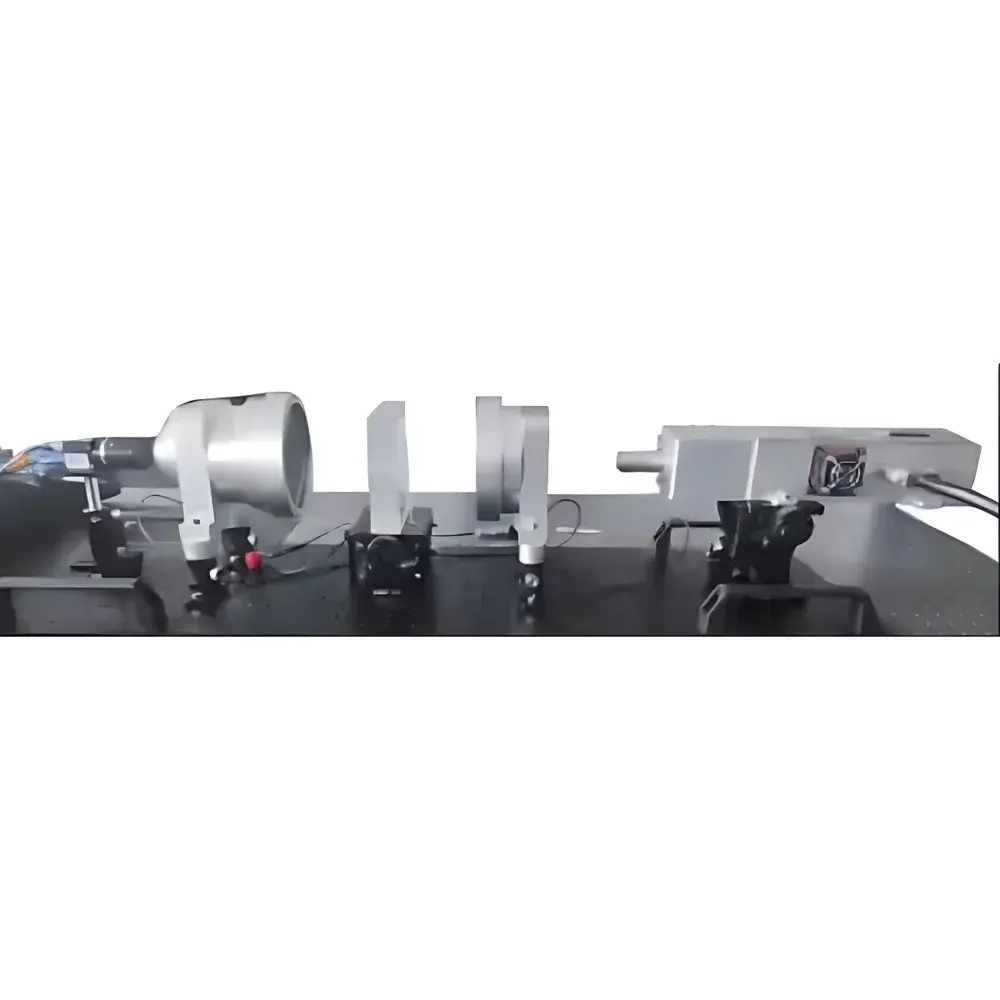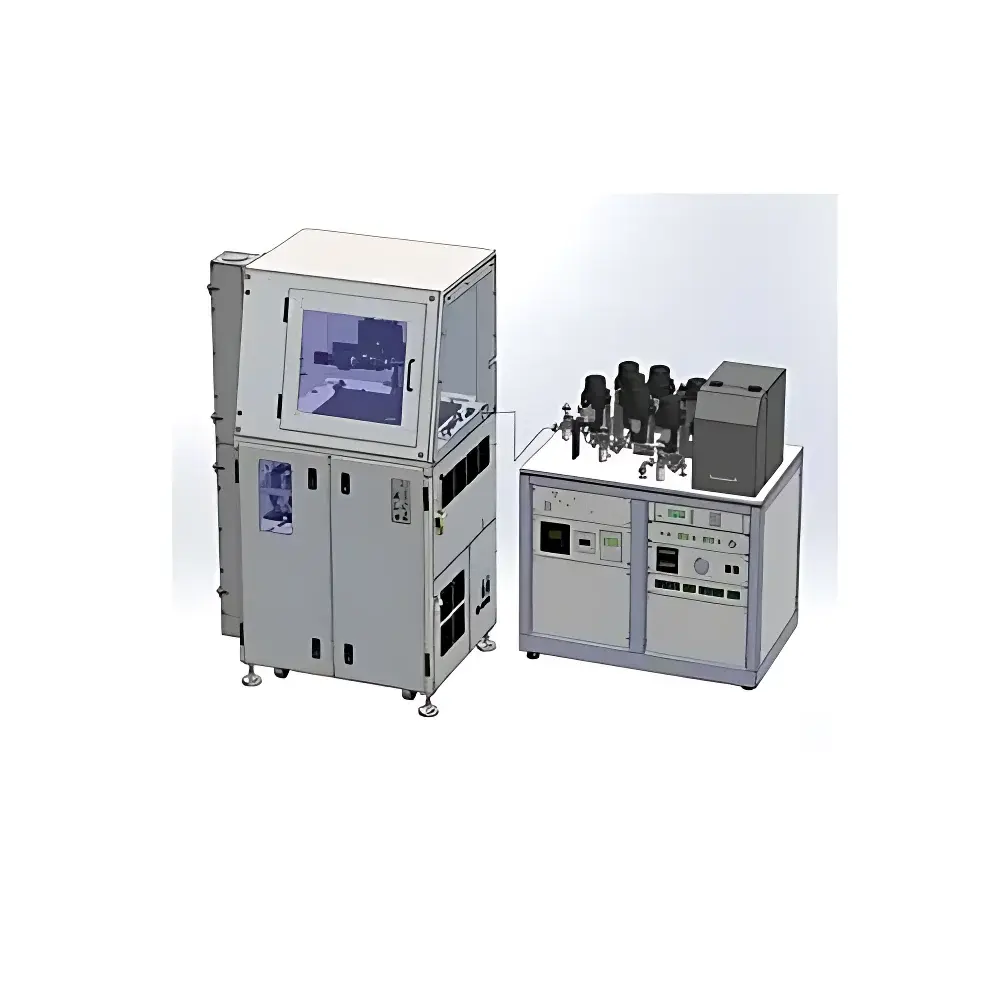
ASI RESOChron Dual-Dating System
| Brand | ASI |
|---|---|
| Origin | USA |
| Manufacturer Type | Authorized Distributor |
| Origin Category | Imported Instrument |
| Model | RESOChron |
| Pricing | Available Upon Request |
Overview
The ASI RESOChron Dual-Dating System is a fully integrated, in-situ, computer-controlled microanalytical platform engineered for high-throughput, multi-isotopic geochronology and trace-element characterization of individual mineral grains. It combines laser ablation (LA) with noble gas mass spectrometry and multi-collector ICP-MS capabilities to perform simultaneous or sequential U–Th–Pb and (U–Th)/He dating on the same grain—without physical separation, chemical dissolution, or manual grain selection. Unlike conventional bulk or single-grain (U–Th)/He protocols—which require vacuum furnace heating, helium extraction, and separate alpha-spectrometric or mass spectrometric measurement—the RESOChron system quantifies He isotopes *in situ* via calibrated laser ablation volume removal, coupled with optical interferometry or X-ray microtomography for precise pit-volume determination. This eliminates two primary sources of uncertainty in traditional thermochronology: (1) uncharacterized crystal surface area and (2) unknown effective diffusion geometry due to undetected microfractures or radiation damage. The system operates on the principle of controlled ablation depth profiling, where He release is directly correlated with measured ablation crater volume and known surface-to-volume ratio—enabling robust age calculation under well-defined geometric constraints.
Key Features
- Integrated dual-dating capability: Simultaneous U–Th–Pb geochronology and (U–Th)/He thermochronology on individual apatite, zircon, titanite, and monazite grains
- In-situ microanalysis: No grain mounting, polishing, or chemical digestion required; analysis performed directly on polished thin sections or grain mounts
- Automated multi-grain workflow: Computer-controlled stage navigation, auto-focus, and sequential ablation across ≥20 grains per session
- Real-time volume metrology: On-line crater volume quantification via white-light interferometry or synchrotron-compatible X-ray micro-CT integration
- Laser ablation source: UV excimer (193 nm) or IR-fiber laser with adjustable fluence (0.5–10 J/cm²) and spot size (5–50 µm)
- Dual-detection architecture: Coupled to a high-sensitivity noble gas MS (e.g., Thermo Helix MC) and a multi-collector ICP-MS (e.g., Nu Instruments Attom)
- Trace-element mapping: Quantitative rastering for U, Th, Sm, Pb, and REE distributions co-registered with age domains
Sample Compatibility & Compliance
The RESOChron system accommodates standard 25 mm petrographic thin sections, grain mounts on glass slides, or epoxy-embedded separates. Compatible mineral phases include apatite, zircon, titanite, monazite, allanite, and xenotime—provided they exhibit sufficient U/Th content (>1 ppm) and low common Pb. All analytical protocols adhere to ASTM D7580 (Standard Guide for In-Situ Microanalysis of Geological Materials) and ISO 14687 (Geological Dating—Requirements for U–Th–Pb and (U–Th)/He Systems). Data acquisition and reporting support GLP-compliant audit trails, including timestamped metadata for laser parameters, detector voltages, background corrections, and volume calibration coefficients—fully traceable to NIST-traceable interferometric standards.
Software & Data Management
The RESOChron Control Suite provides unified acquisition, real-time volume correction, isotope ratio calculation, and age modeling within a single GUI. It includes embedded algorithms for alpha-ejection correction (based on measured grain geometry), He diffusion modeling (using Dodson-type equations), and concordia/discordia filtering. Raw data are stored in HDF5 format with embedded MIAME-compliant metadata. Export modules support direct ingestion into IsoplotR, DensityPlotter, and HeFTy for thermal history inversion. The software complies with FDA 21 CFR Part 11 requirements for electronic records and signatures when configured with user authentication, role-based access control, and immutable audit logs.
Applications
- Quantifying exhumation and erosion rates in active orogens using apatite (U–Th)/He age–elevation relationships
- Resolving polyphase thermal histories in metamorphic terranes via zircon U–Pb + (U–Th)/He double dating
- Calibrating hydrocarbon maturation models in sedimentary basins through time–temperature path reconstruction
- Discriminating fault-related vs. regional uplift signals in ore-controlling structures
- Linking metallogenic events to crustal-scale tectonic transitions using monazite–titanite paired chronology
- Validating detrital thermochronology datasets for provenance analysis and paleo-drainage reconstruction
FAQ
What sample preparation is required prior to RESOChron analysis?
Standard petrographic thin sections or grain mounts prepared following IUGS guidelines are sufficient. No acid etching, annealing, or chemical treatment is needed.
Can the system distinguish between radiation-damaged and pristine domains within a single crystal?
Yes—via spatially resolved U/Th mapping combined with localized He release profiles, enabling domain-specific age calculation.
Is external He standardization required for each session?
No—the system uses internal volume-normalized calibration derived from repeated ablation of synthetic He-doped reference materials (e.g., Durango apatite SRM).
How does RESOChron handle common Pb contamination in young zircons?
The integrated U–Pb module applies common Pb correction using the ²⁰⁴Pb-based model of Stacey & Kramers (1975), constrained by measured ²⁰⁶Pb/²⁰⁴Pb and ²⁰⁷Pb/²⁰⁴Pb ratios.
Is remote operation supported for shared-lab environments?
Yes—secure web-based remote monitoring and queue-based batch submission are available via optional RESOChron Cloud Connect module.