
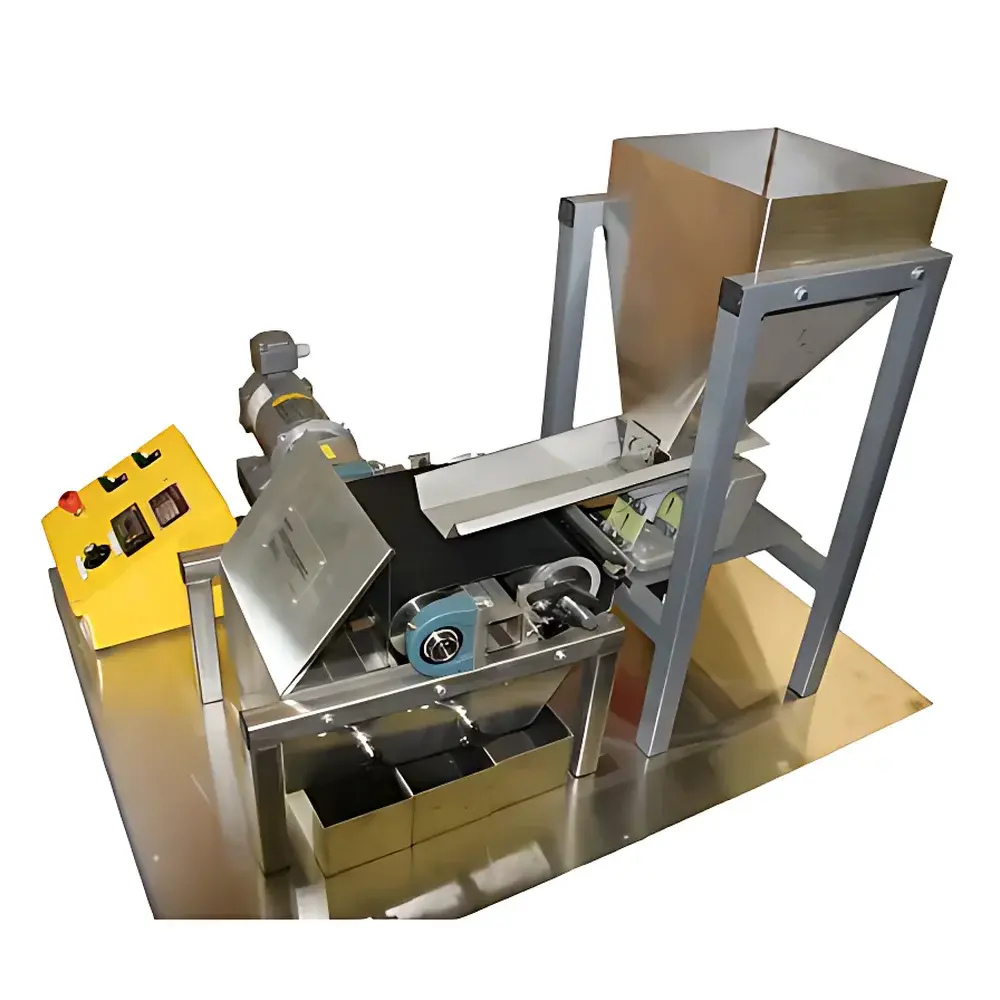
Sepor L/P 10-30 LP1 Laboratory Rare Earth Roll Magnetic Separator
| Origin | USA |
|---|---|
| Manufacturer Type | Authorized Distributor |
| Origin Category | Imported |
| Model | Sepor L/P 10-30 LP1 |
| Pricing | Available Upon Request |
Overview
The Sepor L/P 10-30 LP1 Laboratory Rare Earth Roll Magnetic Separator is an engineered high-gradient magnetic separation system designed for precise, reproducible separation of weakly paramagnetic minerals from non-magnetic or diamagnetic gangue in research-scale mineral processing, metallurgical testing, and materials science laboratories. Operating on the principle of induced magnetic susceptibility differential separation, the unit applies strong, spatially focused magnetic fields—generated by high-energy neodymium-iron-boron (NdFeB) permanent magnets—to selectively attract paramagnetic particles while allowing non-magnetic material to follow its natural trajectory under gravity and centrifugal forces. The core separation mechanism relies on the interaction between particle magnetic susceptibility, field gradient intensity (~0.8–1.2 T at roll surface), and residence time within the active magnetic zone. This makes the L/P 10-30 particularly effective for fine-grained (<2 mm) dry feed streams where conventional low-intensity separators lack sufficient selectivity.
Key Features
- Two-stage rare-earth magnetic roll configuration with 4:1 and 3/4:4 roll diameter ratios—enabling sequential multi-stage separation for enhanced recovery and grade control.
- 100 mm (4″) diameter primary magnetic roll with 200 mm active magnetic width; constructed with sintered NdFeB magnets embedded in stainless-steel housings for thermal stability and corrosion resistance.
- Variable-speed DC drive system with closed-loop RPM feedback control ensures consistent rotational velocity across load variations; digital tachometer display provides real-time speed readout (range: 0–300 rpm, adjustable in 1-rpm increments).
- Integrated vibratory feeder mounted directly to the frame—field-adjustable for standard feed mode or high-efficiency (HE) feed geometry to optimize particle dispersion and monolayer presentation to the magnetic zone.
- Stainless-steel structural frame (304 grade), dual stainless-steel splitter plates, and three removable collection trays facilitate rapid sample changeover, cross-contamination minimization, and GMP-aligned cleaning protocols.
- Designed for 220 V AC, 60 Hz operation; electrical interface complies with UL 508A industrial control panel standards and includes overload protection and emergency stop circuitry.
Sample Compatibility & Compliance
The L/P 10-30 accommodates dry particulate feed with particle size distributions ranging from 75 µm to 2 mm and bulk densities between 1.2–4.8 g/cm³. It is routinely deployed in ASTM D3929-22 (Standard Practice for Magnetic Separation of Iron-Bearing Minerals) and ISO 9017:2021 (Mineral Processing — Laboratory Scale Magnetic Separation Testing) workflows. All wetted and contact surfaces meet FDA 21 CFR Part 11 requirements for material traceability when used in regulated R&D environments. The device supports GLP-compliant documentation via external data logging interfaces (RS-485 and analog 4–20 mA output for RPM and feed rate).
Software & Data Management
While the L/P 10-30 operates as a stand-alone electromechanical instrument, it features native compatibility with Sepor’s optional SeporLab™ Control Suite v3.2—a Windows-based application enabling synchronized acquisition of feed rate (via integrated load cell interface), roll speed, and collection tray mass differentials. Audit trails, user access levels, electronic signatures, and automated report generation (PDF/CSV) are supported to satisfy 21 CFR Part 11 data integrity requirements. Raw operational parameters are timestamped and stored with SHA-256 hash verification for forensic traceability.
Applications
- Paramagnetic mineral concentration (e.g., ilmenite, garnet, monazite, hematite) from silica sand or feldspar matrices.
- Recycling stream purification: removal of stainless steel fines, nickel alloys, or rare-earth-containing fragments from shredded e-waste or battery black mass.
- Quality assurance of abrasive media: detection and quantification of ferrous contamination in alumina or silicon carbide powders.
- Geochemical reference material preparation: isolation of specific heavy mineral fractions for LA-ICP-MS or XRD analysis.
- Development and validation of full-scale rare-earth roll separator operating parameters prior to pilot plant deployment.
FAQ
What is the maximum feed rate capacity for the L/P 10-30 in continuous operation?
Typical dry feed throughput ranges from 5–25 kg/h depending on particle size distribution, moisture content (<0.5% w/w recommended), and desired separation sharpness.
Can the magnetic roll assembly be recalibrated or re-magnetized onsite?
No—NdFeB rolls are pre-magnetized to saturation and sealed; field strength decay is <0.5% per decade under ambient lab conditions. Recalibration requires factory service using Helmholtz coil measurement and NIST-traceable flux mapping.
Is explosion-proof (ATEX/IECEx) certification available?
The base model is not certified; however, Sepor offers a Class I, Div 2 / ATEX Zone 2 compliant variant (L/P 10-30 EX) with purged enclosure and intrinsically safe feed controls upon request.
Does the system support automated fraction collection?
Yes—optional motorized tray indexing (up to six positions) and programmable timed discharge can be integrated via the SeporLab™ Control Suite.
What maintenance intervals are recommended for long-term reliability?
Lubrication-free magnetic rolls require no scheduled maintenance; vibratory feeder bearings should be inspected every 500 operating hours and greased with NLGI #2 lithium complex grease.







