
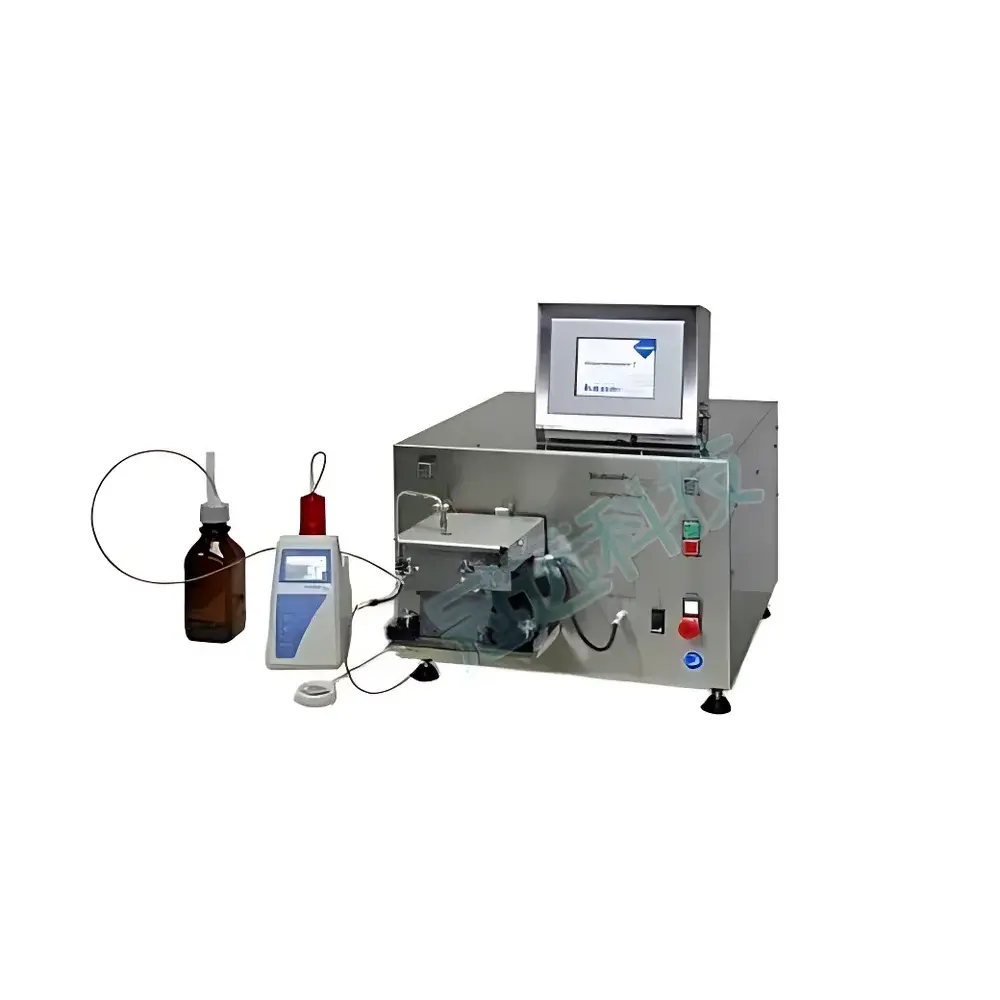
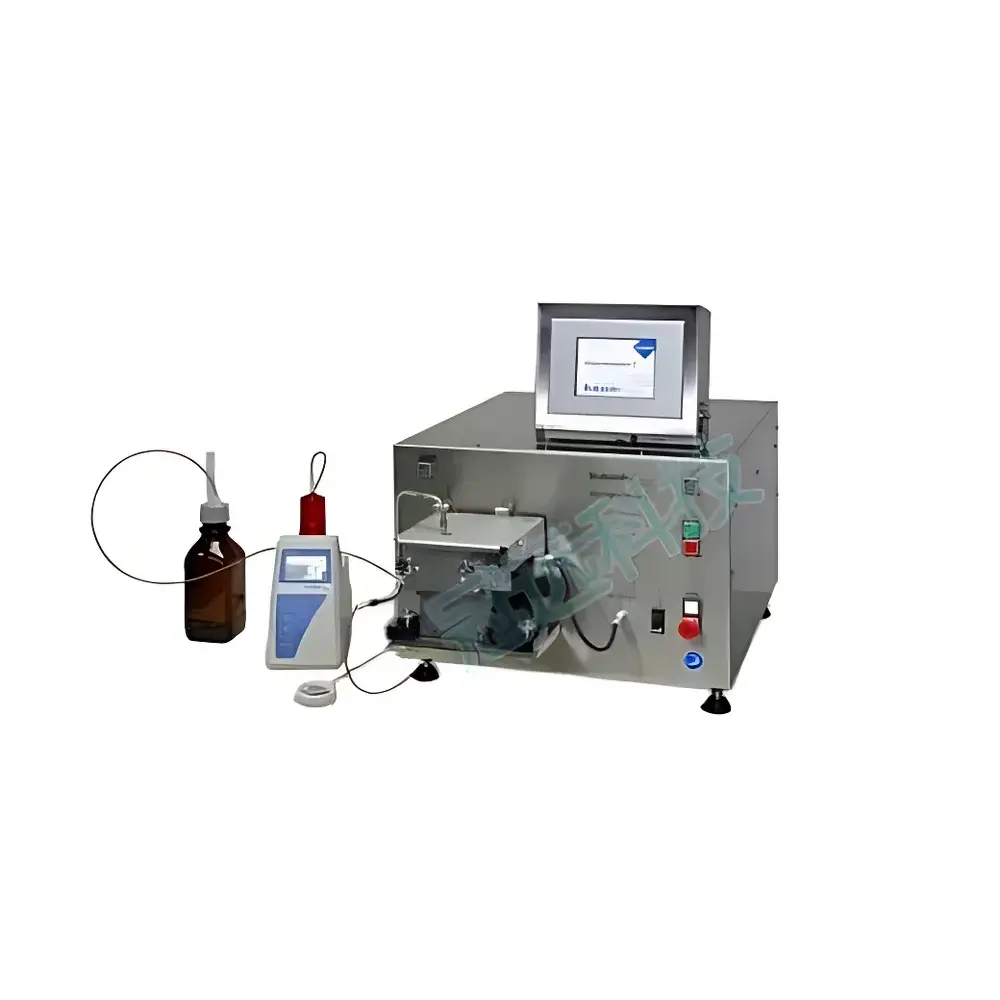
Brookfield C-Type Carbon Black Oil Absorption Meter
| Origin | Germany |
|---|---|
| Manufacturer Type | Authorized Distributor |
| Origin Category | Imported |
| Model | C-Type |
| Pricing | Upon Request |
| Compliance | ASTM D2414, ASTM D3493 |
| Drive Unit | AC Variable-Frequency Motor |
| Power | 0.75 kW |
| Speed Range | 5–150 rpm |
| Default Speed (ASTM) | 125 rpm |
| Speed Stability | Quartz-Crystal Digital Feedback Controlled |
| Torque Measurement | Electronic Load Cell |
| Torque Range | 0–10 N·m |
| Titration Rate | Adjustable (Default 4 mL/min per ASTM) |
| Titration Accuracy | ±0.05 mL |
| Sample Cup Capacity | 100 mL |
| Power Supply | 230 V AC, 50/60 Hz, 4 A |
| Dimensions (L×W×H, w/o burette) | 530 × 560 × 700 mm |
| Weight | Approx. 75 kg |
Overview
The Brookfield C-Type Carbon Black Oil Absorption Meter is a precision-engineered instrument designed for the quantitative determination of oil absorption number (OAN) in carbon black powders, as defined by internationally recognized test methods including ASTM D2414 and ASTM D3493. The device operates on the fundamental principle of torque rheometry: during controlled titration of linseed oil (or specified process oil) into a rotating carbon black sample, the increasing resistance to rotor motion—manifested as rising torque—is continuously monitored. The endpoint corresponds to the critical oil volume at which the carbon black transitions from a dry, free-flowing state to a cohesive, plastic mass—commonly termed the “kneading point.” This method directly correlates with the surface area, structure, and aggregate morphology of carbon black particles, making OAN a critical quality control parameter for rubber compounding, pigment dispersion, and polymer reinforcement applications.
Key Features
- AC variable-frequency motor drive ensures precise, programmable rotational speed control across a wide range (5–150 rpm), with factory-default calibration set at 125 rpm per ASTM requirements.
- Digital quartz-crystal feedback loop maintains speed stability within ±0.1% of setpoint, eliminating mechanical drift and ensuring high inter-laboratory reproducibility.
- High-resolution electronic torque transducer (0–10 N·m range, resolution <0.01 N·m) provides real-time, noise-immune measurement of viscoelastic resistance during oil incorporation.
- Integrated titration module features a motor-driven burette with adjustable delivery rate (default 4 mL/min), calibrated to ±0.05 mL accuracy—critical for compliance with ASTM volumetric tolerances.
- Robust cast-aluminum mainframe and vibration-damped base minimize external interference; ergonomic 100 mL sample cup facilitates rapid loading, cleaning, and cross-contamination prevention.
- Modular architecture separates control electronics, motor drive, torque sensor, and titration subsystems—enabling serviceability, traceable calibration, and long-term operational integrity under industrial QC conditions.
Sample Compatibility & Compliance
The C-Type meter is validated for use with all commercially relevant carbon black grades—including N110, N220, N330, N550, and specialty high-structure variants—across rubber, plastics, ink, and battery electrode manufacturing workflows. It fully satisfies the procedural, instrumentation, and reporting requirements of ASTM D2414 (Standard Test Method for Oil Absorption of Pigments) and ASTM D3493 (Standard Test Method for Oil Absorption of Carbon Black). Instrument design supports GLP-compliant operation: audit trails for speed/titration settings, torque logging timestamps, and manual entry fields for operator ID and batch code are supported via optional software integration. Electrical safety conforms to IEC 61010-1; CE marking is affixed for EU market deployment.
Software & Data Management
While the C-Type operates autonomously via its integrated touchscreen interface, optional PC-based software enables advanced data handling: real-time torque vs. oil volume curve visualization, automatic endpoint detection using first-derivative thresholding, statistical batch reporting (mean, SD, CV%), and export to CSV or PDF formats. All measurement parameters—including actual speed, delivered oil volume, peak torque, and endpoint time—are timestamped and stored locally with non-volatile memory retention (>10,000 test records). For regulated environments, optional 21 CFR Part 11-compliant modules provide electronic signatures, role-based access control, and immutable audit logs—facilitating FDA, ISO 17025, or internal QA audits without third-party middleware.
Applications
- Rubber compound formulation: Correlating OAN with vulcanization kinetics, tensile strength, and abrasion resistance in tire treads and industrial elastomers.
- Pigment dispersion optimization: Quantifying structural demand in ink vehicles and coating resins to prevent flocculation or viscosity instability.
- Carbon black grade verification: Incoming QC screening against supplier certificates of analysis (CoA) for N-series or specialty blacks used in conductive composites.
- Process development: Monitoring OAN shifts during thermal oxidation, surface treatment, or post-reactor conditioning steps in carbon black production.
- Research & development: Investigating structure–property relationships between aggregate branching (DBP absorption), surface chemistry, and functional performance in lithium-ion battery anodes.
FAQ
What standards does the C-Type Oil Absorption Meter comply with?
It is fully compliant with ASTM D2414 and ASTM D3493 for carbon black and pigment oil absorption testing.
Is the instrument suitable for non-carbon black materials?
While optimized for carbon black, it may be adapted for other high-surface-area particulates (e.g., silica, calcium carbonate) subject to method validation per ASTM D281 or internal SOPs.
How is torque calibration performed?
Torque transducers are factory-calibrated using NIST-traceable deadweight standards; field verification kits and annual recalibration services are available through authorized service centers.
Can the titration rate be modified for non-standard protocols?
Yes—the system allows user-defined titration rates between 0.5 and 10 mL/min via touchscreen or software, with full parameter logging for method traceability.
What maintenance is required for routine operation?
Daily cleaning of the sample cup and rotor; monthly inspection of titration tubing and O-rings; annual motor drive and torque sensor verification recommended per ISO/IEC 17025 preventive maintenance schedules.
Related Products





