
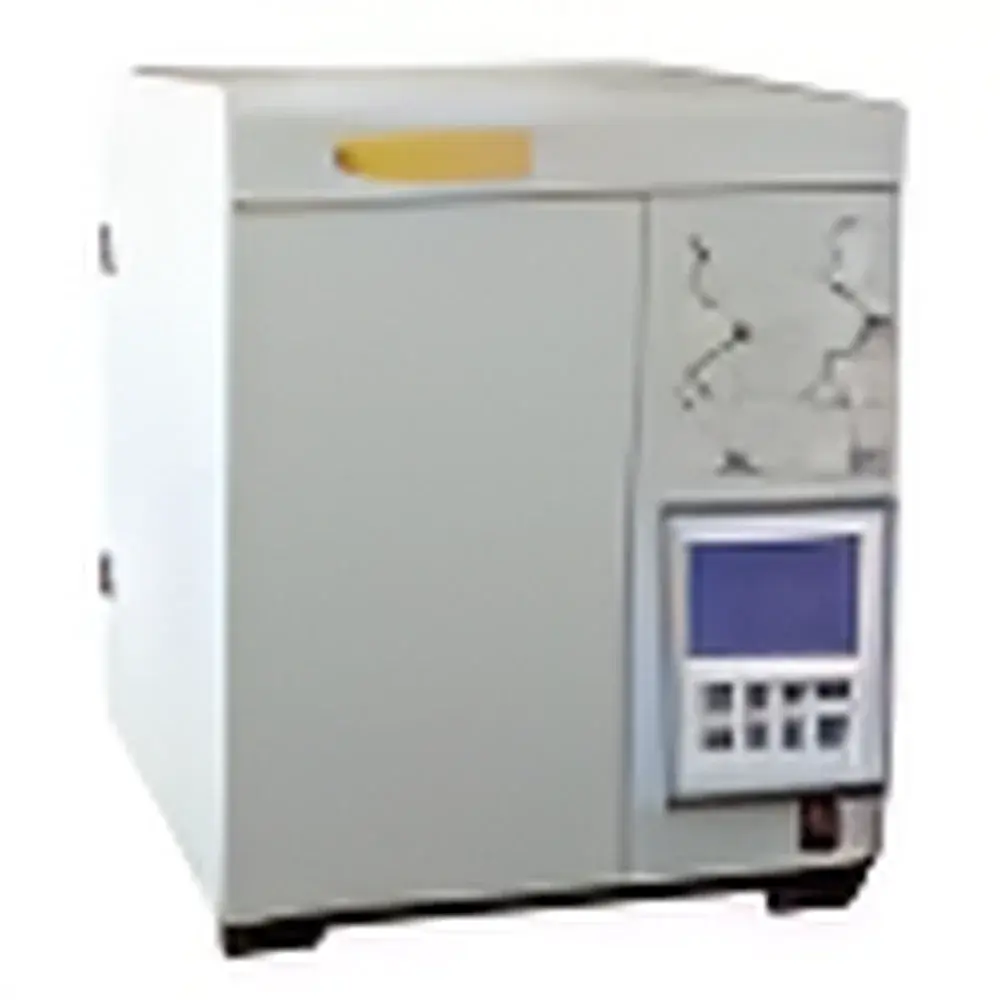

LuNan RuiHong QT-3000 Light Hydrocarbon Analyzer
| Brand | LuNan RuiHong |
|---|---|
| Model | QT-3000 |
| Instrument Type | Laboratory Gas Chromatograph |
| Application Field | Petroleum & Petrochemical Industry |
| Column Oven Temperature Range | +5°C above ambient to 250°C |
| Temperature Control Accuracy | ±0.1°C (column oven), ±1°C (inlet/detector) |
| Max Heating Rate | 20°C/min |
| Cooling Time | ≤8 min (180°C → 35°C) |
| FID Detection Limit | ≤1×10⁻¹¹ g/s (benzene) |
| FID Drift | ≤0.5 mV/h |
| Maximum Temperature Program Steps | 4 |
| Injector | Water-Driven 6-Port Sampling Valve + Manual Syringe Port |
| Software | Dedicated Light Hydrocarbon Qualitative/Quantitative Data Processing Suite |
| Compliance | Designed for ASTM D1945, ASTM D1946, ISO 6974-1, and GB/T 13610-compliant light hydrocarbon analysis workflows |
Overview
The LuNan RuiHong QT-3000 Light Hydrocarbon Analyzer is a purpose-built capillary gas chromatograph engineered for high-resolution separation and precise quantification of C₁–C₆+ hydrocarbon species in natural gas, refinery streams, shale gas condensates, and drill-cuttings headspace samples. Unlike general-purpose GC systems, the QT-3000 integrates thermally optimized hardware architecture with application-specific method templates to address the unique challenges of light hydrocarbon analysis—particularly the need for stable sub-ambient column oven operation, rapid thermal cycling, and reproducible low-concentration detection. Its core measurement principle relies on partition-based separation in fused-silica capillary columns followed by flame ionization detection (FID), delivering quantitative accuracy traceable to certified reference gas mixtures. The system is designed for routine use in both upstream field laboratories and downstream QC/QA environments where compliance with ASTM D1945 (Analysis of Natural Gas by Gas Chromatography), ASTM D1946 (Analysis of Reformed Gas), and ISO 6974-1 (Natural Gas — Determination of Composition) is required.
Key Features
- Column oven with extended low-temperature capability: minimum setpoint at ambient +5°C, stabilized to ±0.1°C across the active zone—enabling accurate retention time alignment for early-eluting components (e.g., methane, ethane, ethylene) without cryogenic cooling.
- Thermally efficient oven design reduces cool-down time from 180°C to 35°C to ≤8 minutes—cutting total cycle time by >60% compared to conventional laboratory GCs lacking near-ambient control.
- Dual-inlet configuration: integrated water-driven 6-port sampling valve for automated, pressure-balanced introduction of headspace gases (e.g., cuttings罐顶气), plus a standard syringe port for liquid or calibration standards.
- FID optimized for hydrocarbon sensitivity: detection limit ≤1×10⁻¹¹ g/s (benzene), drift <0.5 mV/h after 2-hour stabilization—meeting long-duration run requirements for unattended operation.
- Four-step programmable temperature ramping with adjustable heating rates (0–20°C/min) and independent inlet/detector zones controlled to ±1°C.
- Robust mechanical architecture with vibration-damped mounting and sealed electronics—suitable for mobile lab deployment or permanent installation in refinery control rooms.
Sample Compatibility & Compliance
The QT-3000 accepts gaseous samples directly via the water-driven valve (compatible with sample bags, gas cylinders, and headspace vials) and liquid standards via syringe injection. It supports analysis of complex matrices including raw natural gas, LPG blends, FCC off-gas, and geochemical headspace extracts. All hardware and software components are configured to support audit-ready workflows aligned with GLP and GMP principles. Data acquisition includes timestamped method parameters, detector baselines, and raw chromatograms—enabling full traceability per FDA 21 CFR Part 11 when paired with optional electronic signature modules. Method validation documentation references ASTM D1319 (hydrocarbon type analysis), ISO 6974 series, and China’s GB/T 13610 (Determination of Light Hydrocarbons in Natural Gas).
Software & Data Management
The QT-3000 operates with a dedicated Windows-based chromatography data system (CDS) tailored for light hydrocarbon interpretation. It includes pre-loaded retention time libraries for C₁–C₇ alkanes, alkenes, and acetylenes; automated peak identification using retention index matching; and linear/nonlinear calibration curve generation with internal standard correction (e.g., n-pentane or cyclopropane). Quantitative reports comply with industry-standard formats—including mole %, volume %, and ppmv outputs—and export directly to CSV, Excel, or LIMS-compatible XML. Audit trail functionality logs all user actions, parameter changes, and reprocessing events. Optional integration with enterprise LIMS platforms is supported via ASTM E1394 or HL7-compliant APIs.
Applications
- Geochemical evaluation of drilling mud gas and cuttings headspace for hydrocarbon shows and source rock maturity assessment.
- Quality control of pipeline natural gas composition per ISO 13686 and custody transfer specifications.
- Process monitoring in gas processing plants—tracking ethane recovery, propane purity, and butane isomer ratios.
- Refinery feedstock characterization for reformer and cracker unit optimization.
- Environmental screening of VOC emissions from storage tanks and flare stacks.
- Research-grade quantification of light ends in bio-gas and synthetic fuel streams.
FAQ
What is the lowest operational column oven temperature?
The column oven achieves stable control at ambient temperature +5°C, with precision maintained at ±0.1°C across the usable zone.
Does the system support ASTM D1945-compliant analysis?
Yes—the hardware configuration, temperature programming flexibility, and FID performance meet all instrumental requirements specified in ASTM D1945 for natural gas composition analysis.
Can the water-driven sampling valve handle high-H₂S or sour gas samples?
The valve body is constructed from 316 stainless steel with PTFE seals; compatibility with H₂S concentrations up to 500 ppm is verified—higher levels require optional Hastelloy components.
Is remote diagnostics or firmware update capability available?
Firmware updates are performed via USB-connected service mode; remote access requires optional Ethernet module and secure VPN configuration per site IT policy.
What calibration standards are recommended for initial setup?
Certified gas mixtures traceable to NIST SRM 1850a (light hydrocarbon blend) or equivalent national metrology institute standards are recommended for primary calibration.
Related Products




