
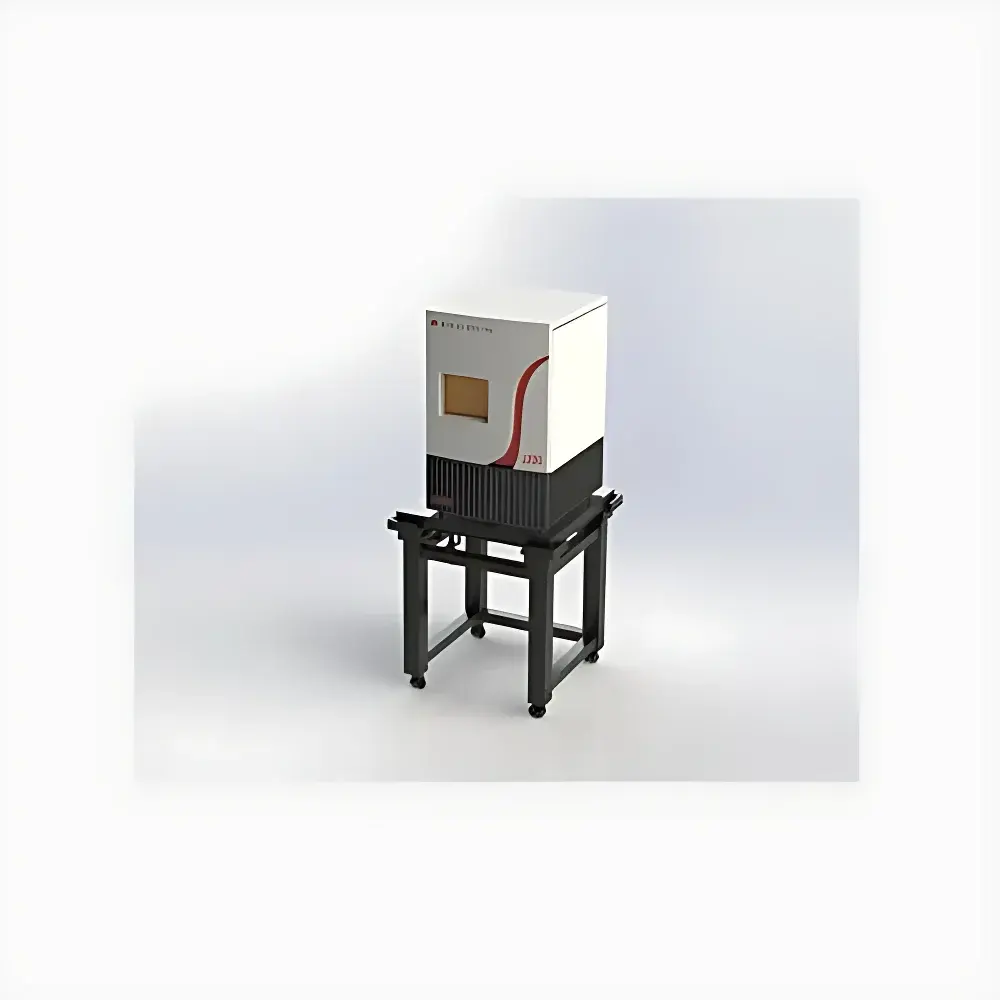
ASI Aurora LIBS Spectrometer
| Brand | ASI |
|---|---|
| Origin | USA |
| Manufacturer Type | Authorized Distributor |
| Origin Category | Imported |
| Model | Aurora |
| Price Range | USD 14,000 – 42,000 |
| Instrument Type | Benchtop |
| Integration Level | Fully Integrated |
| Laser Pulse Energy | 200 mJ (at 1064 nm, 5 ns FWHM) |
| Repetition Rate | Up to 100 Hz |
| Spectral Range | 190–1000 nm |
| Optical Resolution | ≤ 0.07 nm (FWHM at 300 nm) |
| Detector | Back-illuminated, deep-depletion CCD with thermoelectric cooling to −60 °C |
Overview
The ASI Aurora LIBS Spectrometer is a benchtop laser-induced breakdown spectroscopy (LIBS) system engineered for high-fidelity elemental analysis across research laboratories, metallurgical QA/QC facilities, and forensic material characterization environments. Based on the fundamental principle of plasma emission spectroscopy, the Aurora generates transient microplasmas on solid, liquid, or aerosol samples via focused nanosecond laser ablation (1064 nm, 5 ns pulse width), followed by time-resolved spectral acquisition of atomic and ionic line emissions. Its optical architecture integrates a high-throughput Czerny–Turner spectrometer with dual-grating options and a deep-cooled, back-illuminated CCD detector—enabling sub-0.07 nm spectral resolution and robust signal-to-noise performance under gated detection (delay: 0.1–100 µs; gate width: 1–100 µs). Designed and refined over three decades of iterative development by Applied Spectra, Inc. (ASI), the Aurora reflects deep domain expertise in LIBS physics, plasma diagnostics, and industrial deployment constraints.
Key Features
- High-resolution 3D motorized sample stage with ±0.5 µm Z-axis repeatability and programmable XYZ positioning for spatially resolved mapping and heterogeneous sample interrogation.
- Patented sample chamber with intelligent transport gas control (Ar, He, N₂), including real-time pressure regulation (10–1000 Torr) and automatic sample-height compensation via capacitive sensing.
- Compact, air-cooled Q-switched Nd:YAG laser (200 mJ @ 1064 nm, 5 ns, up to 100 Hz repetition rate) with integrated beam homogenization and pointing stability < 25 µrad RMS over 8 hours.
- Fully integrated hardware synchronization: laser trigger, ICCD gate timing, and spectrometer acquisition are coordinated via FPGA-based timing controller with < 1 ns jitter.
- Benchtop footprint (65 × 55 × 45 cm) with EMI-shielded enclosure, Class 1 laser safety interlock system, and compliance with IEC 60825-1:2014 and ANSI Z136.1-2022 standards.
Sample Compatibility & Compliance
The Aurora accommodates conductive and non-conductive solids (metals, ceramics, polymers, geological specimens), liquids (via droplet or thin-film ablation), and particulate aerosols (with optional flow cell integration). Sample preparation requirements are minimal—no vacuum pumping, sputtering, or matrix-matching needed. The system supports ASTM E2926-22 (Standard Test Method for Determination of Elements in Solid Materials by LIBS) and aligns with ISO/IEC 17025:2017 requirements for analytical method validation. All firmware and software modules comply with FDA 21 CFR Part 11 for electronic records and signatures when deployed in regulated GxP environments, including audit trail logging, user access controls, and instrument configuration change tracking.
Software & Data Management
The Aurora ships with TruLIBS®—a curated, experimentally validated emission line database containing > 12,000 atomic/ionic transitions across 76 elements (Z = 3–92), referenced to NIST SRD-78 and calibrated against certified reference materials (CRMs). Coupled with LIBS GDT™ (Graphical Development Toolkit), users build custom chemometric models (PLS, PCA, SVM, RF) directly from raw spectra without coding. Software features include spectral deconvolution with Voigt-line fitting, background subtraction via iterative polynomial interpolation, and batch processing with metadata tagging (sample ID, laser energy, delay/gate settings, ambient gas). Data export formats include HDF5, CSV, and .spa (GRAMS-compatible); all raw and processed files are stored with embedded instrument configuration hashes for full traceability.
Applications
- Quantitative alloy verification (e.g., stainless steel grade identification per ASTM A959, aluminum series classification).
- In-process monitoring of electrodeposited coatings and additive manufacturing powders (O, C, N, H quantification via UV-VIS-NIR coverage).
- Forensic glass and paint chip analysis—distinguishing manufacturing batches using trace element ratios (Sr/Rb, Ba/La, Zr/Ti).
- Geological core scanning for rare earth element (REE) distribution mapping with lateral resolution down to 50 µm.
- Environmental soil screening for heavy metals (Pb, As, Cd, Cr) at regulatory thresholds (e.g., EPA 6010D, TCLP extraction correlation).
FAQ
What is the minimum detectable concentration for common metallic elements?
Detection limits range from 1–50 ppm for most transition metals (Fe, Cu, Ni, Cr) and 10–200 ppm for light elements (Li, B, C, O, N) depending on matrix, laser fluence, and integration strategy.
Can the Aurora operate in ambient air or does it require inert gas purging?
It functions in ambient air for qualitative screening; however, quantitative precision and sensitivity for light elements (Z < 20) improve significantly under argon or helium purge—enabled via built-in mass flow controllers and chamber pressure feedback.
Is spectral calibration traceable to NIST standards?
Yes—wavelength calibration uses Hg/Ne/Ar hollow-cathode lamps with NIST-traceable line positions; intensity calibration employs calibrated photodiode references and certified radiance standards (NIST SRM 2036).
How is data integrity ensured during long-term deployment in regulated labs?
All acquisitions generate immutable HDF5 containers with embedded timestamps, operator IDs, instrument state vectors, and digital signatures; audit logs record every parameter modification, file export, or model retraining event per 21 CFR Part 11 Annex 11 requirements.
Related Products




